
Table of Contents >> Show >> Hide
- What Is Magic Chess: Go Go?
- How a Match Works in Magic Chess: Go Go
- A Simple Beginner Game Plan
- Best Tips for Winning More in Magic Chess: Go Go
- Common Beginner Mistakes
- How Ranked Works
- How Magic Chess: Go Go Differs From Magic Chess in MLBB
- What the Real Player Experience Usually Feels Like
- Final Thoughts
- SEO Tags
If regular Mobile Legends: Bang Bang feels like a high-speed motorcycle, then Magic Chess: Go Go feels like the same universe after someone handed it a chessboard, a calculator, and a very suspicious amount of luck. Instead of mashing buttons and trying not to get ambushed in a bush, you build a lineup, manage your gold, activate synergies, choose the right Go Go Cards, and let your heroes do the fighting for you. It is strategy first, reflexes second, and panic rerolling somewhere in the middle.
That is exactly why the mode is so addictive. A beginner can understand the basics in one session, but winning consistently takes planning, adaptation, and a little emotional maturity when the shop refuses to give you the hero you need for the fifth round in a row. If you came from MLBB, Magic Chess: Go Go will feel familiar because it uses the same hero universe. At the same time, it adds more systems, more decisions, and more ways to throw a match by getting greedy.
This guide breaks down how to play Magic Chess: Go Go in a way that actually makes sense for beginners. You will learn how matches work, what synergies do, how to use commanders, when to save gold, when to level up, and how to stop making the classic rookie mistake of building a lineup that looks cool but collapses like a folding chair in the late game.
What Is Magic Chess: Go Go?
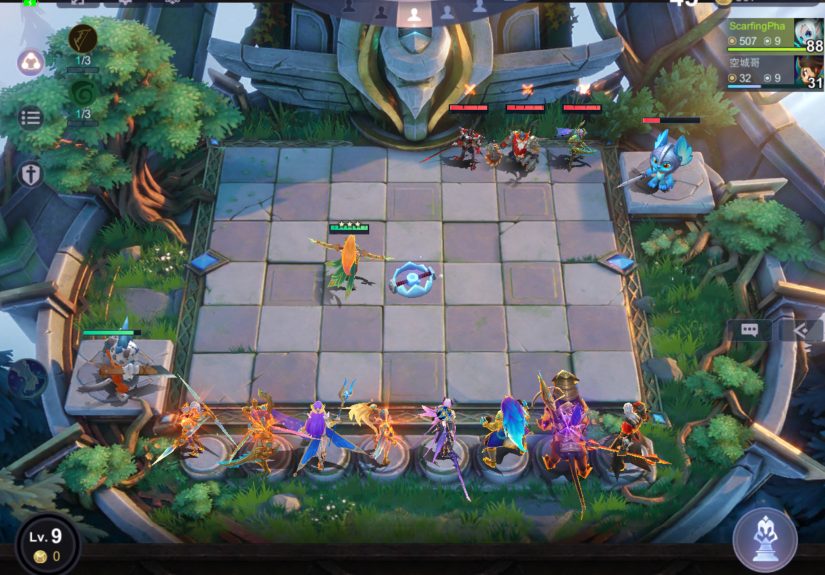
Magic Chess: Go Go is an auto-battler set in the Mobile Legends: Bang Bang universe. In a typical match, you face seven other players. During the preparation phase, you buy heroes, position them on the board, manage your economy, and make strategic upgrades. Once the round starts, battles play out automatically. Your job is not to control the heroes directly. Your job is to build the smartest board possible.
That is the first mindset shift new players need to make. You are not a flashy assassin diving the backline yourself. You are the coach, the manager, and the slightly overcaffeinated chess gremlin making lineup decisions from the sidelines.
Magic Chess: Go Go also expands on the older Magic Chess formula by adding features like more commander systems, Go Go Cards, seasonal synergies, extra progression systems, and a more clearly structured ranked experience. In other words, it is not just “that side mode from MLBB, but wearing a fake mustache.” It is a fuller strategy game.
How a Match Works in Magic Chess: Go Go
Buy heroes from the shop
Every match begins with a simple goal: build a team that can survive longer than everyone else. To do that, you spend gold in the shop to recruit heroes. These heroes belong to different factions and roles, which matter because combining the right ones activates synergy bonuses.
Early on, do not obsess over finding the “perfect” team immediately. Your first goal is to field a board that is stronger than empty spaces and bad decisions. Buy useful units, look for natural pairs, and pay attention to heroes that fit together instead of randomly collecting shiny names like you are filling a sticker album.
Position your units
Positioning matters more than new players expect. Frontline heroes should absorb damage, while fragile damage dealers usually perform better in the backline. If your carry is standing in the front row like it has something to prove, it will usually prove only one thing: that it can disappear very quickly.
A smart board is balanced. Tanks and bruisers protect the front. Damage dealers and utility units stay safer in the back. If an enemy has strong jumpers, assassins, or burst damage, adjust your formation instead of stubbornly keeping the same layout every round.
Upgrade heroes and strengthen your Commander
Like most auto-battlers, power spikes matter. You want stronger versions of important units, and you also want to improve your Commander whenever possible. In Magic Chess: Go Go, commanders are not just mascots floating around looking adorable and judgmental. They bring active and passive skills that can affect battles, your economy, or your overall strategy.
That means your Commander choice should match your game plan. Some commanders help you earn more value. Some improve combat. Some make specific lineups stronger. Picking a Commander with no connection to your intended playstyle is like wearing flip-flops to climb a mountain. It is technically a choice, just not a very good one.
Activate synergies
Synergies are the heart of Magic Chess: Go Go. Heroes are connected by factions and roles, and when you place enough compatible units on the board, you unlock buffs that make your lineup stronger. Those buffs can increase damage, improve survivability, add utility, or create powerful team-wide effects.
This is why random boards usually lose to focused boards. A lineup with clear synergy usually outperforms a pile of individually decent heroes that do not support each other. If your team looks like it was assembled by closing your eyes and tapping the shop, do not be shocked when it plays that way too.
One important thing to remember is that Magic Chess: Go Go is a live-service game. Seasonal updates can change which synergies are available, which ones are strongest, and how certain combinations work. So the smartest long-term approach is learning why synergies are strong, not just copying one trendy lineup and acting like you invented strategy.
Use Go Go Cards wisely
One of the biggest differences in Magic Chess: Go Go is the Go Go Card system. These cards appear during certain rounds and can give you valuable boosts, items, economy help, or other strategic advantages. They can completely change the direction of a match.
The key is not to pick the flashiest card every time. Pick the card that helps your current board. If you are already strong, choose cards that snowball your lead. If you are behind, choose cards that stabilize your lineup, fix your economy, or help you hit an important upgrade. Good players do not just ask, “What looks powerful?” They ask, “What solves my problem right now?”
Equip the right items
Equipment is another huge part of winning. Physical items belong on physical damage carries. Magic items belong on magic damage dealers. Defensive gear belongs on heroes whose job is to stand in front and get punched in the face for the good of the team. Revolutionary stuff, I know.
Do not waste great items on the wrong unit just because that unit happens to be alive and available. The best item on the wrong hero can still be a bad decision. Think about who is actually carrying fights for you, then feed that hero like the star performer it is.
A Simple Beginner Game Plan
Early game: survive without ruining your economy
In the early rounds, focus on two things: building a functional board and protecting your gold. Gold management matters because economy affects everything else. The more efficiently you spend, the easier it becomes to level up, reroll, and complete your lineup later.
If you get early pairs or a natural synergy start, lean into it. If you do not, play the strongest board you can with what the shop gives you. Avoid rerolling too aggressively in the early game unless you have a very specific reason. New players often burn gold chasing one missing unit, then wonder why everyone else hits stronger boards first.
Mid game: commit to a real direction
The mid game is where you stop “figuring it out” and start committing. By this point, you should know which synergy core you are building around, which hero is likely to become your main carry, and whether your Commander actually supports that direction.
This is also the stage where scouting becomes important. Look at other players’ boards. If half the lobby is chasing the same units you need, your odds of finding them go down. That does not always mean pivot immediately, but it does mean you should stop pretending the shop owes you anything.
Late game: polish the board, do not reinvent it
In the late game, your job is refinement. Upgrade key units. Improve your positioning. Choose high-value Go Go Cards. Move items if necessary. Add splash synergies that actually help. What you should not do is panic and throw away your entire strategy because you lost one ugly round to a player who high-rolled like the universe personally favors them.
Late-game victories often come from tiny adjustments. Shift a carry one tile. Corner a fragile unit. Swap a weak filler hero for a utility piece. Replace greed with discipline. Auto-battlers reward players who stay flexible without becoming chaotic.
Best Tips for Winning More in Magic Chess: Go Go
1. Learn one or two core comps first
Trying to memorize every lineup as a beginner is a great way to remember nothing. Start by learning one reliable physical-focused comp and one magic-focused comp. That gives you flexibility based on what the shop, items, and cards offer.
2. Treat economy like a weapon
Gold is not just money. It is tempo, options, and future power. A player with strong economy can recover from bad luck, level at the right times, and roll for upgrades when it matters. A player with no gold is basically begging the shop to take pity on them.
3. Do not force every synergy
Just because a synergy icon lights up does not mean it belongs in your board. Sometimes a smaller, cleaner synergy setup is better than cramming in one extra bonus with a weak hero that does nothing useful.
4. Scout the lobby
Scouting tells you which units are contested, which boards are strong, and what threats you need to position against. If you never scout, you are basically taking a test while refusing to read the questions.
5. Build around your actual carry
Every strong board has a win condition. Maybe it is a backline damage dealer. Maybe it is a durable bruiser with perfect items. Maybe it is a synergy spike enabled by a great Go Go Card. Identify what is really winning fights for you, then support it.
6. Play for Top 4 when needed
In ranked, surviving into the Top 4 matters a lot. Sometimes the smart move is not to greed for first place. It is to stabilize, protect your stars, and take the respectable finish. Pride is nice. Rank points are nicer.
Common Beginner Mistakes
Rerolling too early: This kills your economy and makes the rest of the match feel like unpaid debt.
Ignoring positioning: Even a strong lineup can lose if the carry gets deleted instantly.
Picking cards with no plan: A powerful effect is wasted if it does not fit your board.
Forcing a meta comp every game: Sometimes the lobby, items, and shop are telling you to pivot. Listen.
Holding too many random units: Bench clutter is not strategy. It is indecision wearing a disguise.
How Ranked Works
Ranked is where Magic Chess: Go Go gets serious. The general rule is simple: finishing in the Top 4 counts as a good result, while landing in the bottom half hurts your progress. The ranked ladder uses multiple tiers, and climbing requires both consistency and smart risk management.
This system changes how you should think during a tough match. If your board is weak and your economy is shaky, your goal should shift from “I must get first” to “How do I avoid collapsing into eighth?” That one mental adjustment helps a lot of new players climb faster.
How Magic Chess: Go Go Differs From Magic Chess in MLBB
If you played the older Magic Chess mode inside Mobile Legends: Bang Bang, you will notice familiar DNA right away. The foundation is still hero drafting, synergy building, item use, and board positioning. But Magic Chess: Go Go adds more structure and more moving parts.
Compared with the older MLBB mode, Magic Chess: Go Go offers more systems around commanders, extra progression paths, Go Go Cards, a dedicated ranked setup, and seasonal content changes that keep the game evolving. That is good news for players who want deeper strategy. It also means old habits do not always transfer perfectly.
The best approach is to treat MCGG as its own game instead of assuming everything works exactly the same way it did before. Familiarity helps, but adaptation wins.
What the Real Player Experience Usually Feels Like
One of the funniest things about learning Magic Chess: Go Go is how confident you feel after your first good match. You hit a nice synergy, your carry pops off, the board looks beautiful, and suddenly you think you have unlocked ancient strategic wisdom. Then the next match starts, the shop gives you nonsense, your items do not fit, your Commander choice looks questionable, and the game gently reminds you that strategy titles are built on humility.
That cycle is actually part of the experience, and it is why the game stays fun. Magic Chess: Go Go is not just about memorizing lineups. It is about learning how to react when the match refuses to follow your script. Experienced players are not magically luckier. They are usually just better at turning awkward starts into playable boards.
For most beginners, the early experience is a mix of curiosity and chaos. You recognize familiar MLBB heroes, but now they behave like pieces in a larger puzzle. At first, you might focus too much on collecting your favorite characters. That is normal. Almost everyone has a brief “I will win with vibes alone” phase. The problem is that the board does not care about vibes. It cares about synergy, timing, items, and whether your frontline can survive longer than three seconds.
After a few matches, players usually start noticing patterns. Saving gold feels powerful. Scouting the lobby suddenly makes sense. Positioning changes outcomes. Choosing the right Go Go Card can rescue a shaky game. That is when Magic Chess: Go Go becomes genuinely satisfying, because progress feels earned. You stop guessing and start understanding.
There is also a very specific emotional experience that every player learns: the pain of being one copy away from a key upgrade for what feels like forever. This is where discipline matters. Strong players do not tilt just because the shop is rude. They keep the board functional, protect their health, and work with the resources they actually have. That emotional control is a huge part of improving.
Another common experience is realizing that “best comp” articles only take you so far. A lineup can be strong on paper and still fail in your match if the lobby contests it, your items are wrong, or your cards push you in another direction. The real skill comes from adapting. That is why many players start out by copying builds, but eventually climb by understanding principles.
Over time, the game becomes less about chasing perfection and more about making strong decisions under pressure. You learn when to push levels, when to reroll, when to pivot, and when to settle for a safe Top 4 instead of an unrealistic dream of first. And honestly, that is what makes the experience so engaging. Every match tells a different story. Some are clean wins. Some are ugly recoveries. Some are tragic comedies starring one missing hero copy and your rapidly disappearing HP bar.
That variety is the magic of Magic Chess: Go Go. The game rewards knowledge, patience, and flexible thinking. It gives you enough structure to improve, but enough randomness to keep each match fresh. So yes, there will be rounds where you feel like a tactical genius, and rounds where your board looks like it was assembled during a power outage. Both are part of the fun. Stick with the learning process, and the game becomes far more rewarding than it first appears.
Final Thoughts
If you want to play Magic Chess: Go Go well, focus on the fundamentals first. Learn how to build a stable board, manage gold, activate useful synergies, choose smart Go Go Cards, and position your units with intention. Once those basics become natural, the game opens up in a big way.
You do not need perfect luck to win. You need a good plan, a flexible mindset, and the ability to stop making expensive emotional decisions just because the shop ignored you for two rounds. Magic Chess: Go Go rewards players who stay calm, adapt quickly, and understand that every match is a puzzle, not a script.
So jump in, experiment, lose a few rounds, learn from them, and keep building. Before long, you will stop feeling like a confused tourist on the chessboard and start playing like someone who actually knows why that one Commander, that one card, and that one tiny positioning change just saved the match.
Note: Magic Chess: Go Go is a live-service game, so commanders, synergies, items, rank features, and side modes may change with new updates, seasons, or regional versions.







 Close
Close