
Table of Contents >> Show >> Hide
- First: What “Body Fat Percentage” Tells You (and What It Doesn’t)
- Before You Measure: Choose Your “Why” (Because That Changes Your “How”)
- Method 1: Tape-Measure (Circumference) Method
- Method 2: Bioelectrical Impedance Analysis (BIA) Scales
- Method 3: Skinfold Calipers
- Method 4: DEXA Scan (Dual-Energy X-ray Absorptiometry)
- So… Which Method Should You Choose?
- How Often Should You Measure Body Fat?
- Common Mistakes (and How to Avoid Them)
- Conclusion
- Real-World Experiences: What People Learn When They Track Body Fat
If you’ve ever stepped on a scale, seen a number, and thought, “Cool… what does that mean?” you’re not alone.
Body weight is a blurry snapshot. Body fat percentage is a sharper picture of what that weight is made offat mass and
fat-free mass (muscle, bone, organs, water). And yes, it’s still not perfect. Humans are complicated. (Rude.)
This guide walks through four common ways to measure body fatranging from “I own a tape measure” to “I’m willing to lie very still while a machine judges me.”
You’ll learn how each method works, what it’s good for, what can throw it off, and how to use it without spiraling into spreadsheet madness.
First: What “Body Fat Percentage” Tells You (and What It Doesn’t)
Body fat percentage is the proportion of your total body weight that comes from fat tissue. It helps add context that BMI and scale weight can’t always capture.
For example, two people can weigh the same and have very different body compositionsone might carry more muscle, the other more fat.
But body fat percentage is not a moral report card, and it’s not a perfect health predictor by itself. Where fat is stored matters, too.
Abdominal fat (especially visceral fat around organs) is generally more strongly linked with metabolic risk than fat stored under the skin.
That’s why waist measurements are often used alongside other metrics.
The best way to use body fat data is as a trend tool: measure consistently, compare changes over time, and pair it with performance, labs (if you have them),
energy levels, and how your clothes fit. Your goal is signal, not noise.
Before You Measure: Choose Your “Why” (Because That Changes Your “How”)
Ask yourself what you want from the measurement:
- Tracking progress over months? Consistency matters more than laboratory precision.
- Getting a baseline before a cut or bulk? A more accurate method can be worth it once or twice a year.
- Health-focused check-in? Pair body fat with waist circumference and other health markers.
The “best” method is the one you can repeat reliably without needing a second mortgage or a PhD in hydration management.
Method 1: Tape-Measure (Circumference) Method
The tape-measure method estimates body fat using circumferencesusually waist and neck for men, and waist, neck, and hips for womenalong with height.
Variations of this approach are used by the U.S. military because it’s fast, inexpensive, and easy to standardize.
How to do it (without turning it into an Olympic sport)
- Measure at the same time of day (morning is ideal), before eating, after using the bathroom.
-
Waist: wrap the tape around your bare abdomen, keep it level, snug but not digging in, and measure after a normal exhale.
Don’t “vacuum-seal” your organs to impress the tape measure. - Neck: measure just below the Adam’s apple (or around the midpoint of the neck), level all the way around.
- Hips (if needed): measure around the widest part of the buttocks/hips.
- Repeat each measurement 2–3 times and use the average if they differ.
Pros
- Cheap, fast, and accessible (tape measures rarely require appointments).
- Great for trends when done consistently.
- Pairs nicely with waist circumference for health risk context.
Cons
- Accuracy depends heavily on technique and tape placement.
- Less precise for people with unusual fat distribution, very high muscle mass, or certain body shapes.
- It estimates body fatit doesn’t directly measure it.
Best for: people who want a reliable, repeatable “field method” at home and don’t mind that it’s an estimate.
If you’re consistent, it can be surprisingly useful.
Method 2: Bioelectrical Impedance Analysis (BIA) Scales
BIA deviceslike many smart bathroom scales and handheld testerssend a small electrical current through your body and estimate body composition based on resistance.
Since water conducts electricity well and fat contains less water than muscle, the device uses assumptions about hydration and tissue properties to estimate body fat percentage.
Why BIA can feel “possessed”
BIA is sensitive to fluid shifts. Hydration changes, salty meals, alcohol, hard workouts, and even recent water intake can all nudge the number around.
That’s why you might see your body fat “increase” overnight after a late pizzaeven if the pizza wasn’t that magical.
How to get more consistent BIA readings
- Measure first thing in the morning, after using the bathroom, before food or coffee.
- Try to measure under similar conditions: similar sleep, similar hydration, similar day of the week.
- Avoid measuring right after hard exercise or a sauna session.
- Use the same device each time; different devices use different algorithms.
Pros
- Convenient and fast for frequent tracking.
- Useful for spotting directional change over time if you standardize conditions.
- Many devices also track weight trends, which can be helpful when paired with body fat estimates.
Cons
- Accuracy varies widely by device, population, and hydration status.
- Numbers can bounce around and stress people out if they expect lab-level precision.
- Not ideal for day-to-day decision-making (unless your goal is emotional chaos).
Best for: people who like regular check-ins and can commit to consistent measuring conditionsplus a healthy amount of skepticism.
Treat it like a weather forecast: useful for patterns, not a courtroom verdict.
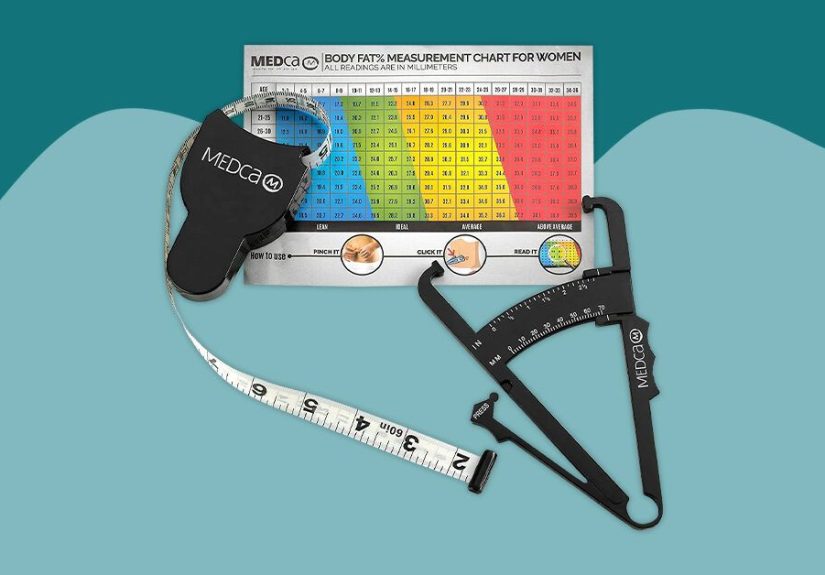
Method 3: Skinfold Calipers
Skinfold testing estimates body fat by measuring the thickness of subcutaneous fat (fat under the skin) at specific sitesoften 3, 7, or more locations.
Those measurements are plugged into equations that estimate body density and then body fat percentage.
What makes skinfold testing work well
When done by a trained professional using a consistent protocol, skinfolds can be a solid, affordable method for tracking body composition changes.
It’s also popular in fitness settings because it doesn’t require fancy machinesjust skill, consistency, and a caliper that isn’t a toy from a cereal box.
How to get the best results
- Use a trained tester (experience matters a lot).
- Stick with the same tester and the same sites each time.
- Measure under similar conditions (time of day, hydration, recent training).
- If you DIY: practice, measure multiple times per site, and accept that your first few attempts are “learning reps.”
Pros
- More “hands-on” and often more informative than a bathroom scale estimate.
- Relatively affordable compared to scans.
- Great for tracking changes if the method is consistent.
Cons
- Technique-dependent; different calipers and testers can produce different results.
- Equations may be less accurate for certain body types, very lean athletes, or people with higher body fat.
- Measures subcutaneous fat, not visceral fat directly.
Best for: people who can access a skilled tester (or who are willing to practice), and want a fairly detailed, repeatable method without going full lab mode.
Method 4: DEXA Scan (Dual-Energy X-ray Absorptiometry)
DEXA is often treated like the “gold standard” in the fitness world for estimating body composition because it can assess
regional fat mass, lean mass, and bone mineral content using low-dose X-rays.
Instead of guessing from external measurements or electrical resistance, it uses imaging-based analysis to break down body composition more directly.
What you get from a DEXA scan
- Total body fat percentage
- Lean mass distribution (helpful for strength training and rehab contexts)
- Regional breakdown (arms, legs, trunk)
- Bone density data (often included depending on the scan type)
Pros
- More precise than most at-home methods.
- Excellent for establishing a baseline and tracking bigger changes over time.
- Gives detailed regional information that other methods can’t.
Cons
- Costs money and requires access to a facility.
- Not something you need frequently; once every few months (or a couple times a year) is plenty for most people.
- Still not “perfect truth”different machines and protocols can vary, and hydration/food timing can influence lean mass estimates.
Best for: people who want higher accuracy, a strong baseline, or detailed regional dataand are okay with paying for it.
Related lab options you might hear about: Air displacement plethysmography (often known by the “Bod Pod” brand) and hydrostatic weighing
are also lab-style methods. They can be very accurate, but they’re less common and usually used in specialized facilities.
If you have access, they can serve a similar “high-accuracy baseline” role as DEXA.
So… Which Method Should You Choose?
Here’s a practical way to choose without overthinking yourself into a nap:
If you want the easiest habit
Choose BIA or tape measurements. Standardize your routine, track weekly or biweekly, and focus on trends.
If you want a good balance of cost and detail
Choose skinfolds with a trained tester (or consistent DIY practice). You’ll get useful detail without needing a scan appointment.
If you want a high-confidence baseline
Choose DEXA. Do it once, then use a simpler method (like tape or skinfolds) to track changes between scans.
How Often Should You Measure Body Fat?
Most body composition changes happen slowly. Measuring too often can create fake dramayour body didn’t gain 2% fat overnight; your water and glycogen just had a meeting.
For most people:
- Tape measurements: weekly or every two weeks
- BIA scales: 1–3 times per week (only if you can stay calm about fluctuations)
- Skinfolds: every 4–8 weeks
- DEXA: every 3–6 months (or 1–2 times per year)
If you’re cutting or bulking aggressively under professional guidance, you might measure more often. Otherwise, slow and steady wins the sanity contest.
Common Mistakes (and How to Avoid Them)
1) Treating one number like it’s your entire identity
Your body fat percentage is information, not your personality. Pair it with strength progress, endurance, sleep, energy, and health markers.
2) Changing methods midstream
Switching from BIA to calipers to DEXA every month is like changing rulers mid-measurement. Pick one primary method and stick with it for a season.
If you upgrade methods, treat the first reading as a new baseline.
3) Measuring under random conditions
Consistency is everything. Same time of day, similar routine, similar hydrationespecially for BIA and tape measures.
4) Expecting “perfect accuracy” from consumer tools
At-home methods are best for trends, not exactness. If you want maximum accuracy, do a lab method (like DEXA) occasionally and use simpler tools to track direction.
Conclusion
Measuring body fat doesn’t have to feel like a science fair project you forgot about until the night before.
Start with your goal: trends or precision. Then pick a method you can repeat consistently.
Tape measures and BIA scales are great for habits and trends, calipers add detail when done well, and DEXA delivers a strong baseline when you want higher accuracy.
Most importantly: use the data to support your health and performancewithout letting it run your life like a tiny, judgmental spreadsheet goblin.
Real-World Experiences: What People Learn When They Track Body Fat
When people first start measuring body fat, the most common experience is surprisenot necessarily at the number itself, but at how much it can change
based on everything except actual fat gain. Someone will measure with a BIA scale on Monday morning, then again Tuesday night after a salty dinner,
and suddenly they’re convinced they “gained 3% body fat in 24 hours.” That’s not fat. That’s water, glycogen, and your body doing normal body things.
The first big lesson is that body composition tracking is more like watching a stock chart than reading a thermometer: you care about the trend line, not every wiggle.
Another common experience: people discover that “weight loss” and “fat loss” are not always the same storyline.
For example, someone starts strength training and their scale weight barely moves, but tape measurements shrink and calipers show improvement.
They’ll often describe it as the moment the fog lifts: the scale was only telling one chapter, and body fat tracking finally adds the missing pages.
On the flip side, someone can lose weight quicklyespecially with aggressive dietingand later realize some of that loss was lean mass.
That’s when methods like DEXA (for a baseline) or consistent calipers become especially valuable, because they help confirm whether a plan is preserving muscle.
People also tend to learn what “measurement consistency” really means. The tape measure seems easy until you do it three times and get three different answers.
The experience many have is that the first month is mostly learning to measurenot learning about their body fat. They refine tape placement,
stop pulling the tape like they’re trying to cinch a suitcase shut, and realize exhaling normally matters. Once their technique stabilizes,
their data becomes dramatically more useful. The same goes for skinfolds: beginners often find that a skilled tester can make the process fast,
comfortable, and surprisingly consistent, while DIY attempts can be… character-building.
For those who use BIA scales, a classic experience is “the hydration saga.” People notice patterns: the reading looks leaner after a rest day,
“worse” after a hard leg workout, and unpredictable after a late night. Over time, many settle into a routinesame time, same conditionsand the number
becomes calmer and more reliable. Some even switch their mindset from “What is my exact body fat?” to “Is it drifting up, down, or holding steady?”
That mental shift is often the difference between body composition tracking being helpful versus exhausting.
Finally, a very real experience: people often become kinder to themselves when they see composition data alongside performance.
Someone might notice their body fat hasn’t dropped much, but their lean mass is up and their waist measurement is down.
Or they realize they feel stronger, sleep better, and have more energyeven if their “ideal number” is taking its sweet time.
The best success stories tend to sound less like, “I hit exactly 18.0% body fat,” and more like, “I found a routine I can live with,
and my measurements are trending the right direction.” In other words: the data helps people play the long game, and the long game usually wins.





 Close
Close