
Table of Contents >> Show >> Hide
- What Is a Trapped Chest in Minecraft?
- Required Materials to Make a Trapped Chest
- Best Method: How to Make a Trapped Chest in Minecraft
- Trapped Chest Recipe Summary
- How a Trapped Chest Works
- Best Uses for a Trapped Chest
- Trapped Chest vs Regular Chest
- Common Mistakes When Making a Trapped Chest
- Best Redstone Setup for Beginners
- Advanced Ideas for Trapped Chest Builds
- Frequently Asked Questions
- Extra Experiences: What I Learned Using Trapped Chests in Minecraft
- Conclusion
A trapped chest in Minecraft is one of those blocks that looks innocent, behaves like regular storage, and then quietly says, “Surprise, I’m also redstone.” If a normal chest is the dependable backpack of your base, a trapped chest is that same backpack with a tiny alarm system hidden in the zipper. It stores items, opens like a chest, and can even form a large double chest. The difference is simple but powerful: when a player opens it, the trapped chest emits a redstone signal.
That single feature makes it useful for secret doors, storage alarms, prank builds, adventure maps, base security systems, hidden redstone circuits, and clever automation. The best part? Making one is much easier than people expect. You do not need an ancient temple, a command block, or a degree in redstone engineering from Villager University. You only need a chest and a tripwire hook.
In this guide, you will learn how to make a trapped chest in Minecraft using the best method, how to gather the required materials, how the block works, where it fits into redstone builds, and how to avoid common mistakes that make beginners stare at their screen like a creeper just filed taxes.
What Is a Trapped Chest in Minecraft?
A trapped chest is a storage block and a redstone component at the same time. It looks almost identical to a regular chest, except the latch has a subtle reddish tint. That tiny visual clue is the Minecraft equivalent of a suspiciously quiet room in a horror movie. Most players will not notice it at first glance, which is why trapped chests are popular in multiplayer bases, minigames, puzzle maps, and redstone contraptions.
When nobody is opening the chest, it behaves like ordinary storage. You can place items inside, organize your loot, and use it as part of your base. When a player opens it, however, the trapped chest sends out a redstone signal. That signal can power nearby redstone dust, repeaters, lamps, pistons, dispensers, droppers, note blocks, doors, trapdoors, and other redstone-connected components.
The signal strength depends on how many players are accessing the trapped chest at the same time, up to a maximum strength of 15. In normal single-player use, the signal is usually very small because only one player is opening it. That is why repeaters are often helpful when you want the signal to travel farther.
Required Materials to Make a Trapped Chest
To make a trapped chest in Minecraft, you need two items:
- 1 Chest
- 1 Tripwire Hook
That is the direct recipe. If you are starting from raw materials, you will need a little more. To craft the chest, gather eight wooden planks. To craft the tripwire hook, gather one iron ingot, one stick, and one wooden plank. In total, from scratch, you need nine wooden planks, one stick, and one iron ingot.
Wood is usually the easy part. Punch a tree, make logs into planks, and congratulations: you have officially participated in the oldest Minecraft tradition. The iron ingot is the only resource that requires mining or looting. Mine iron ore, smelt raw iron in a furnace, and you are ready to craft the hook.
Best Method: How to Make a Trapped Chest in Minecraft
The fastest and cleanest method is to craft a regular chest first, craft a tripwire hook second, and then combine them. This keeps the process organized and works well whether you are playing Java Edition, Bedrock Edition, or Education Edition.
Step 1: Craft a Regular Chest
Open a crafting table and place eight wooden planks around the outer slots of the 3×3 crafting grid, leaving the center slot empty. This produces one chest. Any standard wood plank type works, and you can usually mix plank types for the chest recipe. Oak, spruce, birch, jungle, acacia, dark oak, mangrove, cherry, bamboo, crimson, and warped wood all get the job done.
The chest is the foundation of the trapped chest. Without it, you are basically holding a hook and a dream.
Step 2: Craft a Tripwire Hook
Next, craft a tripwire hook. In a crafting table, place an iron ingot, a stick, and a wooden plank in the correct vertical arrangement. The tripwire hook is normally used in tripwire systems, but it also serves as the key ingredient that turns a plain chest into a trapped chest.
If you already found a tripwire hook while exploring, you can skip this step. Sometimes Minecraft rewards curiosity. Sometimes it rewards curiosity with cave spiders. Choose your adventures wisely.
Step 3: Combine the Chest and Tripwire Hook
Now place the chest and the tripwire hook together in your crafting grid. The result is one trapped chest. In many current versions, the recipe works simply by combining the two ingredients, which means you do not need an elaborate pattern. A crafting table works, and your personal inventory crafting grid can also work because the recipe only uses two items.
Once the trapped chest appears in the result slot, move it into your inventory. That is it. You have made a trapped chest in Minecraft. No lightning storm, no boss fight, no suspicious goat ritual required.
Trapped Chest Recipe Summary
| Item | Amount Needed | Purpose |
|---|---|---|
| Chest | 1 | Main storage block |
| Tripwire Hook | 1 | Turns the chest into a redstone-triggering block |
| Trapped Chest | 1 output | Stores items and emits redstone when opened |
How a Trapped Chest Works
A trapped chest works like a chest until someone opens it. At that moment, it becomes a redstone power source. It can activate components next to it, below it, or connected through redstone wiring. This makes it useful for both simple and advanced builds.
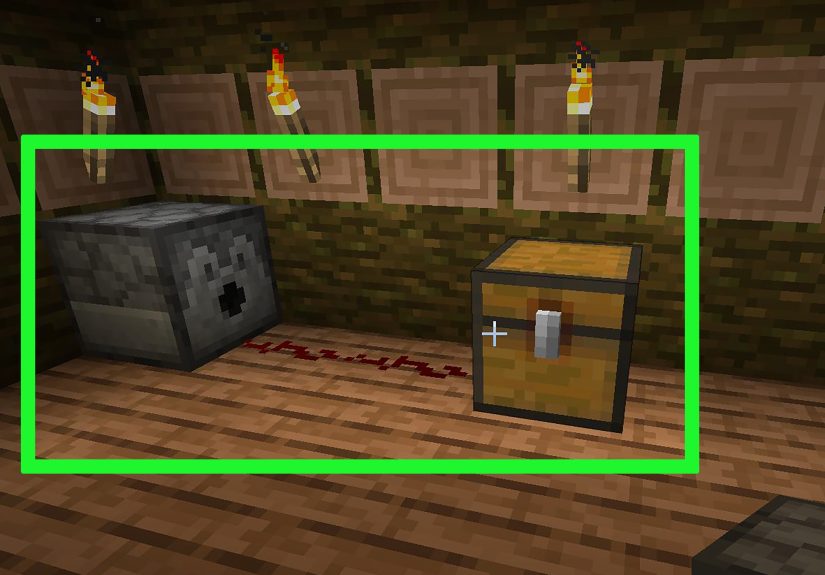
For example, place redstone dust behind a trapped chest and connect it to a redstone lamp. When the chest opens, the lamp turns on. That is the simplest demonstration of the block. From there, you can add a repeater to strengthen the signal, a piston to move blocks, a dispenser for an adventure map effect, or a note block for a loud “someone touched my diamonds” alarm.
A single trapped chest has the same storage capacity as a normal single chest: 27 slots. Two trapped chests can form a large trapped chest with 54 slots. Normal chests and trapped chests do not merge with each other, which can be useful when designing compact storage rooms because you can place regular and trapped chests next to one another.
Best Uses for a Trapped Chest
1. Build a Simple Storage Alarm
The easiest practical use is a storage alarm. Put a trapped chest in your base, run redstone dust from it to a note block or redstone lamp, and the system activates whenever someone opens the chest. In multiplayer, this can help you know when another player is checking your storage area.
For a cleaner setup, hide the wiring behind walls, under floors, or beneath carpets where possible. A visible redstone trail leading away from a chest is not exactly subtle. It is like putting a giant sign on your secret base that says, “Nothing strange here, please ignore the glowing dust.”
2. Create Puzzle Map Triggers
Trapped chests are excellent for adventure maps and puzzle rooms. You can make a door open only after the player checks a chest, trigger a hidden passage, activate a sound effect, or start a redstone sequence. This makes the chest feel like part of the story rather than just a container full of bread and suspiciously named sticks.
For example, you can place a trapped chest at the end of a dungeon room. When the player opens it, a hidden piston door reveals the next path. This feels natural because players already expect to open chests in dungeons. The redstone trigger turns a familiar action into a game mechanic.
3. Use It in Secret Doors
A trapped chest can function as a hidden switch. Instead of using a lever on the wall, which screams “secret door here,” use a trapped chest as the trigger. Opening the chest can power pistons that reveal a staircase, move a bookshelf wall, or open a hidden room behind your storage area.
This works especially well in survival bases because a chest does not look suspicious in a storage room. Of course, experienced players may notice the red latch, but many will walk right past it unless they are specifically looking for redstone tricks.
4. Add Flavor to Multiplayer Bases
In multiplayer, trapped chests are often used for harmless pranks, alerts, and themed builds. A trapped chest can ring a bell, flash lights, open a silly sign wall, or drop a funny item from a dispenser. The best multiplayer uses are creative without ruining anyone’s hard work. A good prank makes people laugh. A bad prank makes the server owner sigh like a tired librarian villager.
Always follow the rules of the server you play on. Some servers allow redstone pranks; others ban traps that damage players or destroy builds. When in doubt, use trapped chests for alarms, puzzles, and decorative redstone instead of destructive setups.
Trapped Chest vs Regular Chest
The main difference between a trapped chest and a regular chest is redstone output. A regular chest stores items and does not send a redstone signal when opened. A trapped chest stores items and does send a signal when opened. Visually, the trapped chest has a reddish latch, while the regular chest has a normal latch.
| Feature | Regular Chest | Trapped Chest |
|---|---|---|
| Stores items | Yes | Yes |
| Single chest slots | 27 | 27 |
| Large chest slots | 54 | 54 |
| Emits redstone when opened | No | Yes |
| Best use | Storage | Storage plus redstone triggers |
Common Mistakes When Making a Trapped Chest
Using the Wrong Ingredient
The trapped chest recipe requires a tripwire hook, not string by itself and not a lever. String is useful for tripwire systems, but the hook is the actual crafting ingredient for the trapped chest.
Expecting a Strong Long-Distance Signal
When one player opens a trapped chest, the signal strength is low. If your redstone line is too long, it may not activate the component you expect. Add a repeater near the chest to refresh and extend the signal.
Confusing Comparator Output with Opening Output
A trapped chest can emit power when opened, but a comparator can also read how full a container is. These are related redstone ideas, but they are not the same thing. If your build needs to detect whether someone opened the chest, use the trapped chest output. If your build needs to detect how many items are inside, use a comparator setup.
Making the Trap Too Obvious
The reddish latch is subtle, but visible. If your design depends on secrecy, place the trapped chest in a believable setting. A random trapped chest sitting alone in a stone hallway is not mysterious; it is suspicious with hinges.
Best Redstone Setup for Beginners
Here is a beginner-friendly setup that teaches the basic concept without complicated wiring:
- Place a trapped chest on the ground.
- Place redstone dust behind it.
- Place a repeater after the dust if you need a stronger signal.
- Connect the line to a redstone lamp or note block.
- Open the trapped chest and watch the lamp turn on or hear the note block play.
This small build is the best first test because it shows exactly what the trapped chest does. Once you understand that, you can replace the lamp with pistons, doors, droppers, or more advanced redstone logic.
Advanced Ideas for Trapped Chest Builds
Once you are comfortable with the basics, trapped chests can become part of more advanced builds. You can connect one to a hidden piston door, a secret staircase, a base alert system, a trading room indicator, or an item disposal system. In an adventure map, you can connect a trapped chest to command blocks if cheats and map tools are enabled. In survival redstone, you can combine it with repeaters, comparators, observers, and pistons to create clever interactions.
One useful idea is a private storage warning system. Place a trapped chest in a room and connect it to a redstone lamp in another area of your base. If someone opens the chest while you are nearby, the lamp turns on. Another idea is a puzzle chest that opens a hidden door only while the chest interface is open. That creates a timing challenge where the player must open the chest, trigger the mechanism, and move quickly.
You can also use trapped chests decoratively in storage rooms. Since regular chests and trapped chests do not merge with each other, alternating them can help you place chests more densely in some layouts. This is useful for compact storage designs where every block matters.
Frequently Asked Questions
Can you make a trapped chest without a crafting table?
Yes, if you already have a chest and a tripwire hook, you can combine them in a small crafting grid because the final recipe only uses two ingredients. However, making the chest and tripwire hook from raw materials usually requires a crafting table.
Can mobs activate a trapped chest?
In normal gameplay, mobs do not open chests the way players do, so they do not activate trapped chests by browsing the inventory. Trapped chests are mainly triggered by players accessing them.
Does a trapped chest explode by itself?
No. A trapped chest does not explode on its own. It only emits a redstone signal when opened. What that signal activates depends entirely on your build.
Can a trapped chest be used as normal storage?
Yes. You can use it exactly like a regular chest if you do not connect it to redstone. It still stores items normally.
How do you tell a trapped chest apart from a regular chest?
Look at the latch. A trapped chest has a faint red tint around the latch area. The difference is small, so it can be easy to miss, especially in dim lighting.
Extra Experiences: What I Learned Using Trapped Chests in Minecraft
The first time many players craft a trapped chest, they expect something dramatic to happen immediately. They place it down, open it, and then nothing explodes, no siren plays, no secret door opens, and no dramatic music starts. That is when the truth becomes clear: the trapped chest is not the whole trap. It is the button. More specifically, it is a button disguised as storage.
That mindset changes everything. Once you stop thinking of it as a “trap in a box” and start thinking of it as a hidden redstone trigger, the block becomes much more useful. In survival worlds, I like using trapped chests for quiet alerts. A note block connected under the floor can make a soft sound when someone opens a certain chest. It is simple, cheap, and does not require building a giant redstone wall that looks like spaghetti made of glowing dust.
Another useful experience is learning where not to place trapped chests. If the chest is sitting in the middle of an empty room with redstone dust visibly running behind it, even a brand-new player will suspect something. The best trapped chest setups blend into normal builds. Put one in a storage wall, a treasure room, a minigame lobby, or a dungeon corridor where a player already expects to find loot. The less dramatic the placement looks, the better the effect.
For beginner redstone builders, trapped chests are also a great training block because they teach cause and effect. Open chest, signal turns on. Close chest, signal turns off. That simple relationship helps players understand repeaters, redstone dust limits, powered blocks, and output direction. It is much easier to learn redstone from a trapped chest and lamp than from a massive piston door tutorial with 47 steps and one comment saying, “Doesn’t work in Bedrock.”
One of the best practical builds is a hidden entrance that opens while the chest is open. Place a trapped chest beside a wall, connect it to pistons, and make the wall shift when the chest is accessed. It feels smooth because opening a chest is a natural action. Instead of pulling a random lever, the player interacts with something that belongs in the room. That is the difference between a redstone build that works and a redstone build that feels clever.
In multiplayer, the best advice is to keep trapped chest builds fun and fair. Use them for alarms, jokes, puzzle triggers, and minigames. Avoid designs that destroy someone’s base or ruin their items unless the server specifically allows that kind of gameplay. Minecraft is more fun when people admire your cleverness instead of immediately typing angry messages in chat.
My favorite beginner-friendly trapped chest project is the “diamond alarm.” Place one trapped chest labeled as valuables storage, hide a redstone line under the floor, and connect it to a bell, note block, or lamp in another room. When someone opens the chest, the signal gives them away. It is not complicated, but it feels wonderfully sneaky. It also teaches an important Minecraft lesson: sometimes the smallest blocks create the funniest stories.
Conclusion
Learning how to make a trapped chest in Minecraft is simple, but learning how to use it well opens the door to clever redstone builds. The recipe only requires one chest and one tripwire hook, making it affordable even in early survival. Once crafted, the trapped chest works as both storage and a hidden trigger, sending out a redstone signal whenever a player opens it.
The best method is to craft a chest from eight planks, craft a tripwire hook from an iron ingot, stick, and plank, then combine the chest and hook. From there, you can create alarms, secret doors, puzzle triggers, storage indicators, and multiplayer prank systems. Keep your wiring clean, use repeaters when needed, and remember that the best trapped chest designs are the ones that look completely ordinary until the moment they are opened.
A trapped chest may be small, but in Minecraft, small blocks often create big ideas. And occasionally, big panic. Mostly ideas, though.






 Close
Close