
Table of Contents >> Show >> Hide
- First, Know When Sunflower Seeds Are Actually Ready
- Choose Your “Easy Way” Harvest Method
- What You’ll Need (Spoiler: Nothing Fancy)
- Step-by-Step: How to Harvest Sunflower Seeds the Easy Way
- How to Store Sunflower Seeds (So They Don’t Taste Like Old Cardboard)
- How to Roast Sunflower Seeds (Optional, But Delicious)
- Troubleshooting: Quick Fixes for Common Problems
- Quick FAQ
- Real-World Experiences: What Actually Makes Sunflower Seed Harvesting “Easy” (500+ Words)
- Wrap-Up
Sunflowers spend all summer being the overachievers of the garden: tall, sunny, and basically
posing for postcards. Then, right when you’re ready to cash in on those beautiful blooms, the birds
show up like, “Thanks for the snack bar!”
The good news: harvesting sunflower seeds is simple, satisfying, and surprisingly low-tech.
If you can operate a pair of pruners and locate a paper bag, you’re already qualified.
This guide walks you through the easiest ways to harvest, dry, and store sunflower seedswhether
you want to snack on them, save them for planting, or keep your backyard birds on your payroll.
First, Know When Sunflower Seeds Are Actually Ready
Harvesting is easy. Harvesting at the right time is the part that separates “beautiful bowl of seeds”
from “sad head of emptiness” (because squirrels) or “moldy science experiment” (because rain).
Look for these ready-to-harvest signs
- The flower head droops and looks heavy, like it’s taking a nap.
- Petals are mostly gone and the head looks dry instead of fresh.
- The back of the flower head changes color from green to yellow, then yellow-brown, then brown.
- The bracts (leafy bits behind the head) turn yellow/brown and feel papery.
- Seeds look plump and firm. If you rub a seed and it pops out easily, you’re close.
Timing varies by variety and weather, but many garden sunflowers are ready roughly a month after flowering finishes.
If you wait until the back of the head is mostly brown and dry, you’ll usually get the fullest, easiest harvest.
Choose Your “Easy Way” Harvest Method
There are two main approaches, and both work. The best one depends on how intense your local bird mafia is.
Method A: Dry on the plant (easy, but risky)
This is the “let nature do it” option. You leave the head on the stalk until it dries, then remove seeds.
The flavor can be great, but wildlife may beat you to it unless you protect the head.
Method B: Cut and dry indoors (still easy, much safer)
This is the “I would like to actually keep my seeds” option. You cut the head once it’s mature (often when the back turns yellow to yellow-brown),
then hang or cure it in a dry, airy spot until it’s fully dry and ready to rub out.
If you’re aiming for maximum convenience and minimum heartbreak, Method B is usually the winner.
What You’ll Need (Spoiler: Nothing Fancy)
- Pruners or a sharp knife (for cutting the head and a bit of stem)
- Paper bags, mesh bags, or cheesecloth (to protect heads and catch loose seeds)
- Twine, string, or rubber bands (to tie bags and hang heads)
- A large bowl or bucket (to catch seeds while you rub them out)
- Optional: gloves (sunflower heads can be scratchy), a stiff brush, a drying rack or baking sheet
Step-by-Step: How to Harvest Sunflower Seeds the Easy Way
Step 1: Protect the seed head (before the birds “help”)
As petals start browning and dropping, cover the head with a breathable barrier:
a paper bag, mesh produce bag, cheesecloth, or nylon netting. Secure it around the stem with twine or a rubber band.
Why breathable? Sunflower heads need airflow. Plastic traps moisture, and moisture invites mold.
Paper and mesh let the head dry while keeping seeds from disappearing.
Step 2: Cut the head at the right moment
For indoor drying, you don’t have to wait until the head is fully brown.
Many gardeners cut when the back is yellow to yellow-brown (mature but not fully dried), then finish drying indoors.
Cut the stem about 6–12 inches below the flower head. Leave enough stem to tie and hang.
Remove big leaves from the stem so they don’t hold moisture.
Step 3: Dry (cure) the head until it’s fully ready
Drying is what makes seed removal effortless. Hang sunflower heads upside down in a warm, dry, well-ventilated place:
a garage, shed, covered porch, or airy basement area works well.
- Keep them out of direct rain and away from high humidity.
- Keep them out of direct sunlight if you’re worried about overheating or uneven drying.
- Make sure there’s air movement. A small fan on low (not blasting) can help in humid climates.
Drying can take anywhere from several days to a few weeks depending on humidity, head size, and temperature.
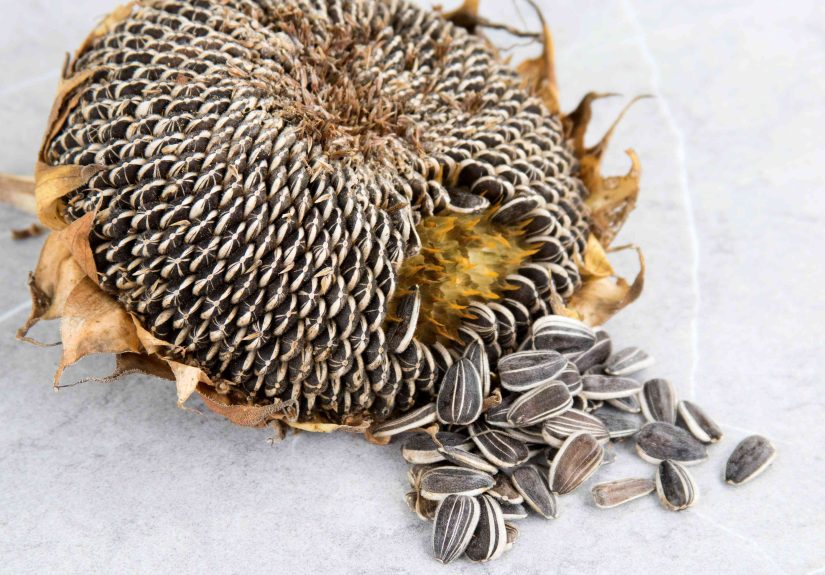
The head is ready when it feels dry and the seeds come out easily with rubbing.
Step 4: Remove the seeds (the fun, slightly messy part)
Set up a “seed station”: place a large bowl, bucket, or clean tote underneath your sunflower head.
Then use one of these easy methods:
- Hand rub: Rub the seed face with your palm or fingers and let seeds fall into the container.
- Brush method: Use a stiff brush to sweep seeds loose (great for stubborn heads).
- Two-head trick: Rub two dried sunflower heads together over a bucket to knock seeds free.
- Gentle tapping: Knock the back/edge of the head against a surface to loosen seeds (be kind; no need to go full drum solo).
Expect a little chaff (dry plant bits). That’s normal. You’re not failingyou’re just harvesting.
Step 5: Clean and dry the seeds again (especially if you’ll store them)
If you plan to store seeds (for snacking or saving), make sure they’re truly dry.
Damp seeds can spoil or mold in storage.
Quick cleaning:
- Pick out large pieces of plant material by hand.
- Pour seeds from one bowl to another in front of a light fan or breeze to blow away chaff (a simple “winnow” move).
Finish-drying:
- Spread seeds in a single layer on a baking sheet or tray.
- Let them air-dry for 24–48 hours in a cool, dry place (longer if your home is humid).
- They’re dry when the shells feel hard and don’t bend easily.
How to Store Sunflower Seeds (So They Don’t Taste Like Old Cardboard)
Sunflower seeds contain oils, which is why they taste greatand why they can go rancid if stored warm or exposed to air and light.
Storage success comes down to three words: cool, dry, airtight.
For eating (raw or roasted)
- Store in an airtight container (glass jar, sealed container, freezer bag).
- Keep in a cool pantry for short-term use.
- For longer storage, use the refrigerator or freezer to preserve flavor.
For planting next season
- Make sure seeds are very dry.
- Store in a labeled paper envelope (inside a jar or container works well).
- Keep them cool, dark, and dry until planting time.
Important seed-saving note: If your sunflower was a hybrid variety, saved seeds may not grow “true” next year.
You might still get sunflowers (often you will!), but they can look different than the parent plant. If you want consistency,
choose open-pollinated or heirloom varieties for seed saving.
How to Roast Sunflower Seeds (Optional, But Delicious)
You can eat sunflower seeds raw, but roasting turns them into the snack that mysteriously disappears in one afternoon.
There are lots of roasting styles. Here’s an easy, reliable approach for in-shell sunflower seeds.
Easy salted roast method
- Rinse seeds to remove debris.
- Optional salt soak: Soak in salted water (or simmer briefly) if you like classic salty shells.
- Drain and pat dry.
- Roast on a baking sheet in a single layer, stirring occasionally.
- Cool completely, then store airtight.
Roasting temperature and time can vary depending on your oven and seed size.
Many home recipes roast in the 300°F range for longer (to dry and toast without scorching),
while some go hotter for a shorter timejust keep a close eye so they don’t burn.
Troubleshooting: Quick Fixes for Common Problems
“Birds are eating everything.”
- Bag heads earlier (as petals start fading), not later.
- Use mesh/nylon netting if birds peck through paper.
- Consider cutting and drying indoors once the back of the head turns yellowish.
“My seeds look skinny or empty.”
- Harvest may have been too earlywait for fuller maturity next time.
- Drought or heat stress can reduce seed fill. Consistent watering during bloom helps.
- Poor pollination happens sometimes (especially with extreme weather). Planting more than one sunflower can improve pollination.
“I found mold on the head.”
- Increase airflow immediately (fan, drier spot, more spacing).
- Avoid plastic coverings and damp storage areas.
- Discard heavily moldy headsbetter safe than sorry for eating. For seed saving, only keep clean, fully dried seeds.
“Seeds won’t come out easily.”
- The head may need more drying time.
- Try the brush method or rub two heads together.
- Work over a bucket and take breaksthis is a marathon, not a speedrun.
Quick FAQ
Can I harvest sunflower seeds early and finish drying inside?
Yes. Many gardeners harvest once the head is mature (often when the back turns yellow to yellow-brown),
then dry indoors to avoid losing seeds to birds or bad weather.
What’s the easiest way to separate seeds from chaff?
Hand-pick the big bits, then pour seeds between bowls in front of a gentle fan or breeze.
The lightweight chaff lifts away; the seeds drop down like the sensible, heavier objects they are.
Can I harvest seeds from “black oil” birdseed-type sunflowers?
Absolutely. They’re usually smaller and thinner-shelled, but they still harvest the same way and roast nicely.
Real-World Experiences: What Actually Makes Sunflower Seed Harvesting “Easy” (500+ Words)
Gardening advice often sounds wonderfully simpleuntil you’re outside holding a sunflower head the size of a dinner plate
while wind blows seeds into your socks. So here are the kinds of real-world lessons home gardeners commonly learn
after harvesting sunflower seeds a few times. Consider this the “field notes” section: practical, a little messy,
and very useful.
1) The biggest harvest upgrade is bagging early. Gardeners who struggle the first year often wait too long to protect the head.
By the time the back is fully brown, birds have already been “sampling.” The best experiences usually come from
covering the heads as petals start fading and the center begins to dry. A simple paper lunch bag works surprisingly well,
especially if you poke a couple small air holes and tie it snugly. In areas with determined birds, a mesh produce bag or
nylon netting can be even better because it’s harder to peck through and dries quickly after dew.
2) Drying location matters more than people expect. A humid garage can slow drying so much that heads start to smell funky.
Gardeners in humid climates often report better results when they hang heads where air moves freelynear a cracked window,
under a covered porch, or in a shed with a small fan running on low. The fan doesn’t need to blast; it just needs to keep
air from sitting still. If the forecast is rainy for days, cutting and drying indoors sooner (at the yellow-back stage)
is often the difference between “snackable” and “compostable.”
3) The “bucket method” saves your sanity. People who try rubbing seeds out over a small bowl tend to end up with seeds everywhere
(counter, floor, hair, probably the dog). The easy trick is to use a wide container: a clean 5-gallon bucket, a storage tote,
or a large mixing bowl. Some gardeners put the whole head inside a big paper bag and rub the seeds out inside the baglike
a contained little seed tornado. It looks silly. It works brilliantly.
4) “Dry enough” is usually drier than you think. Many first-timers store seeds too soon. Experienced harvesters often do a two-stage dry:
first drying the head, then drying the loose seeds spread out on a tray for a day or two. This extra step helps prevent
surprise mold and off flavors. A common rule of thumb: if seeds feel cool or slightly damp to the touch, they’re not ready
for a sealed container yet. Air-dry longer.
5) Roasting is where personal style shows up. Some people love lightly toasted seeds that still taste “fresh.” Others want deep,
nutty crunch with plenty of salt. Gardeners who roast often mention two helpful habits: stirring during roasting to prevent hot spots,
and letting seeds cool completely before storage (warm seeds trapped in a jar can sweat, creating moisture). A fun bonus experience:
roasting sunflower seeds makes your kitchen smell like a cozy snack shopuntil you forget them for five minutes and it smells like
“campfire regret.” Set a timer. Future-you will be grateful.
6) Seed saving is exciting… and occasionally surprising. Gardeners who save seeds for planting often label everything immediately:
variety name, color, and year. (Because “tall yellow one” is not a reliable system by spring.) Another common experience is discovering
that some saved seeds don’t recreate the exact same sunflower if the original plant was a hybrid. Many gardeners still enjoy the results
sometimes you get fun variationsbut if you’re aiming for consistency (same height, same head size), open-pollinated varieties make the
process more predictable.
The overall takeaway from real harvest experiences is simple: sunflower seed harvesting becomes “easy” when you protect the head early,
dry with airflow, contain the mess with a big bucket or bag, and give seeds a little extra drying time before storage. Do that, and you’ll
spend less time chasing seeds around your kitchenand more time actually eating them.
Wrap-Up
The easy way to harvest sunflower seeds comes down to a few smart moves: wait for maturity, protect the head, dry it well, rub out seeds,
and store them airtight in a cool place. Do it once, and you’ll never look at a sunflower the same way againbecause now it’s not just a flower.
It’s a snack factory.





 Close
Close