
Table of Contents >> Show >> Hide
- Why Natural Ant Control Works Best When You Use a Strategy
- Step 1: Figure Out Why the Ants Are There
- Step 2: Remove Food, Water, and the “Welcome Mat”
- Step 3: Seal the Entry Points
- Step 4: Use Natural Ant Control Methods That Actually Help
- Natural Remedies That Are Usually Overhyped
- When Ants Are Telling You About a Bigger Problem
- How Long Does It Take to Get Rid of Ants Naturally?
- Ant Prevention Tips for the Long Haul
- Real-Life Experiences and Lessons From Fighting Ants Naturally
- Conclusion
Ants are tiny, organized, and wildly confident for creatures that weigh less than a bread crumb. One scout finds a drop of juice on your counter, and suddenly the entire colony shows up like they got a calendar invite. The good news is that natural ant control can work very well when you stop thinking like a person with a spray bottle and start thinking like a very annoyed ant traffic engineer.
If you want to know how to get rid of ants naturally, the real secret is not one magic ingredient from your pantry. It is a system. The most effective natural ant control combines cleaning, trail disruption, moisture control, entry-point sealing, and patient baiting when needed. In other words, you are not just chasing ants around the kitchen. You are cutting off their map, their snacks, their water, and their return ticket.
This guide walks through the natural ways to get rid of ants that actually make sense in real homes. No fluff, no fantasy, and no advice that sounds like it came from a wizard who lives in a spice rack.
Why Natural Ant Control Works Best When You Use a Strategy
Many homeowners look for a natural ant repellent and hope one strong smell will solve everything. Sometimes it helps for a day. Sometimes it helps for an afternoon. Sometimes it just makes your kitchen smell like a salad while the ants quietly reroute five inches to the left.
The better approach is integrated pest management. That means using several low-risk steps together instead of relying on one dramatic move. For ants, that usually means:
- Removing food and water sources
- Wiping up scent trails
- Blocking entry points
- Using low-toxicity bait or dust only when necessary
- Fixing the conditions that attracted ants in the first place
That is why the best natural ant killer is often not a killer at all. It is a clean counter, a dry sink, a sealed crack, and a colony that can no longer run a profitable snack route through your home.
Step 1: Figure Out Why the Ants Are There
Before you declare war, look for the reason they showed up. Most ants that wander indoors are not moving in because your home has “great vibes.” They are after food or water. Common attractions include pet food, fruit on the counter, syrup drips, dirty dishes, crumbs under the toaster, sticky trash lids, leaky pipes, damp windowsills, and potted plants with honeydew-producing pests like aphids.
Try to answer three questions:
Where are they coming from?
Follow the line of ants if you can. You may find a gap under a door, a crack along a baseboard, a window frame opening, or a branch touching the house outside.
What are they visiting?
If they are circling the dishwasher, maybe there is moisture. If they are marching toward the pantry, maybe there is sugar. If they are swarming a houseplant, check for sap-sucking insects.
What kind of ants are they?
You do not need to become an amateur entomologist overnight, but species matters. Tiny sugar-loving ants behave differently from carpenter ants. If you see large black ants, sawdust-like debris, or ants near damp wood, that can point to a moisture problem instead of just a snack problem.
Step 2: Remove Food, Water, and the “Welcome Mat”
If you want natural ways to get rid of ants, sanitation is not the boring step. It is the main event.
Clean Like Ants Are Tiny Detectives
Wipe counters, sweep floors, and clean under appliances. Store cereal, sugar, flour, snacks, and pet food in sealed containers. Rinse recycling. Empty the trash regularly. Wash sticky bottles before putting them back in cabinets. Even small residues matter because ants do not need a buffet. They need a speck.
Cut Off Water Sources
Fix drips under sinks, around dishwashers, near refrigerator lines, and at pet bowls. Dry out sponges at night. Empty standing water from trays and sinks. Ants often keep visiting places that seem “clean” because they are really there for moisture.
Wipe Out the Chemical Trail
Ants lay pheromone trails so the rest of the crew can follow. When you wipe the trail, you do not just clean the surface. You break the map. A simple solution of soapy water works well. A mild vinegar-and-water mix can also help remove the trail and temporarily disrupt activity. This is one of the easiest natural ant remedies, and it is one of the most useful.
Here is the catch: do not just kill the visible ants and call it a day. If the trail remains, more workers may show up and rebuild the route.
Step 3: Seal the Entry Points
Once you know where the ants are getting in, make the trip harder. Caulk cracks around windows, baseboards, and utility openings. Replace torn weather stripping. Repair screens. Tighten gaps under doors. Outside, prune branches and shrubs that touch the siding or roof. Think of this as closing the ant freeway exits.
Sealing does not always solve everything by itself, especially when ants are very small, but it is one of the best long-term ant prevention steps. It works even better after you have cleaned up the scent trail and removed the food source. Otherwise, you are basically locking one door while they keep trying to break in through the windows because the kitchen still smells like pancake syrup.
Step 4: Use Natural Ant Control Methods That Actually Help
Here is where people usually go straight to cinnamon, coffee grounds, mystery powders, or the kind of social media hack that sounds suspiciously invented in a group chat. Some natural methods are worth trying. Others mostly create a brief inconvenience for the ants.
1. Soapy Water
This is the MVP of natural ant control. It kills exposed ants quickly, helps remove pheromone trails, and does not leave a perfume-cloud mystery residue in your kitchen. Spray or wipe the visible trail, then dry the area thoroughly.
2. Vinegar and Water
Vinegar does not usually wipe out an entire colony, but it can help erase the trail and reduce repeat traffic. Use it on counters, windowsills, and other hard surfaces. Avoid delicate stone or surfaces that should not be cleaned with acidic products.
3. Food-Grade Diatomaceous Earth
Diatomaceous earth can be useful in dry areas such as cracks, crevices, entry points, and voids where ants travel. It works by damaging the insect’s protective outer layer, which causes dehydration. The important word here is dry. If it gets damp, it becomes much less useful. Apply lightly, keep it away from eyes and lungs, and do not treat it like fairy dust for the whole house.
It can help reduce ant traffic, but it is not always enough to eliminate a colony on its own. Think of it as a support player, not the lead singer.
4. Low-Toxicity Ant Baits
This may surprise people looking for “natural” solutions, but bait is often the most practical low-risk option for indoor ants. Why? Because contact sprays mostly kill workers you can see, while bait can be carried back to the nest and shared with the colony.
Many homeowners use bait stations with boric acid or borax-based products. These are especially useful for sugar-feeding ants. If you go this route, use contained bait stations rather than random blobs of homemade goo on food-prep surfaces. Place the bait near trails, away from children and pets, and be patient. The ants need time to find it, feed on it, and carry it back.
Do not spray vinegar, essential oils, or insecticides directly around active bait placements. If you contaminate or repel the foragers, the bait stops working. This is the classic human error in ant control: “Why is the bait not working?” Because we turned the bait area into a no-fly zone before the ants could do the dirty work for us.
5. Outdoor Tricks for Garden and Foundation Areas
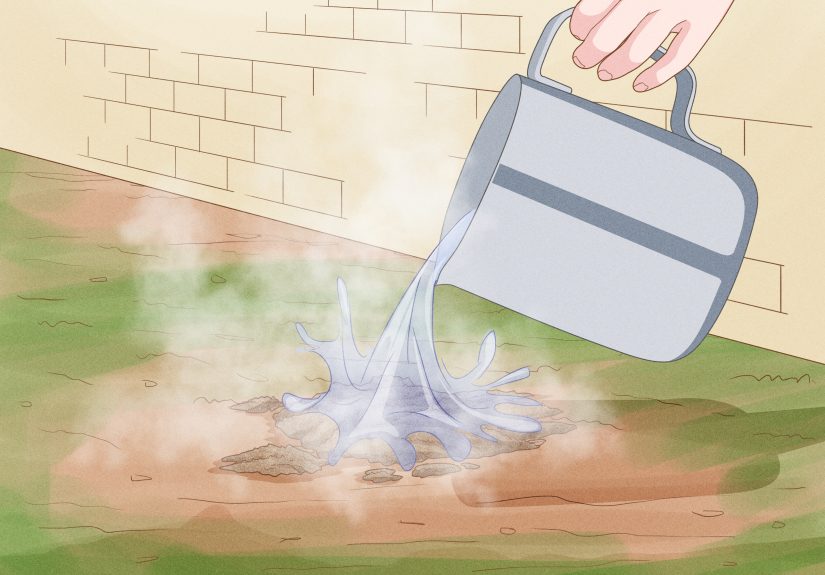
If ants are coming from outside, work on the exterior too. Keep mulch and thick vegetation from pressing against the foundation. Trim back branches touching the house. For plants, sticky barriers can help stop ants from climbing up trunks, especially when they are tending aphids for honeydew. If you have ant mounds in the yard, isolated nests may sometimes be reduced with boiling water, but use caution around roots, turf, and nearby plants.
Natural Remedies That Are Usually Overhyped
Let us have a respectful moment for the internet’s favorite ant remedies: cinnamon, random herbs, strongly scented oils, chalk lines, and all the other tricks that look dramatic in a 20-second video.
Some strong-smelling products may temporarily confuse foraging ants or push them off one path. That does not necessarily mean they solve the infestation. In many cases, they just encourage the ants to take a detour and continue their mission from a slightly more insulting angle.
That does not mean every smell-based deterrent is useless. It means you should see them as temporary helpers, not colony-ending solutions. If a method does not remove food, break the trail, block the entry, or affect the nest, it is usually a short-term nudge rather than a real fix.
When Ants Are Telling You About a Bigger Problem
Sometimes ants are not just a nuisance. They are a clue.
Carpenter Ants
Large ants indoors, especially near damp wood, windows, bathrooms, or roofs, may point to carpenter ants. These ants are strongly associated with moisture-damaged wood. If you keep seeing them, inspect for leaks, rotting trim, damaged siding, poor ventilation, or wood stored too close to the house.
Recurring Kitchen Ants
If ants return every few weeks, there may be a hidden source you have missed. Check under the stove, behind the refrigerator, inside the pantry corners, around recycling bins, and beneath pet feeding stations.
Fire Ants Outdoors
Fire ants are a different problem entirely. If you are dealing with aggressive ants in the yard that sting, general “natural remedies” may not be enough. Least-toxic options can help in some settings, but severe infestations often need a more targeted plan.
How Long Does It Take to Get Rid of Ants Naturally?
Usually not overnight. That is the honest answer.
If you are only wiping trails and cleaning surfaces, you may see improvement within a day or two. If you are using bait, expect more patience. It can take several days to a couple of weeks depending on the species, the colony size, how attractive the bait is, and whether you accidentally sabotaged the process by cleaning or spraying directly around the bait.
The goal is not dramatic instant revenge. The goal is fewer ants this week, no parade next week, and no encore performance next month.
Ant Prevention Tips for the Long Haul
- Wipe up crumbs and sticky spills promptly
- Store pantry foods in airtight containers
- Do not leave pet food out overnight
- Fix plumbing leaks and dry damp areas
- Seal cracks, gaps, and foundation openings
- Trim branches that touch the house
- Inspect indoor plants for aphids and scale
- Use bait early when you first notice a trail, not after the ants have opened a full-service branch office
Real-Life Experiences and Lessons From Fighting Ants Naturally
One of the most common experiences people have with ants is the “I cleaned everything, so why are they still here?” moment. The answer is usually that we cleaned for human eyes, not for ant senses. The counter may look spotless, but a sticky syrup ring under a bottle cap, a damp sponge by the sink, or a pet-food crumb under a cabinet can still be enough to keep the trail active. A lot of successful natural ant control comes from slowing down and looking for the tiny details that ants treat like treasure.
Another classic experience is trying one natural remedy, seeing a short burst of success, and then feeling betrayed when the ants return. This happens all the time with strong-smelling sprays. People spray vinegar or peppermint around a window, the ants vanish for a few hours, and everyone celebrates too early. Then the ants show up again near the outlet, the baseboard, or the other side of the same window. That is not failure. It is a clue that the colony is still nearby and the route was only redirected, not solved.
Homeowners who get the best results usually do three things at once: they clean the trail, remove the food source, and block the point of entry. When they also place a bait station correctly, the results improve dramatically. The hard part is patience. Ant bait often creates an awkward stage where there seem to be more ants at first. This makes people want to panic-clean, spray, stomp, and launch a final crusade. But that “feeding frenzy” is often part of the process. The foragers have found something they want to bring back, which is exactly the point.
There are also plenty of outdoor lessons. Many people focus only on the kitchen and forget the yard. Then they discover branches touching the roof, mulch piled against the siding, or ants farming aphids on plants right outside the window. Once those outdoor conditions are corrected, indoor activity often drops. Ants are efficient, not magical. If the route becomes longer, drier, and less rewarding, they often move on.
One especially important lesson comes from carpenter ants. People sometimes assume all ants are just a sanitation issue, but larger ants can be a moisture warning. A homeowner may battle the visible ants for weeks and then find a leak behind a window frame or in a bathroom wall. In that case, the natural fix is not only about the ants. It is about repairing the damp wood, improving ventilation, and removing the condition that made the area attractive in the first place.
The biggest takeaway from real-world ant battles is simple: natural ant control works best when it is boring, consistent, and slightly obsessive. Not glamorous. Not dramatic. Just effective. A sealed crack, a dry sink, a clean pantry shelf, and a correctly placed bait station will usually outperform a dozen random internet tricks. Ants are persistent, but they are also practical. Make your home less convenient, and they often decide somebody else’s kitchen is a better investment.
Conclusion
If you want to get rid of ants naturally, do not waste your time hunting for a miracle ingredient. Start with the basics that really matter: remove food and water, wipe up trails, seal entry points, and use low-risk methods like soapy water, vinegar, dry diatomaceous earth, or properly placed bait when needed. That is how you turn ant control from an endless game of kitchen whack-a-mole into a long-term fix.
And remember: the goal is not to impress the ants with your creativity. The goal is to make your home inconvenient, unrewarding, and totally off-brand for colony expansion.






 Close
Close