
Table of Contents >> Show >> Hide
- Why Proper Sharps Disposal Matters
- What Counts as a “Sharp” at Home?
- How to Dispose of a Sharps Container: 7 Steps
- Step 1: Start with the Right Container (Don’t Improvise with Flimsy Plastic)
- Step 2: Place the Container Where You Actually Use Sharps
- Step 3: Use-and-Drop Immediately After Each Injection or Stick
- Step 4: If You Don’t Have a Container in the Moment, Use a Safe Backup Plan
- Step 5: Seal the Container Before It’s Overfilled
- Step 6: Choose the Correct Local Disposal Route
- Step 7: Replace, Reset, and Keep a No-Drama Routine
- State-Law Reality Check: Why Your Neighbor’s Rule May Not Be Your Rule
- Common Mistakes to Avoid
- Quick FAQ
- Experience Section (Approx. ): What Real Households Learned the Hard Way
- Conclusion
- Research Institutions Synthesized (U.S.)
If you use insulin pens, injectable medications, fertility meds, migraine injectors, or even a lancet for blood sugar checks, you already know the tiny
objects involved are surprisingly dramatic. They’re small, sharp, and absolutely not welcome floating loose in a trash bag like they own the place.
Disposing of sharps correctly is one of those “boring but essential” routines that protects you, your family, sanitation workers, and pets.
The good news: safe sharps disposal is much easier than people expect. You don’t need a PhD in waste management or a hazmat suit. You just need a solid
routine, the right container, and a clear plan for where that full container goes in your city or state. This guide breaks everything down into seven
practical steps, plus real-world experiences that show what works in normal homes with normal schedules and very normal forgetfulness.
Before we start, one key truth: U.S. disposal rules vary by state and sometimes by county. So think of this article as your master playbook, then confirm
your local “final disposal” rule before you toss or drop off anything.
Why Proper Sharps Disposal Matters
A used needle in regular trash isn’t just “not ideal”it can injure people handling waste and create exposure risks. A puncture from a loose sharp can
happen to housekeepers, custodians, sanitation crews, or anyone moving trash bags. That’s why public health guidance emphasizes immediate containment and
sealed disposal.
In plain English: the safest needle is the one that goes straight from your hand into a secure sharps container, not onto a counter, not into a tissue,
and definitely not into a soda bottle that caves in like a lawn chair.
What Counts as a “Sharp” at Home?
A “sharp” is any item that can puncture skin. At home, that usually includes:
- Pen needles (insulin and other injectables)
- Syringes with attached needles
- Lancets and lancet devices
- Auto-injector needles after use
- Infusion set needles
Rule of thumb: if it pokes, it belongs in a sharps container. Cotton balls, wrappers, alcohol pads, and bandages do not belong in the sharps
container unless local/clinical guidance says otherwise.
How to Dispose of a Sharps Container: 7 Steps
Step 1: Start with the Right Container (Don’t Improvise with Flimsy Plastic)
The best option is an FDA-cleared sharps disposal container. These are made for puncture resistance, leak resistance, secure closure, and easier handling.
They’re sold at many pharmacies, medical supply stores, and online.
If you can’t get one immediately, many communities allow a heavy-duty household plastic alternative (like a detergent bottle) as a temporary solutionif
it is rigid, leak-resistant, closes tightly, stays upright, and is clearly labeled. Thin plastic, clear soft bottles, glass containers, and food bags are
poor choices and often prohibited.
Step 2: Place the Container Where You Actually Use Sharps
Put the container within arm’s reach of your injection/testing spot. If the container lives in another room, “I’ll do it in a second” becomes “where did
that lancet go?” in about 4.5 seconds.
Keep the container:
- Upright and stable
- Out of reach of kids and pets
- Closed between uses when possible
- Away from high-traffic surfaces where it can get knocked over
Step 3: Use-and-Drop Immediately After Each Injection or Stick
The safest routine is simple: use the sharp, then immediately drop it into the container. No recapping contests. No “I’ll put it there for now.”
No balancing act on the sink edge like it’s an Olympic event.
Immediate disposal sharply reduces accidental needle sticks and misplaced sharps. It also keeps your routine consistent, which matters on busy mornings or
travel days.
Step 4: If You Don’t Have a Container in the Moment, Use a Safe Backup Plan
Ideally, this never happens. Realistically, it happens to everyone once in a while. If no sharps container is available right away, use a safe temporary
strategy recommended by health authorities (for example, a secure temporary recap technique or a needle clipper when appropriate), then transfer to a
proper sharps container at the next opportunity.
Non-negotiables:
- Never throw loose sharps into regular trash
- Never put sharps in recycling
- Never flush sharps down the toilet
- Never leave used sharps loose on counters, in pockets, or in travel bags
Step 5: Seal the Container Before It’s Overfilled
Don’t wait until the lid barely closes. Most guidance recommends closing at the fill line or around three-quarters full. Overfilling increases puncture
risk when people try to force one more item in.
Once near capacity:
- Close the lid fully
- Secure it according to instructions (tape may be needed for household alternatives)
- Label clearly if required by local rules (for example, “SharpsDo Not Recycle”)
- Store safely until final disposal
Step 6: Choose the Correct Local Disposal Route
This is where most confusion happens. A full sharps container does not have one universal U.S. endpoint. Depending on where you live, acceptable
options may include:
- Drop boxes or supervised collection sites (pharmacies, clinics, hospitals, health departments)
- Household hazardous waste programs (where accepted)
- Mail-back programs for approved containers
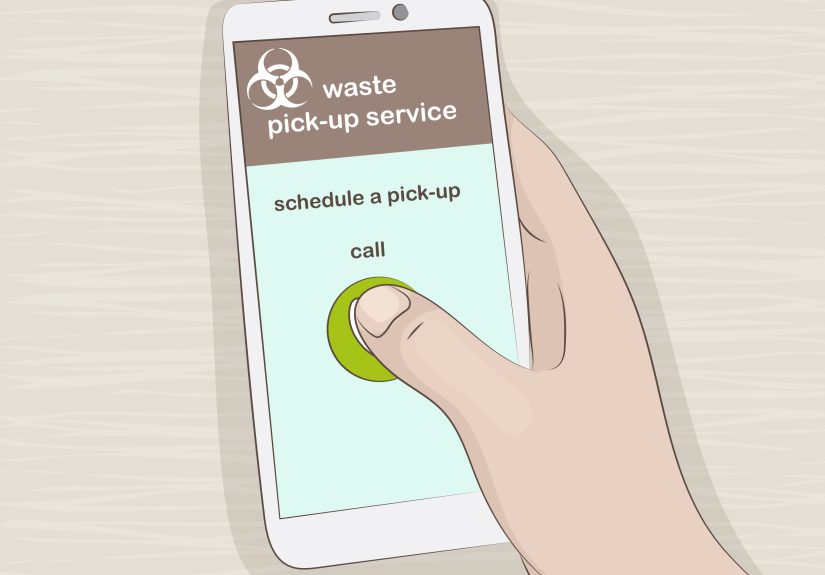
- Residential special waste pickup services
- Last-resort household trash disposal in sealed, approved-style containers only where local rules allow
Your fastest path to the correct answer is to check your state/county health or environmental agency and use a state-by-state locator for sharps programs.
Call sites before visitinghours and accepted container types can change.
Step 7: Replace, Reset, and Keep a No-Drama Routine
The best sharps disposal system is boring, repeatable, and always ready.
- Put a new container in place immediately after disposing of a full one
- Keep a small travel-size container in your bag or car kit
- Teach household members your disposal rule: “If it pokes, it goes in the sharps container”
- Set a reminder to check fill level weekly
This turns disposal from a stressful once-in-a-while task into a clean habit that runs in the background of daily life.
State-Law Reality Check: Why Your Neighbor’s Rule May Not Be Your Rule
One of the biggest myths is “everyone disposes sharps the same way.” Not true. Examples across the U.S. show major differences:
- New York: Hospitals and nursing homes are required by law to accept household sharps as a free community service.
- Massachusetts: Statewide restrictions prohibit putting household sharps in regular trash/recycling streams.
- California: Home-generated sharps are specifically regulated, with approved consolidation points in many jurisdictions.
- Florida: Provides a “last resort” trash method in rigid sealed containers only if county rules permit and safer options are unavailable.
- Texas: Offers detailed household do’s/don’ts and distinguishes household sharps from sharps generated by home health professionals.
- Illinois: Supports local residential sharps collection programs through state funding and collection stations.
Translation: always confirm local guidance before final disposal, even if your cousin in another state swears “this is how everyone does it.”
Common Mistakes to Avoid
1) Waiting too long to get a container
Fix: Buy twoone active, one backup.
2) Using unsafe containers
Fix: Choose FDA-cleared first; if using a temporary household alternative, make sure it meets local standards.
3) Overfilling
Fix: Seal near three-quarters full or at the marked line.
4) Assuming all pharmacies accept sharps
Fix: Call ahead. Participation varies by program and location.
5) Confusing medicine disposal with sharps disposal
Fix: Different streams, different rules. Needles go in sharps programs; medications often use take-back or specific household disposal guidance.
6) Tossing sharps “just this once” in the trash
Fix: “Just once” is when injuries happen. Keep disposal simple enough that doing the right thing is easy every time.
Quick FAQ
Can I use a laundry detergent bottle as a sharps container?
In many areas, yesas a temporary alternative if it is rigid, leak-resistant, puncture-resistant at the lid, closable, and properly labeled. But check
local rules first.
Can I recycle a sealed sharps container?
No. Sharps containers and sharps are not recyclable.
Do I need to label the container?
Often yes, especially for alternative household containers. Many programs recommend clear labeling such as “Sharps” and “Do Not Recycle.”
What if I travel with injectable medication?
Carry a small travel sharps container. Use and dispose immediately, then transfer/dispose according to your destination’s local rules.
What if a local site refuses my container?
Ask why (container type, seal, fill level, labeling) and use your state program locator to find a site that matches your container type.
Experience Section (Approx. ): What Real Households Learned the Hard Way
Experience 1: The Kitchen Counter “Temporary Spot” Problem
A family managing two chronic conditions kept used pen needles in a ceramic cup for “same-day disposal.” The cup lived next to the coffee maker. One rushed
morning, a teenager reached for a spoon, bumped the cup, and needles spilled. Nobody was seriously hurt, but the scare changed their system overnight.
They moved to a wall-mounted sharps container near the medication station and made a simple household rule: no stops between use and disposal. Within a
week, the whole process felt natural. What surprised them most wasn’t the containerit was how much stress disappeared once the routine became automatic.
Their takeaway: convenience beats good intentions every time.
Experience 2: “I’ll Fill It All the Way” Backfired
A caregiver trying to save money kept pushing a container past the fill line. The lid still shut, so it seemed fine. During final sealing, one needle tip
caught near the opening and nicked a glove. No injury beyond a scratch, but it was enough to reset the approach. They now close containers at about
three-quarters full and store an unopened spare in the same cabinet. Counterintuitively, they didn’t spend more over time because they avoided emergency
runs and used the right-size container for their weekly volume. Their takeaway: overfilling is false economy; predictable replacement is safer and calmer.
Experience 3: Pharmacy Assumptions vs. Real Program Rules
One patient drove to a nearby pharmacy expecting quick drop-off, only to learn that location sold sharps containers but did not accept full ones.
Frustrating? Absolutely. Useful? Also yes. They called county waste services, found a supervised collection site two miles away, and saved the number in
their phone. They also learned that some programs accept only specific container types. Now they call before every first-time drop-off and keep a short
checklist in their glove compartment: accepted container type, operating hours, fees, and whether ID is required. Their takeaway: “pharmacy” does not
automatically mean “drop-off”verify first, then drive.
Experience 4: Travel Kit That Prevented a Mess
A frequent traveler using injectable medication used to improvise with zipper pouches and “deal with it later.” On one work trip, a hotel housekeeping
close call convinced them to build a proper travel kit: mini sharps container, alcohol wipes, backup supplies, and a printed note with home-state disposal
resources. Since then, no loose sharps, no awkward front-desk conversations, and no panic packing. They also check destination rules for final disposal if
the container fills before they return home. Their takeaway: a tiny portable container solves giant avoidable problems.
Experience 5: Family Training Made the Biggest Difference
In a multigenerational home, only one person handled injections, but everyone handled trash. After a close call with a bagged needle cap and lancet,
they held a five-minute “sharps safety huddle” at dinner. They demonstrated the container, explained the “if it pokes, it goes here” rule, and posted a
note near the disposal area. Kids learned not to touch medical waste. Grandparents learned where backup containers were stored. The result wasn’t just
fewer errorsit was shared confidence. Their takeaway: sharps safety is a household system, not a solo task.
Conclusion
Safe sharps disposal is less about one big decision and more about seven small decisions repeated consistently: right container, smart placement, immediate
drop-in, safe backup plan, no overfilling, correct local disposal route, and routine reset. Do those seven steps and you dramatically reduce risk without
adding chaos to your day.
If you remember only one sentence, make it this: Never leave sharps loose, and never guess the final disposal ruleverify local guidance.
That one habit protects your home and everyone downstream from your trash bag.
Research Institutions Synthesized (U.S.)
This article synthesizes guidance from U.S. public health and regulatory sources, including FDA, CDC/NIOSH, EPA, MedlinePlus (NIH/NLM), California
Department of Public Health, New York State Department of Health, Florida Department of Health, Texas Commission on Environmental Quality, Illinois EPA,
Massachusetts public health guidance, and SafeNeedleDisposal (NeedyMeds state-by-state locator framework).






 Close
Close