
Table of Contents >> Show >> Hide
- Introduction: When Radar Becomes a Beacon
- What Is AARGM-ER?
- How Turning Radar Against a Target Works
- Why This Matters for Ship Defense
- AARGM-ER Versus Traditional Anti-Ship Missiles
- The Aircraft That Could Carry It
- Why the “New” Missile Has Old Roots
- The Strategic Message: Hide, Emit, or Move?
- Why Electronic Warfare Is the Real Main Character
- Limitations: No Missile Is Magic
- Why the U.S. Navy Wants This Capability
- Specific Public Examples Without the Hollywood Fog Machine
- The Human Experience of Understanding This Technology
- Conclusion: The Radar Trap Is the Point
Editor’s note: This article is a high-level public-information overview for general readers. It avoids operational instructions, sensitive technical details, and any guidance on weapon use.
Introduction: When Radar Becomes a Beacon
Modern warships are floating cities of sensors. Their radars scan the sky, watch the horizon, track aircraft, guide defensive weapons, and help commanders understand what is happening around them. In peaceful language, radar is a ship’s eyesight. In less peaceful language, radar can also become a neon sign that says, “Hello, I am over here.” That is the idea behind the U.S. military’s newest generation of radar-hunting missile technology: turn the target’s own emissions into a pathfinder.
The missile most often discussed in this context is the Advanced Anti-Radiation Guided Missile-Extended Range, commonly known as AARGM-ER. It is connected to a long family of U.S. anti-radiation missiles, weapons designed to detect hostile radar emissions and attack the source. Unlike older weapons that depended more heavily on an active radar signal staying on, the newer generation uses a mix of sensing and navigation methods to keep pursuing a target even when the radar operator tries the classic “oops, nobody’s home” trick by shutting down the emitter.
That makes the concept especially interesting at sea. A warship that keeps radar running may improve its awareness, but it may also reveal itself to electronic sensors. A warship that shuts radar down may reduce its electronic signature, but it risks becoming less aware of fast-moving threats. It is a bad choice sandwich, and nobody ordered extra pickles.
What Is AARGM-ER?
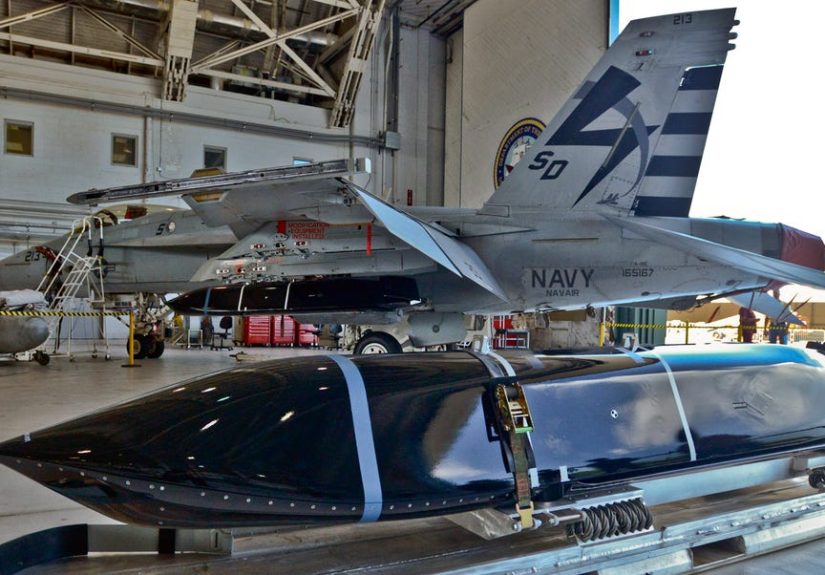
AARGM-ER is an air-launched, extended-range anti-radiation missile developed for U.S. naval aviation and future joint use. It builds on the earlier AGM-88 HARM and AGM-88E AARGM families, but it is not simply an old missile wearing a new jacket and sunglasses. The extended-range model uses a redesigned airframe, upgraded propulsion, modern guidance concepts, and compatibility planning for aircraft such as the F/A-18E/F Super Hornet, EA-18G Growler, and F-35 variants.
The mission category is usually described as Suppression or Destruction of Enemy Air Defenses, often shortened to SEAD and DEAD. In plain American English: make radar-guided threats less useful, less confident, or no longer functioning. Traditionally, this mission focused on land-based air defense radars, but modern naval warfare has blurred the line between “air defense network” and “ship defense network.” A surface combatant with powerful radar is not just a ship; it is a moving sensor node in a larger battlespace.
That is why people call this kind of weapon a potential “ship-killing missile,” although that phrase needs context. It is not a general magic wand for every ship problem. Rather, it is designed to exploit one very important weakness of radar-dependent systems: to detect, track, and coordinate, they often have to emit energy. When they emit, they can be found.
How Turning Radar Against a Target Works
Radar Is Useful Because It Transmits
Radar works by sending out radio-frequency energy and analyzing what bounces back. That is wonderfully useful for detecting aircraft, missiles, and surface contacts. The catch is simple: transmitting energy can reveal the transmitter. A radar can be sophisticated, mobile, and hard to interpret, but it is still doing something that electronic sensors can notice.
Older anti-radiation missiles followed radar emissions like a hound following a scent trail. The target’s radar signal gave the missile a direction to pursue. This created a brutal dilemma for radar operators: keep the radar on and risk being attacked, or shut it off and reduce the effectiveness of the defense system. Either way, the attacker gains something.
The Shutdown Problem
For years, defenders tried to counter radar-homing weapons by shutting down radars, changing emission behavior, moving systems, or using decoys and deception. That is where newer missiles become more concerning for the defender. A modern multi-mode missile is not limited to one cue. Public information about the AARGM family describes a combination of anti-radiation homing, GPS-assisted inertial navigation, and terminal sensing technologies. In general terms, that means the missile can use the radar emission to locate the target area, rely on onboard navigation when the signal changes, and use additional sensing near the end of flight to improve target discrimination.
This is the technological heart of the phrase “turns targets’ radar against them.” The target’s radar helps reveal the target. Once that has happened, shutting the radar down may not be enough to erase the problem. It is a little like posting your location online, deleting it five seconds later, and hoping nobody took a screenshot. Spoiler: somebody probably took a screenshot.
Why This Matters for Ship Defense
Warships depend heavily on radar because the ocean is vast, aircraft are fast, and missiles are rude little physics experiments with guidance systems. Shipboard radar helps detect threats at distance, coordinate with other vessels, guide defensive interceptors, and manage a crowded tactical picture. Without radar, a ship is not blind, but it may be forced to rely more heavily on other sensors and offboard information.
A radar-hunting missile changes the emotional weather inside that decision. If a ship radiates continuously, it may become easier to locate. If it reduces emissions, it may sacrifice some awareness. This is not just about destroying a single radar. It is about creating pressure inside the entire defensive system. The best modern weapons do not merely hit metal; they attack decision-making.
That pressure matters in the Indo-Pacific, the Red Sea, and other maritime theaters where U.S. forces are thinking hard about long-range missiles, electronic warfare, distributed operations, and contested sensor networks. In a modern fight, finding the target is often as important as hitting it. A missile that can exploit emissions fits into a larger shift from platform-versus-platform combat to network-versus-network competition.
AARGM-ER Versus Traditional Anti-Ship Missiles
Not every anti-ship missile thinks the same way. Traditional anti-ship cruise missiles may use radar, infrared sensors, stored target data, or other methods to locate and strike vessels. The well-known LRASM, for example, is discussed publicly as a stealthy, long-range anti-ship missile with autonomous targeting features. Harpoon has served for decades as a classic Western anti-ship missile. Naval Strike Missile and similar systems emphasize sea-skimming flight and target recognition.
A radar-hunting weapon approaches the problem differently. It is especially interested in emitters: radars, command nodes, and systems that reveal themselves through electromagnetic activity. This does not make it “better” in every scenario. It makes it different. Against a radar-active target, it creates a unique dilemma. Against a silent or cleverly managed target, it must rely on other parts of its guidance package and the broader targeting system that supports it.
That distinction is important for readers because military technology is often described online as if every new missile is a dragon-slaying superpower. Real life is more complicated and, frankly, less interested in YouTube thumbnails. Weapons are designed for roles. AARGM-ER’s role is not simply “sink everything.” Its public mission is to defeat radar-based threats and air defense systems, with possible maritime relevance because ships are packed with radars and electronic systems.
The Aircraft That Could Carry It
Public Navy information links AARGM-ER integration with the F/A-18E/F Super Hornet and EA-18G Growler, with F-35 compatibility also discussed. This matters because the missile is part of an aircraft-and-network ecosystem. The Super Hornet brings carrier-based strike capacity. The Growler brings electronic attack and spectrum warfare expertise. The F-35 brings stealth, sensors, and data-sharing potential. Together, these aircraft represent different ways of finding, confusing, pressuring, and striking radar-based threats.
Again, the key point is not a movie-style lone pilot firing one wonder weapon while dramatic music plays. Modern air and naval operations are team sports. Sensors, aircraft, ships, satellites, electronic warfare systems, and command networks all contribute. The missile is the sharp end of a much larger spear.
Why the “New” Missile Has Old Roots
AARGM-ER is new, but the concept behind anti-radiation missiles is not. The U.S. military has been interested in radar-hunting weapons since the Cold War, when surface-to-air missile systems became a major threat to aircraft. The original HARM family gave aircraft a way to threaten radar operators who turned on their systems. Over time, the cat-and-mouse game became more advanced.
Defenders learned to shut down radars, move, disguise emissions, and use integrated networks. Attackers responded with better seekers, better navigation, improved onboard processing, and weapons designed to remain useful even when the signal environment gets messy. AARGM-ER is part of that evolution. It reflects a world where radar is not just a sensor; it is a contested signal in a crowded electromagnetic battlefield.
The Strategic Message: Hide, Emit, or Move?
The most important effect of a radar-hunting ship-killing capability may be psychological and operational. It forces defenders to make uncomfortable choices. A ship commander may need radar to detect threats, but that radar can also attract attention. Turning it off can reduce exposure, but it may also weaken the defensive picture. Moving helps, but movement is not invisibility. Decoys help, but decoys are not miracles. In modern warfare, the side that creates more bad choices for the other side often gains the upper hand.
This is why AARGM-ER matters beyond its hardware. It is part of a wider U.S. push to improve long-range precision strike, electronic warfare, and survivability in contested areas. The missile’s value is not just that it may destroy a radar. Its value is that it can make radar use feel risky at the exact moment a defender needs radar most.
Why Electronic Warfare Is the Real Main Character
Missiles get the headlines because missiles look dramatic. Electronic warfare gets fewer posters, fewer action figures, and tragically fewer coffee mugs. Yet the electromagnetic spectrum is where much of the modern fight begins. Before a missile flies, someone has to find, classify, track, and understand the target. Before a ship defends itself, it has to detect the incoming threat. Before aircraft can enter a defended area, they have to deal with radar, jamming, deception, and data links.
A radar-homing missile is therefore not just a weapon; it is a spectrum warfare tool. It punishes emission. It complicates the defender’s sensor plan. It supports aircraft trying to survive in heavily defended airspace. And when maritime targets depend on powerful radars, the same logic applies at sea.
Limitations: No Missile Is Magic
For all the excitement, it is important not to turn AARGM-ER into a superhero with fins. Real-world effectiveness depends on targeting quality, environmental conditions, integration with aircraft, electronic countermeasures, defensive systems, tactics, training, rules of engagement, and many other factors that do not fit neatly into a viral headline.
Ships can use emission control, decoys, maneuver, layered defenses, networked sensors, and electronic protection. Radar-hunting weapons can be powerful, but defenders are not cardboard cutouts waiting politely to be hit. The ocean is complicated. Signal environments are complicated. Military procurement is also complicated, but that is less “Top Gun” and more “spreadsheet with coffee stains.”
Recent public reporting has also discussed procurement pauses, testing milestones, and schedule changes. That is normal for advanced weapons development. A missile that combines speed, range, survivability, and multi-mode guidance is not built with a weekend trip to the hardware store. It takes years of testing, software refinement, manufacturing adjustments, and budget decisions.
Why the U.S. Navy Wants This Capability
The Navy’s interest is easy to understand. Potential adversaries are building dense air defense networks, long-range missiles, maritime surveillance systems, and radar-equipped ships. Carrier aircraft must be able to operate in areas where the sky is watched, tracked, and contested. A missile that can threaten radar systems from farther away helps aircraft avoid getting too close to the most dangerous parts of an enemy defense network.
For naval warfare, the same logic supports sea control. If a hostile ship’s radar becomes a vulnerability, that ship may be less willing to radiate freely. If it radiates less, it may become less effective as part of a larger defensive web. That can open space for other operations, from aircraft movement to broader maritime maneuver.
Specific Public Examples Without the Hollywood Fog Machine
Public Navy and industry materials have described AARGM-ER testing from Super Hornet aircraft at U.S. test ranges, including Point Mugu. The missile has moved through captive-carry events, live-fire testing, production decisions, and continuing integration work. Public contract announcements have also shown purchases for both Navy and Air Force quantities, along with training rounds, test equipment, and support materials.
These examples matter because they show that AARGM-ER is not merely a concept sketch on a defense contractor’s whiteboard. It has been flight-tested, approved for early production phases, and linked to multiple U.S. and allied aviation plans. At the same time, public reporting about delays and budget pauses reminds readers that “new missile” does not automatically mean instant mass deployment. Military capability arrives through a pipeline, not a magic portal.
The Human Experience of Understanding This Technology
For readers who follow defense technology from the outside, AARGM-ER is fascinating because it changes the way we think about visibility. Most people imagine hiding as a visual problem: paint it gray, keep it low, move at night, avoid being seen. But in modern naval warfare, visibility is also electronic. A ship can be over the horizon and still be “visible” if its emissions are detected. That idea feels strange at first, because radar is usually explained as a tool for seeing others. The twist is that the act of seeing can reveal the seer.
That lesson has a broader, almost everyday quality. Turn on a phone, connect to Wi-Fi, use GPS, ping a tower, and suddenly technology creates a trail. Military systems are far more complex, secure, and specialized, but the basic idea is familiar: signals create information, and information can expose patterns. A radar-hunting missile is a dramatic military expression of a simple truth from the digital age: broadcasting has consequences.
The second experience is realizing how much of modern defense is about choices under pressure. A ship commander is not simply deciding whether to “use radar” or “not use radar.” The decision involves threat awareness, crew safety, mission goals, coordination with other forces, and the possibility that the enemy is trying to manipulate every option. This is why the story is more interesting than a gadget article. The missile matters because it changes behavior. It may cause a defender to hesitate, relocate, switch sensors, use decoys, or depend more on outside information. The weapon’s influence begins before impact.
The third experience is humility. Public articles can explain concepts, but they cannot capture the full classified reality of modern electronic warfare. Readers should be careful with anyone online who speaks with total certainty about exact performance, secret tactics, or guaranteed outcomes. The more confident the armchair admiral, the more likely the chair is doing most of the work. Responsible analysis recognizes what is public, what is inferred, and what remains unknown.
Finally, AARGM-ER shows why the future of naval warfare will not be decided only by bigger ships or faster missiles. It will be shaped by sensing, data, emissions, deception, resilience, and the ability to operate when the electronic environment becomes chaotic. The ship that wins may not be the loudest emitter or the most silent ghost. It may be the force that manages information better, shares it faster, protects it smarter, and makes the opponent’s sensors feel like liabilities instead of strengths.
Conclusion: The Radar Trap Is the Point
The U.S. military’s new radar-hunting missile technology is important because it attacks more than hardware. It attacks confidence. A radar-dependent target must decide whether to keep emitting and risk being found, or go quiet and risk losing awareness. That dilemma is the real weapon. AARGM-ER represents a modern approach to ship-killing and air-defense suppression: use the target’s own electronic behavior as part of the targeting problem.
In an age when naval battles may begin long before ships see each other, radar emissions are no longer just helpful signals. They are clues, fingerprints, and sometimes invitations. AARGM-ER is built around that uncomfortable reality. It turns radar from a shield into a possible vulnerability, which is exactly why commanders, analysts, and defense watchers are paying attention.







 Close
Close