
Table of Contents >> Show >> Hide
- The Headline Is Wilder Than the Medical Reality
- What Actually Happens to Memory After a Severe Brain Injury?
- Why His Wife Felt Like a Stranger
- What Recovery Really Looks Like
- Other Real-Life Stories That Show This Is Not Pure Fiction
- Why Stories Like This Spread So Fast
- What Readers Should Take Away
- Related Experiences: What It Feels Like When Life Keeps Going Without You
- SEO Tags
Some headlines arrive like they’ve had three energy drinks and no adult supervision. This is one of them. The phrase “wakes up after 39 years in a coma” sounds like a medical version of time travel, complete with a bewildered husband, a “stranger” wife, and a world that now contains smartphones, streaming apps, and entirely too many passwords. But the real story behind this viral headline is both more believable and, honestly, more heartbreaking.
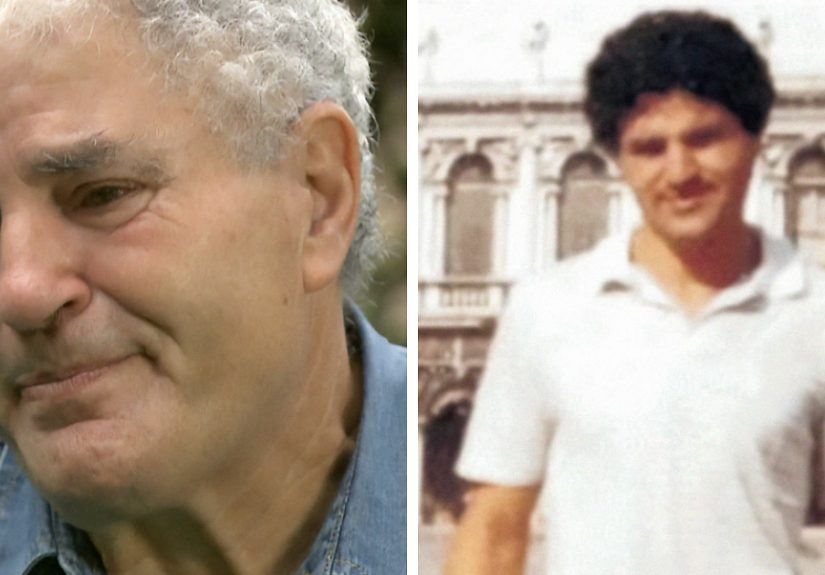
The case that inspired the buzz centers on Luciano D’Adamo, an Italian man who was struck in a 2019 hit-and-run and later woke up believing it was still 1980. He did not experience a clean, movie-style jump from the 1980s straight into modern life because he had literally remained in a coma for 39 years. Instead, the documented issue was a traumatic brain injury and a devastating memory gap that erased nearly four decades of his life. In other words, this was less Rip Van Winkle and more “your brain deleted the family scrapbook and left the emotional receipts behind.”
That distinction matters. It matters for readers, for families navigating brain injury, and for anyone who has ever mistaken a clicky headline for a complete medical explanation. So let’s unpack what really makes this story so unsettling, why his wife felt like a stranger, what severe memory loss after brain trauma can actually look like, and why recovery is usually a long, messy, deeply human process rather than a cinematic reveal with dramatic background music.
The Headline Is Wilder Than the Medical Reality
What makes this story so gripping is not a literal 39-year coma. It is the brutal gap between a person’s internal clock and the world outside. When D’Adamo regained consciousness after the 2019 crash, he reportedly believed he was still in 1980, still a young man, and still attached to the version of life he remembered before the accident. That meant the woman beside him, who was in fact his wife, did not match the girlfriend he remembered. His children did not fit his timeline either. He had not “slept through” marriages, parenthood, aging, and history. His brain simply no longer held those years in a usable way.
This is exactly where viral storytelling tends to get sloppy. In everyday conversation, people use the word coma as a catchall for any prolonged, severe brain injury. Medicine does not. A coma is a state of deep unresponsiveness. People in a coma cannot be awakened and do not interact with their environment. Clinicians also distinguish coma from vegetative state and minimally conscious state, which involve different levels of wakefulness and awareness. Those distinctions are not just technical details for neurologists at conferences. They shape prognosis, treatment, and how families understand what is happening.
Why “39 Years in a Coma” Is So Misleading
Severe brain injuries can absolutely lead to coma, confusion, memory loss, and prolonged disorders of consciousness. But “39 years in a coma” is the kind of phrase that sticks because it is dramatic, not because it is medically precise. In most cases, coma is an acute state. Patients who remain deeply impaired for longer periods are typically described using more specific terms, including vegetative state or minimally conscious state. That is why the viral wording feels enormous, but the verified reality is more nuanced and more medically grounded.
And nuance, inconveniently enough, rarely goes viral.
What Actually Happens to Memory After a Severe Brain Injury?
Traumatic brain injury can disrupt memory in several ways. Some people lose memories from before the injury, which is called retrograde amnesia. Others struggle to form new memories after the injury, which is called anterograde amnesia. Some experience both. The pattern depends on what part of the brain was affected, how severe the injury was, and what complications followed.
That is why cases like D’Adamo’s feel so eerie. A person may be awake, speaking, and physically present, yet still be separated from large chunks of identity. They may remember childhood, early adulthood, and old routines, but not the spouse they built a life with, the child they raised, or the aging face in the mirror. Imagine opening your eyes and discovering that your memory stopped decades before your body did. Your knees have miles on them, your hairstyle has seen things, and the teenager in your head has apparently been replaced by a tax-paying adult. That is not just forgetfulness. That is an identity earthquake.
Medical guidance on amnesia also reminds us that brain-injury-related memory loss is not neat or theatrical. It can come with confusion, language problems, reduced attention, poor processing speed, and emotional distress. The missing years may not return in one glorious montage. Sometimes they come back in fragments. Sometimes they do not. Sometimes families rebuild a life through photographs, repeated stories, and patient repetition, which is heroic but also exhausting.
Why Familiar Faces Can Feel Unfamiliar
When readers latch onto the phrase “stranger wife,” what they are really reacting to is the collapse of emotional continuity. Marriage is not only a legal status. It is thousands of accumulated memories: the jokes only two people understand, the fights about absolutely nothing, the grocery orders, the birthdays, the hospital visits, the random Tuesdays. Strip away the memory scaffolding, and the relationship may remain real in every practical sense while feeling emotionally unanchored to the injured person.
That does not mean love is fake. It means memory is one of the engines that lets recognition feel warm instead of merely factual. You can be told, with total accuracy, “This is your wife,” and still feel like someone handed you a biography instead of a relationship.
Why His Wife Felt Like a Stranger
This may be the most painful part of the story. Headlines treat it like a plot twist. Families experience it like grief wearing a nametag.
For the spouse, there is a cruel emotional whiplash: the person you love is alive, but the version of you they know may be frozen decades in the past. For the patient, the shock is equally brutal. The partner in front of them may be kind, devoted, and clearly important, but emotionally unfamiliar. The marriage is real, but the memory bridge is broken.
Real-life cases from the United States show that this kind of relationship disorientation is not just tabloid bait. ABC News has reported on spouses rebuilding relationships after amnesia erased years of marriage. People has covered couples who had to, in effect, fall back in love after brain injury scrambled memory and personality. These stories differ in cause and severity, but they share one lesson: memory loss does not merely steal facts; it can reorganize intimacy itself.
In practical terms, families often become historians. They narrate anniversaries. They retell births. They explain why the pantry is organized in a certain oddly militant way. They show photos, replay videos, and answer questions that are heartbreaking the first time and not magically easier the fiftieth time. Recovery, then, is not just rehabilitation of the patient. It is also a reinvention of the family’s emotional life.
The Emotional Math of Lost Decades
When nearly 40 years disappear from someone’s memory, the loss is not abstract. It includes funerals not remembered, children not recognized in context, careers that feel like other people’s résumés, and even historical events that seem to have happened in a parallel universe. It is one thing to know that time passed. It is another to realize you cannot inhabit that time internally.
That is why stories like this feel “horrifying.” Not because they resemble a sci-fi script, but because they hit a very human fear: what if I survive, but the map of my life does not come with me?
What Recovery Really Looks Like
Pop culture loves the dramatic awakening scene. Actual recovery is far less glamorous and far more work-intensive. Rehabilitation after brain injury can include physical therapy, occupational therapy, speech-language therapy, neuropsychological care, psychiatric support, and structured social support. Depending on the injury, patients may need help with movement, speech, balance, memory strategies, emotional regulation, and basic daily routines.
Families also play a huge role in recovery. Rehabilitation experts consistently emphasize that family involvement can improve communication, support continuity, and make transitions safer when the patient returns home. But let’s be honest: “family involvement” sounds neat on paper. In real life, it may mean missed work, financial pressure, caregiving fatigue, fear about the future, and learning medical language nobody ever wanted to need.
Long-term recovery can also require a major psychological adjustment. The goal is not always to “go back” to the exact person someone was before. Sometimes the real task is learning how to live forward with a changed brain, altered memory, and a redefined sense of self. That does not make recovery less meaningful. It simply makes it honest.
Families Recover Too, Not Just Patients
One of the most overlooked truths about traumatic brain injury is that it changes entire households. A spouse may become a caregiver. Adult children may become translators of family history. Parents may carry both hope and anticipatory grief at the same time. The injury happens to one brain, but its consequences spread socially, emotionally, and financially.
That is why the strongest coverage of stories like this avoids miracle language and pays attention to labor: the daily repetition, the therapy appointments, the tiny improvements, the awkward setbacks, the humor that somehow survives anyway. Because yes, even here, humor matters. Humans are weirdly gifted at using laughter as a life raft. One day you are reintroducing someone to modern technology, and the next day you are explaining that, no, people do not actually need seven streaming subscriptions, they just somehow ended up with them.
Other Real-Life Stories That Show This Is Not Pure Fiction
D’Adamo’s case is unusual, but it is not the only story that shows how dramatically brain injury can disrupt memory and relationships. In one U.S.-reported case, a woman lost memories of her husband after an accident and the couple had to rebuild trust and connection almost from scratch. In another, a man who suffered a traumatic brain injury emerged with major memory loss, and his partner described the experience as grieving a person who was still physically there. People has also highlighted the story of Dr. Pierdante Piccioni, whose car accident left him without years of memory and inspired the medical drama Doc.
These cases do not prove that every sensational headline is accurate. They prove something more useful: brain injury can radically distort continuity. People may wake up alive yet disconnected from years of shared life. Families may become both companions and archivists. Recovery may involve relearning identity as much as relearning function.
The Common Thread in These Stories
The common thread is not miracle awakening. It is reconstruction. Patients reconstruct memory through cues, routines, therapy, and repeated exposure. Loved ones reconstruct relationships through patience, storytelling, and stubborn devotion. The work is less flashy than a viral headline, but it is far more profound.
Why Stories Like This Spread So Fast
Because they hit every button the internet loves: shock, romance, medical mystery, lost time, and a spouse who suddenly feels unfamiliar. It is basically a headline assembled in a lab to defeat impulse control. But the more responsible way to read it is to separate the emotional truth from the literal wording.
The emotional truth is real: traumatic brain injury can leave someone feeling marooned in an earlier version of life. The literal wording is often sloppy: surviving brain injury with a huge memory gap is not the same thing as being in a straightforward 39-year coma. Once you see that, the story becomes less of a carnival attraction and more of a serious window into neurology, caregiving, and the fragility of identity.
What Readers Should Take Away
If this headline made your jaw drop, that reaction makes sense. But the real takeaway is not “wow, the human brain is a spooky time machine.” It is that severe brain injury can shatter continuity in ways that are devastatingly personal. A spouse may become unrecognizable. A child may seem impossible. A mirror may feel rude. History may read like fan fiction. And recovery may ask more of a family than any headline could possibly explain.
So yes, the story is horrifying. Just not for the cheap reason the headline suggests. It is horrifying because memory is not extra. It is the thread that helps us recognize our people, our choices, our grief, and ourselves. When that thread snaps, life does not stop. It keeps moving. And everyone involved has to learn how to hold on anyway.
Related Experiences: What It Feels Like When Life Keeps Going Without You
One of the strangest things about severe memory loss after brain injury is that the outside world often looks perfectly ordinary. The coffee is still in the cupboard. The family photos are still on the wall. The spouse still knows your favorite song, your bad jokes, and the exact way you pretend not to like dessert before eating half the cake. But for the injured person, all of that can feel like arriving late to a party that apparently has been going on for decades. Everyone else knows the backstory. You are the only one reading the room like a confused substitute teacher.
That is why related real-life experiences matter. They show that the pain is not only medical; it is relational. In stories reported by American outlets, spouses have described the shock of sitting beside a loved one who no longer remembers the wedding, the children, or the shared routines that once defined daily life. Some couples have chosen to “date again,” not because it makes for a cute headline, but because rebuilding trust can genuinely resemble starting over. Imagine having to reintroduce yourself to the person who once knew your entire emotional weather forecast. That is not romantic in the movie sense. It is brave in the laundry-room, insurance-form, physical-therapy, hospital-chair sense.
Patients often face a different kind of terror. They may wake up to a body that feels older, weaker, or less reliable than the self they remember. They may be told they are a parent, a spouse, a professional, a homeowner, or a survivor, and each fact can feel both true and emotionally distant. Some describe the experience like reading a biography of someone who borrowed their name. Others cling to fragments: a smell, a sports moment, a song lyric, a face that seems familiar without explanation. Recovery can become a scavenger hunt through your own life.
There is also the awkwardness nobody puts in the headline. Technology changes. Language changes. Social habits change. A person who internally feels anchored in an earlier decade may suddenly be expected to absorb smartphones, group chats, online banking, and modern slang, which is honestly enough to make anyone want a nap. Families often become tour guides to the future, explaining both the profound and the ridiculous. “Yes, that is your adult child.” “Yes, people watch television on phones now.” “No, nobody understands all the app subscriptions either.” Humor does not solve the grief, but it often makes the next conversation possible.
For caregivers, these experiences can bring a strange blend of gratitude and mourning. The person survived. That is huge. But survival may arrive wearing a completely different personality, memory profile, or emotional range. Many families talk about learning to love the person in front of them while also grieving the version they remember. That is not betrayal. That is reality. It is possible to feel lucky, exhausted, hopeful, angry, and tender in the same afternoon. Brain injury does not force simple emotions. It practically outlawed them.
In that sense, the “stranger wife” idea is less about sensational romance and more about the everyday tragedy of disrupted continuity. The wife is not actually a stranger. The marriage is not fake. The family history did happen. But when memory is damaged, recognition can lag behind truth. And the long work of recovery becomes learning how to connect truth, feeling, and identity again, one repeated story, one therapy session, and one patient act of love at a time.






 Close
Close