
Table of Contents >> Show >> Hide
- First Things First: Do You Even Need Surgery?
- Why Herniated Disc Surgery Is Done
- Types of Herniated Disc Surgery You Might Hear About
- What Happens Before Surgery
- What to Expect on the Day of Surgery
- What Recovery Usually Looks Like
- Risks and Complications to Know
- How Successful Is Herniated Disc Surgery?
- When to Call the Surgeon After Surgery
- Real-World Experiences: What Recovery Often Feels Like
- Final Thoughts
- SEO Tags
If you have been told you might need herniated disc surgery, you are probably juggling two conflicting thoughts at once. The first is, “Please make this pain stop.” The second is, “Wait, spine surgery?” Both are fair. A herniated disc can turn normal life into a weird obstacle course where sitting hurts, standing hurts, walking hurts, and somehow even sneezing feels like a personal attack from your own body.
The good news is that herniated disc surgery is usually not the first stop on the treatment train. It is typically considered when leg pain, arm pain, numbness, weakness, or loss of function continues despite conservative care, or when more urgent nerve problems show up. And when surgery is the right move, modern techniques are often smaller, faster, and less dramatic than people imagine. In many cases, the goal is simple: take pressure off the irritated nerve, help pain settle down, and get you moving again.
This guide explains what surgery for a herniated disc usually involves, who tends to need it, what happens before and during the procedure, what recovery looks like, and what patients often experience in real life. Think of it as a map for the road ahead, minus the medical fog and plus a little clarity.
First Things First: Do You Even Need Surgery?
Not always. In fact, most people with a herniated disc improve without surgery. That is why treatment usually starts with rest, anti-inflammatory medication, physical therapy, activity modification, and sometimes injections. Many people gradually get better as inflammation calms down and the nerve becomes less irritated.
Surgery enters the conversation when the problem keeps hanging around or starts acting more serious. A spine surgeon may recommend an operation if you have persistent radiating pain down an arm or leg, weakness that is not improving, trouble standing or walking, or symptoms that continue after weeks of nonsurgical treatment. More urgent surgery may be needed if there are red-flag symptoms such as bowel or bladder changes, saddle numbness, or rapidly worsening weakness. Those signs can point to severe nerve compression and should not be shrugged off like a minor inconvenience.
In plain English: surgery is usually not for ordinary soreness or a cranky back after a long day. It is more often for nerve compression that is clearly affecting quality of life or function.
Why Herniated Disc Surgery Is Done
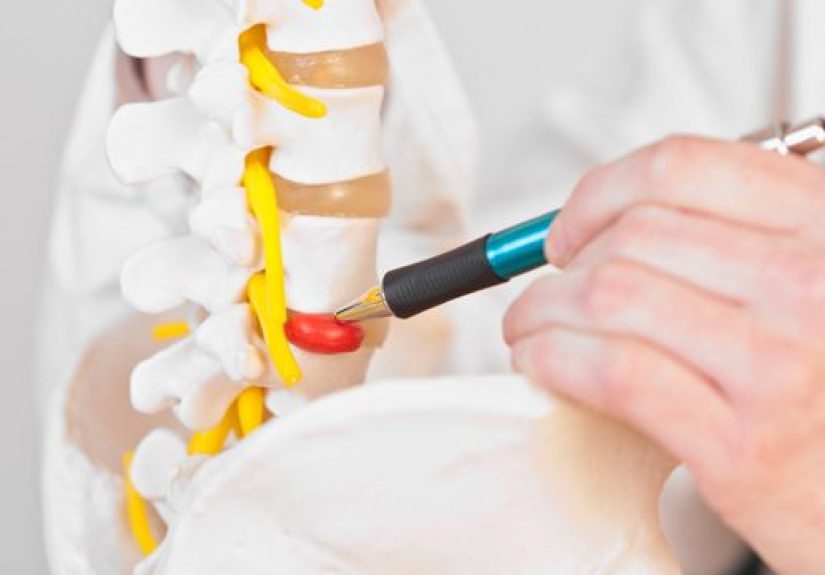
A herniated disc happens when part of the soft inner material of a spinal disc pushes through the tougher outer layer and presses on a nearby nerve. That pressure can cause pain, tingling, numbness, weakness, or sciatica. The surgical goal is not to give you a brand-new spine with superhero upgrades. It is to remove or relieve the part of the disc, bone, or tissue that is crowding the nerve.
Common reasons surgery may be recommended
- Severe sciatica or arm pain that has not improved with conservative treatment
- Numbness or weakness caused by nerve compression
- Difficulty walking, standing, or using the affected limb normally
- Recurrent flare-ups that keep disrupting daily life
- Urgent nerve symptoms involving bladder, bowel, or saddle area sensation
That is why many surgeons describe the best surgical candidate as someone whose symptoms, exam, and imaging all tell the same story. If your MRI shows a disc problem pressing on the same nerve that matches your symptoms, surgery becomes a much more targeted decision.
Types of Herniated Disc Surgery You Might Hear About
1. Microdiscectomy or Discectomy
This is the most common operation for a lumbar herniated disc that causes sciatica. In a microdiscectomy, the surgeon removes the portion of the disc that is pressing on the nerve. The word “micro” usually means smaller incisions and the use of magnification or specialized instruments. This procedure is often done through a small incision and may be an outpatient surgery, which means many patients go home the same day.
For a lot of patients, this is the procedure people mean when they casually say, “I had surgery for a slipped disc.” It is focused, usually less invasive than older open approaches, and designed to relieve nerve pressure without removing more tissue than necessary.
2. Laminotomy or Laminectomy
Sometimes the surgeon also removes a small part of the lamina, which is a portion of bone covering the spinal canal. This creates more space around the nerve roots. A laminotomy removes part of that structure; a laminectomy removes more of it. These procedures are often used when bone or spinal narrowing is contributing to the nerve compression, not just the disc itself.
3. Foraminotomy
If the opening where the nerve exits the spine is too tight, a foraminotomy may be done to widen that space. It can be combined with a discectomy when the nerve is being pinched in more than one way. Think of it as clearing the doorway after removing the furniture that was blocking it.
4. ACDF for a Cervical Herniated Disc
If the herniated disc is in the neck, the surgery may be an anterior cervical discectomy and fusion, commonly called ACDF. In this procedure, the surgeon approaches the spine from the front of the neck, removes the damaged disc, and then stabilizes the space, usually with a fusion. This is a common and well-established operation for cervical disc problems that cause arm pain, numbness, weakness, or spinal cord symptoms.
5. Artificial Disc Replacement
For selected patients, especially in the cervical spine, disc replacement may be an option instead of fusion. The damaged disc is removed and replaced with an artificial device designed to preserve motion. It is not for everyone, and candidacy depends on anatomy, age, disc level, bone health, and the exact diagnosis. This is a “right patient, right procedure” situation, not a trendy upgrade package.
6. Fusion
Fusion is less commonly the main surgery for a straightforward disc herniation, but it may be needed if instability is present, if a full disc removal is required, or if there are additional structural issues. Fusion can be very effective when indicated, but it usually comes with a longer recovery than a simple discectomy.
What Happens Before Surgery
Before surgery, your surgeon will review your symptoms, physical exam findings, and imaging, usually an MRI. You may also have blood work, medical clearance, or additional studies depending on your age and health history. This is the part where your care team tries to make sure your spine is the real culprit and not just the most photogenic thing on the scan.
Typical pre-op steps include:
- Reviewing medications, especially blood thinners, diabetes drugs, or supplements
- Getting instructions about fasting before anesthesia
- Planning your ride home and first few days of recovery
- Setting up a comfortable recovery area with easy access to water, medications, and pillows
- Learning restrictions on bending, lifting, twisting, sitting time, and driving
This is also the time to ask very practical questions. How long is the surgery? Will you go home the same day? When can you shower? When can you work, drive, or sleep on your side without feeling like a folded lawn chair? Good questions now can save a lot of anxious guessing later.
What to Expect on the Day of Surgery
Most herniated disc surgeries are done under general anesthesia, so you are asleep and pain-free during the operation. After check-in, you will change into a hospital gown, meet the anesthesia team, and have an IV placed. The surgeon may mark the surgical site and answer any last-minute questions.
Once in the operating room, the team positions you based on the type of procedure. For a lumbar microdiscectomy, you are usually placed face down. For an ACDF, you are on your back and the approach is through the front of the neck. The surgeon makes the incision, uses imaging and specialized instruments to access the affected level, and removes the disc material or bone causing nerve compression.
Many minimally invasive procedures take less time than people expect, though the exact length depends on the location and complexity. After surgery, you wake up in recovery where nurses monitor pain, movement, blood pressure, and how well you are waking up from anesthesia. If everything looks good and the procedure was straightforward, you may go home the same day. Some patients stay overnight or longer, especially after fusion or more extensive surgery.
What Recovery Usually Looks Like
Recovery is where expectations matter. Many patients notice relief from nerve pain fairly quickly, sometimes even the same day. But that does not mean the body is instantly ready for a triumphant return to lifting groceries like they are Olympic weights. Surgery removes pressure from the nerve; healing still takes time.
The first 24 to 72 hours
You may feel incision soreness, stiffness, fatigue, and lingering nerve symptoms. Some numbness or tingling can take longer to improve than pain. Walking is usually encouraged early because it helps circulation, reduces stiffness, and supports recovery. You may be surprised by how proud you feel after your first slow hallway lap. That is normal.
Weeks 1 to 2
This stage is often about short walks, position changes, rest, hydration, and not overdoing it. You may be told to avoid heavy lifting, bending, and twisting. Sitting may be limited at first, depending on the surgery. Some people return to desk work within two to four weeks, while others need more time.
Weeks 3 to 6
Many patients are gradually able to do more daily activity. Light activity may return earlier, but the “no bending, lifting, twisting” rule often still applies in some form. Physical therapy may begin during this period or shortly after, depending on the procedure and surgeon preference. This is also the phase where people start feeling better and are tempted to do too much. Your spine does not care that you are bored.
Weeks 6 to 12
For many patients recovering from discectomy or microdiscectomy, routine activities are increasingly comfortable by this stage. More strenuous work, sports, or heavy labor may still require additional time. If you had a fusion, the timeline can be longer and more structured.
Beyond 3 months
Recovery continues, especially for strength, endurance, and confidence. Nerves can be slow to calm down. If you had significant weakness before surgery, improvement may take time. The body is not being dramatic; nerves just heal on their own schedule.
Risks and Complications to Know
No surgery is risk-free, and spine surgery is no exception. Commonly discussed risks include infection, bleeding, blood clots, anesthesia complications, spinal fluid leak, and nerve injury. There is also the possibility that surgery does not fully relieve symptoms, especially if the nerve has been compressed for a long time or if there are multiple pain sources.
With discectomy procedures, another concern is recurrent disc herniation, meaning the disc can herniate again at the same level. That is one reason surgeons are serious about early recovery restrictions. They are not trying to ruin your weekend. They are trying to lower the odds of seeing you again for the wrong reason.
Fusion surgeries also carry risks related to hardware, nonunion, or stress on adjacent levels over time. Artificial disc replacement has its own eligibility rules and device-specific considerations. This is why a personalized conversation with a spine surgeon matters more than any one-size-fits-all internet story.
How Successful Is Herniated Disc Surgery?
For the right patient, surgery can be very effective, especially when nerve pain in the arm or leg is the main problem. In general, surgery tends to help radiating nerve pain more reliably than vague back stiffness or isolated neck pain. That distinction matters a lot. A good surgical plan is aimed at the symptom the procedure is actually designed to fix.
Patients often do best when they go into surgery with realistic expectations. The goal is usually meaningful pain relief, better function, and improved quality of life, not a magical reset button that erases every ache you have ever had since high school gym class.
When to Call the Surgeon After Surgery
Always follow your specific discharge instructions, but in general, call your surgical team if you develop fever, worsening wound drainage, increasing redness, severe uncontrolled pain, new weakness, new numbness, calf swelling, chest pain, trouble breathing, or any bowel or bladder changes. New red-flag nerve symptoms after surgery should not be ignored.
Real-World Experiences: What Recovery Often Feels Like
One of the hardest parts of herniated disc surgery is that the medical explanation is clean and tidy, while the human experience is not. On paper, the surgeon removes the disc fragment pressing on a nerve. In real life, patients often describe a strange mix of relief, caution, gratitude, and impatience.
A common experience is immediate improvement in the radiating nerve pain. People who had severe sciatica or arm pain sometimes wake up and realize that the electric, zapping pain that dominated their days is suddenly quieter or gone. What often replaces it at first is a different kind of discomfort: incision soreness, muscular tightness, fatigue, and a body that feels a little insulted by the whole event. Many patients say this trade feels worth it because surgical soreness is easier to understand than relentless nerve pain.
Another common theme is surprise at how small the early tasks feel. Walking to the bathroom, getting in and out of bed, putting on socks, or sitting through a meal can feel like oddly technical achievements. Patients also talk about how tiring recovery can be, even after a short outpatient procedure. That fatigue is real. Healing asks a lot from the body, and anesthesia does not exactly leave behind a spa-day glow.
Patients frequently mention two emotional traps during recovery. The first is fear: fear of moving wrong, coughing wrong, sleeping wrong, or somehow undoing the surgery by existing too enthusiastically. The second is overconfidence: feeling better at two or three weeks and deciding that means it is time to deep-clean the garage, pick up the toddler, or test fate with a casual workout. Neither extreme helps much. The best recoveries often come from a boring but effective formula of walking, following restrictions, doing physical therapy, and staying patient.
Many patient stories also highlight how important the pre-surgery quality of life was in the decision. People often choose surgery after months of poor sleep, missed work, canceled plans, leg weakness, or pain that makes ordinary life feel tiny. For them, surgery is not about chasing perfection. It is about getting back to driving comfortably, walking normally, working without dread, or playing with their kids without planning escape routes to the nearest chair.
Longer-term experiences vary, but a common lesson is that surgery can be a turning point, not a free pass. Patients who do well often learn to respect body mechanics, keep up with core strength, and avoid the habits that aggravated the problem in the first place. They also learn that “feeling good” and “fully healed” are not always the same thing. That distinction can save a lot of frustration.
In other words, the experience of herniated disc surgery is often less like flipping a switch and more like opening a jammed door. Relief may come quickly, but walking all the way through still takes time, effort, and a little humility.
Final Thoughts
Herniated disc surgery can sound intimidating, but for the right patient, it is often a focused procedure with a clear goal: relieve nerve compression and help you return to normal life. The key is understanding that surgery is usually chosen carefully, not casually. It is most helpful when symptoms, imaging, and daily limitations all point in the same direction.
If you are facing this decision, the best next step is a detailed conversation with a qualified spine specialist who can explain what type of procedure fits your anatomy, symptoms, and goals. Ask questions. Get the timeline straight. Know the restrictions. And remember that recovery is not a race. Your spine would very much prefer that you skip the dramatic comeback montage.






 Close
Close