
Table of Contents >> Show >> Hide
- Hemophilia 101: Why Lab Tests Matter
- Screening Tests: APTT, PT, and Friends
- Clotting Factor Assays: Zeroing In on Factor VIII and IX
- Mixing Studies: Is It a Factor Deficiency or an Inhibitor?
- Inhibitor Testing: The Bethesda and Nijmegen–Bethesda Assays
- Special Situations: Acquired Hemophilia and Complex Cases
- What Patients Can Expect During Hemophilia Lab Testing
- How Hemophilia Labs Guide Treatment Decisions
- Tips for Patients and Families Navigating Hemophilia Labs
- Real-World Experiences with Hemophilia Lab Testing
- Conclusion
If you or someone you love is being evaluated for hemophilia, you quickly learn that
life comes with a lot more acronyms: APTT, PT, FVIII, FIX, and something called a
Bethesda assay that sounds like a video game but unfortunately is not. Behind those
mysterious letters are blood tests that help doctors understand how well your clotting
system works, how severe hemophilia might be, and whether treatments are doing their job.
In this guide, we’ll walk through the key hemophilia lab tests in clear, everyday
language. We’ll unpack what APTT and PT actually measure, why factor assays are the
“star” tests in hemophilia, how inhibitor testing works, and what patients and
families can realistically expect from a day at the lab. No medical degree required,
just a bit of curiosity.
Hemophilia 101: Why Lab Tests Matter
Hemophilia is a bleeding disorder caused by low levels or poor function of certain
clotting proteins in the blood, most commonly factor VIII (hemophilia A) or factor IX
(hemophilia B). These proteins help form stable blood clots when you get injured.
When they’re missing or don’t work properly, bleeding lasts longer, can be internal,
and sometimes shows up in joints and muscles rather than as obvious cuts.
Diagnosis and monitoring of hemophilia rely heavily on laboratory testing. Doctors
usually follow a two-step approach:
- Screening tests to see if the blood is clotting properly.
- Specific clotting factor tests (factor assays) to measure factor VIII or IX activity and confirm the diagnosis and severity.
The exact combination and timing of these tests can differ slightly between labs, but
the overall logic is similar around the world.
Screening Tests: APTT, PT, and Friends
Think of screening tests as the “check engine light” for your clotting system. They
don’t diagnose hemophilia by themselves, but they tell doctors if something in the
clotting cascade looks off and which part might be affected.
APTT: The Classic Clue in Hemophilia
The activated partial thromboplastin time (APTT) is the workhorse test
in hemophilia. It measures how long it takes your plasma (the liquid part of blood)
to form a clot when exposed to an “activator,” phospholipids, and calcium. It mainly
reflects the intrinsic and common pathways of the coagulation cascade, which
include factors VIII, IX, XI, and XII.
In classic hemophilia A or B, a typical pattern is:
- Prolonged APTT (it takes longer than normal for the blood to clot).
- Normal PT (we’ll get to that in a moment).
This “normal PT, prolonged APTT” combination strongly suggests a problem in the
intrinsic pathwayexactly where factors VIII and IX live.
PT: Ruling Out Other Causes
The prothrombin time (PT) evaluates the extrinsic and common pathways,
which involve factors II, V, VII, and X, as well as fibrinogen. It’s commonly used to
monitor warfarin therapy and assess liver function, but it’s also part of the standard
bleeding workup.
In most people with hemophilia A or B:
- PT is normal because factors VIII and IX are not part of the PT pathway.
- This contrast with the prolonged APTT helps narrow down the diagnosis.
Other Screening Labs Often Ordered
Alongside PT and APTT, doctors often order:
- Complete blood count (CBC) to look at hemoglobin (anemia from blood loss), white blood cells, and platelets.
- Fibrinogen level and sometimes thrombin time (TT) to check the final steps of clot formation.
- Possibly von Willebrand factor tests if the pattern suggests von Willebrand disease or a combined disorder.
If these screening tests raise suspicion for hemophilia, the next step is more
targeted and much more specific.
Clotting Factor Assays: Zeroing In on Factor VIII and IX
Once screening tests point toward a problem in the intrinsic pathway, doctors order
clotting factor assays. These are the tests that officially confirm hemophilia
and classify its severity.
One-Stage APTT-Based Factor Assays
The most common method worldwide is the one-stage APTT-based factor assay. In
this test, the patient’s plasma is mixed with plasma that is deficient in a specific
factor (for example, factor VIII–deficient plasma) and then an APTT is run. The
degree of correction reflects how much functional factor is present in the patient’s
sample.
These assays are used to measure:
- Factor VIII (FVIII) activity for hemophilia A.
- Factor IX (FIX) activity for hemophilia B.
Results are reported as a percentage of normal activity or in international units
per deciliter (IU/dL). Typical severity cutoffs are:
- Severe hemophilia: <1% activity.
- Moderate hemophilia: 1–5% activity.
- Mild hemophilia: >5% to <40% activity.
These percentages matter clinically: People with severe hemophilia may have
spontaneous joint bleeds, while those with mild disease may only bleed excessively
after surgery or major trauma.
Chromogenic Factor Assays
Chromogenic assays are another way to measure factor VIII or IX activity.
Instead of timing a clot, they measure the generation of a colored product when the
factor participates in a biochemical reaction.
Chromogenic tests are particularly useful when:
- Patients are on modern extended half-life factor products or
PEGylated (polyethylene glycol–modified) therapies that can interfere
with traditional one-stage assays. - The one-stage assay and the clinical picture don’t match (for example, the
factor level looks normal but the patient clearly has hemophilia symptoms).
Many current guidelines suggest using both one-stage and chromogenic assays in the
diagnostic workup when available, especially for factor VIII.
Mixing Studies: Is It a Factor Deficiency or an Inhibitor?
Sometimes a prolonged APTT doesn’t automatically equal simple hemophilia. Other
conditions, such as lupus anticoagulant or heparin contamination, can also prolong
APTT. To tease these apart, labs use mixing studies.
In a mixing study, the patient’s plasma is mixed 50:50 with normal plasma and the
APTT is measured immediately and sometimes after incubation:
- Correction of APTT suggests a factor deficiency (classic congenital hemophilia pattern).
- Failure to correct or only partial correction suggests an inhibitor, such as an antibody against factor VIII.
Mixing studies are especially important in:
- Older adults with new, severe bleeding and no childhood history of hemophilia.
- Patients known to have hemophilia whose lab results suddenly get worse or who stop responding to usual treatment.
Inhibitor Testing: The Bethesda and Nijmegen–Bethesda Assays
An inhibitor is an antibody that neutralizes clotting factor VIII or IX.
It’s one of the most important complications in hemophilia care because it makes
standard factor replacement less effectiveor sometimes not effective at all.
To measure inhibitors, labs use specialized tests:
- Bethesda assay to determine inhibitor titer in Bethesda units (BU).
- Nijmegen–Bethesda assay, a refined version designed to improve accuracy and reduce variability.
Inhibitor results help clinicians:
- Confirm the presence of an inhibitor when mixing studies suggest one.
- Classify inhibitor levels as low-titer or high-titer, which influences treatment choices.
- Monitor response to immune tolerance therapy or other inhibitor-directed treatments over time.
Some centers start with an APTT-based inhibitor screen and then perform a full
Bethesda or Nijmegen–Bethesda assay if the screen is positive.
Special Situations: Acquired Hemophilia and Complex Cases
Not all “hemophilia” is inherited. Acquired hemophilia A occurs when a person
without a lifelong bleeding disorder suddenly develops autoantibodies against factor
VIII, often in older adults or postpartum individuals.
Typical lab findings in acquired hemophilia include:
- Prolonged APTT that does not correct with mixing studies.
- Normal PT, normal platelet count, and normal thrombin time.
Factor VIII activity is usually low, and inhibitor titers are measured with Bethesda
or Nijmegen–Bethesda assays. These patients require expert care, often with
bypassing agents and immunosuppression, and they highlight just how crucial careful
lab interpretation is.
In complex casessuch as those using novel factor concentrates, nonfactor therapies,
or PEGylated productslabs may need to use specific reagents or alternative assays
(often chromogenic) to get accurate measurements.
What Patients Can Expect During Hemophilia Lab Testing
The tests themselves sound intimidating, but from the patient’s side, most of them
boil down to one thing: a blood draw.
Before the Blood Draw
Your care team may give you specific instructions, such as:
- Tell the lab which factor products or nonfactor therapies you recently received and when.
- Bring your treatment record or infusion log if you use factor at home.
- In some cases, schedule testing before your next prophylactic dose to measure “trough” levels.
During the Visit
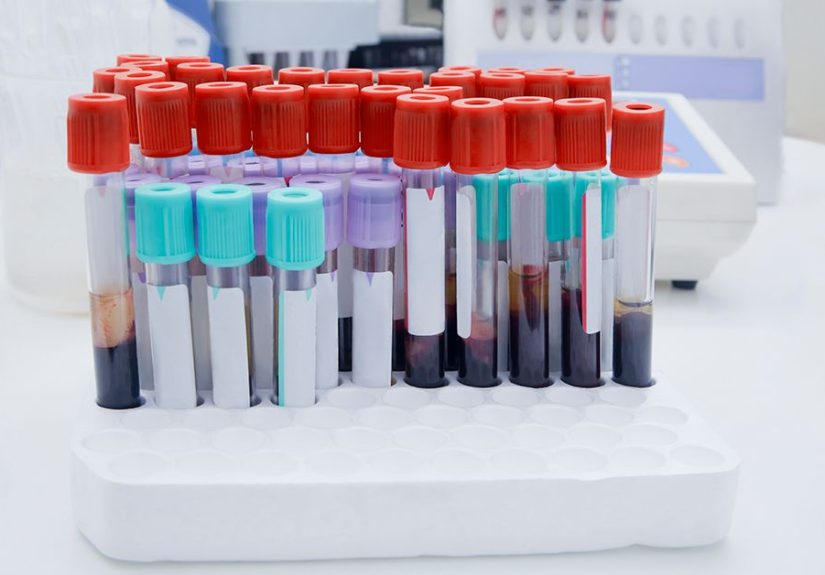
At the lab, a technologist or phlebotomist draws bloodoften into tubes containing
sodium citrate, which helps preserve clotting factors for accurate testing.
Proper mixing and handling are important to prevent artificial changes in PT or APTT
results.
For children or people with difficult veins, the team may use numbing cream, smaller
needles, or distraction techniques (toys, screens, breathing exercises). Some centers
specialize in pediatric draws for kids with hemophilia and other bleeding disorders.
After the Test
Most results for routine PT, APTT, and basic factor levels are available within hours
to a day, depending on the lab. Inhibitor assays and specialized chromogenic tests
may take longer, especially if samples are sent to a reference laboratory.
Your hematologist will interpret results in the context of your symptoms, family
history, and treatment plan. A single factor level is rarely the whole story,
especially if you’re on modern therapies that can complicate measurement.
How Hemophilia Labs Guide Treatment Decisions
Hemophilia care has moved far beyond “you bleed, we transfuse.” Today, lab data
drive precise, personalized strategies:
-
Choosing the right therapy: Factor concentrates, extended half-life
products, or nonfactor therapies may be selected based on factor levels, inhibitor
status, and lifestyle. -
Designing prophylaxis: Factor assays at peak and trough help fine-tune
dose and frequency to keep factor levels above target thresholds. -
Monitoring inhibitors: Regular inhibitor testing is critical,
especially in the first 50–75 exposure days to factor products or after treatment
changes. -
Planning surgery: Pre- and post-op factor levels and PT/APTT guide
dosing and timing of replacement or bypassing agents to minimize bleeding risk.
In short, lab tests are the navigation system for modern hemophilia care. Without
them, it’s like trying to drive cross-country with no GPS, no map, and a car that
occasionally leaks coolant.
Tips for Patients and Families Navigating Hemophilia Labs
A few practical habits can make hemophilia lab testing smoother and more useful:
-
Keep a treatment diary. Track dates, times, and doses of factor or
nonfactor therapy. This helps the care team interpret factor levels correctly. -
Stick to the same lab when possible. Different labs may use different
reagents or equipment, leading to slightly different factor level results.
Consistency helps with long-term comparison. -
Ask for copies of your results. Keeping a folderor a secure digital
fileof your labs can help when traveling or seeing new providers. -
Don’t panic over small fluctuations. Factor levels can vary a bit
between tests; trends over time matter more than any single number. -
Use your hemophilia treatment center. Comprehensive centers have
specialized labs and staff experienced in managing complex results.
Real-World Experiences with Hemophilia Lab Testing
Statistics and pathways are helpful, but in everyday life, hemophilia labs show up
as appointments on the calendar, needle sticks, and conversations with the care
team. Here are some common themes people with hemophilia and their families
often describe when talking about lab tests (summarized from patient education
resources and clinic experience reports rather than any one person’s story).
Getting Used to the Routine
At first, the sheer number of tests feels overwhelming. Families of young children
might remember the first time the word “APTT” appeared in a discharge summary and
wondered whether it was a lab or a new social media app. Over time, though, the
pattern becomes familiar:
- A new diagnosis leads to a cluster of testsAPTT, PT, CBC, factor levels, and sometimes von Willebrand testing.
- Once diagnosis and severity are clear, lab visits become less frequent but more targeted, often tied to treatment changes or planned procedures.
- Inhibitor screening becomes part of the background “maintenance” in the early years of factor exposure.
Many families report that after the first few months, they can look at a lab report
and say, “Okay, APTT is high, PT is normalthat matches what we expect. Factor VIII
is where it should be for his prophylaxis schedule.” That familiarity turns the
lab report from a scary document into a useful tool.
Challenges: Veins, Time, and Emotions
On the flip side, there are real challenges. Children with hemophilia often have
small or difficult veins, especially if they’ve had many previous draws. Parents
talk about planning their day around lab visitspacking snacks, favorite toys, and
even a post-appointment reward to make the experience less stressful.
Teenagers and adults with hemophilia sometimes share that the emotional side of lab
testing is tougher than the needle itself. Waiting for inhibitor results or a factor
level before a big surgery can feel like waiting for exam scores. Having a care
team that explains what’s being tested and why can reduce some of that anxiety.
Communication with the Care Team
One of the most positive experiences people describe is when lab testing is clearly
integrated into the overall plan. Instead of “we drew labs,” the conversation
sounds more like:
- “We’re checking your factor IX level before your next infusion to see if we can lower your dose.”
- “We’re repeating inhibitor testing today because your APTT stayed prolonged even after factor replacement.”
- “We’re adding a chromogenic factor VIII assay because your one-stage level doesn’t match how you’re doing clinically.”
When patients understand that each test has a purpose, they are more likely to feel
like partners in their own care rather than passive bystanders.
Tips from the “Lab Veterans”
People who have lived with hemophilia for years often share practical tips with
newly diagnosed families:
- Schedule smart: Try to book lab visits at a time of day when the child is rested and fed.
- Use numbing cream when possible: Applying it in advance (as directed by the team) can make needle sticks less painful.
- Practice explanations: Simple, age-appropriate explanations (“This test helps us see how strong your blood-clotting ‘superpower’ is today.”) can reduce fear.
- Track patterns: Some families notice that certain veins are more successful or that staying well hydrated helps with blood draws.
Families also emphasize the importance of celebrating the “wins”a smooth blood
draw, better factor levels after adjusting doses, or inhibitor tests that come back
negative after a worrying period.
Looking Ahead
As hemophilia treatments continue to evolvewith gene therapy, long-acting factors,
and nonfactor agentslab testing is evolving too. There is active work on
standardizing APTT reagents, improving chromogenic assays, and developing tests that
better reflect how blood clots in real life, not just in a test tube.
For patients and families, that means lab reports may look a little different over
time, but the core goal remains the same: using laboratory data to support safer,
more effective, and more personalized care for people with hemophilia.
Conclusion
Hemophilia lab testing can feel like a whirlwind of acronyms and numbers, but at its
heart, it’s a powerful tool. APTT and PT help flag where in the clotting cascade the
problem might be. Factor assays define the type and severity of hemophilia. Mixing
studies and inhibitor tests catch complications that change treatment strategies.
And taken together, these labs allow care teams to design therapy that’s not just
reactive, but proactive and tailored to each individual.
You don’t have to memorize every pathway in the coagulation cascade. But
understanding the basics of hemophilia labswhat they measure, why they’re ordered,
and how they guide decisionscan turn a confusing process into one you can follow,
question, and actively participate in. In a condition where prevention and planning
are everything, that’s a powerful step.






 Close
Close