
Table of Contents >> Show >> Hide
- Why Grow a Lemon Tree from Seed?
- The Big Truth About Seed-Grown Lemon Trees
- How to Start Growing a Lemon Tree from Seed
- How to Care for a Lemon Seedling
- When to Transplant Your Lemon Seedling
- Can a Lemon Tree from Seed Produce Fruit?
- Common Problems and How to Fix Them
- Best Tips for Success
- What Growing a Lemon Tree from Seed Is Really Like
- Conclusion
Growing a lemon tree from seed is one of those gardening projects that feels a little magical and a little ridiculous in the best possible way. You squeeze a lemon for dinner, rescue a few seeds from a sticky citrus grave, tuck them into soil, and suddenly you are the optimistic owner of what might become a glossy green tree. Will it produce beautiful lemons next year? Absolutely not. Will it make your windowsill smell faintly Mediterranean and your house feel more interesting? Very likely.
That is the real charm of growing a lemon tree from seed. It is part science experiment, part houseplant adventure, and part patience boot camp. If your goal is fast fruit, a grafted nursery tree is the better choice. But if your goal is to grow something from scratch and enjoy the process, lemon seeds are surprisingly cooperative. They germinate fairly easily, the seedlings are attractive, and the whole project is satisfying in a way only gardeners truly understand.
This guide walks through how to grow a lemon tree from seed, what kind of care it needs, what mistakes to avoid, and what to realistically expect over the months and years ahead. Spoiler alert: this is not a sprint. It is a slow, leafy, slightly dramatic marathon.
Why Grow a Lemon Tree from Seed?
Let’s start with the obvious question: why bother? Seed-grown lemon trees are slower than grafted trees, less predictable, and sometimes stubborn about fruiting. Yet people keep doing it because it is fun, affordable, and oddly addictive.
A lemon seed costs basically nothing if you already have a fresh lemon in the kitchen. It is also a great project for beginners because the first step is simple and the early reward is fast enough to keep you interested. Once the seed sprouts, you get that classic gardener’s thought: I created life with dirt and confidence.
There is also a practical side. A seed-grown tree can become a handsome ornamental plant with glossy leaves, a fresh citrus scent, and enough personality to earn a place near your brightest window. Some gardeners even grow citrus from seed as a learning project before moving on to grafted fruit trees later.
The Big Truth About Seed-Grown Lemon Trees
Before you start naming your future orchard, here is the reality check. A lemon tree grown from seed may take many years to flower and fruit. In some homes, especially where light is limited, it may never produce much fruit at all. Even when it does fruit, the lemons may not be identical to the parent fruit.
This matters even more with Meyer lemons. Meyer lemons are hybrids, so seeds from a Meyer lemon do not reliably grow into a tree that behaves exactly like the parent. In other words, planting a Meyer lemon seed may give you a citrus surprise bag. Sometimes surprises are fun. Sometimes they are just botanical chaos.
If you want dependable fruit sooner, buy a grafted lemon tree. If you want the joy of growing from scratch, keep going. Both paths are valid. One just involves more waiting and fewer guarantees.
How to Start Growing a Lemon Tree from Seed
Choose the Right Lemon
Pick a fresh, healthy lemon with plump seeds. Avoid fruit that looks dried out, damaged, or old enough to remember dial-up internet. Fresh seeds tend to germinate better than seeds that have been sitting around and drying out.
Remove and Clean the Seeds
Take out several seeds so you have options. Rinse away all pulp and juice because leftover fruit residue can encourage mold. If a seed looks shriveled, flat, or damaged, toss it. Gardening is about hope, yes, but it is also about not wasting potting mix on obvious underachievers.
Optional: Soak or Peel the Seed Coat
Some gardeners soak seeds overnight before planting, and others carefully remove the outer seed coat to speed up germination. This can help, but it is not mandatory. If you are a beginner, soaking is the easier move. If you are the type of person who enjoys tweezers and tiny botanical surgery, seed-coat removal may be your kind of evening.
Plant the Seeds
Use a small pot or seed tray with drainage holes and fill it with a light, well-draining potting mix. A citrus or cactus-style mix works well, or you can use standard potting mix improved with perlite or coarse sand for better drainage.
Plant each seed about 1/4 to 1/2 inch deep. Cover lightly with soil, water gently, and make sure the mix is moist but not soggy. If your soil feels like swamp pudding, dial it back.
Keep Them Warm and Bright
Lemon seeds like warmth. A spot around room temperature to slightly warm is ideal, and a seedling heat mat can help if your home runs cool. Place the pot in a bright area. At the germination stage, warmth and steady moisture matter more than blazing direct sun, but once sprouts appear, strong light becomes a must.
Wait for Germination
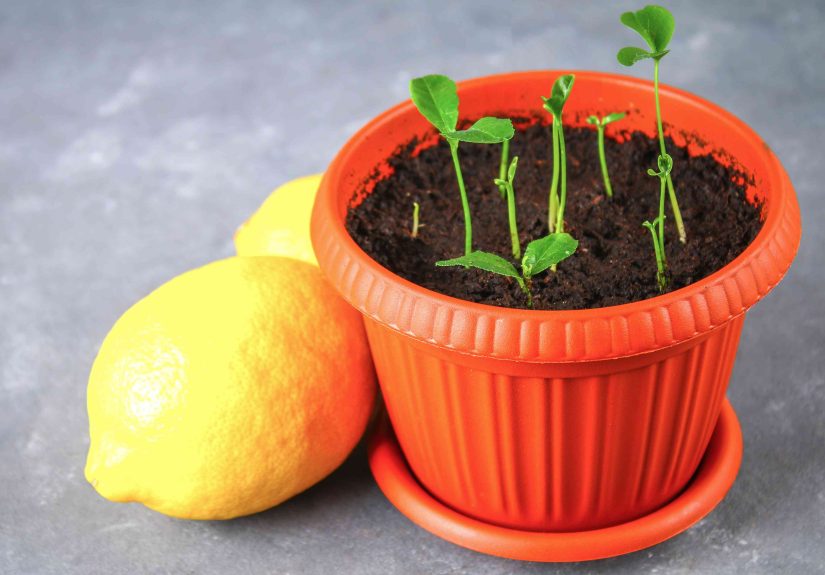
Under good conditions, lemon seeds often sprout in a few weeks. Some are speedy, some are moody, and some apparently need time to reflect. Keep the soil evenly moist during this phase, but never water so much that the container stays waterlogged.
How to Care for a Lemon Seedling
Light: Lots of It
Lemon trees are not shy about their lighting demands. Once seedlings emerge, give them the brightest location you have. A south-facing window is usually best indoors. Aim for at least six hours of strong light a day, with eight or more being even better. In many homes, especially in winter, supplemental grow lights make a huge difference.
If your seedling becomes lanky, pale, or starts leaning like it has strong opinions about architecture, it probably needs more light.
Water: Moist, Not Miserable
Young lemon trees like consistent moisture, but they hate sitting in soggy soil. Water when the top inch or two of mix starts to dry out. Then water deeply enough that moisture moves through the root zone and excess drains away.
The trick is balance. Too little water leads to stress, leaf drop, and stalled growth. Too much water invites root rot, which is basically the botanical version of “things went downhill fast.”
Soil: Fast-Draining Wins
Lemon trees do best in well-draining soil. They prefer a slightly acidic growing environment and respond poorly to dense, compacted, always-wet potting mixes. If you are repotting a seedling, choose a container mix that feels airy rather than heavy. Citrus roots want oxygen as much as they want moisture.
Temperature and Humidity
Lemon trees prefer warm conditions. Comfortable household temperatures are usually fine, especially if days are mild to warm and nights are a little cooler. They also appreciate moderate humidity. In dry homes, especially during winter heating season, you may notice crispy leaf edges or general sulking. A pebble tray, humidifier, or simply avoiding hot dry air from vents can help.
Fertilizer
Once your seedling is actively growing, feed it during the growing season with a fertilizer formulated for citrus or acid-loving plants. Citrus tends to be hungry, especially for nitrogen, but more is not better. Follow label directions and avoid overfeeding, which can burn roots or create weak, overly lush growth.
A good rule: feed when the plant is actively growing, ease off when growth slows in cooler, darker months.
When to Transplant Your Lemon Seedling
Once the seedling has several sets of true leaves and looks sturdy, it is ready for a slightly larger pot. Do not jump from a tiny starter pot into a giant decorative planter the size of a kiddie pool. Oversized pots hold more wet soil than a small root system can handle, which increases the risk of rot.
Move up one pot size at a time. Make sure the new container has drainage holes, and handle the seedling gently because citrus roots do not love rough treatment. After transplanting, keep the plant in bright light and avoid heavy fertilizing for a short period while it settles in.
Can a Lemon Tree from Seed Produce Fruit?
Yes, it can. But “can” is doing a lot of work in that sentence.
A healthy seed-grown lemon tree may eventually flower and fruit, especially if it gets strong light, warm conditions, proper feeding, and time. Lots of time. Outdoors in a favorable climate, the odds improve. Indoors, the tree may stay ornamental for years without offering a single lemon. That does not mean you failed. It means citrus likes to negotiate on its own schedule.
If the tree does flower indoors, pollination may need a little help. Lemon trees are generally self-fertile, so you do not need a second tree, but moving pollen between flowers with a small brush or gently shaking the branches can improve your chances.
Common Problems and How to Fix Them
Leggy Growth
This is usually a light problem. Move the plant to a brighter location or add a grow light.
Yellow Leaves
Yellowing can come from too much water, too little light, poor drainage, or nutrient issues. Check the soil first. If it stays wet for too long, improve drainage and water less often.
Leaf Drop
Sudden shifts in temperature, drafts, underwatering, overwatering, or low light can all trigger leaf drop. Citrus is dramatic. Small changes can feel big to the plant.
Pests
Indoor citrus can attract spider mites, scale, aphids, and mealybugs. Check leaves regularly, especially undersides and stems. Catching pests early is far easier than staging a full indoor citrus rescue mission later.
No Flowers
If your tree looks healthy but never blooms, the most likely issues are age, insufficient light, or simply the fact that seed-grown citrus is slow to mature. Sometimes the solution is better care. Sometimes the solution is patience and a snack.
Best Tips for Success
- Start with several seeds and keep the strongest seedling.
- Use a light, fast-draining potting mix.
- Give the plant as much bright light as possible.
- Water deeply but let the top layer dry slightly between waterings.
- Feed during active growth, not endlessly all year.
- Repot gradually as the plant grows.
- Treat fruit as a bonus, not the first measure of success.
What Growing a Lemon Tree from Seed Is Really Like
The experience of growing a lemon tree from seed is less like buying produce and more like joining a long-running relationship with a moody but lovable houseplant. In the beginning, everything feels exciting. You clean the seeds, plant them, place the pot near a bright window, and check for sprouts with the intensity of someone waiting for a text back. Every morning becomes a tiny inspection tour. Is that soil movement? Is that green? Is that a sprout or just wishful thinking wearing a leaf costume?
Then the seedling appears, and it is honestly thrilling. It is small, simple, and not particularly impressive to anyone who is not you. But to you, it is a horticultural miracle. You start rotating the pot for even growth. You begin evaluating sunlight in your home like a real estate agent. You may even google things like “do lemon seedlings enjoy compliments,” which, for the record, is not the worst gardening instinct.
As the plant grows, the experience becomes a lesson in attention. Lemon seedlings teach you to notice details. You learn the difference between dry soil and dry-looking soil. You notice how quickly indoor air changes in winter. You figure out that one windowsill gets bright morning light while another turns into a dim cave by 2 p.m. The tree becomes a quiet way to understand your home better.
There are also moments of mild panic. A leaf yellows, and suddenly you are replaying every watering decision from the past two weeks. A stem leans dramatically, and you wonder whether it needs more light, more support, or a motivational speech. Growing citrus from seed has a way of making gardeners both observant and slightly theatrical.
But that is part of the pleasure. This is not instant gardening. It is slow gardening. It invites you to pay attention over time, not just for a weekend. A seed-grown lemon tree asks for consistency more than perfection. Bright light, reasonable watering, occasional feeding, and a little patience go much further than heroic over-correction.
Even if the tree never becomes a heavy fruit producer, it still earns its place. The leaves are glossy and fragrant. The plant looks cheerful in a sunny room. It becomes a conversation starter, a small ritual, and proof that useful beauty can come from something as ordinary as kitchen fruit.
And if one day it finally flowers, the reward feels bigger because of the wait. You are not just seeing blossoms. You are seeing the result of months or years of care, adjustments, and stubborn optimism. That first bloom is part victory lap, part botanical plot twist. Growing a lemon tree from seed may not be the fastest way to get fruit, but it is one of the most satisfying ways to earn a story.
Conclusion
Growing a lemon tree from seed is not the shortcut route to a countertop full of homegrown citrus. It is the scenic route. The slower, greener, more character-building route. You start with a seed, a pot, and a hopeful attitude, then build from there with light, warmth, drainage, and patience.
If you want fast, reliable lemons, buy a grafted tree. If you want a rewarding indoor gardening project that lets you watch life unfold from the very beginning, planting lemon seeds is absolutely worth trying. The process is simple, the plant is beautiful, and the experience is the kind of wholesome obsession gardeners never really apologize for.
So go ahead: save those seeds, fill a pot, and start growing. At worst, you get a handsome citrus houseplant. At best, you get a lemon tree and a story that began at your cutting board.





 Close
Close