
Table of Contents >> Show >> Hide
- What Does “Great White Buffalo” Mean?
- The Origin of the Great White Buffalo Idea
- Spiritual Meaning of the White Buffalo
- Great White Buffalo vs. White Buffalo: Is There a Difference?
- How the Phrase Is Used in Everyday Life
- Why the Phrase Still Resonates
- Examples of Meaning in Different Contexts
- Experiences Related to the Great White Buffalo
- Final Thoughts
Some phrases stomp into language like a herd on a mission. Great White Buffalo is one of them. It sounds huge, mysterious, and just dramatic enough to make you sit up straight and wonder whether you’re about to hear a sacred teaching, a wild legend, or the title of a rock song shouted by a guy holding an electric guitar like it owes him money. The truth is: it can point to all three worlds at once.
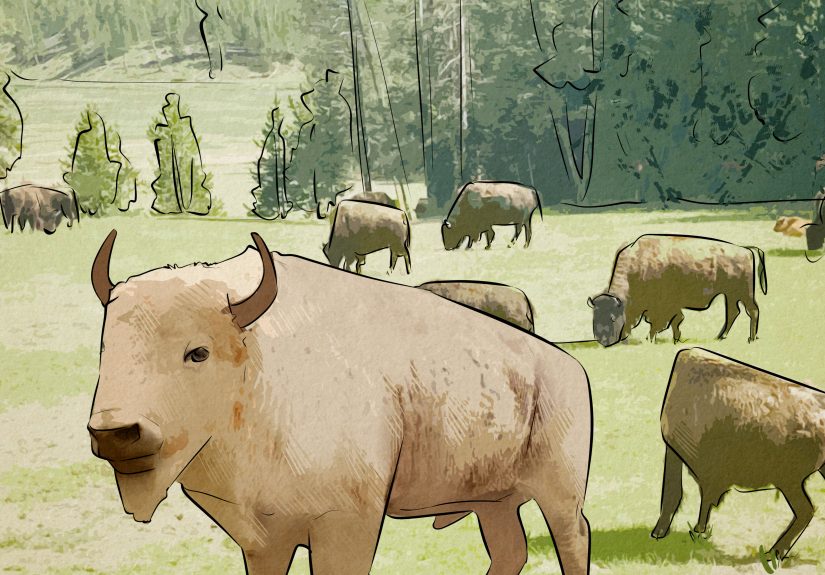
At its most literal, the phrase calls to mind a rare white buffalomore accurately, a white bison in North America. At its deepest level, it connects to Indigenous spiritual traditions, especially Lakota teachings surrounding the White Buffalo Calf Woman and the sacred meaning of a white buffalo calf. In everyday modern speech, meanwhile, great white buffalo meaning has widened into something more metaphorical: a rare, almost mythical thing a person longs for, chases, or sees as a once-in-a-lifetime sign.
That mix of sacred meaning, history, pop culture, and personal symbolism is exactly why people keep searching for the phrase. They want to know whether it means luck, destiny, first love, spiritual awakening, or some mystical combination of all of the above. The best answer is this: it depends on the context. And context, as always, is doing the heavy lifting while the phrase gets all the attention.
What Does “Great White Buffalo” Mean?
The definition of Great White Buffalo shifts depending on where you encounter it. In a literal sense, it refers to a rare white bison. In a spiritual sense, it points to a sacred sign associated with hope, prophecy, renewal, and a call to live in harmony with the earth. In a modern metaphorical sense, it often describes something rare and deeply desiredan ideal, a dream, a person, or an opportunity that feels almost impossible to find.
That is why the phrase can sound spiritual in one sentence and romantic in the next. One person might use it to describe a sacred sign. Another might use it for “the one that got away.” A third might use it for a dream career, a creative breakthrough, or the big purpose they have been chasing for years. Same phrase, very different boots.
There is also a technical language note worth knowing. In the United States, people often say buffalo, but the North American animal is more accurately called a bison. So when people talk about a white buffalo, they usually mean a white American bison. Language is messy, history is messy, and apparently even giant furry icons are not safe from branding confusion.
The Origin of the Great White Buffalo Idea
The sacred origin: White Buffalo Calf Woman
To understand the phrase properly, you have to start with the sacred tradition behind the white buffalo spiritual meaning. In Lakota oral tradition, the White Buffalo Calf Woman is a holy figure who brought sacred teachings and the sacred pipe to the people. Her story is tied to prayer, ceremony, moral order, and the relationship between human beings, the Creator, and the natural world.
In this tradition, the appearance of a white buffalo calf is not treated as a random novelty. It is understood as a spiritually meaningful sign. For many, it represents hope, answered prayer, renewal, and a reminder that people must return to balance. That balance includes respect for the earth, for community, and for the responsibilities that come with life itself. So no, this is not just “wow, cool animal.” It is “wow, sacred reminder, maybe we should get our act together.”
Why people say buffalo instead of bison
Part of the phrase’s staying power comes from American language habits. For generations, Americans called the animal a buffalo, even though American bison is the more precise term. That older habit stuck in songs, stories, schoolbooks, brand names, and everyday conversation. As a result, Great White Buffalo sounds more familiar and mythic to many readers than “Great White Bison,” even if the latter would make a zoologist nod with approval.
How the modern phrase spread
The modern cultural spread of the exact phrase Great White Buffalo owes a lot to pop culture. Ted Nugent’s song “Great White Buffalo” helped cement the phrase in rock culture, where it carried themes of loss, destruction, and warning tied to the history of Native lands and the slaughter of buffalo. Over time, the phrase also picked up a broader life-of-its-own quality, becoming shorthand for something rare, haunting, unforgettable, and just out of reach.
That matters because the phrase now lives in two lanes at once. One lane is sacred and culturally rooted. The other is modern, metaphorical, and loose. Smart writingand respectful conversationdoes not pretend those lanes are identical.
Spiritual Meaning of the White Buffalo
1. Hope and renewal
The most common spiritual idea connected to the white buffalo is hope. In many retellings and interpretations, the appearance of a white buffalo calf signals better times ahead. Not easy times, necessarily. Not “you will find twenty dollars in your winter coat and never have another bad hair day” times. But better times rooted in spiritual awakening, community healing, and restored balance.
That is why the white buffalo often symbolizes renewal. It suggests that something sacred has not vanished, even if the world feels noisy, damaged, or off-course. The sign says: there is still a path back.
2. Abundance and gratitude
The buffalo has long held profound meaning for many Plains Nations because of its connection to life itself. Buffalo provided food, clothing, shelter, tools, and cultural continuity. Spiritually, the animal came to represent abundance, provision, and reciprocity. The lesson is not mindless consumption. It is gratitude, right relationship, and using what is given with respect.
Within that framework, a white buffalo intensifies the symbolism. It becomes not just an animal of sustenance, but a sign of sacred presence. That is one reason the phrase white buffalo symbolism often includes words like blessing, reverence, harmony, and manifestation.
3. A blessing and a warning
One of the most important parts of the spiritual meaning is that the sign is often described as both a blessing and a warning. That double meaning is powerful. It says, in effect, “Pay attention.” Celebrate, yes. But also reflect. Are people living in harmony with the earth? Are communities acting with humility, responsibility, and care? If not, the sign is not just comforting; it is corrective.
This is part of what makes the image so compelling in modern times. A rare white buffalo calf does not simply inspire awe. It also pushes people to ask whether they are listening to what the world is trying to teach them.
Great White Buffalo vs. White Buffalo: Is There a Difference?
Yesand it is an important one. The term white buffalo is the more direct and culturally grounded phrase when discussing the sacred animal and its spiritual meaning. The term Great White Buffalo often feels more dramatic, mythic, or stylized. In some contexts it is simply a poetic extension of the same image. In others, it belongs more to music, movies, modern slang, and personal symbolism than to formal spiritual teaching.
In other words, if you are discussing Lakota tradition, sacred teachings, or the spiritual significance of the white buffalo calf, it is wiser to use careful and specific language. If you are using great white buffalo meaning in a general cultural or metaphorical sense, make it clear that you are not claiming to quote or summarize sacred tradition word-for-word. Respect begins with precision.
How the Phrase Is Used in Everyday Life
In modern conversation, people often use Great White Buffalo as a metaphor for something rare and nearly mythical. It might be a dream job, a soulmate, a creative project, a lost opportunity, or a personal mission that seems forever one step ahead. The phrase works because it carries emotional weight. It sounds larger than ordinary desire. It sounds like pursuit mixed with wonder.
For example, someone might say:
“Starting my own studio has been my Great White Buffalo for years.”
“For him, that old guitar wasn’t just an instrument. It was his Great White Buffalo.”
“She kept comparing every relationship to her Great White Buffalo and no one could live up to the myth.”
Used this way, the phrase usually suggests one of three things: rarity, obsession, or idealization. Sometimes all three arrive together like uninvited guests who somehow still expect snacks.
Why the Phrase Still Resonates
The phrase survives because it combines rarity with meaning. A white buffalo is visually striking, culturally powerful, and emotionally unforgettable. Add the word great, and suddenly the image becomes even biggerpart sacred sign, part legend, part personal obsession board with better branding.
It also resonates because modern life is full of chasing. People chase purpose, identity, love, healing, success, recognition, peace, and whatever that perfectly organized life is supposed to be. The idea of a Great White Buffalo gives that chasing a symbol. It turns longing into an image you can practically see on the horizon.
But the wiser lesson may be this: not every meaningful thing is meant to be hunted down and captured. Some signs are meant to humble us. Some visions are meant to guide us. Some symbols are meant to change the way we walk, not just the place we hope to arrive.
Examples of Meaning in Different Contexts
Spiritual context
In a spiritual discussion, the white buffalo may symbolize sacred renewal, prophecy, reverence, and a call to return to harmony with the natural world.
Cultural context
In a cultural discussion, Great White Buffalo can refer to the way a sacred image moved into broader American language through songs, stories, and symbolic use.
Personal context
In personal development or emotional writing, the phrase may mean a dream, ideal, or elusive life goal that feels powerful enough to shape someone’s decisions.
Romantic context
In modern slang, the phrase is sometimes used for an unforgettable former love or “the one that got away,” though this is a much looser and less historically grounded usage.
Experiences Related to the Great White Buffalo
One reason this topic hits people so hard is that it is not just an idea they read about. It often becomes an experience. Sometimes that experience is physical, like standing in a wide-open grassland or national park and seeing a herd of bison move across the land with a kind of ancient confidence. Even an ordinary brown bison can make a person feel very small in the best possible way. The animal does not rush to impress you. It just exists with such force that your daily worries suddenly look like weak Wi-Fi signals in a storm.
Then there is the educational experience. A person might first hear about the white buffalo in a classroom, museum, documentary, or cultural program and realize this is not just folklore packaged for tourists. It is part of a living tradition. That moment can be eye-opening because it changes the symbol from “interesting animal fact” into something tied to prayer, memory, survival, and cultural continuity. For many readers, that shift is the real turning point. The phrase stops being decorative and starts carrying responsibility.
Another common experience is emotional rather than physical. People encounter the phrase during times when they are searching for meaning. Maybe they are grieving. Maybe they are burned out. Maybe life feels loud, mechanical, and painfully disconnected from anything sacred. In that state, the idea of the Great White Buffalo can land like a flare in the dark. It becomes a symbol of hope, rarity, or the possibility that life still contains mystery. No, it does not magically solve anything. Sadly, there is no buffalo-powered shortcut around heartbreak, confusion, or taxes. But symbols matter because they give language to what people feel but cannot neatly explain.
There are also experiences tied to modern headlines. When people read about a rare white buffalo calf appearing, many describe a feeling of awe that goes beyond wildlife curiosity. Even from far away, they feel pulled into a larger story about earth, balance, and what human beings owe the world around them. In that sense, the experience becomes collective. One calf, one photo, one news reportand suddenly thousands of people are reflecting on nature, prophecy, stewardship, and whether modern society has become a little too proud of itself for its own good.
Finally, there is the personal metaphor experience: the moment someone quietly realizes they have their own Great White Buffalo. It may be a dream they have delayed for years. It may be a version of themselves they still hope to become. It may be a lost love, a calling, a creative obsession, or even peace of mind. The phrase resonates because it captures that strange blend of desire and distance. You can see it. You can name it. But you cannot force it to appear on command. And maybe that is part of the lesson. Some things are approached through patience, humility, respect, and readinessnot possession. In that way, the Great White Buffalo remains powerful not because everyone finds it, but because the search changes the seeker.
Final Thoughts
So, what is the Great White Buffalo meaning? It is part literal rarity, part sacred symbolism, part cultural echo, and part human metaphor. Its deepest roots lie in the spiritual significance of the white buffalo calf, especially in Lakota tradition, where it is linked to hope, prayer, prophecy, and right relationship with the earth. Its broader modern life comes from music, storytelling, and ordinary speech, where it has grown into a symbol of the rare thing people cannot stop seeking.
The smartest way to use the phrase is with respect. Know when you are speaking about sacred tradition, and know when you are speaking metaphorically. Those are not the same thing. One belongs to living cultural teachings. The other belongs to modern language and imagination. Keeping that distinction clear does not make the phrase less powerful. It makes your understanding of it more honest.
And honesty, unlike internet mysticism, never goes out of style.






 Close
Close