
Table of Contents >> Show >> Hide
- The Restaurant Business Has Left the Dining Room
- Ghost Kitchens: Lower Overhead, Different Headaches
- Food Trucks: Mobility Is the Feature and the Exposure
- Catering: Bigger Orders, Bigger Expectations
- How Independent Agents Add Real Value
- A Modern Coverage Conversation for Food Service Clients
- Conclusion
- Experience from the Field: What This Shift Looks Like in Practice
The restaurant business used to be easier to explain. There was a building, a kitchen, a dining room, and a host stand where someone looked slightly overwhelmed on Friday nights. Today, that tidy picture has been replaced by something far more interesting: delivery-only ghost kitchens, food trucks that can serve tacos at lunch and weddings by sunset, and catering programs that operate like miniature logistics companies with chafing dishes.
For food entrepreneurs, this transformation is full of possibility. Lower overhead, flexible operations, digital ordering, and multiple revenue streams have changed what growth can look like. For insurance agents, though, this shift comes with a flashing neon sign that reads: ask more questions. Because when a restaurant no longer looks like a traditional restaurant, a traditional coverage conversation can miss the mark by a mile.
That is exactly why independent agents matter in this market. Ghost kitchens, food trucks, and catering businesses are not just trendy food formats. They are risk puzzles with moving parts, contract obligations, technology dependencies, and operational quirks that do not always fit neatly into standard restaurant policies. The agents who understand that are not just selling insurance. They are helping operators stay open, stay compliant, and grow without stepping on a financial rake.
The Restaurant Business Has Left the Dining Room
The broader backdrop is impossible to ignore. Off-premises dining is no longer a side hustle for restaurants; it is a core part of how Americans eat. Delivery, takeout, curbside pickup, and drive-thru have become deeply embedded in consumer habits, especially among younger customers who expect speed, convenience, digital ordering, and flexible service options. In other words, diners still love restaurants, but they are increasingly enjoying them from couches, offices, sports fields, hotel ballrooms, and parking lots.
That shift has changed the economics of food service. A ghost kitchen can launch without the cost of a polished dining room. A food truck can test a concept without committing to a long-term lease. A restaurant can build a catering arm that serves dozens of people at once, turning one order into a room full of future customers. It is a classic American business story: lower barriers, faster pivots, more hustle, and at least one spreadsheet held together by optimism.
But transformation cuts both ways. Every new revenue stream can introduce a new exposure. When operators add third-party delivery platforms, shared kitchens, temporary event staff, rented vehicles, alcohol service, or off-site cooking, risk gets more layered. A good agent sees those layers before a claim does.
Ghost Kitchens: Lower Overhead, Different Headaches
Ghost kitchens are often pitched as the leaner, meaner future of food service. No dining room. No front-of-house payroll. No expensive storefront designed mainly to look charming on Instagram. That efficiency is part of the appeal. Operators can launch quickly, test multiple brands from one location, and focus on delivery and takeout without the costs of traditional hospitality infrastructure.
Still, “lower overhead” does not mean “lower risk.” In many cases, it simply means the risk has moved. The biggest exposures for ghost kitchens often revolve around business interruption, shared facilities, digital dependence, and supplier or platform concentration. A business that receives most of its orders online is heavily exposed to website failures, ordering platform outages, payment disruptions, and cyber incidents. A kitchen that runs several brands from one space may also create underwriting questions around operations, inventory, food handling, staffing, and how losses would be allocated if something goes wrong.
Then there is the shared-space issue. Many ghost kitchens operate out of commissaries or shared commercial kitchens. That setup can be efficient, but it also raises questions about responsibility. Who insures what equipment? Whose policy responds if smoke from one tenant’s operation affects another? What does the lease require? Are minimum limits or additional insured status required? If refrigeration fails, does the operator have spoilage coverage? If a utility interruption ruins inventory, is that loss actually covered or merely deeply regretted?
This is where agents earn their keep. Instead of assuming “restaurant equals restaurant,” they should ask how many brands operate from the space, who owns the equipment, what the lease says, how orders are received, and whether the business depends on a handful of key suppliers or third-party delivery platforms. A consultative approach matters because ghost kitchens can look simple from the outside while hiding a surprisingly spicy risk profile underneath.
Food Trucks: Mobility Is the Feature and the Exposure
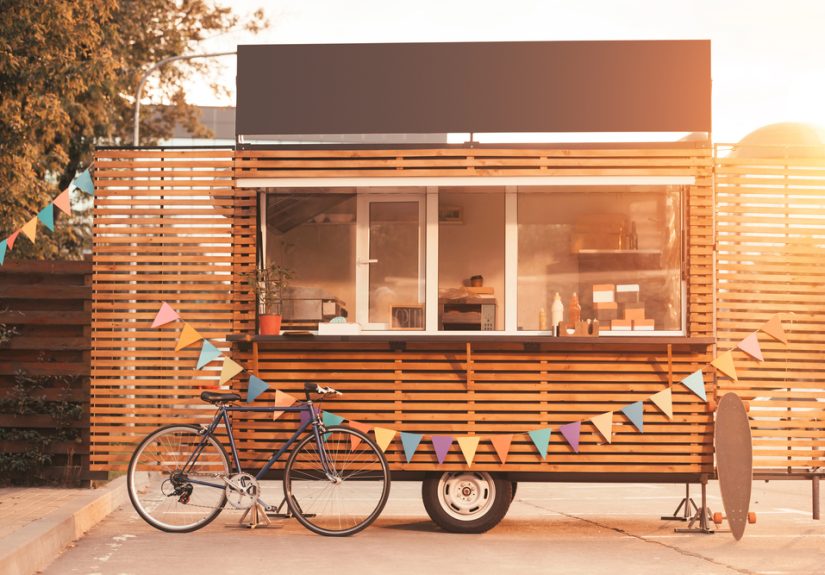
If ghost kitchens are invisible restaurants, food trucks are restaurants with engines. That mobility is their magic. Operators can go where demand is: office districts, breweries, college campuses, private parties, festivals, and weekend events. They can build buzz, test neighborhoods, and create a brand that feels personal, local, and delightfully unpredictable. One day it is lunch service downtown. The next day it is loaded fries beside a live band and a bounce house. America really knows how to combine opportunity and liability.
From an insurance perspective, food trucks are a classic example of a business with layered exposures. There is the vehicle itself, of course, but also the cooking equipment inside it, the modifications made to the truck, the inventory, the generators, the business personal property, the staff, and the public interaction. A food truck can need commercial auto, general liability, property protection, workers compensation, and often additional attention to off-premises operations and customized equipment values.
One common problem is undervaluation. A business owner may insure the truck like a vehicle while forgetting that the real value is not just the chassis. It is the fryers, freezers, wrap, point-of-sale system, plumbing, electrical modifications, signage, and custom buildout that turned a truck into a revenue-generating kitchen. If the coverage does not reflect those modifications, a claim can become a very expensive lesson in fine print.
Food trucks also operate in a maze of permits, local ordinances, event requirements, and location-specific rules. Some venues require certificates of insurance with specific limits. Some festivals require vendors to add organizers as additional insureds. Some municipalities have detailed health, zoning, and parking rules. The operator may see this as bureaucratic chaos. The agent should see it as part of the service plan: review contracts, confirm required limits, and make sure coverage follows the business wherever it parks.
Catering: Bigger Orders, Bigger Expectations
Catering often looks deceptively familiar because the core product is still food. But operationally, catering is a different beast. A dine-in order might be table twelve and a refill request. A catering order might be breakfast for fifty by 8 a.m., lunch for a board meeting at noon, boxed meals for a nonprofit event at 2 p.m., and a wedding reception with alcohol service on Saturday night. Same industry, very different choreography.
That complexity is why more restaurants are treating catering as a standalone growth engine rather than just “extra orders.” A successful catering program needs menus that travel well, packaging that holds up, reliable timing, strong internal coordination, and technology that keeps kitchen operations, guest communications, and delivery schedules aligned. When it works, catering creates high-ticket transactions and broad brand exposure. When it fails, it does so publicly, hungrily, and often in front of people wearing name tags.
From a risk standpoint, catering broadens the map. Food is prepared in one place and served in another. Staff may travel. Equipment may be transported. Vehicles may be owned, rented, or borrowed. Venues may impose insurance requirements. Alcohol service may trigger additional liability considerations. Temporary labor may be used during peak periods. And because events are time-sensitive, a disruption that might be manageable in a storefront can become disastrous in a catering operation.
Agents can help by identifying what kind of catering the client actually does. Is it office lunch drop-off, staffed service, weddings, concessions, private chef work, or all of the above? Does the business transport hot and cold holding equipment? Does it rent vans? Does it use subcontracted drivers? Does it serve alcohol? Does it enter venues with strict contractual insurance requirements? These questions are not paperwork theater. They are how you find coverage gaps before a late delivery, auto accident, or damaged equipment turns into a legal and reputational mess.
How Independent Agents Add Real Value
1. They translate business models into coverage strategies.
The operator says, “We’re just a small food business.” The agent should hear, “We are a multi-channel operation with changing exposures.” That translation is the job. Ghost kitchens may need a sharper look at cyber risk, business interruption, contingent business interruption, and shared-space responsibilities. Food trucks may need properly structured commercial auto and property protection for customized equipment. Caterers may need broader attention to off-premises property, hired and non-owned auto, contract requirements, and event-specific liability concerns.
2. They ask better questions than an online quote form.
A smart agent does not begin with square footage and payroll alone. They ask how the client makes money, where the food is prepared, who owns the kitchen, how orders come in, what third parties are involved, whether the business stores customer data, and what promises are made in venue contracts. That kind of discovery process separates professional advice from a glorified dropdown menu.
3. They help clients survive success.
Many food businesses change fast. A truck adds catering. A caterer opens a commissary. A ghost kitchen launches a second brand and starts shipping farther away. Growth is exciting, but it is also when coverage gets outdated. Agents who keep checking in as operations evolve can help clients avoid the classic problem of being insured for the company they were six months ago instead of the one they are now.
4. They make contracts less dangerous.
In this segment, contracts matter. Commissary agreements, festival vendor agreements, venue contracts, lease provisions, and delivery platform terms can all impose insurance obligations or shift responsibility. Agents are not acting as lawyers, but they can flag red-flag insurance language, verify limit requirements, issue certificates properly, and make sure the insured understands what they promised before they sign first and panic later.
5. They support resilience, not just renewal.
The best agents help clients think operationally. What happens if the POS system goes down on a busy Saturday? What happens if a refrigeration unit fails overnight? What happens if a truck is sidelined before a major event weekend? What happens if a key delivery platform has an outage or a supplier cannot perform? Coverage matters, but so does continuity planning. The businesses that recover fastest are usually the ones that thought through the ugly scenarios in advance.
A Modern Coverage Conversation for Food Service Clients
In a transforming industry, the coverage conversation should be as modern as the business model. That means reviewing general liability, property, business income, workers compensation, commercial auto, cyber, umbrella, and any specialized endorsements that fit off-premises service, spoilage, equipment breakdown, utility interruption, or event-based requirements. It also means checking whether the insured’s property values reflect reality, especially when a food truck or mobile operation includes expensive custom equipment.
Equally important, agents should help clients connect insurance decisions to operational realities. If a caterer depends on recurring corporate lunch orders, timing risk matters. If a ghost kitchen gets most of its orders through digital channels, cyber and platform dependence matter. If a truck operator’s entire business sits inside a customized vehicle, downtime matters. Insurance should reflect the way the business earns revenue, not just the category someone selected on an application.
The food service world is not getting simpler. It is getting more flexible, more digital, more mobile, and more fragmented. That creates pressure for carriers, underwriters, and agents alike. But it also creates opportunity. Agents who understand these models can become trusted advisors to a fast-growing set of businesses that need more than a generic restaurant package and a cheerful email signature.
Conclusion
Ghost kitchens, food trucks, and catering operations are not fringe experiments anymore. They are part of the new architecture of the restaurant economy. Consumers want convenience, operators want flexibility, and technology has made it easier than ever to sell food without relying on a traditional dining room. The result is a transforming industry with exciting upside and very real exposures.
That is why agents have such an important role to play. They can help clients understand how a delivery-first model changes business interruption risk, how a mobile kitchen complicates property and auto valuation, and how an off-site event business turns contracts into part of the risk landscape. More than anything, they can help operators build coverage around how they actually work today, not how restaurants worked ten years ago.
In a market defined by reinvention, the winning agents will be the ones who stay curious, stay consultative, and stay close to how food businesses really operate. Because when the industry keeps changing shape, the best advice is not to squeeze it into an old box. It is to redesign the box.
Experience from the Field: What This Shift Looks Like in Practice
One of the clearest patterns in this space is that operators often describe their businesses in the simplest possible terms, while their actual operations are anything but simple. A ghost kitchen owner may say, “We just do delivery,” but a deeper conversation reveals two virtual brands, a shared commissary lease, platform-based ordering, customer data collection, and a supplier relationship so concentrated that one disruption could shut down revenue overnight. In that scenario, the agent’s value is not abstract. It shows up in better questions, clearer expectations, and a policy structure that reflects reality instead of wishful thinking.
Food truck operators create another real-world lesson: mobility is freedom until something breaks, crashes, overheats, or gets denied at an event because the insurance paperwork is wrong. Many trucks are heavily customized, yet owners sometimes focus on the vehicle itself and underestimate the value of the kitchen built inside it. Agents who slow the conversation down and document the full value of the unit, the equipment, and the business interruption consequences of downtime are often the ones who prevent the ugliest surprises. The truck is not just transportation. It is the storefront, the kitchen, and the cash register rolled into one loud, hardworking rectangle.
Catering clients bring a different kind of complexity. A business can begin with simple office lunch drop-offs and then, almost overnight, expand into weddings, nonprofit galas, school functions, and private events with rented vehicles, temporary staff, alcohol service, and venue contracts loaded with insurance requirements. That kind of growth feels exciting because it is exciting. It also means the risk profile changes faster than many owners realize. Experienced agents often become the first people to say, “This is no longer a basic drop-off operation,” which is not a buzzkill. It is a business-saving observation.
Another common field experience is that operators do not always realize how dependent they are on technology until it fails. A payment outage, ordering platform disruption, hacked account, or point-of-sale issue can stall sales immediately. That is especially true for ghost kitchens and off-premises-heavy businesses, where digital ordering is not a convenience but the front door. Agents who understand that can move the conversation beyond slips, trips, and kitchen fires into cyber hygiene, vendor dependence, and continuity planning. It is not the flashiest part of the discussion, but it is often the part clients remember after the first major tech problem.
Perhaps the biggest lesson from the field is that these businesses do not need agents who talk at them; they need agents who learn them. The most effective advisors are usually the ones who ask how revenue flows, where food travels, who touches the operation, what contracts require, and what would hurt most if business stopped tomorrow. In a transforming industry, that kind of curiosity is a competitive advantage. It helps clients feel understood, helps carriers see a cleaner risk narrative, and helps agencies move from transactional quoting to real partnership. And in a world full of ghost brands, mobile kitchens, and event-driven revenue, real partnership is still one of the few things customers cannot order with a swipe.






 Close
Close