
Table of Contents >> Show >> Hide
- What Is the Family Bass, Exactly?
- Why the Family BASIC Keyboard Matters
- The Secret Sauce: The NES Sound
- How the Family Bass Works
- Why This Feels Bigger Than a One-Off Hack
- Family Bass and the Beauty of Musical Limitation
- Why Retro Music Fans Love This Sort of Thing
- Experiences Around the Family Bass: What This Kind of Project Feels Like
- Final Thoughts
Some projects are impressive. Some are weird. And then there are the rare retro-tech creations that are both gloriously nerdy and genuinely musical. The Family Bass belongs in that last category. At first glance, it sounds like the name of a lost Nintendo side quest or a garage band made entirely of old cartridges. In reality, it is a brilliant mash-up of Nintendo history, hardware hacking, and chip music charm. It turns an NES into a playable instrument by pairing it with a Family BASIC keyboard and letting the console’s signature audio do what it does best: make simple sounds feel unforgettable.
If that premise already makes your inner 8-bit heart sit up a little straighter, good. It should. The story behind the Family Bass is not just about one clever instrument. It is also about why the Nintendo Entertainment System still matters to musicians, tinkerers, collectors, and anyone who has ever heard a bloopy bassline and thought, “Why does this slap so hard?”
What Is the Family Bass, Exactly?
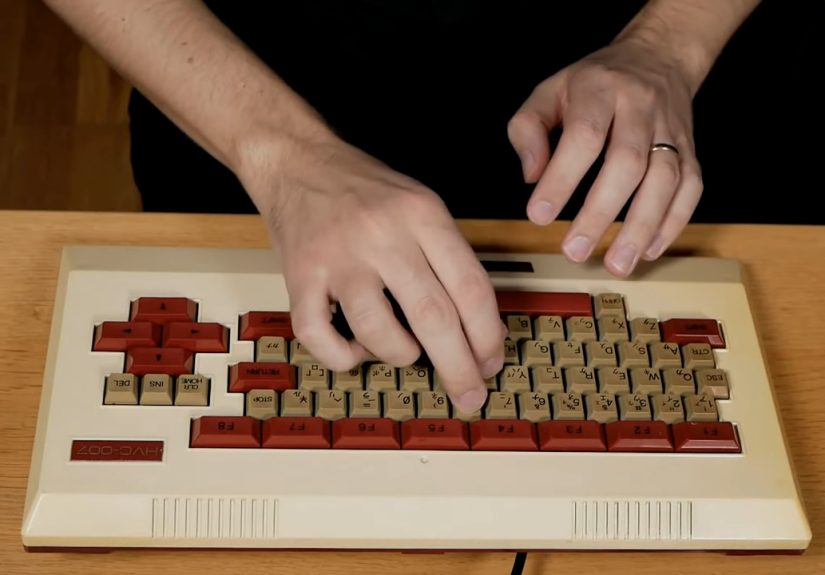
The Family Bass is a modern hardware project built around classic Nintendo parts and custom engineering. Its core idea is simple, but the execution is wonderfully obsessive: connect a Family BASIC keyboard to an NES, then use custom hardware and code to play the console’s internal sound chip live like a real instrument.
That may not sound revolutionary if you grew up in a world where every phone can run a synthesizer app before breakfast. But the Family Bass is special because it does not imitate NES sound. It uses the real thing. The actual console becomes the instrument. Instead of treating the NES as an object behind museum glass, the project turns it into a stage-ready musical tool.
That distinction matters. Plenty of software can mimic retro audio. The Family Bass takes the more romantic route: it leans into original hardware, original quirks, and the slightly stubborn personality of an old game console that was never designed to become a live bass instrument in the first place. Naturally, that only makes it cooler.
Why the Family BASIC Keyboard Matters
To understand why the Family Bass feels so magical, you have to go back to the Famicom era. In Japan, Nintendo’s Family Computer was more than a game machine. Through Family BASIC, Nintendo worked with partners to turn the Famicom into something closer to a family-friendly computer. The package included a keyboard and support for saving programs to cassette, which gave curious users a way to type code, experiment, and treat the console like a lightweight home computer instead of just a cartridge eater.
That idea now feels both futuristic and extremely 1980s. It was a time when companies believed a keyboard could transform any device into a portal to genius. Plug in enough accessories, and maybe your living room would become NASA. Or at least a place where your kid typed ten lines of BASIC and proudly made a square move across the screen.
Family BASIC was not built primarily as a music workstation. Still, it belonged to an era when computing, gaming, and sound were all delightfully tangled together. The same machine that played platformers could also teach programming concepts and encourage hands-on creativity. That spirit is a big reason the Family Bass feels so right. It does not invent a new philosophy for Nintendo hardware. It uncovers one that was already there.
The Secret Sauce: The NES Sound
If the keyboard is the gateway, the sound chip is the soul. The NES audio processing unit is famously limited by modern standards, but those limitations are exactly why it has such a distinctive voice. Its architecture includes pulse channels, a triangle channel, noise, and sample playback. In practice, that means composers had to think carefully, write efficiently, and squeeze melody, rhythm, and personality out of a very small sonic toolbox.
The triangle channel is especially important here. In classic NES music, it often handled bass duties because of its lower, rounder tone. It does not have the flexible volume behavior of the pulse channels, and it is not luxurious by any stretch, but that is part of the charm. The result is a bass sound that feels sturdy, wiry, and surprisingly emotional. It is less “smooth studio session” and more “robot with feelings.”
The Family Bass takes that triangle-wave identity and puts it front and center. Instead of hiding the NES’s limitations, it performs them. Every note carries the character of the hardware. That is why the instrument does not just sound retro. It sounds unmistakably Nintendo-era, with that chewy, mechanical edge fans recognize in an instant.
How the Family Bass Works
The engineering side is half the fun. The original Family BASIC keyboard was designed for the Famicom’s expansion setup, not for a standard NES controller port. So the Family Bass required a custom adapter to bridge that gap. In the finished build, the keyboard’s key matrix is scanned and translated into data the NES can understand. Then custom software running on the console interprets the notes and triggers the audio hardware in real time.
That sentence sounds tidy. The reality is gloriously messy in the best possible way. Old hardware is rarely interested in helping modern creativity move quickly. It sulks. It insists. It demands special handling. The Family Bass succeeds because someone took the time to learn the language of the machine rather than forcing the machine to behave like a modern MIDI controller.
That patience is what separates a gimmick from a meaningful instrument. The project is not just “Look, I made the Nintendo beep!” It is a thoughtful redesign of how vintage parts can be played, translated, and performed with intention. The result is a piece of hardware that feels less like a stunt and more like a conversation between decades.
Why This Feels Bigger Than a One-Off Hack
On paper, the Family Bass is niche. In practice, it touches several passionate worlds at once: retro gaming, DIY electronics, chip music, preservation, and instrument design. That overlap is why people respond to it so strongly. It proves that old technology can still produce new art, not just old memories.
That matters in a culture where nostalgia often gets reduced to passive consumption. Too much retro content asks us to simply remember. The Family Bass asks us to do something more interesting: reinterpret. It takes familiar hardware and gives it a fresh performance life. That is a much more exciting form of tribute.
It also fits beautifully into the longer story of chiptune and chip-inspired music. For years, artists have used aging game hardware and faithful software tools to compose music that is equal parts technical puzzle and emotional craft. The appeal is not just nostalgia. The constraints themselves create style. When you cannot hide behind endless tracks, glossy plug-ins, or orchestral excess, every note has to earn its place.
That discipline is one reason NES-style music remains so compelling. It is compact, melodic, and often shockingly memorable. Whether you are talking about classic game scores or modern projects built with authentic NES workflows, the sound still carries a weird mix of innocence and precision. It is bright but not flimsy. Simple but not empty. Tiny but somehow epic.
Family Bass and the Beauty of Musical Limitation
Great creative tools do not always offer more. Sometimes they offer less, but in exactly the right way. The Family Bass is a reminder that limitation can be a feature, not a bug. Modern digital production gives musicians infinite options, and that is wonderful until it turns your project into a buffet of bad decisions. The NES, by contrast, is the strictest little music teacher imaginable. It gives you a few colors and politely refuses to invent more.
That discipline can be liberating. A musician working within NES-style constraints has to focus on structure, melody, rhythm, and phrasing. There is nowhere to hide a weak idea. If the line is catchy, it works. If it is not, no amount of expensive gloss will save it. The Family Bass embraces that brutally honest setup and turns it into a performance advantage.
There is also something deeply human about hearing an inflexible machine made expressive. A console built for games becomes capable of groove. A keyboard built for home computing becomes a live performance interface. Technology that once seemed closed and predetermined starts to feel open-ended again. That transformation is the real magic.
Why Retro Music Fans Love This Sort of Thing
Retro game music has had an unusually long cultural afterlife. It moved from background audio to fan obsession to a full creative scene. Festivals, tracker communities, hardware mods, and modern game composers all helped prove that chip music was never just a novelty. It developed its own audience, vocabulary, and standards of craft.
The Family Bass lands right in the middle of that tradition. It appeals to people who love the history of game sound, but it also speaks to musicians who care about physical performance. There is a huge difference between sequencing notes and visibly playing them. The latter adds drama, risk, and personality. A live performer can lean into timing, attitude, showmanship, and physical gesture in a way that makes even minimal sound feel larger than life.
That is why a project like this is so satisfying to watch and hear. It gives chip music a body. The notes are not just happening inside a tracker window. They are being pulled out of old hardware by hands, motion, and intent. Suddenly the NES is not merely remembered. It is performing.
Experiences Around the Family Bass: What This Kind of Project Feels Like
Encountering the Family Bass is not just an intellectual experience for retro enthusiasts. It is emotional, tactile, and oddly funny. First, there is the visual surprise. You see a Family BASIC keyboard and an NES in the same setup, and your brain does a tiny double take. One part says, “I know these objects.” Another part says, “I definitely do not know why they are acting like a bass synth.” That tension is delightful. It creates the same feeling as seeing an old appliance suddenly reveal a secret talent.
Then the sound arrives. Not polished modern bass. Not a soft analog pad. Not a cinematic score trying very hard to be important. Instead, you get that unmistakable game-console tone: angular, warm in its own weird way, and full of low-end character that sounds like it escaped from a cartridge and learned stage presence. For longtime players, the reaction can be immediate. The ear recognizes the sonic DNA before the brain finishes naming it. It feels like memory, but it is happening live in front of you.
There is also the experience of contrast. The keyboard suggests typing. The console suggests gaming. The performance suggests musicianship. When those expectations collide, the result is joy. It reminds people that technology is not fixed just because a manufacturer once printed a manual. A device can keep evolving if someone is curious enough to ask better questions. That is a powerful idea for makers, restorers, and artists alike.
For builders and hardware tinkerers, the Family Bass also sparks a very specific kind of admiration: the respectful kind. Not the cheap “Whoa, cool hack” reaction that disappears in ten seconds, but the deeper appreciation that comes from noticing how carefully the system was understood. Old electronics can be unforgiving. Getting them to perform in a new role requires patience, reverse-engineering instincts, and a willingness to meet vintage design on its own terms. People who work with retro hardware know exactly how much persistence that takes.
For musicians, the experience is a little different. The Family Bass is a reminder that expressiveness is not owned by expensive gear. A constrained instrument can still produce charisma. In fact, it can produce more of it, because every gesture counts. When the sound palette is narrow, phrasing becomes dramatic. Timing becomes personality. Repetition becomes groove instead of filler. That is a lesson many modern producers, drowning in infinite presets, could probably use.
And for audiences, perhaps the best part is that the Family Bass makes technical history feel alive rather than academic. You do not have to read a spec sheet to understand why the project matters. You can hear it. You can feel how the machine pushes back, how the performer works with those edges, and how a supposedly outdated console still has something worth saying. That is a rare experience. It turns retro tech from a dusty artifact into a living instrument, and honestly, that is the kind of magic the NES has been threatening to do all along.
Final Thoughts
Family Bass is musical NES magic because it captures the best parts of retro culture without getting stuck in reverse. It respects history, but it does not stop at admiration. It builds. It translates. It performs. By linking the Family BASIC keyboard, the NES sound chip, and modern maker ingenuity, the project shows how old technology can still surprise us when it is approached with curiosity instead of mere nostalgia.
More than anything, the Family Bass works because it understands the emotional truth of classic game sound: those tiny voices were never actually tiny. They carried melody, personality, and imagination far beyond the limits of the hardware that produced them. Decades later, that same spirit is still humming inside the machine, waiting for someone to plug in a keyboard, press a key, and let the magic wobble to life.
Note: This article is intended for general informational and editorial use, and it is based on real historical and technical information about Family BASIC, NES audio design, chip music culture, and the Family Bass project.







 Close
Close