
Table of Contents >> Show >> Hide
- The Real EV Sales Problem Is Bigger Than a Gearbox
- Why Manual Transmissions Still Matter in a Mostly Automatic Country
- The Manual Is Really About Engagement
- Why This Matters for EV Sales Even If Most Buyers Never Wanted a Stick
- Automakers Have Noticed, and Some Are Getting Creative
- Can EVs Win Over Drivers Who Love Manuals?
- The Sales Lesson: Practical Barriers Start the Doubt, Emotional Barriers Finish It
- Real-World Experiences: What This Looks Like on the Road and in the Showroom
- Conclusion
Electric vehicles have a lot going for them. They are quick, quiet, efficient, and increasingly normal in everyday traffic. They can save drivers money on fuel, cut routine maintenance, and make a commute feel oddly futuristic in the best way. Yet EV sales in the United States still hit a strange wall. Plenty of shoppers admire electric cars from a respectful distance, then wander back toward hybrids, gas models, or the used lot with the look of someone who just opened a fancy restaurant menu and ordered fries anyway.
One reason rarely tops consumer surveys, but it shows up again and again in car culture: many people still want a manual transmission, or at least the kind of hands-on driving experience a manual represents. That does not mean every EV shopper is secretly pining for a clutch pedal. Most are not. Price, charging, range confidence, and infrastructure remain bigger mainstream barriers. But the manual-transmission issue matters because it reveals a deeper truth about the EV transition. For a meaningful slice of drivers, especially enthusiasts, the problem is not just what electric cars cost. It is what they feel like.
That emotional sticking point helps explain why EV adoption has sometimes looked less like a smooth revolution and more like a group project where half the class is motivated, a quarter is skeptical, and one guy in the back keeps saying, “Sure, but can I still row my own gears?”
The Real EV Sales Problem Is Bigger Than a Gearbox
Let’s be fair to the data before we get romantic about shifters. The biggest obstacles to EV growth are still practical. Many Americans remain worried about public charging availability, battery repair costs, purchase prices, long road trips, and range anxiety. Even in a market with more EV choices than ever, many shoppers still do not believe the charging ecosystem is as easy, fast, or dependable as it needs to be.
That matters because buying a car is rarely a pure values exercise. Most households do not shop for a vehicle the way they shop for a statement piece. They shop for something that has to survive school pickup, grocery runs, summer heat, holiday travel, bad parking lots, and the occasional mystery beep from the dashboard. If a gas or hybrid model feels simpler, more familiar, and easier to live with, many buyers will choose familiarity every time.
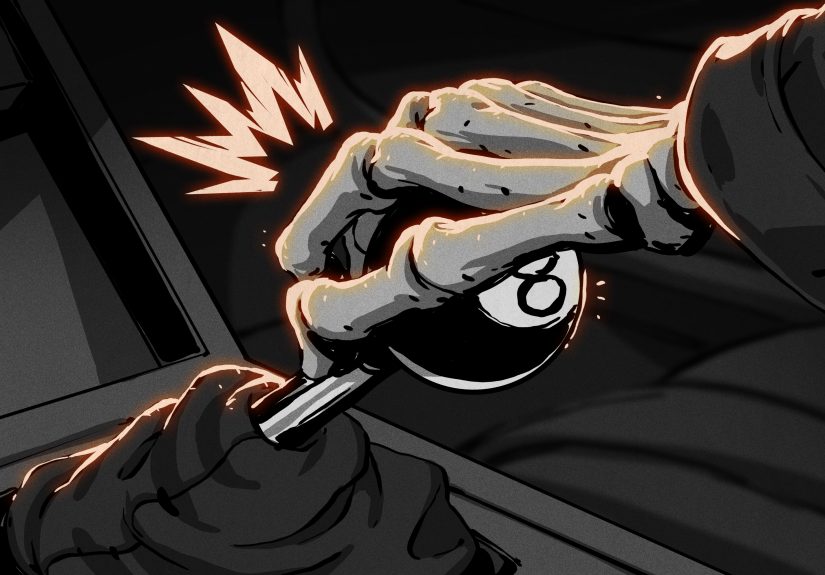
Still, the transmission question should not be dismissed as niche trivia. Manual transmissions are not just hardware. They symbolize control, involvement, mechanical feedback, and the feeling that the driver is doing something more than issuing polite digital suggestions to a battery pack. In that sense, the manual is not the whole problem. It is the mascot for a larger resistance to driving that feels too filtered, too smooth, or too disconnected.
Why Manual Transmissions Still Matter in a Mostly Automatic Country
Yes, manuals are rare in modern America. Automatic transmissions dominate the market, and by a mile. In newer vehicles, stick shifts are now a tiny minority choice. But rarity does not equal irrelevance. If anything, scarcity has made manuals more emotionally loaded. They are no longer ordinary transportation equipment. They are identity equipment.
That is why small manual-friendly models punch above their weight in enthusiast culture. The Subaru WRX continues to attract a strong stick-shift crowd. BMW has leaned back into manuals for cars like the Z4 and M2. Toyota has made a point of keeping manual options alive in driver-focused models such as the GR Corolla and GR86. At the same time, every year brings news of another manual disappearing from the market. The Nissan Versa manual is gone. The Volkswagen Golf R dropped its stick. Some Honda Civic manual options have been narrowed. The list of available three-pedal cars keeps shrinking, which only increases their symbolic value.
In plain English: Americans do not buy many manual cars overall, but the people who love them really love them. And when a technology shift asks those drivers to accept not just an automatic but a single-speed electric drivetrain with almost no traditional powertrain drama, it can feel less like progress and more like surrender.
The Manual Is Really About Engagement
Ask a manual fan why they prefer a stick shift and you usually do not get a spreadsheet answer. They do not say, “Because I have computed the superior emotional return on mechanical interaction.” They say things like, “It feels better,” “I’m more connected,” or “It makes even a slow car fun.” That is the point.
Manual transmissions force participation. The driver times the shift, works the clutch, balances the engine, and feels the car’s rhythm. Even a modest car can feel entertaining because the driver is part of the performance. EVs, by contrast, are often engineered to remove friction. They deliver instant torque, quiet operation, and seamless acceleration. From a convenience standpoint, that is terrific. From a tactile standpoint, some drivers experience it as sterile.
This is one of the most overlooked issues in EV marketing. For years, automakers sold electric cars by emphasizing speed, efficiency, and tech. Those are real strengths, but they do not address the emotional language that many drivers use to describe joy behind the wheel. An EV can be objectively faster than a manual sports coupe and still leave an enthusiast cold. Winning the stoplight drag race is not the same as winning the soul.
What Enthusiasts Hear When EVs Are Pitched
When car fans hear “instant torque,” they often translate it as “very fast, very easy, maybe a little one-note.” When they hear “no need to shift,” some translate that as “one less thing to enjoy.” And when they hear “software-defined vehicle,” they may hear “computer with cupholders.” That is not entirely fair, but it is real.
Why This Matters for EV Sales Even If Most Buyers Never Wanted a Stick
Here is the crucial distinction: manual demand is not a mass-market reason EV sales slow, but it does expose a mass-market fear. People do not want their next vehicle to feel less interesting, less personal, or less satisfying than the one they already own. Even buyers who have never driven a manual often respond to this same concern in softer language. They say a car feels boring. They say it lacks character. They say it feels like an appliance.
That is where the manual-transmission debate becomes bigger than the manual itself. It highlights the emotional tradeoffs buyers think they are being asked to make. Mainstream drivers may not be asking for a clutch pedal, but many are quietly asking for a reason to care. If EVs are pitched only as efficient tools, then hybrids often look like the compromise choice: better fuel economy without changing driving habits, road-trip routines, or expectations about what a car should feel like.
This helps explain why hybrids remain especially appealing. They ask less of the customer. They do not demand a lifestyle shift. They also avoid the emotional shock that can come with moving from a lively gas car to a hyper-smooth EV. For shoppers on the fence, the hybrid can feel like evolution, while the EV can still feel like a leap.
Automakers Have Noticed, and Some Are Getting Creative
Manufacturers are not blind to this. Toyota and Lexus have experimented with simulated manual-transmission setups for EVs, complete with a shifter, a clutch-like experience, and artificial power interruptions designed to mimic gear changes. Jeep’s Magneto concept explored an electric off-roader with manual-like engagement. Honda has signaled interest in creating more emotional shifting experiences for electrified performance cars, even if it has been cautious about literal fake manuals.
Purists will roll their eyes at simulated shifting, and honestly, that reaction is part of the fun. Some drivers hear “fake manual EV” and immediately picture karaoke for gearheads. Not the real thing, they say. Fair enough. But these experiments matter because they prove automakers understand the problem. The market is not asking only for more range and lower prices. It is also asking, sometimes indirectly, for delight.
That is why performance EVs face a particularly tricky mission. They cannot rely on torque alone forever. The first time a driver stomps on the accelerator in a fast EV, the reaction is usually awe. By the tenth time, awe becomes expectation. Engagement has to come from somewhere else: steering feel, brake tuning, weight balance, sound design, track durability, or some new kind of interactive control. If automakers ignore that, they risk building cars that are impressive but emotionally forgettable.
Can EVs Win Over Drivers Who Love Manuals?
Some already have. There is a subset of enthusiasts who have embraced EVs for what they are instead of mourning what they are not. They love the instant response, the center-of-gravity advantages, and the sheer weirdness of silent speed. They do not need a pretend third pedal. They want the best expression of electric performance, not a nostalgia costume.
But that group is not the whole enthusiast market. Many drivers still want a machine that feels mechanical, imperfect, and interactive. To them, a great drive includes anticipation, timing, noise, and effort. They are not rejecting innovation. They are rejecting the idea that removing layers of involvement automatically improves the experience.
For automakers, the smarter move is not to lecture these people about progress. It is to design EVs that acknowledge their concerns. That could mean lighter cars, sharper chassis tuning, better steering, configurable driving modes that change more than throttle mapping, or even limited-production enthusiast EVs that explore manual-like interfaces without pretending they are identical to gas cars. The worst strategy is to tell passionate drivers that they are obsolete. Few sales tactics have ever been improved by adding a shrug.
The Sales Lesson: Practical Barriers Start the Doubt, Emotional Barriers Finish It
When a shopper hesitates on an EV purchase, the first objection may be practical. Charging. Price. Long-distance travel. Resale. Repair costs. But after the practical objections are debated, emotional questions often decide the sale. Will I enjoy living with this thing? Will I miss the car I have now? Will this feel like an upgrade or like homework?
That is where the manual-transmission sticking point becomes such a useful lens. It reminds us that vehicles are not bought only for transportation. They are bought for ritual, comfort, confidence, freedom, and sometimes a little harmless ego. The manual gearbox embodies that truth because it is beloved not for convenience, but for participation.
EVs will keep growing. The technology is improving, charging networks are expanding, and electric models are reaching more segments every year. But the market will move faster when automakers stop assuming that efficiency alone sells the future. People want better cars, not just newer powertrains. And for some drivers, “better” still includes a sense of play.
In other words, the EV market does not have a transmission problem in the literal sense. It has a human problem. Drivers want to feel involved. They want confidence, convenience, and character all at once. The brands that solve that combination will not just sell more EVs. They will sell desire.
Real-World Experiences: What This Looks Like on the Road and in the Showroom
Spend time around real shoppers, weekend drivers, or anyone who lingers too long near a sports sedan in a parking lot, and the transmission conversation starts making a lot more sense. The issue is not always that someone literally refuses to buy a car without a clutch. Sometimes it is subtler. A driver takes a test drive in an EV, comes back impressed, and says something like, “That was quick, but I’m not sure it was fun.” That sentence is doing a lot of work.
For many longtime drivers, especially those who learned on older Hondas, Mustangs, Miatas, WRXs, or BMWs, driving is tied to muscle memory. There is a rhythm to it. Left foot down. Right hand over. Engine note rises. Shift lands. Car settles. It is not just transportation; it is choreography. When they step into an EV, the choreography disappears. The silence is eerie at first, then interesting, then maybe a little lonely. Some adapt immediately. Others feel like they are watching the drive instead of performing it.
There is also the commuting experience. In heavy traffic, a manual can be annoying, yes. Even manual lovers will admit that inching along for 45 minutes is not exactly spiritual enlightenment. Yet many of those same drivers still keep buying stick-shift cars because the reward comes later, when the road opens up, the corner tightens, and the car feels alive in their hands. EVs are often brilliant in traffic. Smooth launches, quiet cabins, easy one-pedal driving. But for drivers who value interaction, the convenience can feel like it came at the expense of the reward.
Then there is the showroom psychology. A buyer cross-shops a sporty gas car, a hybrid, and an EV. The EV wins on acceleration and technology. The hybrid wins on familiarity. The manual-equipped gas car wins on emotion. That buyer may know the manual is the least rational choice. They may even joke about it. But rational and memorable are not the same thing. People live with their cars every day. They do not want to merely respect them. They want to look back at them in a parking lot at least once in a while.
Another experience that keeps showing up is the “second-drive effect.” The first EV test drive often focuses on novelty: the instant torque, the screen, the quiet, the regenerative braking. The second drive is where more nuanced reactions appear. That is when shoppers start asking whether every merge feels the same, whether the steering communicates enough, whether the cabin feels too isolated, and whether the car has a personality beyond being very competent. In a manual car, personality often arrives naturally because the driver helps create it. In an EV, the manufacturer has to engineer it more deliberately.
Even enthusiasts who are open-minded about electrification often describe their favorite EV experiences in language that sounds suspiciously old-school. They praise steering precision, balance, throttle calibration, brake feel, and confidence at corner entry. In other words, they are still chasing involvement. The badge on the powertrain changed; the emotional checklist did not. That is why manual-transmission nostalgia keeps hanging around the EV conversation. It is not only about preserving old hardware. It is about preserving the feeling that driving can still be a skill, a ritual, and a source of joy rather than simply a cleaner way to move from one charging stop to the next.
Conclusion
EV sales are not stalling simply because Americans miss manual transmissions. The bigger barriers are still affordability, charging convenience, and trust in the ownership experience. But the manual debate reveals something deeper and more important: a lot of drivers still want to feel connected to the machine. They want more than efficiency. They want character. Until more EVs deliver that emotional payoff as convincingly as they deliver instant torque, some shoppers will keep choosing hybrids, gas models, or the shrinking number of cars that still let them shift for themselves.





 Close
Close