
Table of Contents >> Show >> Hide
- The Viral Surprise, Explained (And Why People Cried Into Their Coffee)
- Why This Matters More Than a Cute Moment
- A Quick (Respectful) Primer on ASL and Deaf Culture
- How a Neighborhood Can Actually Pull This Off (Without Making It Weird)
- Small Signs, Big Impact (What to Learn First)
- What Not to Do (A Friendly Guide to Avoiding an “Oops”)
- Keeping the Momentum: Make the Neighborhood More Accessible Year-Round
- The Bigger Picture: Inclusion Is a Skill, Not a Mood
- Conclusion: A Surprise That Can Turn Into a Standard
- of Real-World Experiences Related to This Topic
Imagine walking out your front door on a regular Tuesdaysame sidewalks, same mailboxes, same neighbor who always
pretends they don’t see you when you’re carrying seven grocery bagsand suddenly everyone is signing “Good
morning!” like it’s the most normal thing in the world. Your barista signs. The dog-walker signs. The guy who
normally communicates exclusively by nodding at sports highlights? Yep, signing.
That’s the heart-melting premise behind one of the internet’s favorite feel-good moments: an entire neighborhood
quietly learning sign language to surprise a Deaf neighbor. It’s sweet, it’s cinematic, and it’s the rare “viral”
story that doesn’t end with someone trying to sell you questionable detox tea.
But the best part isn’t the surprise itself. It’s what the surprise represents: a community choosing to close a
communication gap that too often leaves Deaf and hard-of-hearing people doing extra work just to participate in
everyday life. And yesthere are real-world versions of this idea, including one widely shared campaign video that
helped spark the trend (with a small footnote: it was staged as an ad, but the inclusion message hit home anyway).
The Viral Surprise, Explained (And Why People Cried Into Their Coffee)
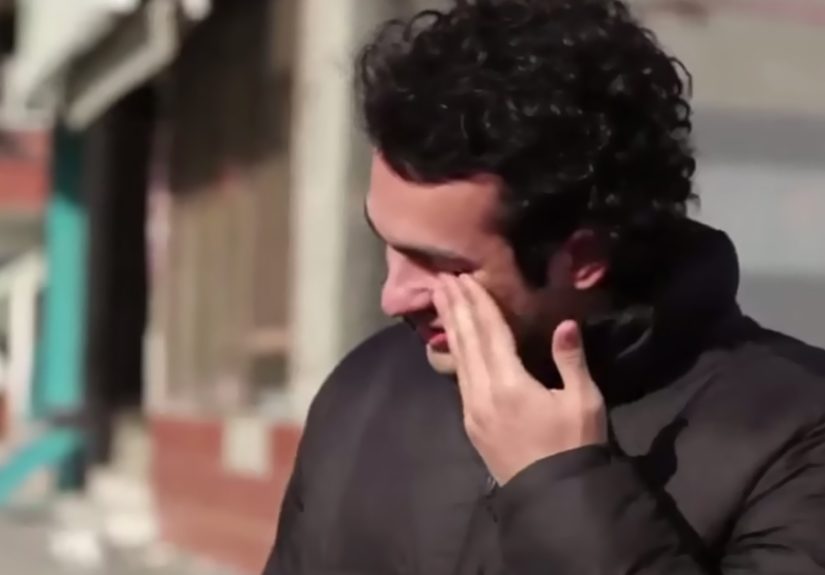
The most famous “whole neighborhood signs” story that rocketed around the web in 2015 came out of Istanbul, where a
Deaf man walked through his neighborhood and found strangers, shopkeepers, and passersby communicating with him in
sign language. The reactions were pricelessequal parts disbelief, joy, and that look you make when you realize
humans might be okay after all.
The important context: it was created as part of a brand campaign. That might make some people roll their eyes, but
it also made millions of viewers consider something practical: “If a whole neighborhood can learn to sign for one
person, why can’t I learn at least a few signs for the people around me?”
That question is the real gift. Because the “surprise” isn’t just a surpriseit’s a proof of concept. It shows what
happens when a community swaps “I don’t know how” for “Let’s figure it out.”
Why This Matters More Than a Cute Moment
Deafness isn’t a personality trait or a plot twistit’s a lived experience that intersects with everything from
friendships to errands to safety. A casual chat at the mailbox, a quick note from a neighbor, or an announcement at
a community meeting can become complicated fast when communication isn’t accessible.
And here’s the key point: there isn’t one universal “Deaf experience.” Some people use American Sign Language (ASL)
as their primary language. Others rely on speechreading (lip-reading), written communication, captioning, assistive
technology, or a mix of methods depending on the setting. Accessibility isn’t one-size-fits-all, and the best
approach is always to ask what works for the person you’re communicating with.
Learning sign language doesn’t “fix” anything about a Deaf person. It simply removes frictionlike adding a ramp to
a building or captions to a video. It’s not charity; it’s participation.
A Quick (Respectful) Primer on ASL and Deaf Culture
ASL is a full language, not “English with hand motions”
ASL is a complete, natural language with its own grammar and structure. It’s expressed through hand movements,
facial expressions, and body language. If you’ve ever watched someone sign and thought, “Wow, this is expressive,”
that’s not a gimmickit’s part of how the language works.
“Deaf” isn’t a bad wordand terminology matters
Many people identify as Deaf, hard of hearing, late-deafened, DeafBlind, and more. Preferences vary, and the most
respectful move is to follow the person’s lead. Also: some older terms are inaccurate or offensive, and it’s worth
retiring them permanently (and without a farewell party).
ASL isn’t universal
ASL is primarily used in the U.S. and parts of Canada, but many countries have their own distinct sign languages.
Even within ASL, there can be regional variationsjust like spoken languages have accents and local slang.
How a Neighborhood Can Actually Pull This Off (Without Making It Weird)
A surprise should feel like joynot like a reality show ambush. The goal is connection, not spectacle. Here’s a
practical, respectful roadmap that works whether you’re organizing five neighbors or fifty.
1) Start with consent… without spoiling the surprise
You don’t need to announce “We’re doing a surprise!” but you do need to make sure the plan aligns with what your
neighbor would actually enjoy. A trusted friend, family member, or someone who knows their communication
preferences can help you avoid awkward misstepslike planning an ASL surprise for someone who doesn’t use ASL.
2) Recruit a small “core team”
Every neighborhood has at least one organizer type: the person who can coordinate a block party, find a missing
cat, and somehow secure folding chairs out of thin air. Get 3–6 people who can commit to the plan and handle:
scheduling, practice sessions, learning resources, and communication with anyone “in the know.”
3) Learn from Deaf-led resources when possible
The gold standard is learning from Deaf instructors or Deaf community organizations. It’s more accurate, more
culturally grounded, and more supportive of the community you’re trying to include. If you’re using online lessons,
look for reputable education programs that emphasize correct signing and cultural contextnot “ASL in 10 minutes or
your money back.”
4) Choose a realistic learning goal
You’re not trying to turn the whole neighborhood into fluent interpreters in a month. You’re trying to make daily
life warmer and easier. A solid beginner goal is:
- Greetings (hello, good morning, how are you?)
- Basic neighbor talk (need help? package delivery, thank you, sorry, please)
- Safety and logistics (car, stop, wait, okay, emergency)
- Fingerspelling (names, addresses, quick clarifications)
5) Practice in short bursts (consistency beats intensity)
A neighborhood plan that works:
- 2 weekly mini-sessions (20–30 minutes each) to learn signs and practice
- 1 weekend meetup (45–60 minutes) for review and confidence-building
- Daily “micro practice” (5 minutes) using flashcards, videos, or fingerspelling drills
If you want a secret weapon: assign “phrase of the day” and have people use it with each other (quietly) around the
block. It keeps things fun and prevents the classic problem of “I learned it once and then my brain immediately
deleted it like an old group chat.”
6) Plan the momentthen keep it simple
The surprise moment doesn’t need confetti cannons. In fact, simpler is often better:
- A regular morning walk where several neighbors greet them in sign
- A small gathering with a short signed message like “We wanted to talk with you”
- A community welcome sign that includes ASL-friendly visuals (and is easy to read)
And one major rule: don’t film them without permission. If you want a keepsake, ask afterward.
The point is connection, not content.
Small Signs, Big Impact (What to Learn First)
The earliest wins come from signs that show respect and reduce friction. Focus on:
Connection starters
- Hello / good morning
- How are you?
- Nice to meet you
- Thank you
Neighbor basics
- Need help?
- Package / delivery
- Sorry
- Please / okay
Safety and practical life
- Wait / stop
- Car / road
- Emergency / help
- Doctor / police (when appropriate)
Quick note: signs can vary by region, and accuracy matters. The most respectful approach is to learn from reliable
instruction and stay open to correctionwithout making the Deaf person do all the teaching.
What Not to Do (A Friendly Guide to Avoiding an “Oops”)
Don’t treat Deafness like a surprise party theme
The goal is inclusion, not “Look how nice we are.” Keep it grounded: you’re learning a language to communicate with
your neighbor, the same way you’d learn “hola” if you moved into a Spanish-speaking community. (Okay, maybe with
fewer rolled R’s.)
Don’t assume everyone who’s Deaf uses ASL
Some Deaf and hard-of-hearing people don’t sign, or sign only in certain contexts. Effective communication depends
on the individual and the situation.
Don’t rely on kids to interpret
In medical, legal, and other high-stakes settings, using family membersespecially childrenas interpreters can be
inappropriate and can lead to serious misunderstandings. The broader rule: interpretation is a professional skill,
and when it’s needed, it should be provided appropriately.
Don’t stop after the big moment
If the surprise is the finish line, it becomes a performance. If the surprise is the start line, it becomes a
relationship.
Keeping the Momentum: Make the Neighborhood More Accessible Year-Round
Once people get a taste of how good it feels to communicate directly, the next step is to make accessibility normal.
Here are practical upgrades that don’t require a city council meeting or a 40-slide PowerPoint:
Host inclusive gatherings
- Choose well-lit spaces where signing and facial expressions are easy to see
- Reduce background noise when possible (even signing households benefit from calm settings)
- Use texting or group chats for quick neighborhood updates
Improve “everyday communication” systems
- Consider visual doorbells or flashing alerts for homes that want them
- Use clear signage for events: time, location, and a text contact number
- When sharing videos, add captions (many platforms make this easier than ever)
Support access in public-facing spaces
If your neighborhood includes shared spacesHOA meetings, community events, local businesseslearn what “effective
communication” means in practice. Accessibility can include qualified interpreters, real-time captioning, written
materials, or other aids depending on the situation and the person’s needs.
The Bigger Picture: Inclusion Is a Skill, Not a Mood
It’s easy to think accessibility is something that happens only in hospitals, courtrooms, or official buildings. In
reality, it’s a daily-life issue: can you chat at the mailbox, understand what’s happening at the neighborhood
meeting, or ask a quick question at a shop without needing a translator?
Learning sign language as a community is powerful because it shifts the burden. Instead of one person constantly
adapting, everyone shares the workand everyone gains something: a new language, a new perspective, and a reminder
that communication is more than sound.
Also, it makes your neighborhood cooler. And not “we installed a fountain” cool. More like “we actually show up for
each other” cool.
Conclusion: A Surprise That Can Turn Into a Standard
The “entire neighborhood learns sign language” story endures because it taps into something simple: being seen.
When a Deaf neighbor suddenly finds people meeting them halfway, the surprise isn’t just linguisticit’s emotional.
It says, “You belong here. We want to know you. We’re not going to make you do this alone.”
If you’re inspired by the idea, start small. Learn a greeting. Learn “thank you.” Learn how to ask, “What’s the
best way to communicate?” Those steps are humblebut they’re also how communities change.
of Real-World Experiences Related to This Topic
Stories like “the whole neighborhood signs” feel almost magical, but the real-life experiences that echo it tend to
be smallerand sometimes even more meaningful. One example that made the rounds recently involved a Deaf man dining
out and being surprised when a waitress used ASL with him. Nothing flashy, no crowd, no camerasjust a regular
moment where communication became easy. For many Deaf people, that kind of interaction is rare enough to feel like
a holiday. It’s not about perfect signing; it’s about being addressed directly instead of being spoken “through”
someone else.
Another experience shows up in community safety efforts. In some places, students and local advocates have taught
basic ASL to police officers and public-facing staff so first-contact interactions don’t default to confusion or
fear. The lesson isn’t “everyone should become fluent.” The lesson is that a handful of signs, paired with better
communication habitsfacing the person, getting attention first, avoiding backlighting, staying patientcan lower
stress in high-stakes situations. That’s not just nice. That’s practical.
Families describe similar “aha” moments when they learn that good communication isn’t one trickit’s a toolbox.
Sometimes the best tool is signing. Sometimes it’s writing down addresses and numbers. Sometimes it’s choosing a
quieter corner table so speechreading is easier, or turning on captions so everyone can follow along. People often
assume accessibility requires expensive equipment or complicated rules. In reality, many improvements are just good
manners with a little planning.
People learning ASL also share a common experience: the emotional shift from “I’m memorizing vocabulary” to “I’m
building a bridge.” Early on, learners worry about messing up. Then they realize that respectful effort matters.
Deaf communities routinely encourage hearing learners who show humility, practice consistently, and understand that
correction isn’t criticismit’s how languages are learned. The key is to treat ASL as a language you’re honored to
learn, not a party trick you perform for applause.
Finally, the most important experience is what happens after the initial burst of inspiration. If the neighborhood
keeps practicingusing signs at cookouts, adding captions to event videos, sharing resources, inviting Deaf-led
educatorsthen the “surprise” becomes something sturdier: belonging. The best version of this story isn’t the one
where everyone learns sign language for a day. It’s the one where they keep learning because now they can’t imagine
going back to a neighborhood where someone feels left out in their own front yard.




 Close
Close