
Table of Contents >> Show >> Hide
- What Sony Actually Cut
- Why This Feels Bigger Than a Simple Product Discontinuation
- How We Got Here
- No, Physical Media Is Not Completely Dead
- Who Actually Loses Something Here?
- What Sony’s Move Really Says About Consumer Tech in 2025
- The Human Side of the Story: What the Writable Media Era Felt Like
- Conclusion
- Additional Reflections: 500 More Words on the Experience of a Writable-Media World
There are some announcements that sound like ordinary corporate housekeeping, and then there are the ones that make an entire generation suddenly smell warm plastic, hear a disc tray whirring open, and remember exactly where they kept the Sharpies. Sony’s decision to stop producing writable optical media belongs firmly in the second category. It is not just a manufacturing change. It is a cultural footnote, a tech-history milestone, and, for anyone who ever burned a vacation video at 1 a.m. while begging the progress bar not to freeze at 99%, a tiny emotional earthquake.
For years, writable optical media sat at the intersection of convenience, control, and optimism. Blank CDs made us amateur DJs. Blank DVDs made us family archivists. Recordable Blu-ray discs made us feel unusually responsible, like the kind of adults who backed things up before a hard drive started making haunted-house noises. Sony was one of the companies most closely associated with that whole ecosystem, so its retreat carries extra symbolic weight. When the brand that helped define the format starts stepping away from blank discs, MiniDiscs, MD Data, and MiniDV cassettes, it feels less like a product update and more like the house lights coming up after a very long movie.
That is why this story matters. Sony is not merely trimming an old catalog category that a few enthusiasts still click on by accident. It is stepping back from a form of media that once represented ownership, permanence, and the oddly satisfying act of making your own copy of something and knowing exactly where it lived. Not in the cloud. Not behind a password reset. Not trapped inside an app with a monthly fee. Just right there, in a case, on a shelf, with your terrible handwriting on the label.
What Sony Actually Cut
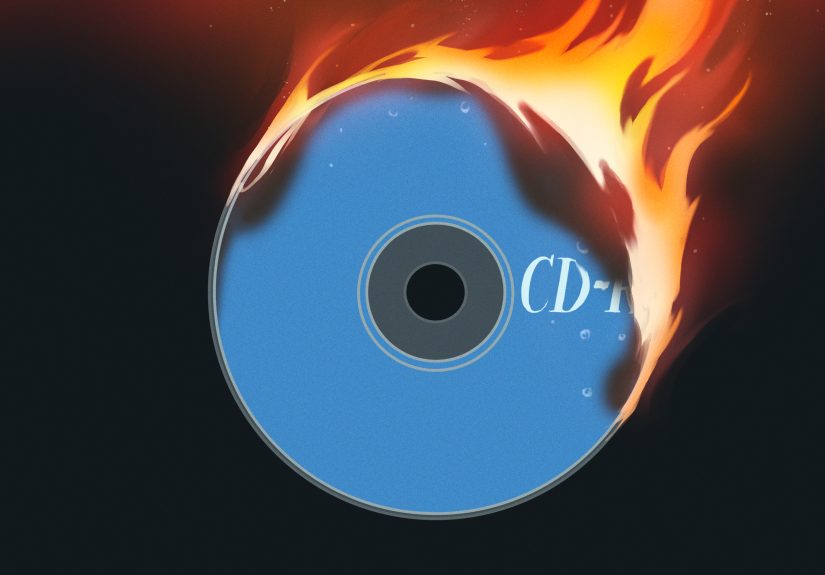
Let’s start with the important distinction, because the internet occasionally hears “Blu-ray” and immediately sprints into a graveyard carrying a black umbrella. Sony’s move was about writable media. In practical terms, that means blank, recordable formats used by consumers to save their own content. The company said it would end production of recordable Blu-ray Disc media, recording MiniDiscs, recording MD Data, and MiniDV cassettes. No successor models are planned.
That matters because it is easy to misread this as “Blu-ray is dead” or “all discs are over.” That is not quite what happened. The announcement did not mean every movie on a Blu-ray shelf instantly evaporated into streaming mist. It also did not mean every Blu-ray player became a paperweight overnight. Commercially pressed movie discs are a separate category, and physical media as a whole did not vanish with this decision. What vanished was Sony’s role in manufacturing blank media for users who still wanted to record, burn, archive, or preserve content themselves.
Still, symbolism matters in tech, and this one lands hard. Sony was not some random bystander arriving late to the party with a folding chair and store-brand chips. It was one of the defining names behind the Blu-ray era. So even though writable media is a niche market now, the company’s exit reads like a formal acknowledgment that the everyday disc-burning age is no longer everyday at all.
Why This Feels Bigger Than a Simple Product Discontinuation
Part of the emotional punch comes from Sony’s history with optical formats. Blu-ray was introduced as a next-generation optical storage format built to carry more data than DVD, making it ideal for high-definition video and large files. Later, Blu-ray became a household name thanks to hardware adoption, the movie industry, and Sony’s own ecosystem. In other words, Sony did not just sell the bucket. It helped dig the well.
That is what gives this story its “end of an era” energy. When a company that once helped define how people stored HD video decides the blank media business no longer makes sense, it tells you something important about where the market has gone. Consumers changed. Habits changed. The humble idea of making and keeping your own local copy went from normal behavior to enthusiast behavior.
There is also a deliciously modern irony here. For years, digital life was sold as frictionless progress. No shelves, no clutter, no cases, no rewritable discs, no tape heads, no fiddling, no problem. And that is true right up until a title disappears from a streaming service, your login breaks, a subscription price jumps, a cloud account gets messy, or a family video sits on an aging device that you swear you will organize “sometime this weekend,” a phrase that has destroyed more archives than malware ever could.
How We Got Here
Streaming Ate the Everyday Use Case
The biggest reason writable optical media faded is also the least mysterious: most people stopped needing it. Once streaming became the default way to watch movies, binge shows, and listen to music, the average household had far fewer reasons to burn discs. You no longer needed to back up recorded TV in the same way, build video libraries from broadcast recordings, or hand someone a disc as the easiest way to share media.
Convenience won the mainstream market. Streaming is immediate, searchable, portable, and annoyingly good at making laziness feel like innovation. It replaced the physical ritual with instant access, and for most people that was a trade worth making. The disc spinner lost to the “play next episode” button, and honestly, it never really recovered.
Flash Storage and Cloud Backups Took the Rest
The second hit came from elsewhere in the storage world. USB drives got cheaper. SD cards got roomier. External SSDs became fast enough to feel magical. Cloud backup became the polite nag in the corner of modern computing. When people did want to save files, they increasingly chose methods that were quicker, smaller, and easier to rewrite than blank discs.
Writable optical media began to look less like a practical tool and more like a specialized option. Not a bad one, just not the first one most consumers reached for. Once that happened, production volumes fell, shelf space shrank, and the economics started to wobble. Sony’s earlier workforce cuts tied to optical media production made it clear that weak demand was not a temporary dip. It was the new weather.
The Hardware Ecosystem Stopped Feeling Normal
There is another reason these formats faded: the supporting hardware gradually stopped being standard. A lot of modern laptops do not include optical drives at all. Many younger users have never routinely burned a disc in their lives. Even among people who still own discs, plenty now use them only for playback, not recording.
Once the drive disappears from the average computer, writable media stops being a casual option. It becomes a deliberate hobby, a preservation strategy, or a professional workflow. That shift changes everything. Mass-market products need mass-market habits. Writable discs no longer had them.
No, Physical Media Is Not Completely Dead
This is the part where the sensible adults clear their throats while the panic merchants dramatically fling themselves across the fainting couch. Sony cutting writable optical media is significant, but it is not identical to “the end of all discs.” Other manufacturers still exist in the market, especially for recordable Blu-ray. Commercial Blu-ray movies also continue to occupy their own lane, and for collectors, cinephiles, and home-theater fans, that lane still matters a lot.
In fact, one reason physical media refuses to vanish entirely is quality. Blu-ray and especially 4K Blu-ray continue to have a strong reputation for better picture and audio than most mainstream streaming services. That comes down to data rates, compression, and the simple truth that convenience often arrives with a side order of compromise. Streaming is terrific for access. Physical media is terrific for fidelity. These are not the same thing, and enthusiasts know it.
There is also the issue of ownership. A disc on your shelf is gloriously old-fashioned in the best possible way: it is there because you bought it, and it keeps being there unless you lose it, crack it, or lend it to that one friend who still has your copy of The Dark Knight and insists they are “pretty sure it’s somewhere.” Streaming licenses change. Catalogs rotate. Menus shift. Interfaces get redesigned by people who seem to believe your favorite title should be three swipes deeper every quarter. Physical media avoids all that drama.
So no, Sony’s decision does not mean every part of physical media collapses tomorrow. It does, however, confirm that writable optical media has moved out of the mainstream and into legacy territory. That is the real headline, and it is plenty big enough on its own.
Who Actually Loses Something Here?
The people most affected are not necessarily the loudest people on social media. They are the quiet, practical users who treated writable media as a dependable tool. Think home archivists saving family videos. Think videographers moving footage into stable, offline storage. Think MiniDisc loyalists who never stopped loving a format that was compact, durable, and just quirky enough to feel cool. Think owners of older Sony hardware that still relied on specific media types.
There is also a preservation angle worth taking seriously. Optical media was never perfect, and even the Library of Congress and NIST have emphasized that longevity varies by media quality, recording quality, and storage conditions. But high-quality optical media with good initial recordings can remain viable for decades in proper ambient conditions. That made discs attractive as a form of offline storage, especially for people who wanted something immune to ransomware, cloud outages, account lockouts, and the endless chaos of “Oops, I synced the wrong folder.”
In that sense, Sony’s withdrawal is a loss not because writable discs were unbeatable, but because they were one of the last mainstream bridges between convenience and tangible control. Once choices disappear, workflows narrow. People can still adapt, of course, but adaptation is not the same thing as abundance.
What Sony’s Move Really Says About Consumer Tech in 2025
More than anything, this announcement says that modern consumer tech has become ruthlessly selective about what counts as “normal.” If a product category is beloved but niche, it now has to survive on enthusiast passion, institutional need, or specialist demand. That can work for vinyl. It can work for boutique Blu-ray labels. It can even work for mechanical keyboards, which somehow turned “clicky noises at work” into a personality type. But it is much harder for blank writable media, because its golden age depended on massive everyday participation.
Sony’s decision also reflects a broader reality: the market increasingly rewards access over possession. We rent more experiences, stream more libraries, and trust more invisible infrastructure than we used to. That model is undeniably convenient. It is also fragile in a way physical media never was. Writable optical media represented the opposite philosophy. Slow, deliberate, local, ownable, boringly reliable. In other words, exactly the kind of thing people tend to miss only after it starts disappearing.
And perhaps that is the strangest twist in all of this. Writable discs did not become obsolete because they were useless. They became obsolete because the world around them changed faster than their strengths could stay fashionable. Reliability does not trend. Tangibility is not algorithm-friendly. Shelves are not scalable. But people still feel the loss when those things go away.
The Human Side of the Story: What the Writable Media Era Felt Like
If you are old enough to remember peak disc culture, Sony’s announcement probably triggered more than a technical opinion. It probably pulled up a whole mood. The sound of a tray sliding open. The anxious little pause before a burn started. The ceremonial removal of fingerprints from the shiny side like you were handling evidence in a courtroom drama. The desperate hope that your computer would not decide this was the perfect moment to become “unresponsive.”
Writable media was never just storage. It was participation. You made things with it. You labeled things with it. You built tiny physical stories out of it. A stack of burned discs could map a life in a way a folder structure never quite can. “Summer Trip 2007.” “Dad’s Camcorder Tapes Backup.” “Wedding Edit Final FINAL 2.” “Road Mix.” “Taxes.” “Photos For Grandma.” If your file management was chaotic, your disc labels were often even worse, but somehow that only made them more personal.
There was also a wonderful sense of agency built into the whole process. You were not waiting for a platform to host your stuff or a cloud provider to remember your password. You were making the copy yourself. That mattered. It felt secure in a tactile, low-drama way. Once a disc was finished and clicked into a case, the job felt done. Not theoretically done. Not “synced.” Done done.
MiniDisc fans will tell you that old formats can become emotional homes, not just technologies. The same was true for writable CDs, DVDs, and Blu-ray discs. Each one belonged to a particular chapter in how people organized digital life. CDs were mixtapes, software, and photo dumps. DVDs were camcorder memories, school projects, and homemade movie collections. Blu-ray added that extra sense of seriousness, as if your backup had put on a collared shirt and started using the word “workflow.”
That is why Sony’s exit lands differently from the disappearance of some random accessory cable nobody liked. Writable optical media was woven into everyday rituals. It lived in desk drawers, entertainment centers, media binders, office supply cabinets, and those plastic towers that made everyone feel briefly like a small-scale broadcast engineer. It was ordinary, and because it was ordinary, it became intimate.
So yes, there are better tools now for many jobs. Faster ones. Bigger ones. Smarter ones. But they do not all leave behind the same feeling. Very few modern storage methods have romance. Nobody gets misty-eyed over moving a folder to cloud cold storage tier two. Nobody writes wistful essays about the emotional resonance of a progress bar in a backup dashboard. Writable media had character. It had friction. It had ceremony. And for a lot of people, that made the results feel more real.
Sony cutting production of writable optical media will not stop the internet, slow streaming, or cancel the future. But it does close a door on a very particular kind of digital life: one where saving something meant holding it in your hand a few minutes later. That is not nothing. That is a meaningful shift in how memory, ownership, and technology intersect. The world will keep moving. Of course it will. But it is still okay to stand in the doorway for a second and say, “Well, that was an era.”
Conclusion
Sony’s writable optical media cut is not the apocalypse for Blu-ray, nor is it proof that all physical media is headed for the museum gift shop by next Tuesday. What it is is a clear signal that the consumer habits that once made blank discs, MiniDiscs, MD Data, and MiniDV feel essential have largely moved on. Streaming, flash storage, cloud services, and disappearing optical drives changed the market so thoroughly that a once-normal part of digital life now survives mostly through enthusiasts, archivists, collectors, and specialists.
That makes this moment worth paying attention to. Not because it is loud, but because it is revealing. Sony’s move shows how technology evolves when convenience wins, ownership gets abstracted, and physical formats shift from mainstream utility to passionate niche. The disc is not gone. The shelf is not empty. But the center of gravity has moved, and Sony just made that official.
For readers who grew up burning music, archiving camcorder footage, or building careful little libraries of things they did not want the internet to control, the story hits deeper than a product bulletin. It feels like the final scene of a very specific chapter in home tech. And maybe that is the most honest way to frame it: not as panic, not as nostalgia for nostalgia’s sake, but as recognition. A format can still matter even after the market stops treating it like the default.
Additional Reflections: 500 More Words on the Experience of a Writable-Media World
There was a time when making a disc felt vaguely heroic. Not “cape fluttering on a rooftop” heroic, but definitely “I have conquered the machine and preserved my memories” heroic. You plugged in the camcorder, imported the footage, trimmed the awkward parts where someone forgot the lens cap, picked a menu template with way too much enthusiasm, and then committed the whole thing to a blank disc like you were sealing a time capsule. The process was slow enough to feel important. You had to intend to do it.
That intention is part of what people miss. Modern storage often happens automatically, invisibly, and in the background. That is useful, but it also makes memory feel less ceremonial. Writable media forced a ritual. You chose what mattered. You named it. You burned it. You shelved it. The result was a physical object that said, “This was worth keeping.” Even when the label was ugly and the menu music sounded like a budget wedding slideshow, there was a dignity to the effort.
Family life especially seemed to orbit around these objects. School recitals, birthday parties, graduation clips, holiday mornings, badly framed fireworks, and the universal parental masterpiece known as “twenty-seven minutes of a child approaching a swing set.” All of it ended up somewhere on discs and tapes. Maybe not elegantly. Maybe not with consistent naming conventions. But it got saved. And because it got saved to something visible, it had a better chance of surviving the constant churn of phones, laptops, cables, and changing software standards.
Then there was the social side. Burned discs used to travel. You made one for a friend. You mailed one to relatives. You handed someone a wedding video, a senior project, a portfolio, a music mix, or a backup copy with a seriousness that implied, “Please treasure this and also do not leave it on your car dashboard in August.” The medium itself added weight. Even cheap plastic cases managed to make ordinary files feel official.
Of course, writable media had flaws. Discs could fail. Burns could error out. Formats could age into awkwardness. The wrong marker could smudge. The wrong storage conditions could shorten lifespan. And every household had at least one binder full of mystery discs labeled with deeply unhelpful names like “Stuff,” “New Stuff,” and the unforgettable classic “Use This One.” But imperfection was part of the charm. Writable media was never frictionless, which meant it was memorable.
That is why Sony’s decision feels like more than a business adjustment. It marks the shrinking of a tactile relationship with our own files. We still make memories, obviously. We still save them. But increasingly we do so in systems designed for access rather than possession, convenience rather than ceremony, endless availability rather than deliberate keeping. Sometimes that is better. Sometimes it is just different. And sometimes different still deserves a small goodbye.
Maybe that is the best way to understand this moment. Writable optical media was not merely a storage solution. It was a habit, a workflow, a safety blanket, and occasionally an excuse to reorganize a desk drawer while waiting for a progress bar. It taught people to think about backups, ownership, and what was worth preserving. For all its quirks, it helped turn digital life into something you could actually hold. Sony stepping away from it does not erase those experiences. It simply confirms they belong to a completed chapter now, and completed chapters, even the nerdy ones, deserve a proper send-off.







 Close
Close