
Table of Contents >> Show >> Hide
- What Happens at the End of Donnie Darko?
- Donnie Darko Ending Explained in Plain English
- Why Does Donnie Laugh Before He Dies?
- Is the Ending About Time Travel, Mental Illness, or Both?
- What Donnie’s Sacrifice Means Emotionally
- The Theatrical Cut vs. the Director’s Cut
- Why the Ending Still Hits So Hard
- Extra Reflections: The Experience of Watching Donnie’s Sacrifice
- Conclusion
- SEO Tags
Note: Major spoilers ahead for Donnie Darko, including the ending, the director’s-cut interpretation, Frank the rabbit, Gretchen’s fate, and the whole gloriously strange business with time travel, destiny, and one very unlucky jet engine.
Some movies end, roll credits, and politely leave your brain alone. Donnie Darko is not one of those movies. Richard Kelly’s cult classic prefers to kick open the door, whisper something unsettling about time, death, and fate, and then stroll away while you sit there wondering whether you just watched a sci-fi puzzle, a psychological breakdown, a spiritual allegory, or all three wearing the same Halloween costume.
That is exactly why the ending still fascinates viewers. On the surface, the finale looks brutally simple: Donnie dies in his bedroom when the jet engine crashes through the roof. But emotionally and narratively, the ending is doing much more than delivering a tragic twist. It reframes everything that came before it. Donnie’s final choice is not random, pointless, or merely bleak. It is a sacrifice, and the movie wants us to understand that sacrifice as both cosmic and deeply personal.
So let’s break it down in plain English, minus the usual “movie explained” fog machine. We’ll look at what literally happens, what Donnie seems to understand in the final moments, why Frank matters so much, and why Donnie’s sacrifice remains one of the most haunting endings in modern cult cinema.
What Happens at the End of Donnie Darko?
Near the end of the film, Donnie has finally put together enough of the pattern to understand that something is horribly wrong with reality. Over the previous 28 days, he has been guided by Frank, the unnerving rabbit figure who first lured him out of his house on the night a jet engine crashed into his bedroom. That single event starts the movie’s chain reaction, but it also raises the biggest question: if the engine came from nowhere, where did it come from?
By Halloween night, things get much uglier. Gretchen is killed. Frank, now revealed to be a real person in a rabbit costume, accidentally hits her with his car. Donnie then shoots Frank in the eye. It is one of the movie’s most important full-circle moments, because the creepy rabbit guide who has been leading Donnie all month now appears to be tied to a death that has not fully “happened” yet in the strange logic of the film.
After this, Donnie returns home, sees the sky and the storm behaving like reality itself is tearing open, and uses his strange, receiver-like powers to send the jet engine back through a vortex in time. Then the film rewinds. We return to the original night. This time, Donnie stays in bed. He laughs. The engine crashes into his room. He dies.
That is the ending in its rawest form: Donnie allows himself to be killed so the timeline can reset. If you only remember one thing, remember that. Donnie dies because he chooses not to escape.
Donnie Darko Ending Explained in Plain English
The Tangent Universe Theory
The clearest explanation comes from the movie’s expanded mythology, especially the text associated with The Philosophy of Time Travel. In that framework, the story we watch mostly takes place inside a “Tangent Universe,” a temporary and unstable offshoot of reality. This duplicate universe is not meant to last. It can survive only for a short time before collapsing in a way that threatens the “Primary Universe,” which is the real one.
In this reading, the falling jet engine is the “Artifact,” the metal object that signals the Tangent Universe has formed. Donnie becomes the “Living Receiver,” the chosen person who has to return the Artifact to the Primary Universe before everything collapses. That is why he experiences eerie visions, bizarre luck, bursts of insight, and moments that seem to suggest telekinesis or supernatural guidance. He is not just a troubled teenager having a bad month. He is the person tasked with fixing a break in time.
If that sounds like a lot, welcome to Donnie Darko, where puberty and wormholes apparently share a zip code.
Who Frank Really Is
Frank is not just a random nightmare rabbit. He is both a real person and a supernatural guide. In the Tangent Universe, Frank dies after Donnie shoots him in the eye. Because of that death, Frank becomes one of the “Manipulated Dead,” a figure capable of guiding Donnie through the broken timeline. That is why Frank can appear earlier in the month, warn Donnie about the world ending, and nudge him toward the sequence of events needed to repair reality.
In other words, Frank is not only creepy for atmosphere. He is a mechanism of fate. He is the movie’s nightmare messenger, but also its reluctant helper. Without Frank, Donnie never survives the first engine crash. Without surviving, Donnie never reaches the point where he can send the engine back. Frank saves Donnie so Donnie can eventually choose to die.
Yes, it is twisted. That is also why it works.
Why Donnie Has to Die
Once Donnie understands the pattern, he realizes the terrible cost of his survival in the Tangent Universe. Gretchen dies. Frank dies. The world itself may die. The month he has lived through contains growth, love, rebellion, discovery, and a genuine emotional awakening, but it is built on a cosmic error. For reality to heal, the error must be corrected. That means the Artifact must be returned and the original timeline restored.
But that restoration carries a price. If time resets to the moment when the engine first falls, Donnie must remain in his room and allow the event that should have killed him the first time to happen. His death is not punishment. It is correction. He chooses to accept the fate he avoided at the start of the film so that everyone else can live in the repaired universe.
That is why the ending is a sacrifice, not just a shock.
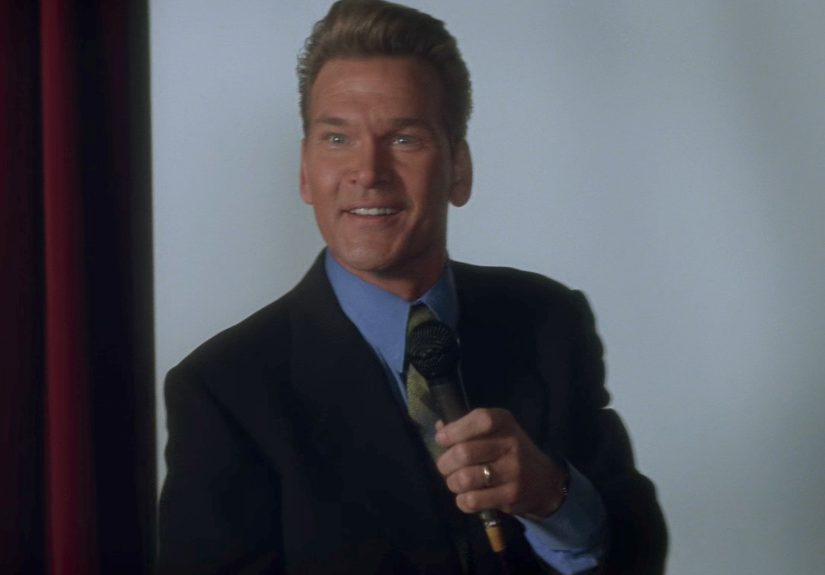
Why Does Donnie Laugh Before He Dies?
Donnie’s laugh in bed is one of the most unforgettable and unsettling moments in the movie. It would be easy to interpret it as madness, but that reading feels too small for what the film is doing. The stronger interpretation is that Donnie finally understands everything he needs to understand. He knows the loop. He knows the cost. He knows what happens if he lives.
His laughter is part relief, part acceptance, part cosmic exhaustion. It is the laugh of someone who has stared directly into the absurd machinery of existence and, for one brief moment, is no longer afraid. Earlier in the film, Donnie fears dying alone. By the end, he is not just facing death. He is choosing it for a reason larger than himself.
That laugh can also be read as the moment he feels strangely free. For once, there is no more confusion, no more guessing, no more tormenting visions. He has his answer. It is a brutal answer, admittedly, but still an answer. And in a movie obsessed with uncertainty, that clarity matters.
Is the Ending About Time Travel, Mental Illness, or Both?
This is where Donnie Darko earns its cult reputation. The movie does not behave like a tidy science-fiction manual, and it does not reduce Donnie to a simple case study either. Instead, it invites both readings to exist together. On one level, the Tangent Universe explanation gives the ending a structured sci-fi logic. On another, Donnie’s experiences are filtered through therapy, medication, sleepwalking, dread, and alienation, all of which keep the psychological reading alive.
That duality is not a flaw. It is one of the film’s greatest strengths. If the movie were only about time travel, it might become a mechanics exercise. If it were only about mental illness, it might lose its metaphysical power. By blending the two, the ending stays emotionally unresolved in the best possible way. We understand the sacrifice, but we are still left feeling unsettled by how reality, faith, fear, and imagination overlap.
That is also why people keep arguing about the ending decades later. Donnie Darko is not trying to shut down interpretation. It is practically handing you a flashlight and telling you to wander deeper into the tunnel.
What Donnie’s Sacrifice Means Emotionally
The ending lands because it is bigger than plot. Donnie’s sacrifice means something emotionally even if you ignore every term in the time-travel rulebook. For most of the movie, Donnie feels like a teenager at war with the world around him. He sees hypocrisy in adults, emptiness in social rituals, and fear hiding behind fake certainty. He is brilliant, angry, funny, lonely, and scared. He does not fit anywhere comfortably, and he knows it.
Then Gretchen enters his life. Their relationship gives the film its warmest and saddest emotional thread. Donnie finally experiences connection that feels real and unforced. That matters because it raises the stakes of the ending. He is not giving up a life that felt empty. He is giving up the possibility of love, growth, and being understood. That makes the sacrifice hurt more.
There is also a spiritual quality to the ending. Donnie becomes a kind of unseen savior. He restores the world, but no one will fully know what he did. The repaired universe contains traces of the lost one only as dreamlike guilt, grief, or strange familiarity. Gretchen does not really know him in the final timeline, yet something in her reaction suggests a haunting emotional echo. That detail is devastating because it implies Donnie’s act matters immensely, even though it cannot be publicly remembered or celebrated.
He saves everyone and disappears from their story. That is the essence of his sacrifice.
The Theatrical Cut vs. the Director’s Cut
If you came away from the theatrical cut feeling like the ending was equal parts genius and migraine, you are not alone. The original version leaves much more unsaid. It gives you mood, symbolism, and clues, but it does not pause to explain the machinery. That ambiguity is part of what made the film a cult obsession.
The director’s cut adds more explicit material from The Philosophy of Time Travel and makes the Tangent Universe reading easier to follow. Suddenly, terms like Artifact, Living Receiver, and Manipulated Dead help connect the dots. For some viewers, this improves the ending because it clarifies Donnie’s task. For others, it makes the film a little less magical by overexplaining what once felt eerie and open-ended.
Both versions matter. The theatrical cut preserves mystery. The director’s cut strengthens the sci-fi architecture. Put together, they suggest that Donnie’s sacrifice is both narratively concrete and symbolically flexible. You can read it as a time-travel correction, a spiritual act, a tragic acceptance of destiny, or a fusion of all three.
Why the Ending Still Hits So Hard
Donnie Darko sticks with viewers because the ending refuses to feel merely clever. Plenty of mind-bending movies can explain themselves in charts and arrows. This one lingers because it ties its puzzle to adolescence, fear, and the aching need to matter. Donnie spends the film asking questions most people hide from: Why am I here? What is the point? Is there design in suffering? What does it mean to grow up in a world full of frauds, slogans, and people who want simple answers to impossible problems?
The ending does not solve those questions with a motivational poster. Instead, it gives Donnie one meaningful act. He cannot fix every hypocrisy in his town. He cannot save his romance. He cannot grow into adulthood in the way he might have hoped. But he can choose to save other people. That choice gives his brief, strange journey a moral center.
And that is why the ending hurts in such a specific way. Donnie does not “win” in the ordinary movie sense. He understands, and then he sacrifices. The film asks whether that is enough. For many viewers, heartbreakingly, it is.
Extra Reflections: The Experience of Watching Donnie’s Sacrifice
One reason the ending of Donnie Darko has endured is that the experience of watching it changes as you get older. On a first viewing, especially if you go in blind, the ending can feel like being hit in the face with a philosophy textbook that was written by a ghost and edited by a goth rabbit. You are trying to keep up with the mechanics, the imagery, the countdown, the therapy sessions, the family comedy, the satire, the romance, and the apocalypse. It is a lot. The movie does not exactly hand out snacks and diagrams.
But on rewatch, something interesting happens. The film becomes less about “solving” the plot and more about feeling the emotional shape of Donnie’s arc. You notice how often he is trying to understand whether life has a design. You notice how often adults in the movie offer him false binaries and shallow certainty. You notice how intensely he wants honesty, even when honesty is painful. That makes the ending feel less like a twist and more like a culmination.
There is also a particular ache in how the film captures teenage experience. Even without the time-travel framework, Donnie’s world feels emotionally true: school politics that seem absurd and all-powerful at the same time, adults who are either deeply kind or hilariously useless, the terror of wanting connection, the fear that something is wrong with you, the suspicion that everyone else got a manual for life that you somehow missed. Donnie’s sacrifice lands because it grows out of that emotional reality. He is not a superhero in a cape. He is a confused kid who becomes capable of one staggering act of clarity.
For many viewers, Gretchen is the key to why the ending remains so painful. She is not just the love interest inserted to make the plot sadder. She represents the possibility that Donnie’s life in the Tangent Universe might have turned into something beautiful. He finds tenderness with her. He becomes more open. He looks less isolated. When the universe takes that away, the audience feels the cost of the correction in human terms. The ending works because Donnie is not merely saving abstract reality. He is giving up the version of reality where he got to matter to someone in a direct, ordinary way.
The final montage after the reset is another reason the experience lingers. Characters wake up unsettled, grieving, or vaguely altered, as if their bodies remember something their minds cannot quite reach. That is emotionally brilliant. The film suggests that sacrifice may leave echoes even when history erases the event itself. Donnie’s choice does not vanish just because the world resets. It survives as sadness, unease, intuition, and dream residue. That gives the ending a ghostly emotional afterlife.
And maybe that is the best way to understand why people keep returning to Donnie Darko. The ending does not just ask, “What happened?” It asks, “What does it feel like to know something no one else will ever know?” Donnie’s sacrifice is tragic because it is invisible, but it is moving for the exact same reason. He dies without applause, without explanation, without witnesses who can fully testify on his behalf. Yet the audience sees it. We become the keepers of the meaning. We are the ones who remember the universe he gave up.
That makes the ending feel oddly intimate. You do not simply observe Donnie’s sacrifice. You carry it out of the movie with you, like a half-remembered dream that makes the world look a little stranger the next morning.
Conclusion
So, what does the ending of Donnie Darko really mean? The strongest answer is that Donnie understands he has been living inside a broken branch of reality and chooses to correct it by accepting the death he originally escaped. In plot terms, he returns the universe to order. In emotional terms, he gives up love, future, and recognition so others can live. In symbolic terms, he becomes a lonely, almost anonymous martyr.
That is why the ending still feels powerful. It is weird, yes. It is dense, yes. It occasionally behaves like a sad suburban prophecy written on the back of a math notebook, absolutely. But beneath all the time loops and nightmare imagery is a surprisingly clear human truth: Donnie’s final act is one of courage. He stops running, sees the cost, and makes the hardest possible choice anyway.
That is not just an ending explained. That is an ending earned.






 Close
Close