
Table of Contents >> Show >> Hide
- Table of Contents
- Quick Primer: Who Is Dick Grayson?
- Ranking Dick Grayson’s Eras (Yes, We’re Doing This)
- Top Dick Grayson Stories, Ranked (Starter-Friendly)
- #1: “The Judas Contract” (The Birth of Nightwing)
- #2: Robin: Year One (Dick Learns the Job Is Hard)
- #3: Nightwing: Year One (Leaving the Nest Without Burning It Down)
- #4: “Batman & Robin: Batman Reborn” (Dick-as-Batman, Damian-as-Robin)
- #5: Grayson Vol. 1: Agents of Spyral (Spycraft + Moral Core)
- #6: Modern Nightwing (The “Hope Has Abs” Era)
- #7: Batman: Dark Victory (A Robin-Origin Lens)
- #8: “Best of the Titans” Collections (Leadership, Loyalty, Fallout)
- #9: “Street-Level Nightwing” (Blüdhaven Basics)
- #10: “Any Story Where Dick Becomes the Mentor”
- Mini-FAQ for Searchers (Because Google Loves This)
- Ranking the Best Dick Grayson Dynamics
- Ranking the Suits: Symbol, Style, and “Please Don’t Add Pouches”
- Ranking Dick Grayson on Screen
- Hot Takes (Mildly Spicy, Not Villain-Level)
- Hot Take #1: Dick Grayson is DC’s best “legacy hero” success story.
- Hot Take #2: Nightwing works best when he’s allowed to be hopeful and formidable.
- Hot Take #3: Dick is more interesting as Batman’s equal than Batman’s understudy.
- Hot Take #4: The best Nightwing stories are “city + community” stories.
- Why Dick Grayson Still Works
- Reader Experiences ( of “Yep, That’s Dick”)
If Gotham had a “Most Likely to Turn Trauma Into Healthy Emotional Growth” award, Dick Grayson would have
a shelf full of trophiespolished, labeled, and somehow not stored in a bat-shaped cave. Dick is the rare
comic-book character who’s been around forever and keeps evolving without losing his core appeal:
he’s capable, compassionate, occasionally reckless, and (most importantly) he’s proof that you can grow up
under Batman and still become a functional adult who doesn’t communicate exclusively through dramatic rooftop
silhouettes.
This is a rankings-and-opinions piece, which means two things are true at the same time:
(1) there are receipts for the big milestones in Dick’s history, and (2) the “best” parts depend on what you
want from a herohope, grit, found family, acrobatics that laugh in the face of gravity, or that sweet spot
where a smile can be a strategy.
Quick Primer: Who Is Dick Grayson?
Dick Grayson debuts in Detective Comics #38 (1940) as the first Robin, the original “Boy Wonder.”
His origin is classic DC heartbreak: he’s the youngest member of the “Flying Graysons,” his parents are killed
because of organized crime, and Bruce Wayne takes him in. But the outcome is uniquely Dick: instead of becoming
a mini-Batman, he becomes a bright counterweight to Batman’s darknessstill serious, still driven, but not
emotionally fossilized.
Over time, Dick graduates from Robin to leading the Teen Titans, then steps out of Batman’s shadow by becoming
Nightwing. In one of the defining turning points of DC history, he dons a new costume and identity
during “The Judas Contract” era (mid-1980s), and the dominoes keep falling from there: solo hero, mentor, leader,
and at multiple points, the guy trusted to wear the cowl as Batman when the story demanded someone worthy.
If you’ve ever wondered why fans argue about him like he’s a sports franchise: it’s because Dick is a rare “bridge”
character. He connects generations (Golden Age to now), teams (Bat-Family to Titans), tones (grim Gotham to hopeful
heroics), and identities (sidekick to headliner). Also, he can do a quadruple flip and land on a gargoyle like it’s
a normal Tuesday. That helps.
Ranking Dick Grayson’s Eras (Yes, We’re Doing This)
This ranking is based on: character growth, iconic moments, and how well the era answers the question
“Who is Dick Grayson when he’s not reacting to someone else’s trauma?”
-
#1: Nightwing (Independent Protector of Blüdhaven)
Peak Dick. Nightwing is what happens when you keep the mission but ditch the emotional handcuffs.
He’s still connected to Batman, but he’s not defined by Batman. This era shines because Dick’s
best qualitiesoptimism, empathy, leadershipbecome the main event rather than “the thing that annoys
the brooding guy in a cape.”Modern runs lean into Dick as a positive force: cleaning up corruption, building community,
and proving heroism isn’t only about punching clowns (though, sure, sometimes it is). Some recent stories
even frame him as a wealthy hero choosing public accountabilityturning resources into real help instead of
“mysterious gadgets and vibes.” -
#2: Leader of the Titans (Team Captain Energy)
Dick as a team leader is basically “Batman, but with better people skills.” He’s strategic without being cold,
inspiring without being preachy, and he’s the friend who shows up when the group chat is on fire.
Titans-era Dick proves he’s not just a graduate of the Bat-school of painhe’s someone who builds
chosen family and keeps it together with equal parts competence and heart. -
#3: Batman (The “Worthy Successor” Chapter)
When Bruce is presumed dead, Dick takes up the mantle of Batman and partners with Damian as Robin.
This era is fascinating because it flips the dynamic: Dick becomes the steady center while Damian is the chaos.
It’s also one of the clearest arguments that “Batman” can mean something beyond fearDick makes the symbol
feel human without making it soft. -
#4: Robin (The Blueprint Sidekick)
As the first Robin, Dick establishes the role: the light in Gotham, the youthful bravery, the emotional tether
that keeps Batman from drifting into pure vengeance. It’s foundational. It’s iconic. It’s also, by definition,
the era where Dick is still becoming himself. -
#5: Super-Spy / Agent 37 (Grayson)
“Grayson” is the weird-but-fun era: espionage, secrets, shifting allegiances, and a Dick Grayson who has to
weaponize charm in a whole different way. It’s not everyone’s favorite flavor of Dick, but it spotlights his
adaptabilityhe can be a hero even when the job requires lies, because his moral compass keeps trying to drag
the story back toward decency.
Quick note on the “Ric Grayson” period: Some readers treat it as a speed bump, some as a genuine
exploration of identity. Either way, it usually ranks low because it sidelines the qualities people come to Dick
for: agency, purpose, and that classic “I’m going to do the right thing, even if it’s inconvenient” backbone.
Top Dick Grayson Stories, Ranked (Starter-Friendly)
There are a lot of Dick Grayson stories. Like, “you could read these for a year and still find more” a lot.
This list leans toward stories that either define his character or showcase why fans keep ranking him near the top
of DC’s most beloved heroes.
-
#1: “The Judas Contract” (The Birth of Nightwing)
A turning point: betrayal, leadership under pressure, and the moment Dick steps into a new identity as Nightwing.
It’s the story that says, “He’s not a sidekick anymore,” without turning him into a loner. -
#2: Robin: Year One (Dick Learns the Job Is Hard)
This is the “training montage” you actually feel. It explores early Robin as a kid thrown into high stakes and
expected to adapt fastwhile balancing Batman’s intensity with his own instincts. -
#3: Nightwing: Year One (Leaving the Nest Without Burning It Down)
The transition story: Dick is Robin no more, tries to figure out who he is, gets perspective from other heroes,
and becomes Nightwing. It’s a character reset that doesn’t erase historyjust reframes it. -
#4: “Batman & Robin: Batman Reborn” (Dick-as-Batman, Damian-as-Robin)
The duo is electric. Dick’s warmth and competence clash (in the best way) with Damian’s razor-edged arrogance.
It’s a story about mentorship, legacy, and the idea that Batman can be a symbol of more than fear. -
#5: Grayson Vol. 1: Agents of Spyral (Spycraft + Moral Core)
Superhero espionage with a leading man who can’t help being decent. Watching Dick navigate a world built on
secrets is compelling because it tests what his heroism is made of when the rules are… let’s say “optional.” -
#6: Modern Nightwing (The “Hope Has Abs” Era)
Recent Nightwing stories emphasize Dick as a public-minded herofighting corruption, protecting his city,
and yes, occasionally dealing with the important responsibility of rescuing an adorable three-legged dog
who becomes part of his orbit. It’s a reminder that heroism can be kind without being naive. -
#7: Batman: Dark Victory (A Robin-Origin Lens)
A moody, early-career Gotham story that ties into the formation of the Bat-Family. It’s not “Dick only,” but
it’s excellent for understanding why Robin matters to Batman’s worldand why Dick was the one who made it work. -
#8: “Best of the Titans” Collections (Leadership, Loyalty, Fallout)
When Dick leads, you see the full toolkit: strategy, compassion, and the ability to keep a room full of
wildly powered personalities pointed in the same direction. Titans stories make Dick feel like the emotional
center of an entire corner of DC. -
#9: “Street-Level Nightwing” (Blüdhaven Basics)
Some of Dick’s best work is unglamorous: protecting neighborhoods, dismantling local corruption, and proving
you don’t need cosmic stakes to tell a heroic story. If Batman is fear, Nightwing is perseverance. -
#10: “Any Story Where Dick Becomes the Mentor”
Whether it’s Damian, younger heroes, or teammates trying to hold it together, Dick mentoring others is one of
his most consistent “top tier” modes. He’s living proof that you can grow up in a harsh world and still choose
to be gentle with people.
Mini-FAQ for Searchers (Because Google Loves This)
Is Dick Grayson the first Robin? Yeshe debuts as Robin in 1940 and becomes the template for the role.
When did Dick Grayson become Nightwing? In the mid-1980s, during “The Judas Contract” era, when he dons a new identity and costume.
Did Dick Grayson ever become Batman? Yeshe takes up the mantle when Bruce Wayne is presumed dead, notably alongside Damian as Robin.
Ranking the Best Dick Grayson Dynamics
Dick is a relationship-driven character. Put him next to someone, and the story instantly becomes about growth,
trust, and whether the other person is emotionally prepared for sincerity.
-
#1: Dick & Batman (Bruce) The Complicated Family Classic
It’s messy. It’s meaningful. It’s the central “found family” story of Gotham. Dick is both proof that Bruce
can save a child and proof that Bruce can still fail the people he loves by being emotionally unavailable
in 14 different martial arts. -
#2: Dick & Damian Big Brother / Mentor Chaos Management
Dick brings out Damian’s humanity. Damian tests Dick’s patience like it’s an Olympic sport. Together, they’re a
masterclass in leadership: Dick shows that compassion is a discipline, not a personality trait. -
#3: Dick & Barbara Gordon Competence Meets Chemistry
This dynamic works because it’s built on shared history and mutual respect. They challenge each other,
support each other, and generally don’t treat communication like a villain origin story. -
#4: Dick & the Titans The Team That Lets Him Breathe
With the Titans, Dick gets to be himself without automatically becoming “the kid in Batman’s shadow.”
It’s where he earns leadership on his own terms. -
#5: Dick & His City (Blüdhaven) The “Local Hero” Relationship
Some heroes protect symbols. Dick protects people. When stories focus on his responsibility to a city,
Nightwing becomes less about legacy and more about communityarguably his most distinct lane in DC.
Ranking the Suits: Symbol, Style, and “Please Don’t Add Pouches”
Dick’s costume history is basically a fashion argument between “sleek acrobat” and “what if armor but make it a
nightclub.” Here’s the vibe-based ranking.
-
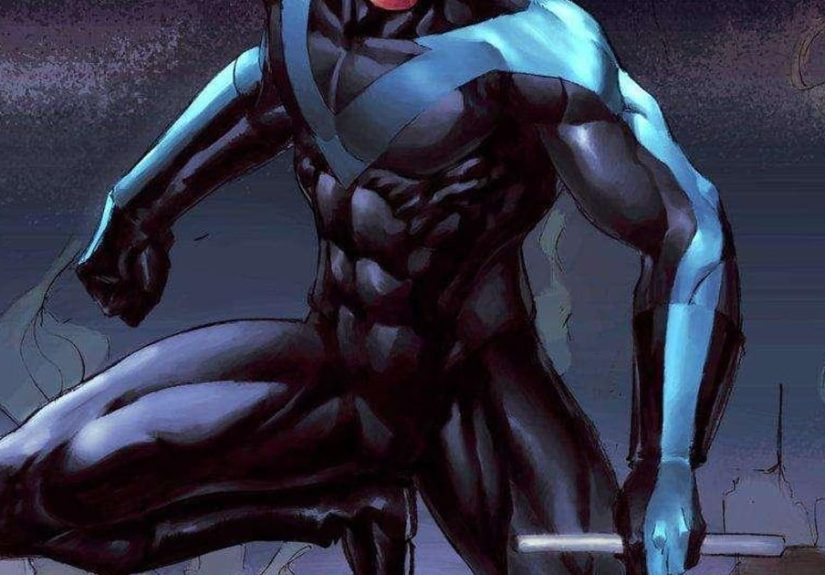
#1: The Classic Nightwing Blue Emblem
Clean lines, iconic symbol, instantly recognizable silhouette. It says “I’m here to help” and “I can do a flip
over your head before you finish blinking.” -
#2: The Batman Suit (Dick’s Version)
When Dick wears the cowl, the suit feels like a legacy rather than a warning label. It’s still Batmanbut it
moves differently, fights differently, and carries a different emotional temperature. -
#3: Early Robin (The Bright Origin Look)
It’s historically huge and visually loud. Is it practical? Not really. Is it iconic? Absolutely.
-
#4: Spy-Era Looks
Spy gear is functional and fits the genre. The downside is that it can mute the “symbolic hero” factor.
If you love espionage stories, you’ll rank this higher.
Ranking Dick Grayson on Screen
Dick’s screen history is… uneven. Sometimes he’s the heart. Sometimes he’s trapped in a script that treats him like
“Batman’s sidekick-shaped accessory.” Still, there are some bright spots.
-
#1: Animated Dick (Usually the Best Character Translation)
Animation tends to capture his agility, humor, and leadership without getting embarrassed about comics being
comics. When animated projects let Dick be competent and kind, the character clicks immediately. -
#2: Live-Action Dick When the Story Lets Him Grow Up
The best portrayals emphasize the transition: Robin to independent hero. The moment the story treats him like
his own person, you can feel the character snap into focus. -
#3: The “He’s Here, But He’s Not Allowed to Be Dick Grayson” Versions
These are the portrayals where he’s technically present, but the writing doesn’t give him his defining traits:
leadership, empathy, and that resilient optimism.
Looking forward, DC Studios has announced an animated feature called Dynamic Duo centered on Dick Grayson
and Jason Todd, exploring their early friendship and how it’s testedan interesting sign that DC wants to spotlight
the Robins as characters with their own weight, not just accessories to Batman’s mythology.
Hot Takes (Mildly Spicy, Not Villain-Level)
Hot Take #1: Dick Grayson is DC’s best “legacy hero” success story.
Plenty of characters inherit titles. Dick earns identities. He evolves from Robin to Nightwing because he outgrows
the rolenot because a marketing meeting demanded a refresh.
Hot Take #2: Nightwing works best when he’s allowed to be hopeful and formidable.
The “sunny hero” angle can get flattened into a joke. The best Dick stories prove hope is not softnessit’s stamina.
He fights hard, leads well, and chooses kindness anyway. That’s discipline.
Hot Take #3: Dick is more interesting as Batman’s equal than Batman’s understudy.
The most compelling Bat-Family stories treat Dick as someone who can disagree with Bruce and still love him.
That’s not rebellion; that’s adulthood.
Hot Take #4: The best Nightwing stories are “city + community” stories.
Give Dick a city to protect, a network to build, and corruption to exposesuddenly you’re reading a superhero story
that feels like it matters beyond punch-ups.
Why Dick Grayson Still Works
Dick Grayson endures because he represents a rare superhero fantasy: not just surviving trauma, but growing into
someone who can love people well. He’s a leader who doesn’t need to dominate, a fighter who doesn’t need to terrify,
and a hero who can look at Gotham-level darkness and still decide to be a source of light.
In a genre obsessed with “Who would win in a fight?”, Dick answers a better question: “Who would you want leading
when everything’s falling apart?” That’s why he keeps ranking near the top of fan lists, debates, and “most beloved”
conversations. He’s not perfect. He’s just relentlessly, stubbornly, human.
Reader Experiences ( of “Yep, That’s Dick”)
Reading Dick Grayson stories tends to produce a very specific emotional arc. It starts with admiration (“How is he
doing that flip?”), detours into sympathy (“Oh right, the childhood tragedy”), and then lands somewhere surprisingly
grounding: “Waitthis character actually believes people can get better.” In a universe where trauma is often treated
like an inevitable pipeline to brooding, Dick’s presence feels like someone cracked a window and let fresh air into
the room.
One of the most common “Dick Grayson experiences” is realizing how differently he changes the temperature of a scene.
Put him in Gotham, and the city doesn’t magically become cheerfulbut it becomes possible. Conversations feel
more honest. People open up. Even the action reads differently, because his competence isn’t fueled by rage; it’s
fueled by clarity. He’s not trying to punish the world into behaving. He’s trying to protect it into becoming safer.
Another familiar experience is the “identity whiplash” that turns into appreciation. New readers often enter through
Robin or Nightwing and think the other identity is just a costume change. Then you read the stories that actually
explore the shifthow stepping away from Batman is both an act of love and an act of self-preservationand suddenly
the progression clicks. It’s not “teen sidekick becomes edgy adult.” It’s “a kid grows up, sets boundaries, and
decides he gets to define himself.” That hits harder than any dramatic punch.
If you’ve ever binged a run where Dick is leading a team, you’ve probably felt that quiet relief of watching a hero
who’s good at relationships. He apologizes. He listens. He delegates. He trusts people. It’s so basicand so rare in
superhero fictionthat it feels almost radical. There’s a reason fans say he’d be the best person to call when
everything’s collapsing: he doesn’t just save the day; he keeps the people around him intact enough to continue
living afterward.
And yes, there’s the joy factor. Dick stories often include small moments that remind you why superhero comics can
be fun: a clever quip mid-swing, a rooftop landing that feels like choreography, a heartfelt exchange that doesn’t
get undercut by cynicism, or a “protect the dog” moment that makes you grin because it’s heroic in the simplest way.
Those scenes stick because they’re not about being the toughest. They’re about being the kind of person who notices
what needs saving and does it.
The last common experience is the “ranking realization.” After you read enough Dick Grayson, you stop asking whether
he’s underrated. You start asking why he isn’t the default answer for “best legacy character” more often. Not because
he’s the strongest or the darkest or the loudestbut because he’s the clearest example that growth can be heroic.
In a world built on masks, Dick Grayson’s best trick is that he never forgets the person underneath.






 Close
Close