
Table of Contents >> Show >> Hide
- Why Deep-Fried Deviled Eggs Work So Well
- What Exactly Are Deep-Fried Deviled Eggs?
- How to Make Them Without Losing Your Mind
- Best Flavor Variations for Deep-Fried Deviled Eggs
- Common Mistakes That Can Ruin the Crunch
- Serving, Storing, and Food Safety
- Why Deep-Fried Deviled Eggs Deserve a Spot on the Table
- Experiences People Often Have With Deep-Fried Deviled Eggs
- SEO Tags
There are party foods, and then there are party foods that make people stop mid-conversation, point at the platter, and ask, “Wait… what are those?” Deep-fried deviled eggs belong very proudly in the second category. They take a classic, creamy, paprika-dusted appetizer and give it a crisp golden jacket. The result is everything you want in one bite: crunchy outside, fluffy filling, savory egg richness, a little tang, and just enough drama to make the snack table feel like it got dressed up for the occasion.
If regular deviled eggs are the reliable cousin who always shows up on time, deep-fried deviled eggs are the cousin who arrives wearing leather boots and somehow pulls it off. They are familiar, but louder. Nostalgic, but crispier. Still perfectly at home at Easter brunch, game day, backyard parties, and holiday spreads, but now with more swagger and a much better crunch soundtrack.
Why Deep-Fried Deviled Eggs Work So Well
The genius of deep-fried deviled eggs is not that they reinvent the deviled egg. It is that they exaggerate everything people already love about it. The filling stays creamy and tangy, usually built from cooked yolks, mayonnaise, mustard, and a pop of acidity from vinegar, pickle juice, or hot sauce. But the egg whites, instead of acting like polite little serving cups, get breaded and fried until they are crisp and golden.
That contrast changes the whole experience. Classic deviled eggs are soft on soft. Fried deviled eggs add texture, and texture is the thing that gets remembered. It is the culinary equivalent of adding cymbals to a song that was already catchy. Suddenly there is snap, crunch, and a warm-cool contrast that makes the filling taste even creamier.
They also solve a tiny but real party problem: deviled eggs can blur together after a few bites. Deep-fried deviled eggs do not blur. They announce themselves. They are memorable, conversation-starting, and just strange enough to be interesting without crossing into novelty-for-novelty’s-sake territory. Nobody is stuffing them with cotton candy or glitter. Thank goodness.
What Exactly Are Deep-Fried Deviled Eggs?
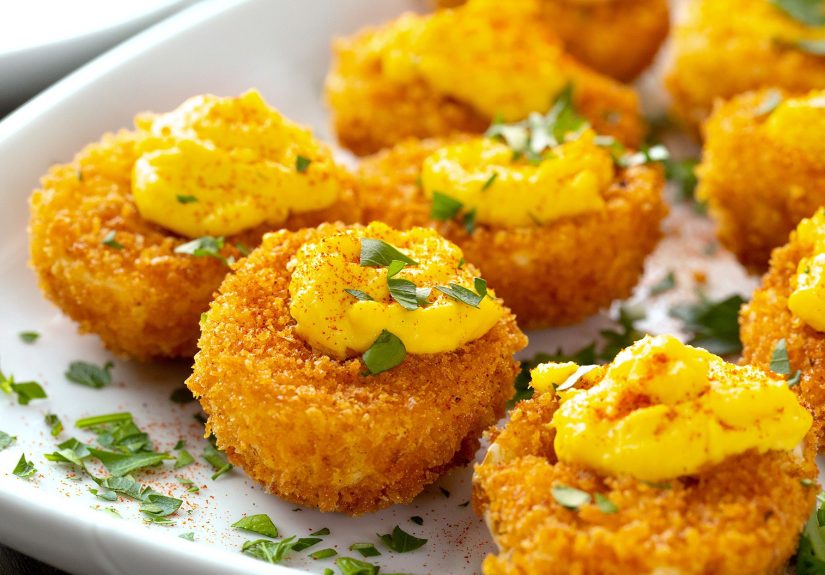
At their core, deep-fried deviled eggs are hard-cooked eggs that are peeled, halved, and separated into whites and yolks. The yolks become the filling. The whites get coated, usually in a flour, egg, and breadcrumb mixture, then fried until crisp. After that, the filling is piped or spooned back into the crunchy shells, and the whole situation gets garnished with paprika, chives, bacon, jalapeño, dill, or whatever else the cook wants to brag about.
The coating often relies on panko breadcrumbs because they stay airy and crisp instead of turning heavy. Some versions add Parmesan for extra savoriness. Others lean spicy with cayenne or hot sauce. Southern-style versions may include pickle relish, Dijon, or chopped herbs. The beauty of the dish is that it can stay close to the classic template or wander into bolder territory without losing the point.
How to Make Them Without Losing Your Mind
1. Start with eggs that actually want to be peeled
The first hurdle is the least glamorous one: boiling and peeling eggs cleanly. This matters because ragged egg whites will not look great, and once you bread and fry them, every imperfection gets promoted to management. Many cooks swear by using slightly older eggs rather than ultra-fresh ones, because older eggs tend to peel more easily. A hot start or steaming method can also help, followed by an ice bath to stop the cooking and make peeling less maddening.
In practical terms, the goal is simple: firm yolks, tender whites, and smooth egg halves. Not chalky yolks, not rubbery whites, and definitely not an egg that looks like it lost a wrestling match with the shell.
2. Make the filling smooth, bright, and just a little punchy
The filling is where deep-fried deviled eggs either become exceptional or just become fried egg halves with mayo problems. A good filling should be creamy but not runny, rich but not dull. Mayonnaise gives it body. Mustard adds zip. A splash of vinegar, pickle brine, or hot sauce wakes everything up. Salt and pepper matter more than people think, and paprika is not just there for color; it rounds out the richness with a subtle earthy sweetness.
For a smooth texture, mash the yolks thoroughly. Some cooks use a fork, some use a sieve, and some go at it like they have unresolved feelings. Whatever the tool, the point is to avoid a lumpy filling. A piping bag makes the final eggs look polished, but a spoon works too. No one has ever refused a deviled egg because it lacked architectural precision.
3. Bread the whites like you mean it
Once the yolks are out, the egg white halves need a coating that will stay put. The standard setup works because it is standard for a reason: flour first, beaten egg second, breadcrumbs last. The flour dries the surface slightly and helps the egg wash cling. The egg wash helps the breadcrumbs stick. The breadcrumbs create the crisp shell that makes the whole recipe worth your time.
Panko is especially effective here because it fries up craggy and light rather than dense. A little Parmesan in the breadcrumb mix can boost flavor, and a pinch of cayenne or black pepper adds depth. Just do not overdo the seasoning in the crust if the filling is already bold. This is an appetizer, not a chili pepper dare.
4. Fry fast, not forever
The egg whites are already cooked, which means frying is not about cooking them through. It is about crisping the coating. That makes deep-fried deviled eggs surprisingly quick once assembled. Fry in hot oil just until golden brown, then let the breaded whites drain briefly on paper towels or a rack. If you fry them too long, the coating can darken before the inside benefits. The sweet spot is short, confident, and decisive.
Once cooled slightly, pipe in the filling and garnish right before serving. That timing matters because crisp things stay crisp for only so long once creamy fillings enter the building.
Best Flavor Variations for Deep-Fried Deviled Eggs
Classic party-table style
Stick with mayonnaise, Dijon or yellow mustard, a touch of vinegar, paprika, and chives. This version tastes familiar, which is exactly why the crunch feels so fun. It is the easiest place to start and the hardest to stop eating.
Southern-inspired
Add pickle relish, dill, or a hint of sweet acidity. A little hot sauce in the filling can sharpen the flavor without making the eggs overtly spicy. This version feels right at home next to fried chicken, pimento cheese, and a tray of iced tea glasses sweating on a porch.
Bacon-jalapeño
For a bolder spin, fold finely chopped jalapeños into the filling and top with crisp bacon and chives. This version is louder, saltier, and a guaranteed hit at game-day gatherings where nobody is pretending to be delicate.
Herb-forward and bright
Dill, parsley, chives, and a little lemon zest can make the eggs feel fresher and lighter. This is the version that shows up to spring brunch wearing linen and somehow still knows how to party.
Common Mistakes That Can Ruin the Crunch
Deep-fried deviled eggs are not hard, but they are a little fussy. The most common mistake is starting with poorly peeled eggs. The second is making the filling too loose. The third is assembling everything too early and wondering why the coating lost its crispness. The fourth is forgetting that this is still an egg-and-mayo appetizer and treating it like it can hang out on the counter forever. It cannot.
Another issue is balance. The filling needs acid and seasoning or it will taste flat against the crust. Meanwhile, the fried coating needs enough texture to stay interesting but not so much bulk that the egg disappears. The ideal bite still tastes like deviled egg first, crunchy miracle second.
Serving, Storing, and Food Safety
These eggs are at their best when the parts are prepped ahead and assembled close to serving time. You can boil the eggs in advance, make the filling ahead, and even plan your breading station early. But for maximum crunch, fry the whites near serving time and fill them shortly afterward.
For parties, serve them on a platter with a little support so they do not wobble around like tiny edible bumper cars. Garnish with paprika, herbs, chopped bacon, or pickled jalapeños. A little contrast on top makes them look intentional and not like someone breaded eggs on a dare.
As for storage, the reality is less glamorous but more important. Egg dishes are perishable. Refrigerate them promptly, keep them cold until serving, and do not leave them out for more than two hours. In hot weather, that safe window gets even shorter. Properly stored deviled eggs also have a shorter refrigerator life than plain hard-cooked eggs, so they are best enjoyed sooner rather than later. Translation: this is not the appetizer to “just leave out and see what happens.” What happens is regret.
Why Deep-Fried Deviled Eggs Deserve a Spot on the Table
Deep-fried deviled eggs are not trendy because they are gimmicky. They work because they amplify a classic without burying it. The familiar creamy filling is still the star, but now it gets contrast, drama, and a better first impression. That makes them ideal for hosts who want something recognizable yet memorable, comforting yet a little flashy.
They also fit surprisingly well across occasions. They can be Southern and homey, polished enough for brunch, fun enough for game day, and clever enough for holiday appetizers. They are proof that sometimes the best food ideas are not about inventing something new. Sometimes they are about looking at an old favorite and asking one excellent question: “What if this were crispy?”
And honestly, that is a question more foods should be willing to answer.
Experiences People Often Have With Deep-Fried Deviled Eggs
One of the funniest things about deep-fried deviled eggs is how predictable the reaction is, even though the food itself feels a little unexpected. At first, people squint at the platter. They recognize the shape, but the crispy coating throws them off. Then someone picks one up out of curiosity, takes a bite, and immediately does that wide-eyed look people do when they were prepared to be polite and accidentally became enthusiastic. After that, the platter usually turns into a traffic jam.
At family gatherings, these eggs tend to create two camps. The first camp consists of the traditionalists, the people who believe the classic deviled egg has already achieved perfection and should not be meddled with. They approach cautiously, like food historians investigating a scandal. The second camp is made up of the thrill-seekers, the ones who hear the words “deep-fried deviled eggs” and react as if a marching band just entered the kitchen. What is amusing is that both groups usually end up reaching for seconds.
There is also the very real kitchen experience of making them for the first time and learning that timing is everything. The eggs can be boiled ahead, the filling can be made ahead, and the garnishes can be lined up like little flavor confetti. But the moment the whites are fried, the clock starts ticking on maximum crunch. That realization changes how people host. Instead of doing every last thing hours in advance, they start thinking in stages: prep, chill, fry, fill, serve. It feels a bit more restaurant-like, but in a satisfying way, like your kitchen suddenly has better instincts and slightly more swagger.
Another common experience is discovering that deep-fried deviled eggs are excellent conversation starters. Put out chips and dip, and people say thank you. Put out crispy deviled eggs, and people ask questions. Are they hard to make? What is in the coating? Did you really fry eggs? Can these be spicy? Can they be air-fried? Did you make enough? It is a rare appetizer that doubles as both snack and social device, but these do exactly that.
Hosts also learn fast that presentation matters. A simple dusting of paprika is good, but adding chives, bacon bits, or sliced jalapeños makes the platter look intentional and exciting. Guests eat with their eyes first, and deep-fried deviled eggs reward a little extra flourish. Even people who do not usually care about garnish suddenly become very interested in what a few green herbs can do for a tray of golden eggs.
Perhaps the most relatable experience, though, is the moment after the party when the cook realizes the risky-sounding appetizer was the first one to disappear. Not the fancy cheese board. Not the expensive shrimp. Not the dip everyone always pretends to love. The eggs. Crispy, creamy, slightly outrageous eggs. That is usually when deep-fried deviled eggs stop being a one-time experiment and become part of the regular rotation. Once a dish manages to be nostalgic, crunchy, funny, and genuinely delicious all at once, it tends to earn repeat invitations.







 Close
Close