
Table of Contents >> Show >> Hide
- What Is Foam Pipe Insulation, Really?
- Safety and Common-Sense Tips Before You Hack
- Draft-Stopping and Comfort Boosters
- Protective Padding for Home and Garage
- Organization and Storage Hacks
- Decor, Crafts, and Seasonal Projects
- Outdoor and Garden Uses
- Tips for Getting the Most from Pipe Insulation Hacks
- Real-Life Experiences with Clever Pipe Insulation Hacks
- Conclusion: Small Foam Tubes, Big Everyday Impact
Foam pipe insulation is one of those things you buy for a very boring reason:
to keep pipes from freezing or sweating. Then the leftover pieces sit in a
corner of the garage, quietly judging you. The good news? Those soft,
inexpensive tubes are basically the “pool noodles” of the DIY world, and
they’re ready to work way beyond the basement.
Whether you’re trying to stop a chilly draft, protect a car door, keep kids
from bumping into sharp corners, or whip up a last-minute holiday wreath,
pipe insulation can do it. In this guide, we’ll walk through clever, real-world
ways to use foam pipe insulation that have absolutely nothing to do with
plumbing, plus practical tips to make your projects safe, durable, and
actually nice to look at.
What Is Foam Pipe Insulation, Really?
Before you start slicing it into a million pieces, it helps to know what
you’re working with. Foam pipe insulation is typically made from
polyethylene or similar closed-cell foam. It comes pre-slit so it can slide
over pipes and usually has a round, hollow center.
For DIY projects, the key advantages are:
- Lightweight: Easy to cut, move, and mount almost anywhere.
- Soft and cushioned: Great for bumpers, padding, and child-proofing.
- Inexpensive: A single 6-foot length is usually just a few dollars.
- Flexible: Bends around corners, curves, and awkward shapes.
You’ll see similar foam used in pool noodles, packaging, and protective
bumpers. For most of the projects below, standard 1/2-inch to 1-inch
diameter foam pipe insulation is perfect.
Safety and Common-Sense Tips Before You Hack
Foam pipe insulation is simple to work with, but treat it like any other
DIY material:
- Use a sharp utility knife or heavy scissors to get clean, straight cuts.
-
When cutting multiple pieces, mark cut lines with a pen or painter’s tape
so lengths match. -
If you’ll be using insulation where kids or pets can reach, secure it with
strong tape, screws and washers, or zip ties so it can’t become a toy
(unless it’s meant to be a toy). -
For outdoor projects, consider wrapping foam in weather-resistant tape or
fabric to protect it from UV light and moisture.
With the basics out of the way, let’s turn those extra tubes into something
a lot more fun than pipe covers.
Draft-Stopping and Comfort Boosters
1. Under-the-Door Draft Stoppers
If you’ve ever felt a blast of cold air sneaking under an exterior door,
you already know where this is going. Foam pipe insulation makes an
excellent DIY draft stopper. Here’s the quick method:
- Measure the width of the door.
- Cut a length of pipe insulation to match.
-
Slice the foam lengthwise (if it isn’t already slit) and slide it along
the bottom edge of the door. -
For a more finished look, slip the foam into a fabric tube made from an
old pillowcase or sew a simple cover.
The foam hugs the bottom of the door, blocking drafts and helping keep
heated or cooled air inside where it belongs. It’s especially useful in
older homes where thresholds aren’t perfectly tight.
2. Temporary Weatherstripping for Windows
If you live with slightly stubborn old windows, pipe insulation can act as
a removable weatherstrip. Cut narrow strips and press them into the gap
where the sash meets the frame. It helps tame rattles and drafts without
permanent changes.
This is perfect for renters: when the season changes or you move out, just
pull the foam out and toss it.
3. Sealing Around Window AC Units
Window air conditioners are notorious for letting in outside air around the
sides. Thin slices of foam pipe insulation can fill those gaps. Cut them to
length and gently wedge them between the unit and the window frame, then
tape if needed.
You’ll block insects, hot drafts, and dust, making your AC work a little
less hard and your room a lot more comfortable.
Protective Padding for Home and Garage
4. Garage Wall Bumpers for Car Doors
Tight garage? Foam pipe insulation to the rescue. Slice a piece lengthwise,
open it up, and screw or glue it to the wall right where your car door
tends to hit. The foam acts as a cushioned bumper so you don’t chip paint
on either the wall or the door.
You can even use a contrasting color or add reflective tape so it doubles
as a visual guide when you pull in.
5. Edge Protectors for Workbenches and Shelves
Metal shelving, concrete edges, and sharp workbench corners are just
waiting for your shins. Protect yourself (and your kids) by snapping foam
insulation over those edges. Cut to length, slit if needed, and secure with
construction adhesive or zip ties.
This is especially handy in:
- Basement playrooms
- Home gyms
- Workshops and garages
6. Soft Bed Bumpers for Kids
Transitioning a toddler from a crib to a real bed? You don’t necessarily
need a bulky bed rail. Slide a length of pipe insulation under the fitted
sheet along the outer edge of the mattress. The low foam “bump” is just
enough to make rolling off less likely and a lot less painful if it
happens.
It’s not a replacement for proper supervision or medical-grade safety
rails, but for many families it’s a helpful extra layer of protection.
Organization and Storage Hacks
7. Custom Drawer and Tool Dividers
Deep drawers and tool chests are chaos magnets. Pipe insulation makes
simple, customizable dividers:
- Cut short pieces to fit the width of a drawer.
-
Use the hollow center to cradle screwdrivers, wrenches, paintbrushes, or
scissors. -
For craft rooms, store knitting needles, crochet hooks, or even makeup
brushes.
Because the foam is soft, it also protects delicate finishes on tools and
keeps things from rattling around.
8. Boot Shapers and Tall-Shoe Supports
Foam pipe insulation is practically born to be a boot shaper. Cut two
lengths to match the height of your tall boots and insert them inside.
They’ll keep the shafts upright so they don’t crease, flop over, or get
crushed in the closet.
You can do the same for waders, tall rain boots, or even some costume
footwear that you pull out once a year.
9. Gentle Clamps and Grips
Wrap small pieces of foam insulation around tool handles or clamp jaws to
add grip and protect surfaces. For example:
- Slip foam over the handles of garden tools for a softer grip.
-
Add foam to spring clamps when holding painted or finished wood so the
jaws don’t leave dents. -
Wrap foam around a broom handle to create an ergonomic “rest” for your
hands when sweeping large areas.
Decor, Crafts, and Seasonal Projects
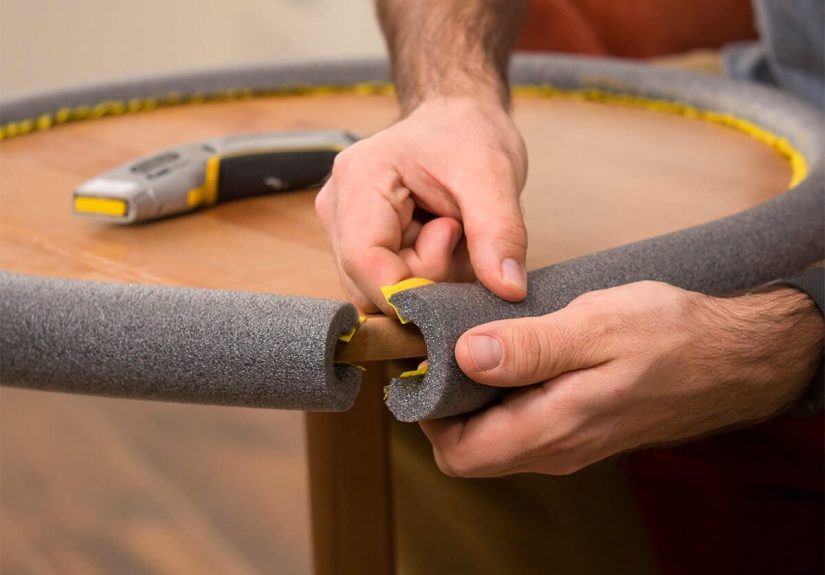
10. Lightweight Wreath Forms
Foam pipe insulation can easily be formed into a circle and taped at the
ends to create an inexpensive wreath base. Wrap it in ribbon, burlap, or
yarn; then add faux greenery, ornaments, or flowers.
Because it’s so light, you can hang large wreaths on doors or walls without
heavy hardware. It’s a budget-friendly alternative to store-bought wreath
forms, especially for oversized statement pieces.
11. Faux Fireplace or Wall Accents
If you’re decorating a non-working fireplace or creating a temporary
backdrop for a party, pipe insulation can become part of the scenery.
Painted and wrapped in paper or fabric, it can mimic logs, beams, or
architectural trim. It’s not structural, but it’s great for fun visual
tricks.
For example, stack “log” slices made from foam rings inside a decorative
fireplace opening. Add LED candles and you’ve got a cozy look without
actual firewood.
12. Costume and Prop Building
Need a lightweight sword, staff, or sci-fi gadget for Halloween or a
cosplay convention? Pipe insulation is a fantastic core material. Slip it
over a wooden dowel or PVC pipe for rigidity, then cover with tape, fabric,
or foam sheets and paint.
Because it’s soft, it’s safer for crowded events and easier to carry all
day than heavy wood or metal props.
Outdoor and Garden Uses
13. Cushion for Garden Stakes and Cages
Thin plant stems can get bruised or snapped where they touch metal cages or
stakes. Cut short pieces of foam, slit them, and snap them onto the top
rungs of tomato cages or the sections where plants rub the most.
The foam acts as a buffer, protecting tender stems and keeping your plants
healthier and more upright through the growing season.
14. Hose Guides and Protection
Dragging a garden hose around corners can damage plants, chip masonry, and
kink the hose itself. Use pipe insulation as a sleeve over the hose where
it normally rubs against hard edges. You can also cut a short piece, stake
it to the ground, and run the hose through it as a low-friction guide.
15. Camping and Outdoor Comfort
Pipe insulation can make outdoor adventures more comfortable, too:
-
Wrap foam around tent poles where they contact the ground to reduce
abrasion. -
Slide pieces onto folding chair arms for a softer, warmer grip on chilly
nights. - Use foam as a quick cushion on hard benches or picnic tables.
It’s not fancy, but when you’re sitting around a campfire, “not fancy” is
usually exactly right.
Tips for Getting the Most from Pipe Insulation Hacks
To make your clever uses last, keep a few best practices in mind:
-
Label offcuts: Keep a small bin labeled “foam scrap” so
you know where to look when inspiration strikes. -
Finish the look: Wrap exposed foam in fabric, duct tape,
or decorative tape where appearance matters, like on doors or inside
living spaces. -
Avoid heat sources: Don’t put foam near open flames,
heating elements, or very hot surfaces. -
Check periodically: For bumpers and safety padding, give
them a quick tug every now and then to ensure they’re still secure.
Once you’ve experimented a little, you’ll start seeing potential uses for
these foam tubes all over your home and yard.
Real-Life Experiences with Clever Pipe Insulation Hacks
The first time I used pipe insulation for something non-plumbing was in a
drafty rental. The front door had a good half-inch gap at the bottom, and
winter wind treated it like a welcome mat. I didn’t want to drill into the
door or install anything permanent, so I grabbed a leftover piece of foam
insulation from a water-heater project and tried an experiment.
I cut the foam to length, slid it onto the bottom of the door, and wrapped
it in a piece of fabric from an old curtain panel. The whole “project” took
maybe ten minutes. The immediate difference in comfort was obvious, but the
real surprise showed up in the next utility bill. The apartment wasn’t
suddenly a high-efficiency marvel, but that one tiny improvement helped
stop the worst of the cold air, and the heater cycled a little less often.
After that, I started seeing uses everywhere. In my garage, there’s a
narrow spot where the car door always came dangerously close to smacking a
concrete column. I screwed a length of pipe insulation to the column at
door-height. That little foam bumper has saved my paint job more times than
I care to admit. When friends visit and park inside, I always get a
comment: “Oh, that’s smart. I should do that in my garage.”
Another accidental discovery came from kid-proofing. A coffee table with
very “stylish” sharp corners became a constant stress point once a toddler
started running laps around the living room. I didn’t love the look of the
bulky commercial corner protectors, so I cut short pieces of pipe
insulation, mitered them at 45-degree angles, and taped them together to
form custom corner guards. Wrapped in neutral fabric that matched the
upholstery, they almost disappeared visually but made a big difference in
peace of mind.
In the garden, pipe insulation has quietly become one of my favorite
helpers. Tomato cages and metal stakes can be harsh on plant stems,
especially when wind gets involved. By snapping small foam pieces onto the
top rings and the points where stems rest, I noticed fewer broken branches
after storms. It’s a simple buffer, but it’s incredibly effective for
delicate plants that are otherwise well supported.
There’s also the organization side. I used to toss screwdrivers and
chisels into a drawer and then play “guess which one stabbed my hand this
time” later. A spare length of pipe insulation, sliced into sections and
tucked into that drawer, changed the game. Each tool rests snugly in the
foam, easy to see and grab, with no clattering or jabbing fingers.
Probably the most surprisingly helpful use has been for travel and storage.
Before packing a suitcase, I slip jewelry chains or small cords through
short pieces of foam to keep them from tangling. When storing picture
frames or mirrors, I line the edges with foam to keep them from chipping in
transit. None of these projects are glamorous, but they’re the kind of
tiny upgrades that quietly make daily life less annoying.
The overarching lesson from all these experiments is simple: when you look
at materials by their properties instead of their original label,
you open up a lot of creative possibilities. Pipe insulation is soft,
light, cheap, and easy to cutso it becomes padding, bumpers, organizers,
shapers, and supports. Once you start thinking that way, it’s hard to stop,
and those leftover foam tubes will never sit unused in the garage again.
Conclusion: Small Foam Tubes, Big Everyday Impact
Pipe insulation might never make the cover of a design magazine, but it
quietly solves a long list of everyday problems: drafty doors, scuffed car
doors, cluttered drawers, bruised shins, floppy boots, stressed-out plant
stems, and more. With a few cuts and some creativity, those unassuming foam
tubes transform from purely functional plumbing accessories into some of
the most versatile helpers in your home.
The next time you walk past a rack of foam pipe insulation at the hardware
store, don’t just think about water lines in the basement. Think about
draft stoppers, bumpers, organizers, and clever hacks hiding in plain
sight. Your future selfwith fewer dents, fewer drafts, and a slightly more
organized homewill be very glad you did.







 Close
Close