
Table of Contents >> Show >> Hide
- What Actually Happened in October 2021?
- Why Beijing Turned Up the Volume
- Why the October Flights Mattered So Much
- How Taiwan Responded
- How Washington and the Wider World Read the Crisis
- Was October 2021 the Start of a War?
- What October 2021 Revealed About the Taiwan Strait
- Experiences Related to the China-Taiwan Incursion October 2021
- Conclusion
In October 2021, the Taiwan Strait delivered one of those geopolitical moments that made even casual news readers put down their coffee and say, “Wait, how many planes?” Over four tense days, China sent wave after wave of military aircraft into Taiwan’s Air Defense Identification Zone, or ADIZ, creating headlines, raising nerves, and reminding the world that cross-strait tension does not need an actual invasion to feel dangerous. It only needs persistence, pressure, and enough jet engines to make diplomacy sweat.
The episode is often remembered as the “China-Taiwan incursion” of October 2021, but the most important fact is also the most frequently blurred: these aircraft entered Taiwan’s ADIZ, not Taiwan’s sovereign territorial airspace. That distinction matters. An ADIZ is a self-declared buffer zone used for early warning and monitoring, not the legal equivalent of national airspace. Even so, the October flights were no trivial stunt. They were a loud, carefully staged demonstration of military pressure, political messaging, and gray-zone coercion.
This is what happened, why it mattered, and why the October 2021 surge still stands as a key moment in the modern China-Taiwan story.
What Actually Happened in October 2021?
During the first days of October 2021, as the People’s Republic of China marked its National Day holiday period, Taiwan reported an extraordinary spike in People’s Liberation Army aircraft operating in its ADIZ. The most widely cited four-day sequence looked like this: 38 aircraft on October 1, 39 on October 2, 16 on October 3, and 56 on October 4. That brought the four-day total to 149. Some later reporting rounded the overall surge to “nearly 150” or “150” depending on whether additional late-night flights or an October 5 counting window were included. Either way, the message was the same: Beijing had dramatically raised the temperature.
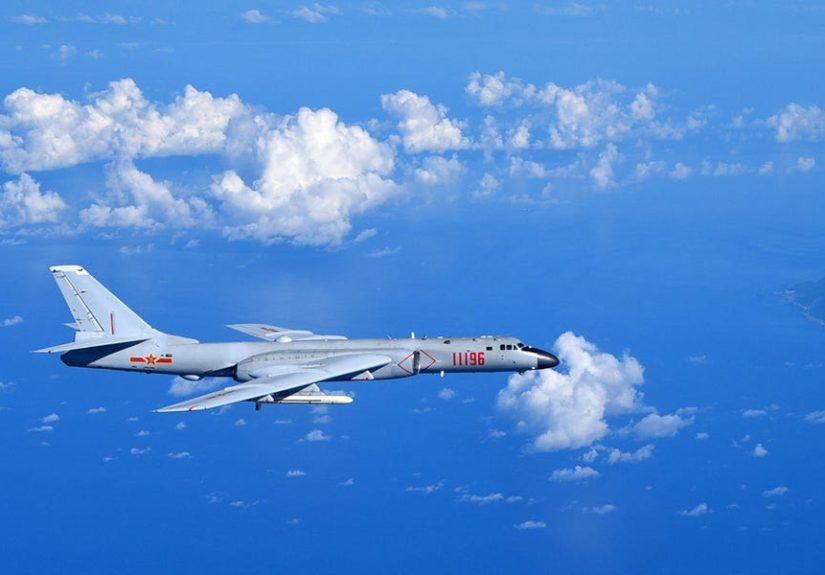
The aircraft mix was not random. Taiwan’s public reports and subsequent U.S. analysis described combinations of J-16 fighters, Su-30 fighters, H-6 bombers, anti-submarine aircraft, and airborne early warning platforms. In plain English, this was not a casual flyby. It looked more like a choreographed show of force with reconnaissance, strike, and coordination elements all in the same package. In military signaling, variety is part of the sentence.
Most of these flights occurred in the southwestern part of Taiwan’s ADIZ, near the Pratas Islands and key waterways linking the Pacific and the South China Sea. That geography was not accidental either. It highlighted China’s ability to pressure Taiwan from directions that matter operationally while also hinting at broader anti-access and maritime control objectives.
ADIZ Is Not the Same as Airspace
Let’s clear up the most common misunderstanding before it starts another internet argument. Taiwan’s ADIZ is not the same thing as Taiwan’s sovereign airspace. The PLA aircraft did not fly over Taipei, buzz apartment towers, or violate the island’s 12-nautical-mile territorial boundary. What they did was enter a monitored identification zone that gives Taiwan more time to detect and respond to potential threats.
That legal and operational distinction is crucial. It means the October 2021 flights were not an invasion. But it does not mean they were harmless. ADIZ incursions can still force defensive responses, consume military resources, test procedures, increase fatigue, and create risks of miscalculation. In strategic terms, they are pressure without full escalation, which is precisely why they are so useful to Beijing.
Why Beijing Turned Up the Volume
China’s motives in October 2021 were layered, not singular. This was not just about planes. It was about signaling resolve to Taiwan, warning the United States and its partners, reinforcing domestic nationalist narratives, and normalizing a larger Chinese military presence around the island.
One motive was political pressure on Taiwan’s government, which Beijing views as resisting unification and leaning too comfortably on democratic legitimacy and foreign support. By raising the tempo of military activity, China could remind Taipei that geography is rude, history is unfinished, and the neighborhood is not getting quieter.
Another motive was strategic signaling toward Washington. In 2021, U.S.-China relations were already strained by competition over trade, technology, security, and regional influence. Taiwan sat squarely in the center of that competition. Sending large numbers of aircraft near Taiwan allowed Beijing to warn against deeper U.S.-Taiwan ties without crossing the threshold into open war. It was coercive diplomacy with afterburners.
Domestic timing mattered too. The flights coincided with the PRC National Day period, which gave the operation symbolic weight. National holidays are not always just holidays in authoritarian great-power politics. Sometimes they are stage lighting.
Gray-Zone Coercion, Not Full-Blown War
Many U.S. analysts described the episode as a classic gray-zone move. Gray-zone tactics sit in the uncomfortable space between peace and war. They are designed to pressure an opponent, change facts on the ground, exhaust defenses, and reshape expectations without triggering a direct military response that the other side cannot ignore.
That description fits October 2021 well. The flights were aggressive enough to alarm, but limited enough to preserve plausible deniability against claims of outright attack. They pressured Taiwan while also probing how the island, the United States, and regional observers would react. In other words, Beijing was not simply rattling the cage. It was studying the hinges.
Why the October Flights Mattered So Much
Some people saw the coverage and asked a fair question: if the aircraft did not enter Taiwan’s territorial airspace, why did the world treat the event so seriously? The answer is that military pressure works cumulatively. A single sortie can be shrugged off. Repeated large-scale formations create a new normal.
First, the flights imposed operational costs on Taiwan. Every scramble, tracking mission, and air-defense response burns time, money, maintenance cycles, and human energy. Fighter jets do not run on patriotic speeches. Pilots and crews get tired, equipment wears down, and readiness becomes a budgeting issue as much as a tactical one.
Second, the incursions increased the risk of accidental escalation. When military aircraft operate frequently and in large numbers near a contested area, the margin for error shrinks. A navigation mistake, a misunderstood maneuver, or an overly aggressive intercept can turn strategic signaling into a crisis no one scheduled on the calendar.
Third, the flights were part of a longer campaign to normalize Chinese military presence around Taiwan. Repetition matters. Once large formations become familiar, what once seemed shocking begins to feel routine. That is one of the quiet goals of coercion: not merely to frighten, but to redefine what counts as “normal.”
The Aircraft Mix Told a Bigger Story
The composition of the sorties suggested that China was doing more than waving a flag with wings attached. Fighters provided speed and escort. Bombers added strike symbolism. Early warning aircraft implied command-and-control practice. Anti-submarine platforms hinted at interest in sea denial and broader battlespace awareness. This combination supported the view that the PLA was rehearsing coordination, testing operational patterns, and building familiarity with high-tempo activity near Taiwan.
That does not mean an invasion was imminent in October 2021. It does mean the operation was strategically meaningful. Think of it less as a declaration of immediate war and more as a very loud reminder that military coercion is now part of Beijing’s standard toolkit.
How Taiwan Responded
Taiwan’s response mixed military professionalism with political restraint. Its armed forces scrambled aircraft, monitored the formations with missile systems, and tracked the incursions publicly. That public reporting was significant in its own right. By releasing regular information, Taiwan prevented Beijing from controlling the narrative and showed both domestic and international audiences that it was watching closely.
At the policy level, the episode reinforced Taiwan’s push toward what is often called an asymmetric or “porcupine” defense strategy. The logic is straightforward: Taiwan cannot match China plane for plane or ship for ship, so it aims to become harder, costlier, and riskier to attack. Mobile missiles, dispersed systems, resilience planning, and survivable command structures become more important than flashy symmetry.
October 2021 also strengthened the argument inside Taiwan that military intimidation was no longer occasional background noise. It was an enduring condition. Once that realization settles in, defense planning changes from preparing for a hypothetical future to adapting to a stressful present.
How Washington and the Wider World Read the Crisis
In Washington, the flights were broadly described as provocative and destabilizing. U.S. officials and analysts did not treat them as a surprise invasion, but they did view them as part of a dangerous trend. American policy circles increasingly saw Beijing’s Taiwan strategy as multidimensional: military pressure, diplomatic isolation, economic leverage, information operations, and incremental attempts to weaken deterrence over time.
That mattered because Taiwan is not just a local dispute wrapped in historic grievances. It sits at the center of a wider strategic map involving U.S. alliances, Indo-Pacific naval access, semiconductor supply chains, and the credibility of American commitments in Asia. When Chinese aircraft surged near Taiwan in October 2021, the signal was heard not only in Taipei but also in Washington, Tokyo, Canberra, and beyond.
Many U.S. analysts also argued that the episode should not be read only as a Taiwan story. It was also a lesson in how China applies pressure below the threshold of war. The same logic that drives maritime coercion in one theater can appear as air pressure in another. Different stage, same director.
Was October 2021 the Start of a War?
No, and it is important to say that clearly. The October 2021 surge was not the beginning of an invasion. But it was a warning flare. It showed how Beijing could increase military pressure rapidly, how Taiwan would be forced to respond repeatedly, and how easily public debate could slide into confusion if people failed to distinguish between ADIZ activity and actual territorial airspace violations.
At the same time, it would be a mistake to dismiss the episode as mere theatrics. History has a habit of hiding serious shifts inside “just signaling.” October 2021 revealed how cross-strait coercion was becoming more regular, more layered, and more psychologically effective. The issue was not only what China did that week. It was what that week suggested about the future.
What October 2021 Revealed About the Taiwan Strait
The biggest lesson from the October surge was that the Taiwan question was entering a more dangerous phase even without missiles flying or amphibious landings beginning. Military competition was becoming normalized in day-to-day operations. Strategic ambiguity was under strain. Public communication mattered more. So did allied credibility, civil resilience, and the ability to tell the difference between an alarming event and an immediate war trigger.
The crisis also exposed the central paradox of modern deterrence in the Taiwan Strait: China wants to expand pressure without triggering a war, while Taiwan and its partners want to resist that pressure without stumbling into one. That is a narrow bridge to cross while military aircraft keep circling overhead.
So when people ask why October 2021 still matters, the answer is simple. It was not just an episode of military intimidation. It was a preview of the strategic environment that has continued to shape the Taiwan Strait ever since: constant pressure, careful signaling, growing risks, and a contest over whether coercion can gradually rewrite the status quo.
Experiences Related to the China-Taiwan Incursion October 2021
To understand the October 2021 incursion fully, it helps to step away from the aircraft counts and think about experience. Not abstract strategy. Human experience. Because one of the strangest features of Taiwan’s security environment is that extreme tension and ordinary life can exist side by side. A record number of military aircraft can appear in the news, and yet people still go to work, buy lunch, answer emails, complain about traffic, and decide whether bubble tea is a need or a lifestyle.
That contrast shaped how many people processed the October surge. For outside observers, the headlines sounded apocalyptic. For many in Taiwan, the feeling was more complicated. There was concern, of course, but also familiarity. Military pressure from Beijing was not brand new in 2021. What changed was the scale, the tempo, and the realization that these flights were becoming part of a pattern rather than isolated episodes.
For defense planners and military personnel, the experience was far less philosophical. Repeated flights meant repeated decisions, repeated alerts, repeated monitoring, and repeated pressure to perform flawlessly. The public might see a number on a screen. A military crew sees maintenance demands, procedural discipline, communication drills, and the ever-present risk that one bad moment can produce a much bigger crisis. In that world, adrenaline is not cinematic. It is administrative, technical, and exhausting.
For civilians, the experience often involved a strange emotional split. On one hand, there was pride in Taiwan’s ability to respond calmly and professionally. On the other, there was the draining awareness that the island’s democracy lived under permanent intimidation. That kind of pressure does not always create visible panic. Often it creates something quieter: vigilance mixed with fatigue, concern mixed with stubborn normalcy.
There was also an informational experience. People had to sort through dramatic headlines, political spin, social media exaggeration, and genuine expert analysis. Was this the start of a war? Was the media overhyping it? Was the danger real but not immediate? Those questions were part of the lived reality too. In a modern crisis, confusion is often one of the first things to arrive.
For the international audience, October 2021 was a wake-up call. It made the Taiwan Strait feel less like a frozen dispute from history books and more like an active security challenge with consequences for trade, alliances, technology, and regional order. The experience from abroad was one of sudden proximity. A conflict that had seemed geographically distant started to look economically and strategically close.
And perhaps that is the most lasting human experience tied to October 2021: the sense that stability can look calm on the surface while pressure builds underneath. The planes did not start a war. But they changed how many people thought about risk, readiness, and the future of the Taiwan Strait. Sometimes history does not kick down the door. Sometimes it just keeps circling overhead until everyone notices the sound.
Conclusion
The China-Taiwan incursion of October 2021 was not an invasion, but it was a major strategic event. It highlighted the difference between ADIZ pressure and sovereign airspace violations, showed how effectively Beijing can apply gray-zone coercion, and underscored the burden this pattern places on Taiwan’s military, politics, and public psychology. More than anything, it proved that the Taiwan Strait’s danger lies not only in dramatic war scenarios, but in the slow normalization of pressure that makes each future crisis easier to launch and harder to ignore.






 Close
Close