
Table of Contents >> Show >> Hide
- What Is BhangmeterV2?
- Why Is It Called a Bhangmeter?
- The Science Behind Nuclear Flash Detection
- How BhangmeterV2 Works
- Historical Context: From Vela Satellites to DIY Detectors
- The Vela Incident and the Mystery of the Double Flash
- Why BhangmeterV2 Is Brilliantly Weird
- Limitations: What BhangmeterV2 Can and Cannot Do
- Why Makers Love Projects Like This
- Practical Lessons From BhangmeterV2
- Experiences Related to BhangmeterV2 and Nuclear Detection Culture
- Conclusion
- SEO Tags
Most gadgets answer ordinary questions. Is the room too hot? Did the door open? Is the coffee machine plotting against protrange DIY electronics project built around a far less casual question: has a nuke gone off?
At first glance, the name sounds like something invented during a late-night engineering session fueled by solder fumes and bad coffee. But a bhangmeter is a real concept in nuclear detection history. Traditional bhangmeters were specialized sensors designed to detect the distinctive flash pattern of atmospheric nuclear explosions. BhangmeterV2 borrows that dramatic heritage and turns it into a compact, internet-connected project using modern maker hardware and a nuclear event detector chip.
The result is part science lesson, part Cold War throwback, part darkly funny desk ornament. It is not a survival system, a civil-defense plan, or a replacement for official emergency alerts. But as a conversation starter about radiation detection, nuclear monitoring, sensor design, and the weird history of space-based treaty verification, BhangmeterV2 is hard to beat.
What Is BhangmeterV2?
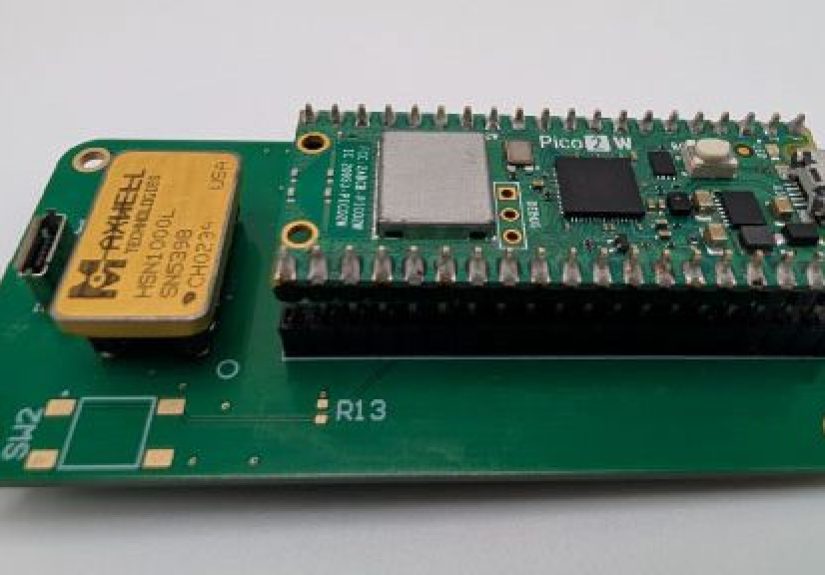
BhangmeterV2 is a Raspberry Pi Pico 2 W-powered device designed to detect the prompt gamma radiation pulse associated with a nuclear detonation. Its key sensing component is an HSN-1000L nuclear event detector, a radiation-hardened part originally intended for high-reliability electronics that might need to react almost instantly to a nuclear radiation pulse.
In simple terms, the detector watches for a very fast burst of ionizing radiation. When it sees a qualifying pulse, its output changes state. The microcontroller notices that change, records the time, and can update a JSON log or send the result to a remote service. The public-facing joke practically writes itself: a machine that updates the internet with the answer to humanity’s least comforting yes-or-no question.
Unlike a Geiger counter, BhangmeterV2 is not designed to measure background radiation over time. It is also not a classic optical bhangmeter in the historical sense. Traditional bhangmeters measure light intensity from a nuclear fireball, especially the famous double-flash pattern. BhangmeterV2 focuses on the prompt gamma event, which is an early radiation signature of a nuclear explosion.
Why Is It Called a Bhangmeter?
The word bhangmeter has a wonderfully odd backstory. Historically, a bhangmeter was a non-imaging radiometer used to detect nuclear detonations by observing changes in light intensity. These instruments were placed on satellites and other platforms to help identify atmospheric nuclear tests.
The name has been explained in a few different ways. One popular explanation links it to “bang” spoken with an exaggerated two-syllable rhythm, matching the two-pulse optical signal produced by an atmospheric nuclear blast. Another tongue-in-cheek explanation suggests that early skeptics thought anyone who believed satellite sensors could detect nuclear flashes must have been smoking bhang, a cannabis preparation. Either way, the name stuck, which proves that scientists do occasionally have excellent branding instincts.
The Science Behind Nuclear Flash Detection
The famous double flash
A nuclear explosion in the atmosphere produces a distinctive optical signal. First comes an extremely bright, short flash. Then, as the fireball expands and the shock wave changes the transparency of the surrounding air, the visible signal dips and rises again into a second, longer pulse. This double-humped light curve is one of the classic signatures that historical bhangmeters were designed to recognize.
That double flash matters because ordinary bright events usually do not follow the same pattern. Lightning, sunlight glinting off clouds or water, meteors, explosions, and sensor noise can all confuse detection systems. A useful nuclear detection network must separate the terrifyingly important signal from the merely dramatic background noise.
Prompt gamma radiation
BhangmeterV2 approaches the question from another angle. Instead of watching the sky for a double optical pulse, it uses a nuclear event detector that reacts to intense ionizing radiation pulses, especially prompt gamma radiation. Gamma rays are high-energy photons. In the context of a nuclear detonation, prompt gamma radiation appears very early, before slower effects such as the blast wave arrive.
This is where the project becomes both fascinating and slightly absurd. If a small ground-based device detects the prompt gamma pulse from a nuclear explosion, it is probably within line of sight and uncomfortably close. That means the device may be very quick, but the information it provides is not exactly a cheerful early-warning service. It is less “pack a bag” and more “well, that was a significant data point.”
How BhangmeterV2 Works
The HSN-1000L nuclear event detector
The HSN-1000L is the star of the show. It is a specialized component that senses fast ionizing radiation pulses and changes its output almost immediately when its detection threshold is exceeded. These kinds of nuclear event detectors were made for electronics that may need to protect themselves during extreme radiation events by shutting down, freezing memory operations, clamping signals, or triggering recovery routines.
In BhangmeterV2, that high-speed output becomes a digital signal for the Raspberry Pi Pico 2 W. Under normal conditions, the detector output remains in its ordinary state. If a qualifying event occurs, the signal changes, and the Pico records the event. From there, the project can update a JSON status file and push the result to the cloud.
The Raspberry Pi Pico 2 W brain
The Raspberry Pi Pico 2 W provides the project’s logic and wireless connectivity. It is small, inexpensive, flexible, and powerful enough for this kind of monitoring task. The Pico reads the detector, manages status lights, handles startup behavior, and communicates event data over Wi-Fi.
That makes BhangmeterV2 a modern maker interpretation of a Cold War-era detection idea. Instead of a classified satellite payload feeding a defense network, this version uses hobbyist-friendly hardware, MicroPython-style logic, and a web endpoint. The project is not powerful because it is complex. It is memorable because it makes a serious scientific idea visible in a simple, almost cartoonishly direct way.
Cloud logging and JSON status
The project’s use of JSON is a clever detail. A JSON log is easy for websites, dashboards, scripts, and other services to read. Under normal conditions, the device can report that it is alive and connected. If the detector triggers, the JSON can include a timestamp for the event.
Of course, this raises the obvious question: will the internet connection still be around after a nearby nuclear detonation? Maybe. Maybe not. The project’s humor lives in that gap between engineering seriousness and apocalyptic practicality. A cloud log is useful if the server survives, the network survives, the power survives, and the device survives. That is a lot of “ifs” wearing one trench coat.
Historical Context: From Vela Satellites to DIY Detectors
BhangmeterV2 makes more sense when viewed against the history of nuclear test monitoring. After the Limited Test Ban Treaty of 1963, nuclear tests were banned in the atmosphere, underwater, and in outer space. That created a major verification problem: how could countries know whether someone had secretly tested a nuclear weapon?
The United States developed space-based monitoring systems to help answer that question. The Vela satellites carried sensors designed to detect nuclear explosions by measuring x-rays, gamma rays, neutrons, optical flashes, and other signatures. Later systems, including sensors hosted on GPS satellites, continued the mission of nuclear detonation detection and treaty monitoring.
The story also produced one of science’s great accidental discoveries. Vela satellites looking for nuclear test signatures detected mysterious bursts of gamma radiation from deep space. Those events eventually became known as gamma-ray bursts, among the most energetic explosions in the universe. In other words, a program built to watch for nuclear cheating accidentally opened a new window into astrophysics. Not bad for hardware with a day job.
The Vela Incident and the Mystery of the Double Flash
No discussion of bhangmeters is complete without mentioning the Vela Incident. On September 22, 1979, a U.S. Vela satellite detected a double-flash signal over the southern Indian Ocean region. The signal resembled the optical signature of an atmospheric nuclear test, but the event remains controversial. Some analyses supported the possibility of a nuclear test, while others argued for alternative explanations such as a sensor anomaly or natural event.
The Vela Incident is a perfect example of why nuclear event detection is hard. Sensors can be fast and sensitive, but interpretation still requires context. Location, weather, satellite geometry, corroborating signals, political intelligence, and independent measurements all matter. A single sensor can raise the alarm. A complete detection system needs layers of evidence.
Why BhangmeterV2 Is Brilliantly Weird
BhangmeterV2 has the charm of a project that is technically real and emotionally ridiculous. It answers a question almost nobody wants answered locally. That is exactly why it attracts attention. The project takes a piece of high-consequence engineering and reframes it through the playful lens of maker culture.
There is a useful educational point here. Many people think of nuclear detection as something abstract: satellites, bunkers, generals, acronyms, and movie screens full of blinking dots. BhangmeterV2 shrinks that concept down to a board, a sensor, a microcontroller, and a status page. Suddenly the physics feels tangible.
It also demonstrates an important truth about sensors: detecting something is not the same as understanding everything about it. A smoke alarm can tell you there is smoke, but not whether you burned toast or lost the kitchen. BhangmeterV2 can detect a specific kind of fast radiation pulse, but it cannot independently characterize a nuclear event the way a national monitoring network can.
Limitations: What BhangmeterV2 Can and Cannot Do
It is not a full nuclear warning system
BhangmeterV2 should not be mistaken for an official emergency alert tool. A real nuclear detection system uses multiple sensors, multiple platforms, and sophisticated analysis. Optical sensors, gamma detectors, neutron detectors, x-ray sensors, seismic stations, infrasound arrays, atmospheric sampling, satellite observations, and communications networks can all play roles depending on the event.
A single DIY detector cannot provide that level of confidence. It can make a measurement, log an event, and teach people about the physics. That is valuable, but it is not the same as strategic warning.
Line of sight matters
Because BhangmeterV2 focuses on prompt gamma detection, geometry matters. Gamma radiation from a nuclear event does not politely curve around hills, buildings, and the planet to deliver a helpful notification. If the device sees the radiation pulse, it is likely because the event is in a direct or nearly direct path.
This limitation is part of what makes the project darkly funny. A positive detection could be scientifically impressive while being practically terrible news for the local area. It is a sensor with impeccable timing and questionable bedside manner.
False positives and interpretation
Every detection system must deal with false positives. High-energy particles, electrical noise, strong radiation sources, test conditions, or component behavior could create signals that need careful interpretation. Professional systems use calibration, redundancy, filtering, environmental data, and cross-checks to avoid overreacting to noise.
For BhangmeterV2, the best mindset is educational curiosity. Treat it as a demonstration of radiation-event logic, not as a final authority on global catastrophe. If the device says something dramatic, the first step is not to post in all caps. The first step is to seek official emergency information from reliable public authorities.
Why Makers Love Projects Like This
Makers are drawn to strange interfaces between everyday electronics and big systems. A clock that displays satellite time, a weather station that reads real atmospheric pressure, a Geiger counter that clicks at background radiation, or a dashboard that monitors air quality all share the same appeal: they make invisible forces visible.
BhangmeterV2 does the same thing, but with much higher narrative voltage. It connects a tabletop circuit to nuclear physics, Cold War history, treaty verification, space science, and web publishing. That is a lot of story for one small board.
It also shows how modern microcontrollers have changed hobby electronics. A project that once would have required specialized equipment, custom interfaces, and expensive logging hardware can now use a small wireless microcontroller and open-source software patterns. The physics is still advanced. The data plumbing is surprisingly approachable.
Practical Lessons From BhangmeterV2
Good sensors need good context
A sensor is only as useful as the system around it. BhangmeterV2 can notice a fast radiation event, but context determines meaning. Was it a real gamma pulse? Was the device tested? Was the timestamp accurate? Was the signal corroborated? Was there environmental interference? These are the questions that turn raw detection into useful information.
Simple interfaces make complex science easier to understand
The project’s simple yes-or-no framing is part of its genius. Nuclear detection is complicated, but a status page asking whether a nuke has gone off is instantly understandable. That simplicity invites people into the deeper topic. Once they laugh, they are more likely to learn.
Humor can make serious technology approachable
There is nothing funny about nuclear weapons themselves. But humor can be a doorway into difficult subjects. BhangmeterV2 uses absurdity to lower the barrier to learning about radiation, treaty verification, prompt gamma flashes, and satellite detection systems. The joke is not the danger. The joke is the wildly specific gadget built to answer an awful question with deadpan confidence.
Experiences Related to BhangmeterV2 and Nuclear Detection Culture
Spending time with a project like BhangmeterV2 creates an unusual emotional experience. On one hand, it feels like classic maker fun: a small board, a rare component, status LEDs, Wi-Fi, JSON, and the satisfaction of turning a weird idea into a working object. On the other hand, the subject matter has gravity. This is not a plant-watering sensor or a garage-door monitor. It is a device inspired by nuclear event detection, which means every technical detail points toward a much larger human story.
One relatable experience is the moment when the project changes from a joke into a lesson. At first, the phrase “has a nuke gone off?” sounds like internet absurdism. Then you begin reading about prompt gamma rays, optical double flashes, nuclear event detectors, and Vela satellites. Suddenly, the silly question becomes a doorway into decades of engineering built around verification, deterrence, and trust. The little circuit on the desk starts to feel connected to satellites, treaties, laboratories, and history books.
Another experience is the maker’s classic battle with reliability. A dramatic sensor is only useful if the boring parts work. Power must be stable. Wi-Fi must reconnect cleanly. The status file must update predictably. The timestamp must be meaningful. Indicator lights must tell the truth. In a project like BhangmeterV2, the absurd event case gets all the attention, but the normal operating state is where most engineering lives. The device spends nearly all its time saying, in effect, “nothing happened.” Making “nothing happened” reliable is surprisingly important.
The project also encourages humility. Nuclear detection is not just about having a sensor. It is about calibration, placement, physics, redundancy, and interpretation. A hobbyist device can teach the concept beautifully, but it also reveals why official monitoring systems rely on networks and multiple signatures. The more you learn, the less tempting it becomes to oversell a single reading.
There is also a strange comfort in seeing complicated technology made visible. Most people interact with nuclear history through documentaries, museums, or emergency planning documents. BhangmeterV2 gives the topic a physical form. It turns invisible radiation physics into a signal line, a log entry, and a web status. That does not make the subject less serious, but it does make it more understandable.
Finally, BhangmeterV2 is a reminder that curiosity often wears a ridiculous hat. Some of the best educational projects begin as jokes. A person asks a slightly unhinged question, builds a device to answer it, and accidentally creates a compact lesson in physics, electronics, history, and risk communication. That is the real charm of BhangmeterV2. It is not useful because we expect to need it. It is useful because it makes us ask better questions about the systems that watch the world when the stakes are highest.
Conclusion
BhangmeterV2 is one of those rare projects that manages to be funny, educational, historically rich, and technically intriguing at the same time. It uses a nuclear event detector and a Raspberry Pi Pico 2 W to watch for a prompt gamma pulse, then logs the result in a modern, web-friendly way. That alone is enough to make electronics fans lean closer.
But the deeper value is the story it tells. BhangmeterV2 points back to the history of bhangmeters, Vela satellites, nuclear test monitoring, and the science of detecting extraordinary events from tiny traces of light or radiation. It also reminds us that a detector is not the same as a complete warning system. Real nuclear event confirmation requires multiple sensors, context, and official analysis.
As a practical safety device, BhangmeterV2 is not something anyone should rely on. As a learning project, it is excellent. It turns the invisible into data, the historical into hands-on electronics, and a terrifying question into a surprisingly effective science lesson. In the grand tradition of maker culture, it proves that sometimes the best way to understand a serious topic is to build something wonderfully strange and let the blinking lights start the conversation.
SEO Tags
Note: This article is written for educational and informational web publishing. It does not provide emergency instructions, weapon-related guidance, or a replacement for official public safety alerts.







 Close
Close