
Table of Contents >> Show >> Hide
- Table of Contents
- What Is Corned Beef?
- Ingredients (and Smart Substitutions)
- Choosing the Best Corned Beef Brisket
- Prep That Matters: Rinse, Optional Soak, Spice Upgrade
- Best Method: Low-and-Slow Simmer + Veg at the End
- Slow Cooker Method (Hands-Off, Great for Busy Days)
- Instant Pot Method (Fast, Tender, Weeknight-Friendly)
- Oven-Braised Method (Set-It-and-Forget-It, Very Tender)
- Serving Tips: Slice Like You Mean It
- Leftovers That Don’t Feel Like Leftovers
- Common Mistakes (and How to Avoid Them)
- Real-Kitchen Experiences & Extra Tips ()
- Conclusion
Corned beef with cabbage and potatoes is the culinary equivalent of a cozy sweater: not fancy, not trying to be trendy,
but somehow it makes everyone in the room happier. It’s also the dish that teaches an important life lesson:
brisket doesn’t respond well to being rushedkind of like your friend who needs 45 minutes “just to put on shoes.”
This guide pulls together the best, most dependable tips from well-known U.S. recipe authorities (think: test kitchens,
big food publications, and food-safety guidance) and turns them into one no-drama, flavor-forward method. You’ll get a
“best overall” stovetop/oven-braise approach, plus slow cooker and Instant Pot options, and the little details that
separate tender and juicy from salty and chewy.
What Is Corned Beef?
Corned beef is beef (usually brisket) that’s been cured in a salty brine with “pickling” spices. The name has nothing
to do with corn-on-the-cob; historically, it refers to big “corns” (chunks) of salt used for curing. In modern grocery
stores, most corned beef brisket comes pre-cured and packaged with a little seasoning packetbasically, a tiny spice
starter kit for your next great dinner.
The classic Irish-American “boiled dinner” tradition typically serves the meat with cabbage and potatoes. Today we’re
keeping the spirit of that meal, but we’re doing it with better timing and better texturebecause cabbage deserves more
than being cooked into submission.
Ingredients (and Smart Substitutions)
Core Ingredients
- Corned beef brisket (3–5 lb), with spice packet if included
- Potatoes (about 2 lb): small red potatoes, Yukon Gold, or baby potatoes
- Green cabbage (1 medium head), cut into wedges
- Carrots (optional but classic), cut into big chunks
- Onion (optional), quartered for sweetness
- Garlic (optional), lightly smashed
- Liquid: water + optional beer (stout) or broth
Spice & Flavor Upgrades (Optional, Highly Recommended)
- Whole spices: mustard seed, coriander seed, peppercorns, allspice, cloves, bay leaves
- Something tangy: a splash of vinegar in the pot (or later in a sauce)
- Serving sauces: whole-grain mustard, Dijon, horseradish cream, or a quick vinaigrette
If you only do one upgrade: bring your own mustard (whole-grain or Dijon) and don’t be shy. Corned beef loves a sharp
sidekick.
Choosing the Best Corned Beef Brisket
Flat Cut vs. Point Cut
You’ll usually see two brisket cuts sold as corned beef:
flat cut (leaner, slices neatly) and point cut (fattier, more marbling, can be extra juicy).
For the “best corned beef with cabbage and potatoes recipe” experienceespecially if you want pretty slices for servinggo
with flat cut. If your household votes for maximum richness and doesn’t care about tidy slices, point cut is
a delicious chaos gremlin. Either works.
Spice Packet vs. DIY Pickling Spices
The packet is fine. It’s also tiny. If you want the kitchen to smell like you know what you’re doing, add a teaspoon or
two of extra pickling spices (mustard seed, coriander, peppercorns, bay leaves are the greatest hits). You’re not “changing
the recipe,” you’re “producing a director’s cut.”
Prep That Matters: Rinse, Optional Soak, Spice Upgrade
1) Rinse the Brisket
Corned beef is cured in brine, and that surface brine can be aggressively salty. A thorough rinse under cold water helps
keep the final dish seasoned rather than seawater-adjacent.
2) Optional Soak (For Salt-Sensitive Folks)
If you’ve had corned beef that tasted like it was trying to preserve you for the next century, do this: soak the brisket
in cold water for 30–60 minutes (or up to a couple hours), then drain and proceed. It’s not mandatory, but it can mellow
saltinessespecially with certain brands.
3) Start with Cold Water
For tender brisket, slow and gentle wins. Starting in cold water and bringing it up gradually encourages even cooking.
Also, it buys you time to locate your tongs, which are probably in the same place as every missing sock: another dimension.
Best Method: Low-and-Slow Simmer + Veg at the End
This is the method I recommend most for flavor, texture, and control: a gentle simmer (not a rolling boil), then add
potatoes and cabbage at the right time so they’re tendernot mush. Think of it like group work: everyone has a different
finish time, and forcing them to “stay in the pot together” just creates resentment.
Best Corned Beef with Cabbage and Potatoes (Stovetop “Boiled Dinner” Style)
Ingredients
- 1 (3–5 lb) corned beef brisket (flat cut preferred), spice packet reserved
- 1 onion, quartered (optional)
- 3–4 cloves garlic, smashed (optional)
- 2 bay leaves (if not included in the packet)
- 1–2 teaspoons whole peppercorns (optional)
- Water (enough to cover)
- 12 oz stout beer (optional) or replace with broth
- 2 lb small red or Yukon Gold potatoes, halved if large
- 3–4 carrots, cut into large chunks (optional but classic)
- 1 medium head green cabbage, cut into 6–8 wedges
- To serve: whole-grain mustard or horseradish cream
Step-by-Step
-
Rinse (and optionally soak). Rinse the corned beef under cold water. Optional: soak in cold water
30–60 minutes to reduce saltiness, then drain. -
Build the pot. Place brisket in a large pot or Dutch oven. Add spice packet (and any extra whole spices),
onion, garlic, and bay leaves. Add beer (if using), then add cold water to cover the meat by about 1 inch. -
Bring to a gentle simmer. Bring the pot up until it just begins to boil, then immediately reduce to a
low simmer. Skim any foam that rises early on (it’s harmless, just not pretty). -
Cook until tender. Simmer, covered, until the brisket is fork-tendergenerally about 45–60 minutes per
pound, but let tenderness (not the clock) be your boss. If the fork meets resistance, keep cooking. -
Rest the meat. Transfer brisket to a board, tent with foil, and let it rest 10–20 minutes. This makes
slicing easier and helps juices settle. -
Cook potatoes and carrots. While the beef rests, bring the cooking liquid back to a lively simmer.
Add potatoes (and carrots, if using). Cook until nearly tender, about 15–25 minutes depending on size. -
Add cabbage last. Nestle cabbage wedges into the pot and cook until tender but still pleasantly green,
usually 10–15 minutes. (Translation: cabbage shouldn’t be gray. Gray cabbage is a cry for help.) -
Slice against the grain. Slice the corned beef across the grain into 1/4–1/2 inch slices. Serve with
potatoes, cabbage, and a ladle of hot cooking liquid. Bring mustard. Accept compliments.
Pro Moves for Even Better Results
- Gentle simmer, not a hard boil: Boiling can make brisket tougher and can shred the outside. Keep it calm.
- Size your potatoes: Cut larger potatoes so they cook evenly. Small potatoes can stay whole.
- Want more flavor? Add a pinch of extra pickling spices or a cinnamon stick for a warm background note.
Slow Cooker Method (Hands-Off, Great for Busy Days)
If your schedule is packed, slow cooker corned beef and cabbage is the low-effort hero. The key is adding vegetables at
the right time so you don’t end up with potato paste.
- Rinse the brisket and place it in the slow cooker, fat side up.
-
Add the spice packet, onion, and garlic. Pour in water (and optional beer or broth) so there’s enough liquid to keep
things moist (it doesn’t always need to fully submerge). - Cook on LOW about 8–10 hours (or HIGH about 4–5 hours), until tender.
- Add potatoes and carrots partway through (commonly with about 2 hours left on LOW, or about 1 hour left on HIGH).
- Add cabbage near the end so it stays sweet and tender, not limp.
- Rest and slice across the grain; serve with mustard or horseradish sauce.
Slow cooker tip: if you’re running late, you can roast vegetables on a sheet pan and serve them alongside the sliced beef.
It still tastes like a cohesive meal, just with better texture (and fewer “how did the potato become a cloud?” moments).
Instant Pot Method (Fast, Tender, Weeknight-Friendly)
Instant Pot corned beef can be remarkably tender, especially if you allow a natural pressure release. The pattern is: pressure
cook the beef, rest it, then quickly pressure-steam the vegetables.
- Rinse brisket and place on a trivet (or directly in the pot).
- Add spice packet and water (about 6 cups for many cookers) plus optional onion/garlic.
-
Pressure cook (typical ranges: ~55–90 minutes depending on size and recipe style), then
natural release for best tenderness. - Rest the brisket under foil while you cook vegetables.
- Add potatoes and carrots (and then cabbage on top). Pressure-steam briefly (often just a few minutes), then quick release.
- Slice against the grain and serve.
Instant Pot safety note: don’t overfill. Vegetables can sit slightly above the “max fill” line in some recipes, but they
should never block the pressure valve or prevent the lid from sealing properly.
Oven-Braised Method (Set-It-and-Forget-It, Very Tender)
If you want super consistent tenderness and don’t feel like babysitting a simmer, braising in the oven is a great play.
You get gentle, even heatplus your stove stays free for everything else (like making a sauce or dramatically tasting mustard).
- Preheat oven to around 300°F (many recipes land in the 300–350°F neighborhood for braising).
- Rinse brisket, place in a Dutch oven, add spices and enough water to cover by about 1 inch.
- Bring to a quick boil on the stove, skim if needed, cover, and transfer to oven.
- Braise until very tender (often about 3–4+ hours, depending on size).
- Rest the meat, then simmer vegetables in the cooking liquid until tender.
Serving Tips: Slice Like You Mean It
Slice Against the Grain (Non-Negotiable)
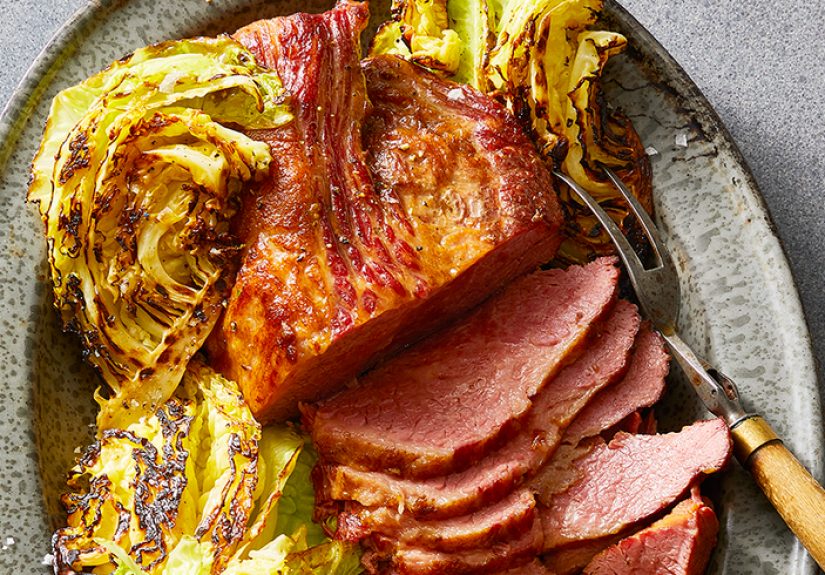
Brisket has visible lines (the “grain”). Slice perpendicular to those lines. Cutting with the grain makes the meat feel
stringy and toughlike you’re chewing on a very delicious shoelace.
Best Sauces for Corned Beef
- Whole-grain mustard: classic, punchy, perfect with the salty cure.
- Horseradish cream: mix prepared horseradish with sour cream or mayo, plus lemon and pepper.
- Quick dill vinaigrette: an Epicurious-style upgradebright, herbal, and great with roasted cabbage or potatoes.
How to Plate Without Making It Weird
Pile cabbage wedges and potatoes on a platter, fan the beef slices over the top, then ladle a little hot cooking liquid
over everything. It makes the meat glossy, keeps it warm, and prevents the potatoes from drying out. Food styling with a purpose.
Leftovers That Don’t Feel Like Leftovers
- Reuben sandwiches: rye bread, corned beef, Swiss, sauerkraut, and dressing. Your lunch just peaked.
- Corned beef hash: chop beef and potatoes, crisp in a skillet, top with eggs. Breakfast royalty.
- Soup upgrade: dice leftovers into broth with cabbage and potatoes for an easy, hearty bowl.
- Roast the veg next time: if you prefer crisp edges, roast cabbage and potatoes while the beef cooks, then serve together.
Common Mistakes (and How to Avoid Them)
Mistake #1: Boiling Like It Owes You Money
A rolling boil can rough up brisket. Keep it at a steady simmer. Your future self will thank you while chewing effortlessly.
Mistake #2: Cooking Cabbage for the Same Length of Time as Beef
Cabbage doesn’t need hours. Add it near the end. Tender and sweet is the goalnot “mysterious soft green memory.”
Mistake #3: Slicing the Wrong Direction
If you remember nothing else: slice against the grain. It’s the difference between “tender” and “why is my jaw tired?”
Mistake #4: Panic When the Meat Is Still Pink
Corned beef can remain pink because of the curing process. Color alone isn’t a reliable doneness test. Tenderness and proper
cooking (plus resting) matter most.
Mistake #5: Over-salting Everything
The brisket is already cured. Taste the broth before adding extra salt, and consider the optional soak if you’re sensitive to salt.
Real-Kitchen Experiences & Extra Tips ()
Here’s what tends to happen in real kitchens (the ones with a slightly crooked drawer, a spice rack that’s half-full of
optimism, and at least one pot lid that has mysteriously gone missing).
First: people often assume corned beef is “just boiled meat,” so the cooking can’t matter that much. Then they crank the
heat, let the pot rage-boil for hours, and wonder why the brisket is tough. Brisket is a working muscle; it needs time
and gentle heat so collagen can break down. If you’ve ever tasted corned beef that was both salty and chewy, it’s
usually not the recipe’s faultit’s the temperature. Lower the heat. Let it simmer. Your stovetop is not a drag strip.
Second: cabbage is the dish’s drama queen. If it cooks too long, it turns limp and sulfur-y and perfumes the house like a
gym bag full of regrets. But cooked correctlyadded late, simmered just until tenderit becomes sweet and silky, soaking up
the brisket’s spiced broth. If you’re feeding cabbage skeptics, this timing is your secret weapon. Cut cabbage into wedges
so it holds together, and try not to stir it like you’re making a smoothie.
Third: potatoes are sneaky. Small red potatoes hold their shape well and look great on a platter. Yukon Golds get creamy and
buttery (great if you like softer edges). Either way, size matters. If some potatoes are golf-ball small and others are
fist-sized, you’ll get half perfect and half undercooked. Cut larger ones so everything finishes together. And if you’re
using a slow cooker, resist the urge to add potatoes at the very beginning unless you enjoy the texture of mashed potato
roulette.
Fourth: the spice packet is helpful but not sacred scripture. Many home cooks quietly upgrade flavor by adding a little extra
mustard seed, coriander seed, and peppercorns. The payoff is huge: the broth smells like a deli in the best possible way.
A bay leaf or two adds depth, and garlic and onion make the whole pot taste more rounded. Some cooks add stout beer for a
malty backbone; others prefer broth. Both camps are right, and they can coexist peacefullyprobably.
Fifth: slicing can make or break everything. Corned beef looks like it has faint lines running in one direction; those are
the muscle fibers. Slice across them. If you slice the wrong way, even perfectly cooked meat can feel stringy. If you slice
it the right way, the exact same brisket feels tender and lush. This is the moment to slow down and be intentional.
Finally: leftovers are where corned beef becomes a lifestyle. A Reuben sandwich can feel like a restaurant meal at home.
Hash is the breakfast you make when you want people to believe you “just threw something together” even though it tastes
like a weekend brunch special. If you want to be extra clever, store beef and vegetables separately; it helps the textures
stay nicer on day two and three. And if your veggies are a bit soft? Crisp them in a hot skillet with butter. Nobody has to
know they were once “leftovers.” They’ve been promoted.
Conclusion
The best corned beef with cabbage and potatoes recipe isn’t about fancy ingredientsit’s about timing and tenderness.
Rinse (and optionally soak) to manage salt, simmer gently until fork-tender, rest the meat, then cook potatoes and cabbage
at the end so everything lands on the plate at its best. Add mustard, slice against the grain, and you’ve got a classic
corned beef and cabbage dinner that tastes like traditiononly upgraded.







 Close
Close