
Table of Contents >> Show >> Hide
- Why a spine disease can cause eye inflammation
- The most common eye issue in AS: anterior uveitis (iritis)
- Other eye effects linked to AS and inflammation
- Why immediate evaluation matters
- How doctors diagnose AS-related eye inflammation
- Treatment: local control + systemic strategy
- Daily life with AS and eye risk: practical playbook
- Urgent red flags: go now, not later
- Frequently asked questions
- Conclusion
- Experience Corner (Extended Section – 500+ Words)
If you think ankylosing spondylitis (AS) is “just a back problem,” your eyes would like a quick word.
AS is an inflammatory condition that mainly targets the spine and sacroiliac joints, but it can also
show up outside the skeletonespecially in the eyes. The most common eye complication is
anterior uveitis (also called iritis), and it can arrive suddenly, dramatically, and
usually without checking your calendar first.
The good news: with fast recognition and coordinated care, most people protect their vision and recover
well from flares. The better news: once you know the warning signs, you can act quickly instead of
wondering whether your eye is “just tired from screens.” This guide breaks down what AS does to the eyes,
what symptoms deserve urgent attention, how treatment works, and what everyday habits help reduce risk.
It is based on real clinical guidance and patient-centered standards used in U.S. care settings.
Why a spine disease can cause eye inflammation
AS belongs to a family of conditions called spondyloarthritis. These are immune-mediated
inflammatory diseases, which means inflammation doesn’t always stay in one neighborhood. In AS, immune
activity can affect entheses (where tendons and ligaments attach to bone), joints, and extra-articular
organsincluding the eye.
In simple terms: your immune system is supposed to defend you. In AS, it may become overactive and
misdirected, triggering inflammation in places that are not “the problem.” The eye’s uveal tract
(iris, ciliary body, choroid) is particularly vulnerable to this kind of inflammation.
Genetics can also influence risk. The HLA-B27 gene variant is strongly associated with AS
and with certain forms of acute anterior uveitis. Important nuance: HLA-B27 is a risk marker, not fate.
Some people with HLA-B27 never develop AS or uveitis, and some people with AS are HLA-B27 negative.
Biology is rarely a one-button machine.
The most common eye issue in AS: anterior uveitis (iritis)
The eye complication clinicians watch most closely in AS is anterior uveitisan inflammation in the front
part of the eye. It often appears suddenly and can be quite painful. If you have AS and one eye becomes
red and light-sensitive out of nowhere, treat that as a “same day” problem, not a “let’s see tomorrow”
problem.
Classic symptoms you should not ignore
- Eye pain (often deep, aching, or sharp)
- Red eye, usually worse around the iris
- Sensitivity to light (photophobia)
- Blurred vision or “foggy” vision
- New floaters or visual disturbance (in some cases)
- Sometimes a small or irregular pupil on the affected side
Many people experience unilateral flares (one eye at a time), though either eye can be affected over
time. Some episodes are isolated; others recur in cycles. Recurrent episodes are not rare in AS, which is
why long-term communication between rheumatology and ophthalmology matters so much.
How common is it?
Estimates vary by study and disease duration. In everyday counseling, clinicians often explain that a
substantial minority of people with AS will develop at least one episode of uveitis in their lifetime.
Depending on cohort and follow-up duration, lifetime risk can range from roughly one in five to
approaching one in two. Translation: it is common enough to proactively discuss before symptoms start.
Other eye effects linked to AS and inflammation
Uveitis gets the spotlight, but it is not the only possible issue. Ongoing or severe ocular inflammation
can raise the risk of secondary complications, including:
- Glaucoma (damage related to elevated eye pressure)
- Cataracts (from inflammation itself or corticosteroid exposure)
- Posterior synechiae (iris adhesions)
- Macular edema and vision distortion in more complex disease
- Scleritis in some inflammatory contexts
This is exactly why “I can still sort of see” is not a reassurance. Eye inflammation can be active before
major visual damage is obvious. Early treatment protects structures you can’t self-monitor in a mirror.
Why immediate evaluation matters
Anterior uveitis is often treated as an urgent ophthalmic condition. Rapid diagnosis and treatment can
shorten flare duration, reduce pain, and lower risk of long-term visual complications. Delayed treatment,
on the other hand, can increase the chance of persistent inflammation and structural damage.
If you have AS and develop painful red eye + light sensitivity + blurred vision, seek
same-day eye care (or emergency care if severe symptoms or sudden vision loss occur). “It might pass” is
not a reliable strategy here.
How doctors diagnose AS-related eye inflammation
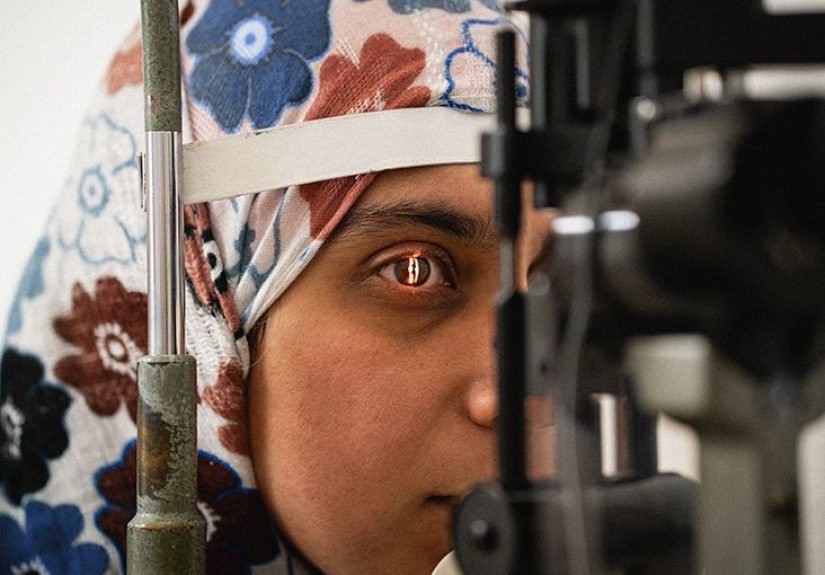
Diagnosis is clinical and exam-based. Ophthalmologists typically use a slit-lamp exam to identify cells
and flare in the anterior chamber and to distinguish uveitis from other causes of red eye (like
conjunctivitis). Intraocular pressure is also checked because pressure can move in the wrong direction
during inflammation or treatment.
Tests and history that help
- Detailed symptom timeline (onset, pain, vision change, one eye vs both)
- Eye exam with slit lamp and pressure measurement
- Dilated retinal exam when needed
- Systemic history: back pain pattern, stiffness, psoriasis, bowel symptoms, family history
- Targeted labs/imaging when diagnosis is unclear (not always required each flare)
Sometimes eye disease is the clue that leads to recognition of previously undiagnosed
spondyloarthritis. That is one reason eye specialists may ask questions that sound surprisingly
rheumatologic, such as chronic inflammatory back pain or morning stiffness patterns.
Treatment: local control + systemic strategy
Treatment has two goals: calm the active eye flare quickly and reduce future flare risk through better
systemic inflammation control.
During an acute flare
- Corticosteroid eye drops to suppress inflammation
- Cycloplegic/mydriatic drops to reduce painful ciliary spasm and help prevent adhesions
- In selected cases, periocular/oral steroids for deeper or harder-to-control inflammation
- Close follow-up to taper drops safely and monitor pressure
Your doctornot Dr. Internetsets dosing and taper schedules. Stopping drops too fast can trigger rebound
inflammation, while overuse can raise pressure and increase steroid-related risks.
Long-term prevention and AS disease control
Recurrent uveitis often means the treatment conversation expands beyond eye drops. Rheumatology and
ophthalmology may adjust systemic therapy to reduce inflammation burden across the body. In guideline-based
care for AS with recurrent uveitis, TNF-inhibitor monoclonal antibodies are often favored
over some other biologic pathways because of stronger evidence for uveitis-related outcomes.
Clinical decision-making is individualizeddisease activity, prior medication response, comorbidities
(such as inflammatory bowel disease), infection risk, and pregnancy planning all matter. There is no
one-size-fits-all biologic menu, and that is a good thing.
Daily life with AS and eye risk: practical playbook
1) Build a two-specialist routine
Think of your care team as a duo: rheumatologist + ophthalmologist. Share medication changes across both
clinics. Bring your latest problem list and biologic schedule to each visit.
2) Know your “flare script”
Keep a simple action plan: who to call, where to go after-hours, which symptoms trigger urgent care.
When pain and light sensitivity hit, you should not have to assemble a strategy from scratch.
3) Track patterns
A small symptom log helps: date, eye involved, severity, new meds, infections, stress, sleep disruption.
Pattern spotting can improve flare prevention and treatment timing.
4) Protect general inflammatory health
Sleep, movement, smoking avoidance, and medication adherence are unglamorous but powerful. You cannot
biohack your way out of inflammatory disease, but you can reduce avoidable inflammatory pressure.
5) Don’t self-prescribe leftover drops
Old steroid drops from a previous flare are not a DIY starter kit. Red eye has multiple causes, and the
wrong treatment can delay proper diagnosis or worsen outcomes.
Urgent red flags: go now, not later
- Sudden painful red eye with light sensitivity
- Rapidly worsening blurry vision
- New flashes, floaters, or “curtain” in vision
- Severe headache, nausea, and eye pain
- Symptoms that worsen despite treatment
If these happen, seek urgent ophthalmic evaluation. Vision is not the place to test your patience.
Frequently asked questions
Can AS cause permanent vision loss?
It canespecially if uveitis is untreated or repeatedly uncontrolled. But with early diagnosis, appropriate
anti-inflammatory treatment, and follow-up, many people maintain good vision long term.
Does every person with AS get uveitis?
No. Risk is meaningful but not universal. Some people never have an eye flare, while others have recurrent
episodes. Genetics, disease duration, and inflammatory profile all influence risk.
If my eye is red but not painful, is it still uveitis?
Not always. Conjunctivitis, dry eye, allergy, and blepharitis are common alternatives. However, in someone
with AS, any unusual red eyeespecially with light sensitivity or blurred visionshould be assessed
promptly.
Will biologics cure AS-related uveitis forever?
Biologics can significantly reduce flare frequency for many patients, but they are not a guaranteed cure.
Management is usually long-term and adjusted over time based on response and safety.
Should I get routine eye checks even without symptoms?
Yes, especially if you have prior flares or high-risk features. Baseline and periodic eye care improve
early detection and help catch treatment side effects such as pressure changes.
Conclusion
Ankylosing spondylitis can absolutely affect the eyes, and the most important word in this whole topic is
timing. The earlier uveitis is recognized and treated, the better the odds of preserving
comfort and vision. If you live with AS, treat eye symptoms as actionable information, not background noise.
Build your care team, learn your flare signs, follow treatment plans closely, and keep communication open
between specialists.
One final reality check with a smile: your spine and your eyes may seem like distant relatives, but in AS
they’re in the same group chat. When one starts shouting, listen early.
Experience Corner (Extended Section – 500+ Words)
The following composite stories reflect common real-world experiences patients and clinicians describe in
AS-related eye inflammation. They are educational examples, not individual medical advice.
Experience 1: “I thought it was just screen fatigue.”
Jordan, 29, had known AS for three years. One Monday morning, his right eye felt gritty and bright office
lights seemed aggressively rude. By lunch, the eye was red and painful. He blamed late-night spreadsheets,
too much coffee, and the universal modern diagnosis: “I looked at screens too long.”
By evening, the pain deepened and his vision looked slightly smeared around text. He remembered his
rheumatologist mentioning uveitis and went to urgent ophthalmology instead of waiting. Diagnosis:
acute anterior uveitis. He started steroid and dilating drops the same day and had close follow-up over the
next week. Symptoms improved quickly, and vision returned to baseline.
His biggest takeaway was simple: in AS, painful red eye plus light sensitivity is not a “sleep it off”
symptom. Fast action prevented a bigger problem. He now keeps an emergency eye-care plan in his phone,
right next to his train app and fantasy football lineup.
Experience 2: “The flare kept coming back.”
Maya, 36, had intermittent eye flares every 8–10 months. Each episode responded to drops, but the cycle
repeated. Her rheumatologist and ophthalmologist reviewed the pattern together and decided this was not just
an eye problemit was a systemic control problem.
After discussing risks and benefits, they adjusted her long-term AS treatment. Over the next year, her
flare frequency dropped meaningfully. She still attends regular eye visits because prevention is a process,
not a finish line. Her words: “I stopped thinking in isolated episodes and started thinking in systems.”
That mindset shift helped her adhere to treatment and reduce panic when symptoms appeared.
She also learned that treatment success is more than “no pain today.” It includes protecting future vision,
reducing structural eye damage risk, and maintaining work and family routines without repeated disruption.
Experience 3: “My eye doctor helped diagnose my back disease.”
Chris, 33, saw an ophthalmologist first for recurrent unilateral uveitis. During history-taking, the doctor
asked about morning back stiffness and pain improving with movement. Chris laughed and said, “That’s my
entire morning.” He was referred to rheumatology, where axial spondyloarthritis was confirmed.
For him, the eye was the clue that unlocked the bigger diagnosis. Before that, he assumed his back pain was
from sports injuries and a stubborn mattress. Once diagnosed, he started targeted therapy and physical
rehabilitation, and both spinal symptoms and eye flares became more manageable.
His lesson: specialists are not silos. Sometimes an eye visit can reveal a rheumatologic disease, and
sometimes rheumatology treatment protects future eye health. Connecting those dots early changed his
trajectory.
Experience 4: “I wanted control, not fear.”
Elena, 41, said the worst part was uncertainty: “Will this happen at work? While driving? During my kid’s
school event?” Her team helped her build a practical flare protocol:
- Call pathway for same-day eye symptoms
- Medication list kept current and shared across clinics
- Quarterly check-ins when disease activity changed
- Symptom diary to spot trends and triggers
The protocol didn’t eliminate AS, but it replaced panic with procedure. She describes the change this way:
“I stopped feeling ambushed by my own body.” That emotional benefit matters. Chronic disease management is
not only biochemicalit is logistical and psychological, too.
Her final advice to newly diagnosed patients: learn the warning signs, build your team early, and never
apologize for urgent eye care. Preserving vision is always worth the inconvenience of a same-day visit.






 Close
Close