
Table of Contents >> Show >> Hide
- Introduction: When a Nutcracker Goes Full Engineering Nerd
- What Does “All-Billet” Mean?
- How a Flexure Replaces a Hinge
- Why 17-4 PH Stainless Steel Makes Sense
- The CNC Machining Challenge
- Why This Nutcracker Is a Great Example of Design for Manufacturing
- Advantages of a Single-Piece Flexure Nutcracker
- Possible Limitations and Trade-Offs
- What Makes It Different From a Normal Nutcracker?
- Real-World Applications Beyond Nuts
- Design Lessons From the All-Billet Nutcracker
- Experience: What It Feels Like to Think Through a Flexure-Based Nutcracker
- Conclusion
Note: This article is written for web publishing and synthesizes real engineering information about billet machining, flexure mechanisms, 17-4 PH stainless steel, CNC manufacturing, and practical nutcracker design.
Introduction: When a Nutcracker Goes Full Engineering Nerd
Most nutcrackers are simple tools. Two handles, one hinge, a few ridges, and a walnut that never saw it coming. But an all-billet, single-piece, flexure-based nutcracker is not “most nutcrackers.” It is the kind of object that makes machinists grin, engineers lean closer, and everyone else ask, “Wait, why is this kitchen tool built like spacecraft hardware?”
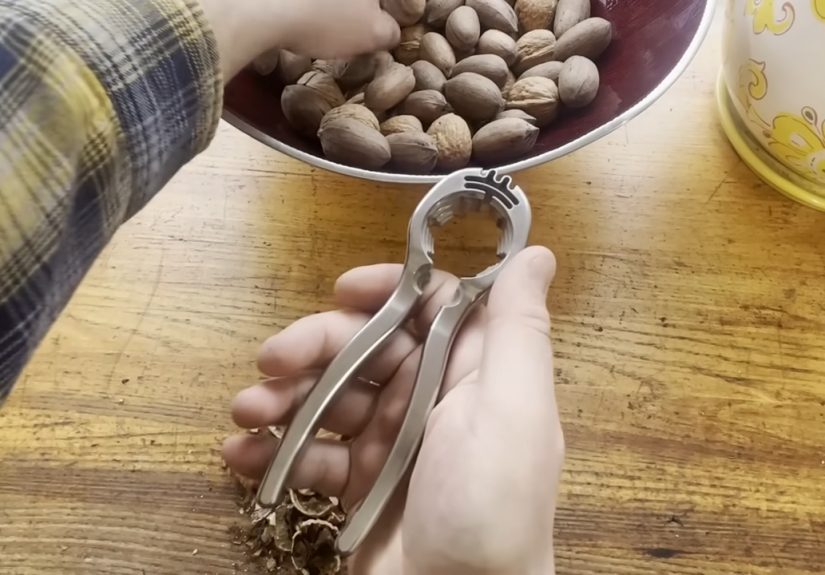
The idea is beautifully excessive: machine a nutcracker from one solid piece of metal, remove the traditional pin hinge, and replace it with a carefully designed flexure. Instead of separate moving parts rubbing against each other, the tool bends elastically in a controlled region. The result is a monolithic nutcracker that looks futuristic, feels precise, and turns a snack into a small mechanical ceremony.
The specific project that made this concept famous used 17-4 PH stainless steel heat treated to the H900 condition. That choice matters. This is not decorative pot metal pretending to be tough. 17-4 PH is a precipitation-hardening stainless steel known for high strength, hardness, and corrosion resistance. In other words, it is exactly the kind of material you would pick if your nutcracker wanted a résumé.
What Does “All-Billet” Mean?
In everyday maker language, “billet” usually means the part was carved from a solid block of stock rather than cast, stamped, welded, or assembled from multiple pieces. Technically, a billet is the original metal stock form. Once machining is complete, the final object is no longer a billet; it is a machined part. But the phrase “all-billet” still communicates the spirit of the design: solid material, subtractive manufacturing, and no flimsy shortcuts.
For this nutcracker, the all-billet idea is central to its appeal. A conventional nutcracker depends on a hinge pin, separate arms, possibly rivets, and surfaces that may loosen over time. A single-piece billet nutcracker has no hinge pin to lose, no joint to wiggle, and no mystery crevice where pecan dust can start a tiny civilization.
How a Flexure Replaces a Hinge
A flexure is a flexible region designed to bend in a predictable way. In a traditional hinge, motion comes from one rigid part rotating around another. In a flexure-based mechanism, motion comes from the elastic deformation of the material itself. Think of it as a spring, hinge, and structural member politely sharing the same job.
In the all-billet nutcracker, the flexural spring section sits where a normal hinge would be. When the user squeezes the handles, this thin, carefully shaped area bends. The jaws move, the nut meets pressure, and the shell cracks. When the force is released, the flexure returns the handles toward their original position.
This is the same broad design philosophy behind many compliant mechanisms. Compliant mechanisms use flexible members instead of traditional joints. They can reduce part count, eliminate backlash, reduce friction, and remove the need for lubrication. In precision instruments, medical devices, aerospace hardware, and micro-mechanisms, those advantages are not just elegant; they are practical.
Why 17-4 PH Stainless Steel Makes Sense
The material choice is one of the reasons this project is more than a shiny novelty. 17-4 PH stainless steel combines strength, hardness, and corrosion resistance. “PH” stands for precipitation hardening, a heat-treatment process that strengthens the alloy. The H900 condition refers to aging the material at around 900 degrees Fahrenheit, which develops very high strength and hardness.
For a flexure-based nutcracker, strength matters because the thin flexural region must bend without permanently deforming. Corrosion resistance matters because this is a kitchen-adjacent tool, and nobody wants a nutcracker that looks like it spent winter under a truck. Hardness matters because the gripping teeth and bearing surfaces need to survive repeated contact with hard shells.
That said, H900 is not magic. Higher strength often comes with lower ductility compared with softer heat-treatment conditions. A designer must avoid sharp stress risers, overly thin sections, and bending ranges that push the flexure beyond its safe elastic limit. The goal is not to make the metal suffer. The goal is to make it bend just enough, then happily spring back like nothing happened.
The CNC Machining Challenge
Machining this kind of part is not as simple as “cut until nutcracker appears.” The flexure section is delicate, the geometry is unforgiving, and the finish needs to be clean. CNC machining starts with a digital model, toolpaths, workholding, cutters, speeds, feeds, and a healthy respect for the fact that stainless steel can be stubborn.
In the original build, the flexural section was formed through a sequence of CNC drilling operations followed by milling. Drilling helps remove material in controlled locations, creating the openings and reliefs that define the flexible spring shape. Milling then refines the form, shapes the handles, cuts the jaws, and gives the finished tool its final profile.
Why Workholding Matters
One of the tricky parts of machining a one-piece flexure tool is that the part begins to behave differently as material is removed. Early in the operation, the stock is rigid. Later, once the flexure is freed, the handles can move. That movement is wonderful during use but annoying during machining. A cutter wants stability, not interpretive dance.
That is why temporary supports, clever fixturing, and even small jacks or braces can be used to keep the handles from shifting while the final features are cut. Good machining is not just about the tool touching metal. It is about controlling vibration, deflection, heat, chip evacuation, and part movement from the first operation to the final polish.
Why This Nutcracker Is a Great Example of Design for Manufacturing
Design for manufacturing means creating a product that can actually be made efficiently and reliably. With a flexure-based nutcracker, the designer must think about cutter access, inside corner radii, tool length, surface finish, and how the part will be held. A beautiful CAD model is only the beginning. If no tool can reach a feature, the model is basically digital poetry.
Internal corners cannot be infinitely sharp when milled with rotating tools. Thin sections can chatter. Deep slots may require long tools that flex. Stainless steel can work-harden if cut poorly. Every one of these realities influences the final design. The impressive part is not merely that the nutcracker is one piece; it is that the concept respects the constraints of real-world machining.
Advantages of a Single-Piece Flexure Nutcracker
1. Fewer Parts
A conventional nutcracker may have two handles and a hinge pin. A single-piece flexure nutcracker has one main body. Fewer parts can mean fewer assembly steps, fewer failure points, and a cleaner design.
2. No Traditional Hinge Wear
Hinges wear because parts rub against each other. A flexure bends internally, so there is no pin rotating inside a hole. That helps reduce backlash and looseness over time, assuming the flexure is designed within its fatigue limits.
3. No Lubrication Needed
A kitchen tool should not need hinge oil to operate smoothly. Flexure-based motion avoids sliding contact at the joint, which means no greasy hinge and no awkward moment where your walnuts taste faintly like machine shop regret.
4. Easy to Clean
A single-piece stainless steel body can be easier to wipe down than a multi-part assembly full of crevices. Food-contact design still depends on finish quality, passivation, and maintenance, but fewer joints usually help.
5. Serious Visual Appeal
Let’s be honest: this tool looks cool. It has the clean, sculptural form of a precision instrument. It belongs equally on a kitchen counter, in a machinist’s toolbox, or in a sci-fi movie where someone cracks alien pistachios.
Possible Limitations and Trade-Offs
The all-billet flexure-based nutcracker is impressive, but it is not automatically the perfect consumer product. Machining a complex stainless steel part from solid stock can be expensive. Material waste is higher than with stamping or forging. Cycle time can be long. Tool wear can be real. For mass-market nutcrackers, a simple hinged design is cheaper and easier to produce.
There is also the matter of fatigue. A flexure works by repeated bending. If the flexure is overstressed, poorly finished, scratched in a critical region, or bent too far too often, fatigue cracks could develop. Good engineering reduces that risk through generous radii, controlled stress distribution, smooth surfaces, and appropriate material selection.
Finally, ergonomics matter. A tool can be mechanically brilliant and still uncomfortable if the handles are too thin, too sharp, too slippery, or too short. A nutcracker must convert hand force into shell-cracking pressure without punishing the user. The best version of this design would balance strength, spring feel, jaw geometry, and comfort.
What Makes It Different From a Normal Nutcracker?
A normal nutcracker is a lever with a hinge. It works. It is cheap. It does not need a thesis defense. But the flexure-based billet nutcracker represents a different design mindset. It asks: what if we remove the joint entirely? What if the spring action is built into the body? What if the tool is both functional and a demonstration of material behavior?
That is why this object resonates with makers. It takes a humble kitchen task and turns it into a compact lesson in compliant mechanism design. You can see the load path. You can understand where the motion comes from. The tool does not hide its engineering; it celebrates it.
Real-World Applications Beyond Nuts
The same principles behind this nutcracker appear in many serious applications. Flexures are used in precision stages, optical mounts, micro-grippers, medical devices, sensors, and aerospace mechanisms. Anywhere designers need repeatable motion with minimal friction and no backlash, compliant mechanisms become attractive.
In a camera lens, tiny motion errors matter. In a laboratory instrument, backlash can ruin measurements. In space hardware, lubricants can cause problems. In micro-scale devices, assembling tiny hinges may be impractical. Flexures solve many of these issues by allowing controlled motion through elastic deformation.
The nutcracker is playful, but the engineering is legitimate. It is a countertop example of a design language used in advanced technology. That is part of its charm: it lets everyday users hold a piece of precision-thinking in their hands, then use it to attack a walnut.
Design Lessons From the All-Billet Nutcracker
Material Is Not an Afterthought
The right flexure depends on the right material. A soft metal might bend permanently. A brittle material might crack. A strong stainless alloy like 17-4 PH gives the designer a better chance of combining strength, spring behavior, corrosion resistance, and durability.
Geometry Controls Behavior
The flexure is not just a thin spot. Its thickness, length, radius, and surrounding reliefs determine stiffness and stress. Small changes can dramatically affect how the tool feels and how long it lasts.
Surface Finish Matters
Scratches and sharp machining marks can become stress concentrators. For a flexure, a smooth finish is not cosmetic fluff. It can help reduce fatigue risk and improve the life of the part.
Simple Use Can Hide Complex Engineering
The best tools feel obvious when used. Squeeze handles, crack nut, enjoy snack. Behind that simple action may be careful modeling, machining strategy, heat treatment, and testing.
Experience: What It Feels Like to Think Through a Flexure-Based Nutcracker
Working with the idea of an all-billet, single-piece, flexure-based nutcracker changes the way you look at ordinary tools. At first glance, a nutcracker seems too simple to deserve serious engineering. Then you start sketching the load path, and suddenly the humble walnut becomes a structural opponent. The shell is hard, irregular, and unpredictable. The user’s grip force varies. The jaws must bite without launching shell fragments across the room like snack shrapnel. The handles must flex enough to move but not enough to feel mushy. That is when the design stops being a novelty and starts becoming genuinely interesting.
One practical lesson is that flexures reward restraint. Beginners often think flexibility means making a section very thin. That can work once, right before it fails in a tiny metallic tragedy. A useful flexure needs controlled compliance, not weakness. The bend should be spread across a planned region instead of concentrated at a sharp notch. Generous radii, smooth transitions, and careful thickness choices make the difference between a spring and a future crack.
Another experience-based insight is that stainless steel demands patience. Machining 17-4 PH is not like carving butter, unless the butter has been doing deadlifts. Cutting tools need the right speeds and feeds. The setup must be rigid. Chips must clear. Heat must be controlled. The machinist has to think several steps ahead because once the flexure is opened up, the part can move under cutting pressure. That means the order of operations is just as important as the design itself.
There is also something satisfying about the single-piece philosophy. A traditional hinge is easy to understand, but it introduces parts, tolerances, assembly, wear, and cleaning concerns. A monolithic flexure removes much of that clutter. It feels almost like cheating, except the cheat code is physics. The material becomes the mechanism. The spring is not added; it is revealed by machining.
From a user’s perspective, the best version of this nutcracker would feel precise and slightly springy. The handles would resist smoothly, the jaws would align cleanly, and the shell would crack with a controlled snap. A poor version would feel stiff, sharp, or fragile. That difference would come down to details: handle shape, jaw tooth geometry, flexure stiffness, finish, and the maximum opening range.
The larger takeaway is that clever engineering does not have to live only in robots, aircraft, or medical devices. It can live in a kitchen drawer. A flexure-based nutcracker turns a familiar object into a lesson about materials, manufacturing, and design discipline. It reminds us that even the simplest tools can be reimagined when someone asks a slightly ridiculous but wonderful question: “Could this be made from one solid piece of stainless steel with no hinge at all?” Apparently, yes. And it can look fantastic doing it.
Conclusion
An all-billet, single-piece, flexure-based nutcracker is more than an overbuilt kitchen gadget. It is a compact demonstration of compliant mechanism design, precision CNC machining, and smart material selection. By replacing a traditional hinge with a flexural spring section, the design reduces part count, eliminates hinge play, and creates a tool that feels more like engineered sculpture than ordinary hardware.
Its use of 17-4 PH stainless steel in the H900 condition makes sense because the design needs strength, hardness, corrosion resistance, and elastic performance. The machining process requires careful planning, especially around the flexure and workholding. The final result is not the cheapest way to crack a nut, but it may be one of the most satisfying.
For makers, machinists, engineers, and design lovers, this nutcracker is a reminder that everyday objects can still surprise us. Sometimes innovation is not about adding more parts. Sometimes it is about removing them until the material itself does the moving.






 Close
Close