
Table of Contents >> Show >> Hide
- Corrections vs. Bear Markets: The “How Bad Is It?” Cheat Sheet
- What Counts as “Emerging Markets,” Anyway?
- The Core Reasons EM Corrections and Bear Markets Happen
- A Short History, Told Through the Big EM Stress Episodes
- 1994–1995: Mexico’s “Tequila Crisis” and the modern EM template
- 1997–1998: The Asian Financial Crisis and contagion’s master class
- 1998: Russia’s defaultwhen “local” turns global
- 1998–2002: Brazil, Turkey, Argentinadifferent stories, similar pressure points
- 2008–2009: The Global Financial CrisisEM gets hit even when it didn’t “start it”
- 2011: Eurozone stress, growth scares, and the “risk-off” reflex
- 2013: The Taper Tantrumwhen “just talking” moved EM markets
- 2014–2016: The commodity slump and China slowdown fears
- 2018: Idiosyncratic crises (Turkey, Argentina) plus a tougher global backdrop
- 2020: COVIDfastest panic, then a complicated recovery
- 2022–2025: Higher global rates, a stronger dollar, and selective stress
- Patterns That Repeat Across EM Bear Markets (Because Markets Love Sequels)
- So What Do You Do With This History?
- What Corrections Feel Like: Investor Experiences (and What They Teach)
- Experience #1: “It was fine… until the currency chart showed up.”
- Experience #2: “The headlines are scary, but the sell-off is scarier.”
- Experience #3: “Everything is correlated… until it isn’t.”
- Experience #4: “The recovery feels illegal.”
- Experience #5: “I learned what I actually own.”
- Experience #6: “The best decision I made was boring.”
- Conclusion
Emerging markets are where the growth headlines livenew middle classes, new tech adoption, new infrastructure, new everything.
They’re also where “plot twists” happen more often: surprise devaluations, sudden capital controls, commodity faceplants, and elections that turn
into financial thrillers. If developed markets sometimes feel like a long-running sitcom, emerging markets can feel like prestige TV:
brilliant seasons, shocking finales, and the occasional episode where the writers clearly drank too much coffee.
This article is a practical, story-driven history of how emerging market (EM) corrections and bear markets tend to happen, why they’ve been so
dramatic at key moments, and what patterns repeat across decades. We’ll keep it real, keep it readable, and yeskeep a sense of humor,
because staring at drawdown charts without humor is how people end up stress-baking banana bread at 2 a.m.
Corrections vs. Bear Markets: The “How Bad Is It?” Cheat Sheet
What’s a correction?
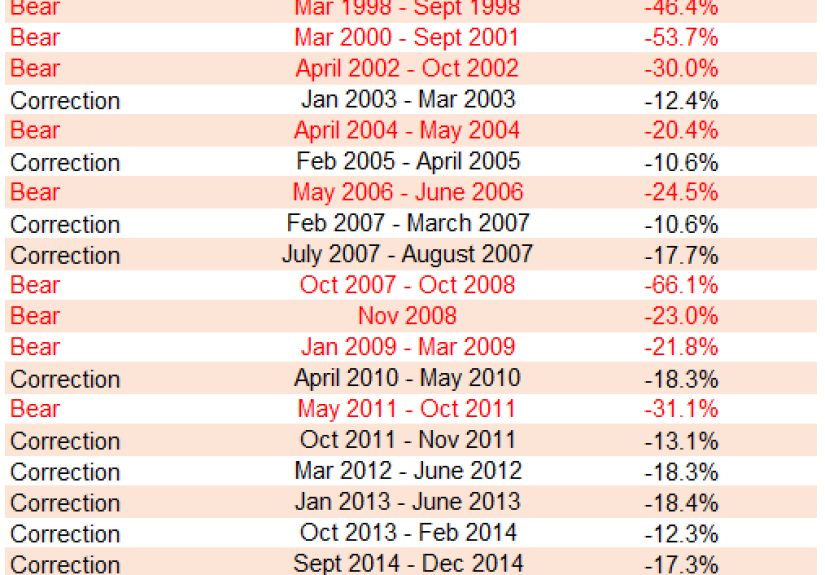
In everyday investing language, a market correction is typically a drop of about 10% to under 20% from a recent high.
Think of it as the market saying, “Okay, okay… I got a little carried away.”
What’s a bear market?
A bear market is commonly defined as a decline of about 20% or more. That’s the market’s version of
canceling plans, turning off read receipts, and ghosting optimism for a while.
Why emerging markets can feel more intense
Emerging markets often have higher growth potentialbut also more frequent stress points: currency swings, higher inflation risk, heavier reliance
on foreign capital, and greater sensitivity to global interest rates and commodity cycles. That doesn’t mean “bad.” It means “dynamic,” which is a
polite way of saying “buckle up.”
What Counts as “Emerging Markets,” Anyway?
“Emerging markets” isn’t a single placeit’s a category. Index providers like MSCI build benchmarks (for example, the MSCI Emerging Markets Index)
that track large and mid-sized companies across a set of EM countries. In practice, when investors talk about EM sell-offs, they often mean broad
index declines driven by a mix of country-specific shocks and global financial conditions.
One important nuance: EM returns come from both local asset prices and currency moves.
If a country’s stock market rises 8% in local terms but its currency drops 12% against the U.S. dollar, a U.S.-based investor can still end up down.
That currency layer is a recurring character in every EM dramasometimes hero, sometimes villain.
The Core Reasons EM Corrections and Bear Markets Happen
-
Currency and debt mismatch: When governments, banks, or companies borrow in a foreign currency (often USD) but earn revenue in local
currency, a devaluation can turn “manageable” debt into “uh-oh” debt fast. -
Capital flow reversals: Money often floods into EM during “risk-on” periods and rushes out when global investors get nervous.
That exit can pressure currencies, bonds, and equities at the same time. -
Global rate shocks: Higher U.S. yields can pull capital back toward dollar assets and tighten financial conditions for EM.
Even talk of tighter policy has historically mattered. -
Commodity cycles: Many EM economies are tied to energy, metals, or agriculture. When commodity prices fall hard, budgets and
trade balances can weaken quickly. -
Politics and policy credibility: Elections, sudden regulation, capital controls, or central bank credibility issues can act as
accelerantsespecially when external conditions are already tough.
A Short History, Told Through the Big EM Stress Episodes
The point of this history isn’t to memorize dates like a trivia night champion. It’s to recognize patterns:
what tends to break first, what spreads contagion, and what eventually stabilizes the situation.
1994–1995: Mexico’s “Tequila Crisis” and the modern EM template
Mexico’s 1994 peso crisis helped define how modern EM crises can unfold: pressure on a currency peg or managed exchange rate, dwindling reserves,
investor panic, rapid devaluation, and a feedback loop into banks, companies, and government financing. The details were specific to Mexico, but the
bigger lesson became a classic: when short-term capital and currency promises collide, markets don’t politely ask for a meetingthey sprint for the exit.
A key theme that showed up here (and later, again and again) was the risk of financing structures that look stable until the moment the exchange rate
regime changes. Once confidence breaks, the repricing can be brutally fast.
1997–1998: The Asian Financial Crisis and contagion’s master class
The Asian Financial Crisis began when Thailand’s baht broke its peg in mid-1997, and stress spread across parts of Southeast Asia and beyond.
Many economies had rapid credit growth, banking vulnerabilities, and significant foreign-currency exposure. When currencies weakened, debt burdens
inflated, financial institutions strained, and growth collapsed in several countries.
This period also popularized a hard truth: contagion is real. Investors often treat “emerging markets” as one risk bucket.
Even countries with stronger fundamentals can get hit when investors de-risk broadly. In other words, markets sometimes don’t do nuance when they’re scared.
1998: Russia’s defaultwhen “local” turns global
Russia’s 1998 crisisfeaturing default and currency turmoiladded another dimension: the way EM stress can jump into global markets through leverage
and interconnected portfolios. When big shocks hit, correlations can spike, liquidity can vanish, and “diversification” can briefly feel like a rumor.
1998–2002: Brazil, Turkey, Argentinadifferent stories, similar pressure points
Around the turn of the millennium, multiple emerging markets faced severe stress episodes with varying mixes of currency problems, fiscal strain,
banking fragility, and political uncertainty. Argentina’s 2001–2002 crisis became one of the most widely discussed examples of a fixed exchange rate
regime breaking under pressurefollowed by an enormous economic and social shock.
The repeating motif across these episodes wasn’t “EM is doomed.” It was more specific:
when policy credibility collapses and external financing dries up, the market reprices the entire country risk premium in a hurry.
2008–2009: The Global Financial CrisisEM gets hit even when it didn’t “start it”
The 2008 crisis started in developed market credit plumbing, but emerging markets still took major hits because global growth expectations fell,
trade slowed, commodity prices dropped, and investors fled risk. This is a key historical reminder:
EM bear markets don’t require an EM-origin shock. Sometimes the storm is imported.
Many EM markets eventually rebounded as policy support surged globally and risk appetite returnedanother recurring pattern:
the same fast money that leaves can come back, sometimes faster than anyone expects.
2011: Eurozone stress, growth scares, and the “risk-off” reflex
As Europe wrestled with sovereign debt fears and global growth expectations wobbled, emerging markets again felt the ripple effects.
These were the years when investors learned (or re-learned) that EM isn’t just a story about local GDP growthit’s also a story about global liquidity,
trade, and investor positioning.
2013: The Taper Tantrumwhen “just talking” moved EM markets
In 2013, U.S. Federal Reserve communication about reducing asset purchases triggered sharp reactions across markets, and emerging markets saw
meaningful stress in currencies and financial conditions. This episode became a reference point for how sensitive EM can be to U.S. rates and
global funding costseven before policy fully changes.
The lesson: in emerging markets, the cost of dollars matters. When dollar funding gets more expensive or scarce, vulnerabilities that felt
theoretical can suddenly feel very real.
2014–2016: The commodity slump and China slowdown fears
A powerful driver of EM cycles is commodities. When energy and metals prices fell sharply in the mid-2010s, many commodity-linked EM economies faced
weaker fiscal positions, softer growth, and investor skepticism. At the same time, worries about China’s growth and currency policy added volatility.
This stretch highlighted an underappreciated detail: some EM bear markets are less about one dramatic “crash day” and more about a grinding,
multi-quarter resetdeath by a thousand cautious analyst notes.
2018: Idiosyncratic crises (Turkey, Argentina) plus a tougher global backdrop
In 2018, certain countries experienced acute stress while global conditions also tightened. When U.S. rates rise and the dollar strengthens,
countries with large external financing needs or credibility issues can get singled out. This is where the phrase “not all EM is the same” becomes
more than a sloganit becomes the difference between a rough year and an existential mess.
2020: COVIDfastest panic, then a complicated recovery
The early 2020 shock was a reminder that markets can fall on fear before they fall on data. Risk assets sold off globally, including EM.
Then policy support and changing expectations fueled recoveries in many placesthough outcomes varied widely by country, public health capacity,
fiscal space, and exposure to tourism/commodities/trade.
2022–2025: Higher global rates, a stronger dollar, and selective stress
In the more recent period, higher global interest rates and shifting growth expectations have continued to shape EM performance.
The big takeaway is not that one “great EM bear market” happened everywhere at once. It’s that the market has increasingly separated countries by
fundamentals: reserves, inflation management, political stability, debt structure, and the ability to attract durable investment.
Patterns That Repeat Across EM Bear Markets (Because Markets Love Sequels)
1) The first crack is often currency-related
In many major EM crises, pressure on the currency or an exchange-rate promise is an early signal. If reserves fall, confidence weakens, and foreign-currency
debt is high, the market starts to price a devaluation before officials admit it’s possible.
2) “Contagion” is partly psychology and partly plumbing
Investors often rebalance by selling what they can, not what they should. Liquid EM assets can get dumped because they’re easy to tradeeven if the country
itself is relatively stable. At the same time, global funds and banks can transmit stress across regions through risk limits, margin calls, and portfolio rules.
3) The exit door gets smaller when everyone runs at once
Liquidity can disappear during EM sell-offs. Bid-ask spreads widen, price gaps happen, and “I’ll just sell later” becomes “later is… not available.”
This is why EM downturns often feel sharper than the economic news alone would justify.
4) The “fix” is usually some mix of credibility + liquidity
Stabilization typically comes from improved policy credibility (clear plans, credible central bank action, fiscal adjustments) and/or liquidity support
(reserves, swap lines, multilateral support, debt restructuring, or global easing). It’s rarely one magic trickmore like several unglamorous fixes done consistently.
So What Do You Do With This History?
History can’t tell you the next headline. But it can teach you what to watch:
- External vulnerability: current account deficits, reserve adequacy, foreign-currency debt
- Inflation and credibility: policy consistency, central bank independence, real rates
- Global conditions: U.S. rates, dollar strength, commodity trends, global risk appetite
- Concentration risk: whether “EM exposure” is actually just a big bet on a few countries/sectors
Practical investors often respond to EM volatility with a few common-sense approaches:
diversify broadly (not just one country), size the allocation so you can emotionally survive it, rebalance with discipline,
and avoid pretending you can time every twist. None of this is personal financial advicejust the market equivalent of
“wear a seatbelt because physics doesn’t care about vibes.”
What Corrections Feel Like: Investor Experiences (and What They Teach)
You asked for experiences, so here are realistic, ground-level “what it’s like” moments investors commonly report during emerging market corrections
and bear markets. These aren’t one person’s diarythey’re composite snapshots of recurring behaviors, emotions, and decision traps that show up across cycles.
Experience #1: “It was fine… until the currency chart showed up.”
An investor buys an emerging markets fund because they want growth beyond the U.S. market. The stocks in a specific country are doing okay locally,
but the local currency weakens against the dollar. Their account balance falls anyway. Confusion turns into frustration:
“How can companies be up but I’m down?” That’s the currency layer at work.
Lesson: In EM, currency is not background noise. It’s part of the main plot. If you’re investing from the U.S., dollar strength can be a headwind
even when local fundamentals aren’t collapsing.
Experience #2: “The headlines are scary, but the sell-off is scarier.”
During a global risk-off moment, the news cycle turns into a doom buffet: “capital flight,” “policy uncertainty,” “contagion.” Prices drop quickly.
The investor opens their app too often (rookie mistake) and starts bargaining with the universe:
“If it just bounces 3%, I’ll sell and pretend this never happened.”
Lesson: EM drawdowns can be fast and emotionally loud. If your plan requires you to panic-sell at the worst moment, the plan is the problem.
A pre-decided allocation size and rebalancing rule can be more valuable than a perfect forecast.
Experience #3: “Everything is correlated… until it isn’t.”
In the heat of a sell-off, multiple EM countries fall together. It feels like diversification failed.
Then, months later, performance starts to separate: some countries stabilize quickly, others drag.
Suddenly the investor’s “EM” allocation behaves less like one bucket and more like a set of different stories.
Lesson: Correlations often spike during stress, then fade. Diversification helps most over full cycles, not necessarily on the worst day.
Also, “EM” is not one tradecountry and sector composition matter more than people think.
Experience #4: “The recovery feels illegal.”
After a brutal bear market, a rebound begins. The news is still negative, but prices rise anyway.
The investor hesitates because it feels too soonlike the market is breaking its own rules.
They wait for “confirmation,” but by the time the headlines improve, a big chunk of the rebound has already happened.
Lesson: Markets are forward-looking and often turn before the mood does. That’s why systematic rebalancing can beat “waiting until it feels safe.”
In EM, recoveries can be sharp precisely because sentiment gets so extreme on the way down.
Experience #5: “I learned what I actually own.”
During calm markets, an investor thinks they own “global growth.” During a downturn, they realize they actually own a heavy concentration in a few countries,
a few sectors, and a few mega-companiesplus a big helping of currency exposure.
They finally read the fund’s country and sector breakdown (shocking, I know) and understand why their results look the way they do.
Lesson: EM investing rewards curiosity. Know what’s inside the wrapper: country weights, sector bets, and whether the strategy leans toward
commodity exporters, tech-heavy markets, or state-linked financials.
Experience #6: “The best decision I made was boring.”
The investor who survives EM volatility best is rarely the one with the flashiest prediction.
It’s usually the one who sized the position reasonably, diversified, rebalanced occasionally, and didn’t turn a long-term allocation into a daily referendum
on their self-worth.
Lesson: In emerging markets, boring is brave. A calm process can outperform a dramatic personality.
Conclusion
Emerging market corrections and bear markets are not random lightning strikesthey’re often the result of familiar forces:
currency pressure, debt structure, capital flow reversals, commodity cycles, and shifts in global interest rates and risk appetite.
The history is messy, sometimes painful, and frequently humbling. But it’s also full of recoveries, reinventions, and long-run growth stories.
If there’s one practical takeaway, it’s this: treat EM volatility as a feature, not a bugthen build a strategy that can live with it.
Your future self will thank you. Possibly with sleep. Definitely with fewer panic-refreshes of your portfolio app.







 Close
Close