
Table of Contents >> Show >> Hide
- Why Death Becomes a Character in the First Place
- 10 Famous Representations of Death in Myth, Legend, and Folktale
- 1. Thanatos: Greek Death with a Quiet Step
- 2. Hel: The Norse Face of the Unavoidable
- 3. Anubis: Egypt’s Guide, Guardian, and Funeral Professional
- 4. Yama: The Judge of the Dead in Indian Tradition
- 5. Mictlantecuhtli: Aztec Lord of the Underworld
- 6. Baron Samedi: Death with Swagger in Haitian Vodou
- 7. The Grim Reaper: Europe’s Most Famous Deadline Reminder
- 8. The Banshee: Ireland’s Wail Before the End
- 9. The Morrígan: Battle, Fate, and Death in Celtic Myth
- 10. Santa Muerte: Folk Devotion and the Modern Skeleton Saint
- What These Death Figures Reveal About Us
- Living with the Stories: Experiences Related to Death in Myth, Legend, and Folktale
- Conclusion
Note: This article is written for a general audience and focuses on cultural symbolism, storytelling, and folklore rather than graphic detail.
Death may be the one character guaranteed to appear in every human story, yet cultures almost never leave it as a blank, abstract idea. Instead, they dress it up, give it a title, hand it a dramatic entrance, and let it walk straight into myth, legend, and folktale. Sometimes death arrives as a judge. Sometimes it is a guide, a guardian, or a warning cry in the dark. Sometimes it shows up looking impossibly regal. Sometimes it looks like it borrowed its outfit from the world’s gloomiest costume closet.
That variety is exactly what makes representations of death so fascinating. These figures are not just spooky decorations from old stories. They reveal how societies understood fate, morality, grief, memory, and the great mystery no one gets to skip. In some traditions, death is orderly and almost bureaucratic. In others, it is wild, prophetic, maternal, or strangely compassionate. And in more than a few tales, death is less a villain than a cosmic employee with a very full calendar.
Below are 10 memorable representations of death from myth, legend, and folktale. Together, they show that while human beings disagree about nearly everything, we have all spent a remarkable amount of time imagining what waits at the edge of life.
Why Death Becomes a Character in the First Place
Personifying death helps people talk about the untalkable. A name, face, or story gives shape to something that otherwise feels too large and too final. That is why death figures appear in so many traditions across the world: they help cultures explain where the dead go, who escorts them, who judges them, and whether the end of life is chaos or part of a larger order.
What is especially striking is that these figures are rarely one-note. Some are terrifying, yes, but many are also fair, solemn, protective, or even oddly comforting. They remind us that mythology and folklore are not just about fear. They are also about making meaning. Humans have always wanted to know whether death is a door, a verdict, a road, a shadow, or a hand on the shoulder saying, “All right, the story changes here.”
10 Famous Representations of Death in Myth, Legend, and Folktale
1. Thanatos: Greek Death with a Quiet Step
In Greek mythology, Thanatos is the personification of death, and he is usually imagined not as a roaring monster but as a calm, inevitable presence. That matters. Greek thought often treated death as something woven into cosmic order, not simply a horror show with thunder effects. Thanatos appears when a person’s allotted time has run out, which gives him a strangely official role. He is less chaotic villain and more final messenger.
What makes Thanatos memorable is his restraint. He does not stomp across myth in a cloud of melodrama. Instead, he represents the quiet certainty that mortality belongs to every human life. In storytelling terms, he is the opposite of theatrical overkill. He is precise, efficient, and impossible to bribe with good vibes. If that sounds cold, it also sounds deeply Greek: fate rules, the gods watch, and death arrives exactly when it means to.
2. Hel: The Norse Face of the Unavoidable
In Norse mythology, Hel rules the realm of the dead that bears her name, and she stands as one of the most striking representations of death in old European tradition. She is not merely a location manager for the afterlife. She is the embodiment of a world where death is real, stern, and unsentimental. That fits Norse myth perfectly, which tends to greet existence with a hard stare and very little sugar coating.
Hel’s symbolism is powerful because she reflects the Norse view that not every death leads to glorious battle songs and heroic feasting. Some souls go instead to her domain, a reminder that mortality is not always romantic, glorious, or wrapped in shiny armor. Hel represents death stripped of fantasy polish. She is the cold fact behind the saga, the part of the story that does not care whether a warrior gave a great speech first.
3. Anubis: Egypt’s Guide, Guardian, and Funeral Professional
Anubis, the jackal-headed Egyptian deity associated with embalming and the dead, is one of history’s most recognizable death figures. But his role is not simply to symbolize endings. He is also a protector. In Egyptian belief, death required preparation, ritual, and right passage. Anubis oversaw that transition, linking the physical care of the body with the spiritual journey beyond life. If the afterlife had a chief of operations, Anubis would be wearing the badge.
That makes Anubis especially interesting among mythological death figures. He is not death as destruction. He is death as process. He stands at the border between worlds and helps ensure that the dead are treated properly. In a culture that valued order, ceremony, and the survival of the soul, Anubis represented a deeply reassuring idea: the dead were not abandoned to confusion. Someone knowledgeable, sacred, and impeccably composed knew the route.
4. Yama: The Judge of the Dead in Indian Tradition
Yama, found in Hindu mythology and later Buddhist traditions, is one of the world’s great death rulers. He is often associated with judgment, moral reckoning, and the destination of souls after death. Unlike a purely frightening specter, Yama embodies justice. He is not there simply to end life and vanish into the mist. He weighs what a life has been. That gives him enormous symbolic force.
Yama shows how representations of death often overlap with ethics. Death, in this model, is not just an event. It is an accounting. A culture that imagines a judge of the dead is also imagining that actions matter beyond the final breath. That idea has real staying power. It answers an old human question: does the universe notice what we do? Yama’s presence says yes, absolutely, and perhaps more carefully than we would prefer.
5. Mictlantecuhtli: Aztec Lord of the Underworld
Mictlantecuhtli, the Aztec lord of the dead, rules Mictlan, the underworld associated with many ordinary deaths. As a representation of death, he is unforgettable because he reflects a worldview in which the afterlife is not a one-size-fits-all destination. In Aztec cosmology, the manner of death could shape where a soul traveled, and Mictlantecuhtli presided over one of the great destinations in that spiritual map.
He also reminds us that death figures are often tied to cosmology, not merely fear. Mictlantecuhtli is part of a larger system of order, journey, and transformation. He is severe, yes, but he is also structurally important. In myth, that often matters more than being likable. Nobody expects the lord of the underworld to win a popularity contest. His real job is to define what death means in a world where the boundary between life, ritual, and cosmic structure is intensely meaningful.
6. Baron Samedi: Death with Swagger in Haitian Vodou
Baron Samedi is one of the most vivid death figures in Haitian Vodou. Associated with cemeteries, the dead, and the boundary between life and afterlife, he is famous for his dark humor, sharp style, and larger-than-life personality. That combination makes him stand out immediately. Baron Samedi does not drift in like a silent fog. He arrives with charisma. Death, in his presence, becomes theatrical, irreverent, and impossible to ignore.
But his flamboyance is not just for show. Baron Samedi reveals something profound about folklore and religion: death can be approached with ritual seriousness and bold personality at the same time. He is a guardian of thresholds, a spirit connected to burial and mortality, yet he also breaks the expectation that death must always appear solemn and hushed. In other words, he proves that even the grave can have style. Not cheerful style, exactly, but unforgettable style.
7. The Grim Reaper: Europe’s Most Famous Deadline Reminder
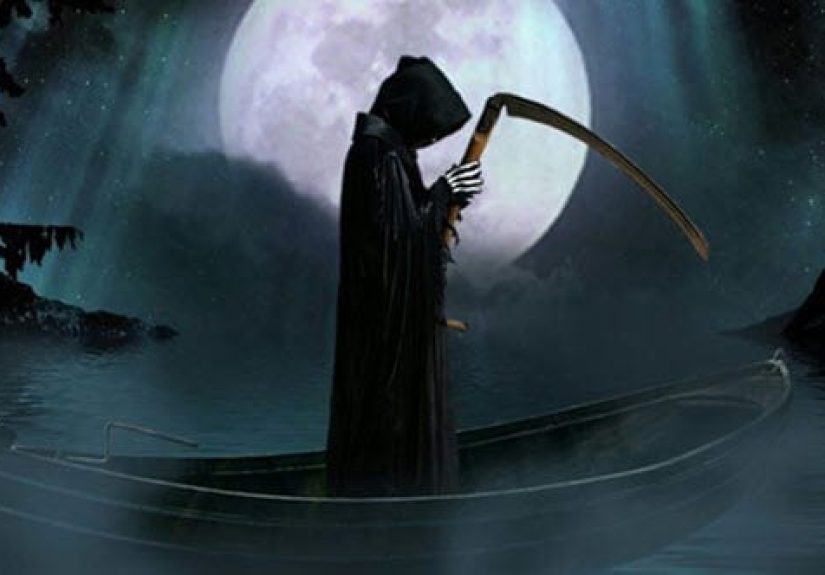
If death had a global brand ambassador, it might be the Grim Reaper. The hooded skeletal figure carrying a scythe became the classic Western personification of death, especially in European art and folklore. The image is blunt on purpose. Skeleton equals mortality. Scythe equals harvesting lives. Hood equals, well, nobody ever puts on a dramatic hood because the meeting will be casual. The symbolism is almost aggressively clear.
The Grim Reaper became especially powerful in the wake of plague and mass mortality, when death felt not theoretical but visibly everywhere. That history helps explain why the image stuck. It turned social terror into a single figure people could picture, fear, and even parody. Over time, the Reaper moved from medieval imagination into cartoons, novels, films, and memes, which is an odd career arc but an impressive one. Very few death figures have managed both existential dread and pop culture longevity.
8. The Banshee: Ireland’s Wail Before the End
The banshee is not exactly death itself, but in Irish and Celtic folklore she is one of death’s most haunting signals. Her cry is said to warn that a death in a family is near. That makes her less executioner and more omen, but omens matter deeply in folklore. They prepare the living for what they cannot prevent. The banshee turns grief into sound before grief fully arrives.
What gives the banshee lasting power is emotional realism. Many cultures imagine signs that appear before major loss because humans desperately want warning, even when warning changes nothing. The banshee answers that wish in eerie form. She is a figure of dread, yes, but also of acknowledgment. Her lament says that loss is not unnoticed. Someone, somewhere, is already mourning with you. That may be chilling, but it is also strangely tender beneath the shiver.
9. The Morrígan: Battle, Fate, and Death in Celtic Myth
The Morrígan, a powerful figure in Irish myth, is tied to battle, sovereignty, fate, and death. She is often associated with prophecy and the doom that hangs over warriors before conflict. Unlike a simple “god of death” label, the Morrígan operates in a broader symbolic field. She is about the tension before the fall, the nearness of fate, and the wild intelligence of forces bigger than any single hero’s plan.
That makes her one of the most sophisticated death figures in mythology. The Morrígan does not just represent the moment life ends. She represents the atmosphere around mortality: forewarning, inevitability, and the collapse of human control. Her connection with battlefield imagery and bird symbolism only deepens her power. She is the unsettling idea that death may already be circling overhead long before anyone realizes the battle has turned.
10. Santa Muerte: Folk Devotion and the Modern Skeleton Saint
Santa Muerte belongs more to folk religion and popular devotion than to ancient myth, but she is unquestionably one of the modern world’s most powerful representations of death. Depicted as a robed skeletal female figure, she blends imagery associated with the Angel of Death, older Mexican traditions, and folk spirituality. That layered background gives her a unique place in the cultural history of death personified.
What is most striking about Santa Muerte is that many devotees approach her not just with fear, but with trust. She can symbolize protection, healing, justice, and safe passage, which complicates the usual assumption that death figures only terrify. Santa Muerte shows how folklore evolves. Death does not disappear from modern life just because people live with smartphones and online grocery delivery. It simply changes clothing, gathers new meanings, and keeps speaking to old anxieties.
What These Death Figures Reveal About Us
Put these figures side by side and a pattern emerges. Death is rarely imagined as random. More often, it is structured. It belongs to law, fate, ritual, memory, warning, or transition. Thanatos is orderly. Anubis is ceremonial. Yama is judicial. The banshee is prophetic. The Grim Reaper is bluntly symbolic. Santa Muerte is intimate and devotional. Each figure answers the same question with a different accent: what does it mean for life to end?
These myths and legends also reveal that people do not merely fear death. They negotiate with it in story. They give it names. They turn it into art. They place it in ritual. They imagine it as a king, a goddess, a saint, a whisper, a judge, or a skeletal traveler with a tool that says, in essence, “harvest season is not just for wheat.” That creativity is not morbid for its own sake. It is human beings trying to make the biggest mystery feel speakable.
Living with the Stories: Experiences Related to Death in Myth, Legend, and Folktale
One reason these representations of death endure is that people do not encounter them only in old books. They meet them in museums, in festivals, in family sayings, in Halloween costumes, in novels assigned for class, and in the strange little moments when folklore sneaks into everyday life. A person may see Anubis on a museum wall and suddenly realize ancient Egyptians did not treat death as pure terror, but as something ordered and navigable. Someone else may hear the word “banshee” used jokingly in conversation and only later learn that behind the joke is a centuries-old image of grief arriving before bad news.
There is also a distinct emotional experience in seeing how different cultures imagine death without flattening them into one big spooky soup. The Grim Reaper can feel cold and universal, while Santa Muerte feels intimate and devotional. Baron Samedi can seem shocking at first because he mixes mortality with style and humor. The Morrígan feels stormy and prophetic. Yama feels judicial. Anubis feels ceremonial. When readers move among these figures, they often realize they are not just studying death. They are studying how communities teach courage, memory, respect, and meaning.
For many people, the first real encounter with these stories happens in adolescence, when mythology suddenly stops being a list of weird names and starts sounding like coded philosophy. A student reads about Hel or Thanatos and recognizes that ancient people wrestled with the same questions modern people do. What happens after death? Is the universe fair? Does character matter? Why do humans need rituals around loss? Myth does not hand over neat final answers, but it does offer company, and company matters.
There is a social experience, too. Folklore about death often gets shared in groups: around campfires, in classrooms, at seasonal celebrations, or while swapping family superstitions. Someone mentions the banshee. Someone else brings up the Grim Reaper. Suddenly a casual conversation becomes a miniature anthropology seminar with snacks. These stories help people discuss loss at a safe angle. Instead of talking immediately about private grief, they talk about symbols. That symbolic distance can make the topic easier to approach.
Even the visual experience matters. A jackal-headed god, a robed skeleton saint, a queen of battle crows, a dark lord of the underworld, a judge with cosmic authority: these are memorable images because death is easier to contemplate when imagination gives it shape. Art, ritual objects, paintings, masks, and statues all turn abstract fear into something the eye can meet. Once a culture can picture death, it can also argue with it, respect it, honor it, laugh nervously at it, or fold it into ceremony.
That may be the strangest and most meaningful experience of all. Death figures from myth, legend, and folktale do not simply frighten people. They often make people feel less alone. They suggest that generations before us also stared into uncertainty and responded with story, symbol, and stubborn creativity. Human beings may never solve the mystery of death, but we have proven, repeatedly and across continents, that we are very good at refusing to meet it in silence.





 Close
Close