
Table of Contents >> Show >> Hide
- Why Expressing the Bladder Matters (More Than “Keeping the Carpet Dry”)
- Quick Safety Checklist (Read This Before You Try Anything)
- Know the Two “Bladder Personalities” (Because It Changes Everything)
- The Four Ways to Express (or Reliably Empty) a Paralyzed Dog’s Bladder
- Way #1: Standing Manual Expression (The “Classic” Method)
- Way #2: Side-Lying Manual Expression (The “Couch Mode” Method)
- Way #3: Sling-Assisted or Two-Person Expression (The “Team Sport” Method)
- Way #4: Veterinary-Assisted Emptying Options (Catheter-Based Management)
- How Often Should You Express?
- How to Tell If the Bladder Is “Empty Enough”
- Hygiene, Skin Care, and UTI Prevention
- Troubleshooting: When Expression Isn’t Working
- When to Call the Vet Immediately
- A Simple Daily Bladder-Care Routine (Steal This)
- FAQ (Because Everyone Asks These)
- Real-World Experiences: What Caregivers Learn After the “First Week Panic” (500+ Words)
- Conclusion: You’ve Got This (Even If It Feels Weird at First)
A paralyzed dog can still be a happy dog. But if your pup can’t empty their bladder normally, you’ll need a new life skillone you probably didn’t learn in school: bladder management. The good news? Most caregivers can learn it. The better news? Once you get the hang of it, it becomes a quick routinelike making coffee, except the “espresso shot” is… literal.
This guide breaks down four practical ways to help a paralyzed dog empty their bladder, with safety tips, troubleshooting, and real-world routines. It’s written for pet parents, but grounded in what veterinary neurology, rehab, and nursing teams commonly teach. Important note: a veterinarian (or a licensed veterinary technician) should demonstrate the technique in person before you try it at home, especially if your dog is painful, recently had surgery, is very tense, or has a “hard-to-express” bladder.
Why Expressing the Bladder Matters (More Than “Keeping the Carpet Dry”)
When a dog can’t empty their bladder well, urine sits in the bladder longer than it should. That can lead to problems like:
- Overstretching the bladder (which can weaken bladder muscle over time)
- Urinary tract infections (UTIs) and persistent bacteriuria
- Urine scald (skin irritation from leaking urine)
- Bladder stones in some dogs, especially with chronic urinary issues
Bladder care isn’t glamorous, but it’s one of the biggest “quality of life” levers you control. Consistent, gentle emptying reduces discomfort and lowers the risk of complications.
Quick Safety Checklist (Read This Before You Try Anything)
- Get a hands-on lesson from your vet team firstvideos and articles are helpful, but your hands need coaching.
- Don’t force it. If you’re pushing hard and nothing is happening, stop and call your veterinarian. Some bladder types should not be “power-squeezed.”
- Skip home expression if your dog might have a urinary blockage (straining, painful belly, vomiting, no urine at all), recent abdominal trauma, or severe pain.
- Watch for red flags: blood in urine, fever, foul smell, sudden discomfort, vomiting, extreme lethargy, or going 8–12 hours with no urine output.
Know the Two “Bladder Personalities” (Because It Changes Everything)
Paralysis can disrupt the nerve signals that coordinate bladder squeezing and sphincter relaxation. In simple terms, many dogs fall into one of two patterns:
1) “Tight and Tough” (Upper Motor Neuron / UMN-type pattern)
The bladder may feel firm, and the urinary sphincter can stay tightmaking manual expression difficult. These dogs often need patience, positioning, relaxation, and sometimes vet-prescribed medications to reduce urethral tone.
2) “Loose and Leaky” (Lower Motor Neuron / LMN-type pattern)
The sphincter may be weak, so urine can dribble or leak. These bladders can be easier to express, but they may refill and leak quicklymeaning you may need a more frequent routine and strong skin-care habits.
You don’t need to diagnose this at homeyour veterinarian can. You do need to know that if expression feels impossible or your dog seems painful, it’s not a personal failure. Sometimes it’s anatomy plus neurology doing a team-up event.
The Four Ways to Express (or Reliably Empty) a Paralyzed Dog’s Bladder
Way #1: Standing Manual Expression (The “Classic” Method)
This is the most commonly taught home technique. The goal is gentle, steady pressure on the bladder until urine flowsthen continuing until the stream slows and the bladder feels smaller. For many dogs, standing posture makes the bladder easier to locate and gives urine a natural “downhill” exit.
Best for
- Many medium and large dogs
- Dogs who can stand with support (sling, harness, or your hands)
- Caregivers who can position hands comfortably around the abdomen
How it generally works (vet-taught overview)
- Set the stage: Calm space, same spot each time, leash/harness on. Anxiety can tighten abdominal muscles.
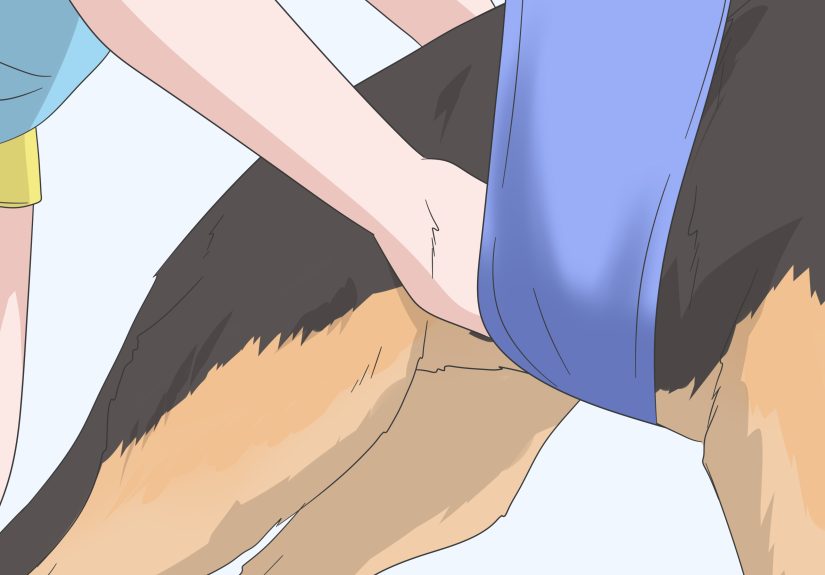
- Support the body: Use a rear support sling if needed so your dog is balanced and not twisting.
- Find the bladder: Using flat fingers, feel in the lower abdomen just in front of the pelvis. A fuller bladder often feels like a smooth, firm water balloon.
- Hands-on pressure: Place hands on both sides of the abdomen and apply slow, steady, even pressure inward and slightly back toward the pelvis.
- Hold, then adjust: If urine doesn’t start immediately, maintain gentle pressure briefly, then reposition and try again. Many dogs need a “find the sweet spot” moment.
- Continue in cycles: Once urine flows, keep steady pressure until it slows. Release, re-feel, and repeat until the bladder feels significantly smaller.
Pro tips (the stuff people wish they knew on day one)
- Go slow. Steady pressure works better than quick squeezing.
- Relaxation matters. A tense dog = tense belly = difficult expression. Calm voice, treat, or licking mat can help.
- Small adjustments beat big force. Move hands slightly forward/back or higher/lower rather than pushing harder.
- Track results. If output suddenly drops, or your dog seems uncomfortable, that’s a vet callnot a “try harder” situation.
Way #2: Side-Lying Manual Expression (The “Couch Mode” Method)
Some dogs express more easily while lying on their side. This position can reduce resistance, help nervous dogs relax, and give you better leverageespecially for small dogs or dogs recovering from surgery who don’t love standing.
Best for
- Small dogs and dogs who fatigue easily
- Dogs who are anxious or tense while standing
- Caregivers who need a more stable posture to work
How it generally works (vet-taught overview)
- Pad the area: Place a pee pad or towel under the rear half of your dog. Keep wipes nearby.
- Set the dog on their side: Many dogs relax faster here. Support the spine and avoid twisting.
- Locate the bladder: Feel the lower abdomen near the pelvis. In this position, the bladder may sit slightly differently.
- Use “flat hand” pressure: Instead of pinching, use broader, flatter contact to apply gentle inward pressure.
- Let gravity help: If urine begins, keep steady pressure. If it stops, pause, re-locate, and repeat.
Common mistake
People often press too far forward (hitting intestines) or too far back (missing the bladder). If you’re unsure, ask your vet team to mark a “target zone” during your lesson.
Way #3: Sling-Assisted or Two-Person Expression (The “Team Sport” Method)
For large dogs, dogs with strong abdominal tension, or caregivers with wrist/hand fatigue, a sling-assisted approach can make expression safer and more consistent. Sometimes the magic is simply better alignment: hips level, spine straight, feet supported, and the bladder sitting where it’s easiest to compress.
Best for
- Large or barrel-chested dogs
- Dogs who need rear-end support (common in hind-end paralysis)
- Caregivers who struggle with leverage or hand strength
Simple setups that often help
- Rear support sling: One person supports the dog upright while the other expresses.
- Harness + leash stabilization: Keeps the front end steady so the dog isn’t twisting away from your hands.
- Non-slip mat: Helps the dog feel secure, reducing abdominal bracing.
How it generally works (vet-taught overview)
- Person A: Supports the dog in a comfortable standing posture (no dangling hind end, no spine twisting).
- Person B: Locates the bladder and applies steady, even pressure as in Way #1.
- Switch roles if needed: Some dogs respond better when they’re calmer with a familiar handler up front.
This method sounds fancy, but it’s often the easiest way to learnbecause you can focus on one job at a time instead of juggling your dog’s balance and the technique simultaneously.
Way #4: Veterinary-Assisted Emptying Options (Catheter-Based Management)
Sometimes manual expression isn’t enoughor isn’t appropriate. In those cases, veterinarians may recommend catheter-based bladder emptying. This can be temporary (during hospitalization) or part of a longer-term plan in special circumstances.
Option A: Intermittent catheterization (typically clinic-taught, sterility required)
Intermittent catheterization involves passing a urinary catheter to drain the bladder, then removing it. It can allow more complete emptying than manual expression in some dogs, but it requires training, a clean/aseptic technique, and careful handling to reduce infection or trauma risk. It is generally more technically challenging in female dogs due to anatomy.
Option B: Indwelling catheter (usually hospital use)
In some acute settingsright after a spinal injury or surgerya dog may have an indwelling urinary catheter connected to a closed system to keep the bladder decompressed. This is typically managed in a hospital because close monitoring and infection prevention are critical.
Why this counts as a “way”
The goal of bladder care is reliable emptying and low pressure. If manual expression is incomplete or risky, your vet may pivot to a catheter-based plan or combine approaches (for example, manual expression at home with periodic rechecks and urine testing).
How Often Should You Express?
Frequency depends on your dog’s size, fluid intake, bladder type, and whether they leak. Many dogs do best on a schedule that roughly mimics normal urination patterns: several times a day, with adjustments based on your vet’s guidance. Early onwhen you’re learningmore frequent, shorter sessions can prevent overfilling.
A practical routine many caregivers use
- Morning
- Midday (or early afternoon)
- Evening
- Before bed
If your dog is leaking constantly, you may still need scheduled expression to reduce pooling urine and skin irritation. If your dog is not leaking and can’t urinate at all, the schedule becomes even more important. Your vet can also suggest monitoring tools (like ultrasound checks in-clinic) if incomplete emptying is suspected.
How to Tell If the Bladder Is “Empty Enough”
Manual expression often doesn’t remove 100% of urine in every dog, even with excellent technique. That’s one reason consistent schedules and veterinary follow-up matter. At home, people typically use a combination of these cues:
- The stream slows to dribbles despite correct hand placement
- The bladder feels smaller, softer, or harder to locate
- Your dog relaxes after expression (some dogs clearly look relieved)
If you’re frequently getting very little urine or your dog’s abdomen remains firm and round, ask your vet for a recheck and technique review. Sometimes one small correction in hand position changes everything.
Hygiene, Skin Care, and UTI Prevention
Bladder care is half technique, half housekeeping. (And yes, the housekeeping is the part no one puts on Instagram.)
Simple habits that pay off
- Wipe after each session (unscented wipes or warm water) to remove residual urine.
- Keep the hind end dry to reduce urine scald. Consider barrier creams only if your veterinarian approves.
- Wash bedding often and use absorbent layers that pull moisture away from skin.
- Encourage hydration unless your vet has restricted fluids. Dilute urine can be friendlier to the bladder.
- Routine urinalysis as recommendedespecially if your dog has a history of UTIs or stones.
UTI signs to watch for
- Foul-smelling urine
- Blood in urine
- Fever, lethargy, reduced appetite
- New discomfort during expression
- Sudden increase in leaking or accidents
Troubleshooting: When Expression Isn’t Working
“I can’t find the bladder.”
- Try again when the bladder is fuller (but don’t let it overfill).
- Switch positions: standing vs. side-lying.
- Use flatter fingers and move slowlyrushing makes you miss it.
- Ask your vet team for a hands-on recheck; this is extremely common early on.
“The bladder feels like a brick and nothing comes out.”
- Stop forcing it. This can happen with high urethral tone or other issues.
- Call your veterinarianyour dog may need medication support, pain control, or a different emptying plan.
“My dog cries or tries to bite.”
- Pain is a stop sign. Don’t push through it.
- Ask your vet about pain management, inflammation, infection, or technique changes.
- Consider muzzle training for safety during learning sessions (your vet team can guide you).
“My dog leaks all the timeso do I still need to express?”
Sometimes yes. Leaking can mean the bladder is overfull and overflowing, or the sphincter is weak and urine dribbles even when the bladder isn’t empty. Your veterinarian can help determine what’s happening and whether scheduled expression is still needed.
When to Call the Vet Immediately
- No urine output despite attempts, especially with a firm, distended belly
- Vomiting, collapse, severe lethargy, or signs of severe pain
- Blood in urine or foul odor plus fever
- Sudden change in your dog’s urinary pattern (new leaking, new resistance, new discomfort)
A Simple Daily Bladder-Care Routine (Steal This)
- Same times daily (morning / midday / evening / bedtime)
- Same setup (pad, wipes, treats, sling)
- Express using your best method for that day
- Wipe + dry the area
- Log quick notes (good flow? small amount? any discomfort?)
Logs are underrated. They help you notice patterns earlylike decreased output, stronger urine smell, or increasing resistancebefore a problem becomes an emergency.
FAQ (Because Everyone Asks These)
Can a dog learn to pee again after paralysis?
Sometimes, depending on the cause and severity of the spinal injury. Some dogs recover partial or full bladder control over time; others need long-term assistance. Your veterinarian can talk prognosis based on neurologic exam findings and imaging.
Is bladder expression painful?
It should not be painful when done correctly on an appropriate patient. Discomfort suggests inflammation, infection, overdistension, or improper technique. Any new pain is a reason to stop and call your vet.
What if my dog is overweight?
Extra padding can make the bladder harder to palpate. Side-lying expression, sling support, and a vet-guided technique refresher often help. Weight management also improves mobility, comfort, and caregiving ease.
Should I restrict water to reduce accidents?
Usually nodehydration can worsen urinary health. Always ask your veterinarian before changing water intake. Better schedules and skin protection are safer fixes than “less water.”
Do diapers solve the problem?
Diapers can help manage leaks, but they do not replace bladder emptying if your dog retains urine. If you use diapers or belly bands, change them frequently and protect skin from moisture.
Real-World Experiences: What Caregivers Learn After the “First Week Panic” (500+ Words)
If you’re new to this, here’s the truth that experienced caregivers quietly know: the first week is the hardest. Not because your dog is “too complicated,” but because you’re learning a skill that requires touch, timing, and confidence. People often describe the early days as a weird mix of love, anxiety, and detective worklike you’re trying to locate a water balloon hidden in a fuzzy sleeping bag while your dog wonders why you’ve suddenly become obsessed with their lower abdomen.
A common early milestone is the “Oh! That’s the bladder!” moment. Many caregivers spend the first few attempts pressing in the wrong placetoo far forward, too shallow, or on tense muscles. Then a vet tech adjusts their hands half an inch, and suddenly urine flows. It’s humbling, but also oddly empowering. That tiny correction is why in-person coaching matters more than any article. Once your hands learn the feel, it gets faster.
Another shared experience: your dog’s mood changes the entire session. Caregivers often report that expression is easiest when the dog is calm, supported, and feels safe. Dogs that are anxious or in pain brace their belly, which turns the whole process into a wrestling match nobody wins. That’s why people swear by small “calm hacks”: a quiet room, the same routine, a lick mat, a soft voice, and taking a breath before you start. It sounds cheesy, but it’s basically nervous-system managementfor both of you.
Many caregivers also learn that “more force” is rarely the answer. When urine doesn’t come out, the instinct is to push harder. Experienced folks do the opposite: they reposition, switch to side-lying, add sling support, or pause and try again in a minute. Over time, they become very sensitive to warning signslike a bladder that feels unusually firm, a dog that suddenly resists, or output that drops dramatically. Those are the days they call the vet, because they’ve learned that stubborn expression can cause trouble.
The routine itself becomes surprisingly normal. People often build a “bladder station”: pee pads, wipes, a towel, a trash can, and treats in one spot. They keep a simple log (even just a note on their phone) because patterns matter. A dog who suddenly leaks more, smells stronger, or seems uncomfortable can be developing a UTI or other issue. Catching it early saves money, stress, and discomfort.
There’s also the emotional side: caregivers frequently say they worried their dog would feel embarrassed or “less themselves.” What actually happens is the opposite. Once the bladder is managed, dogs often seem happiermore relaxed, more willing to cuddle, more energetic in the front end, more engaged. It’s not that they’re thrilled about your new “professional bladder assistant” role. It’s that comfort changes everything. A consistently emptied bladder can mean better sleep, fewer accidents, and less skin irritation.
Finally, people report a shift from fear to fluency. The first successful full expression feels like winning a tiny gold medal in a sport nobody asked to play. Then it becomes routine. Then you become the person giving encouragement to someone else in a support group: “You’ll get it. Ask your vet to recheck your hand placement. Try side-lying. Use a sling. Keep it calm. Don’t force it.” That’s the caregiving journey in a nutshellawkward beginnings, steady practice, and a whole lot of love disguised as a schedule.
Conclusion: You’ve Got This (Even If It Feels Weird at First)
Expressing a paralyzed dog’s bladder is part technique, part routine, and part learning your dog’s unique “settings.” The four approachesstanding manual expression, side-lying expression, sling/two-person support, and veterinary catheter-based optionscover most real-life scenarios. Work closely with your veterinarian, keep sessions gentle, and treat changes in output or comfort as useful information (not something to power through).
Your dog doesn’t need perfection. They need consistency, comfort, and a caregiver who’s willing to learn. That’s already you.





 Close
Close