
Table of Contents >> Show >> Hide
- Who Is Chelsea Miller and Why Her Knives Stand Out
- The Signature Look: Horseshoe Rasp Texture That Actually Works
- Why Chefs and Design Folks Keep Bringing Them Up
- Custom Handmade Pieces vs. the Manufactured Collection
- Materials and Performance: What You’re Really Paying For
- Care, Sharpening, and Storage: The Non-Drama Routine
- What Not to Do With a Nice Knife
- How to Choose the Right Chelsea Miller Knife
- Final Thoughts
- Real-World Experiences Related to Chelsea Miller Knives
- SEO Tags
Some knives are just tools. Others feel like they come with a backstoryand a little attitude. Chelsea Miller Knives sit firmly in the second category: distinctive kitchen blades that mix craft, memory, and a clever dual-purpose detail (yes, the “grater” texture is real, and yes, it’s ridiculously satisfying on garlic).
Below is an in-depth look at what Chelsea Miller knives are, what makes them different from typical chef’s knives, how the brand has expanded from long-waitlist custom work into a more accessible line, and how to care for the blades so they age beautifully.
Who Is Chelsea Miller and Why Her Knives Stand Out
Chelsea Miller is an American knife maker whose work is tied closely to her rural Vermont upbringing and a family background in hands-on building. In her own story, she grew up with a carpenter–blacksmith father, later moved to New York City to work in film and performance, and returned home when her father became illreconnecting with craft in his workshop and eventually turning knife making into both vocation and creative outlet.
That personal arc matters because it shows up in the design philosophy: her knives lean into honest materials, visible texture, and a handmade feel. They’re meant to be usedthen used some moreuntil the knife looks like it belongs to you.
The Signature Look: Horseshoe Rasp Texture That Actually Works
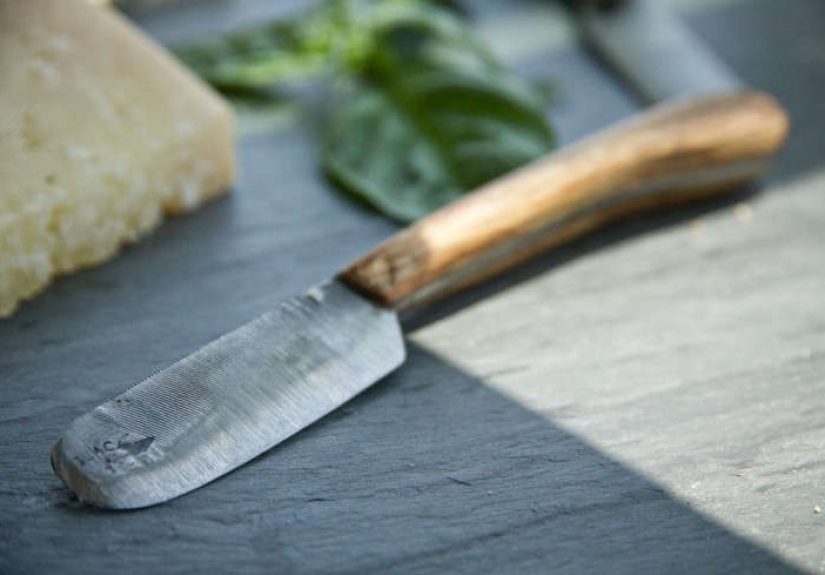
Many of the brand’s best-known handmade pieces begin as horseshoe rasps: steel tools farriers use to file horses’ hooves. Rasps have raised, triangular crosshatched teeth, and Miller’s knives preserve that texture on part of the blade while shaping a proper cutting edge on the other side.
In practice, the rasp texture works like a built-in micro-grater for small jobsgarlic, ginger, nutmeg, citrus zest, or a quick dusting of hard cheese. It’s not meant to replace every grating tool in your drawer; it’s meant to save time during real cooking, when your hands are messy and you’re trying to keep moving.
A quick note on “forged” vs. “stock removal”
Knife-making language gets confusing fast. Some of Miller’s smaller handmade knives are hand-forged. The well-known rasp knives, however, are typically made using stock removalgrinding and shaping steel to preserve the rasp teeth, followed by heat treatment to set hardness and edge performance. That’s not a downgrade; it’s simply a different method used by plenty of respected makers. What matters most is the final geometry and heat treat.
Common misconceptions about rasp knives
Because rasp knives look different, they attract myths. One is that the texture is “just for looks”but it’s designed to grate small ingredients. Another is that “forged” is the only marker of quality; in reality, both forging and stock removal can produce excellent blades when heat-treated correctly. The most practical misconception is that a special knife should be treated delicately: these knives are meant for food prep, not decoration. The real rule is simpleuse it, then clean and dry it.
Why Chefs and Design Folks Keep Bringing Them Up
Chelsea Miller knives show up in a sweet spot between culinary gear and design object. Food outlets have highlighted the knives for their sculptural look and reclaimed-material story, while design publications focus on the “form follows function” twist: the texture isn’t there to be quirky, it’s there to grate and zest.
They’ve also been widely associated with chef culturepopular profiles note that well-known restaurants and celebrity chefs have used her knives, and behind-the-scenes videos from major publishers helped introduce her work to a huge audience. That visibility created a feedback loop: more cooks saw the knives, more cooks wanted them, and demand pushed the brand to offer both limited handmade work and a manufactured collection that more people can actually buy.
Custom Handmade Pieces vs. the Manufactured Collection
For years, the hardest part of buying a Chelsea Miller knife was the wait. Custom work drew serious demand and long lead times. In recent years, the brand expanded to include a manufactured line made to Miller’s specificationshelping serve restaurants, retail partners, and home cooks without the same waitlist pressure.
Custom handmade and hand-forged knives
These are limited-production pieces, often made from recycled rasps and other reclaimed steel. They typically use high-carbon (non-stainless) steel and hardwood handles such as walnut or maple, with brass pins. High-carbon steel can take a very keen edge and develops a patina, which many owners love because it looks “earned.” The tradeoff is that you must wipe and dry the blade promptly after use. These are often made in small annual batches; her site has described long lead times for custom chef knives (commonly many months) because production is intentionally limited.
CMK manufactured collection
This line uses stainless steel and more standardized production, with approachable pricing and consistent availability. The look stays “Chelsea”: clean profiles, warm wood handles, and a design language influenced by the handmade originals. Stainless steel is generally lower-maintenance than high-carbon steel, but these knives still aren’t “toss it in the dishwasher and forget it” tools.
Materials and Performance: What You’re Really Paying For
With Chelsea Miller knives, value comes from a blend of materials, craftsmanship, and experience.
- Steel choice: High-carbon steel rewards you with a lively edge and evolving patina; stainless steel rewards you with easier day-to-day care.
- Construction: Many models use full-tang builds (steel running through the handle), brass pins, and hardwood handles like walnut or maplechoices that improve durability and hand-feel.
- Workflow perks: The rasp texture encourages “small but impactful” cooking moves: grating aromatics or zest right where you’re already working.
In everyday use, a well-made chef’s knife should feel stable, slice predictably, and stay sharp with reasonable maintenance. The most practical test is boring but effective: does it make your prep smoother on a weeknight? With these knives, the goal is “beautiful and busy,” not “pretty and precious.”
Care, Sharpening, and Storage: The Non-Drama Routine
Miller’s own care guidance is straightforward: wash by hand, dry immediately, and use mineral oil as needed. For handmade high-carbon blades, dryness is the difference between a graceful patina and unwanted rust.
Handmade high-carbon knives
- Wipe with mild soap on a damp cloth; dry right away with a cotton towel.
- Apply a thin coat of food-safe mineral oil occasionally to protect blade and handle.
- Expect patina (color change). Treat red rust as a signal to tighten up your routine.
Stainless manufactured knives
- Hand wash and dry (dishwashers can dull edges and stress handles).
- Don’t leave any knife damp in a sink or on a wet towel.
Cleaning the rasp “teeth”
A soft brush (even a toothbrush) helps remove bits from the texture. Keep it gentlethis is maintenance, not a grudge match.
Honing vs. sharpening
Honing realigns an edge that has rolled slightly during use; sharpening removes metal to create a new edge. Most home cooks do best with light honing and periodic professional sharpening, plus smart habits that protect the edge: avoid glass or stone cutting boards, don’t twist the blade through hard pits or bones, and store it so the edge isn’t banging around.
Safe storage that also protects the blade
A knife block, a magnetic strip, or an in-drawer organizer keeps the edge from dulling and prevents unpleasant surprises. If the knife is special enough to be a talking point, it’s special enough to deserve a storage plan.
What Not to Do With a Nice Knife
When a knife is sharp and well-made, it’s tempting to use it for everything. Resist. Most edge damage comes from “one-time” shortcuts: cutting on glass, prying, or hacking through things the blade wasn’t meant to meet.
- Avoid hard surfaces: Glass, granite, and marble boards can dull edges quickly. Use wood or quality plastic.
- Skip the pry bar moments: Don’t twist the blade to open packages, lift lids, or separate frozen items.
- Be careful with bones and pits: Kitchen knives are for slicing and chopping food, not cracking through dense bone or rock-hard pits.
These habits sound obvious, but they’re exactly what makes a good knife stay good. Think of it like tires: you can technically drive over nails, but you probably shouldn’t if you like your weekends.
How to Choose the Right Chelsea Miller Knife
Pick based on habits, not hype:
- If you want low maintenance: choose the stainless manufactured collection.
- If you love patina and handmade character: go for a custom high-carbon piece (and commit to drying it).
- If you cook most nights: start with a chef’s knife; add a paring knife for detail work.
- If you entertain a lot: steak knives and a bread knife can be the unsung heroes.
Final Thoughts
Chelsea Miller Knives are popular for a simple reason: they turn a daily kitchen object into something personal. The rasp-textured blade isn’t just decorationit’s a functional detail that can change how you prep. Combine that with thoughtful materials and a maker-driven design approach, and you get knives that feel like they belong in your hand, not in a display case.
If you buy one, buy it to use it. Then do the two-minute care routine. Your future self (and your edge) will thank you.
Real-World Experiences Related to Chelsea Miller Knives
These experiences are common themes reported by owners, cooks, and interviewersnot personal use claims.
1) The “wow” moment is tactile, not just visual. People often describe picking up the knife for the first time and noticing three things immediately: the weight, the warmth of the wooden handle, and the texture. Even when the finish looks rustic, it tends to feel intentionallike a design choice you can sense through your fingertips. That’s a big part of the appeal: it doesn’t feel like it rolled off a line; it feels like it came from a studio.
2) The rasp texture becomes your shortcut. Owners frequently say the grater side changes small behaviors. Instead of skipping fresh garlic because it’s “too much effort,” they grate a clove right on the blade and keep going. The same goes for ginger, citrus zest, and quick spice boosts. Many still use a separate grater for big jobs, but they love the knife for fast, in-the-moment flavor upgrades that happen while you’re already mid-prep and don’t want extra dishes.
3) Patina turns into a timeline. With the high-carbon handmade knives, color change is inevitableand it becomes personal. Some owners describe the patina as a record of meals: the first tomato-heavy sauce, the citrus week, the winter stew season. There’s often an adjustment phase (because “new knife” instincts tell you everything should stay shiny), followed by acceptance that patina is proof of use, not damage. Once that clicks, the blade feels less like a product and more like a companion that grows with your cooking. Most owners say the biggest win is simply learning the rhythm: cut, rinse, dry, put awaythen let the patina do its quiet work.
4) The knife nudges you into better kitchen habits. A recurring theme is that special knives change routines. People stop leaving blades in the sink, stop tossing them into drawers, and start drying immediately. It’s not because they suddenly became perfect; it’s because the tool teaches them what it needs. Many say the habit spreadssuddenly they’re treating other cookware more thoughtfully too, because it’s easier to maintain good gear than to replace damaged gear.
5) It starts conversations that don’t feel showy. At dinner parties, someone eventually asks, “What is that texture?” Owners enjoy that the answer isn’t just “brand name,” but a mini story about reclaimed rasps, craft, and functional design. It’s a practical conversation starterlike a good playlist, not a brag. The knife earns attention by doing a job well, and the story simply explains why it looks and feels different.
6) The best compliment is when you stop thinking about it. Experienced cooks often say their favorite tools disappear in use: the knife tracks with the hand, slices predictably, and doesn’t fight the food. That “invisible” performance is where a well-made chef’s knife becomes worth it. When a Chelsea Miller knife becomes someone’s daily driver, it’s usually because the balance feels right, the edge holds up with sensible care, and the little workflow perkgrating and zesting right on the bladekeeps saving seconds that add up over a week of cooking.







 Close
Close