
Table of Contents >> Show >> Hide
- What Is the Breadloaf Westport Chair?
- Signature Design Details That Make It “Breadloaf”
- Comfort Breakdown: Why the “Sit” Feels Different
- Materials and Build Quality: What to Look For
- Where the Breadloaf Westport Chair Really Shines
- Breadloaf vs. Other Adirondack-Style Chairs
- Shopping Checklist: How to Choose the Right One
- Care and Maintenance Tips That Actually Work
- FAQ
- Real-World Experiences: What Living With a Breadloaf Westport Chair Feels Like
- Conclusion
Some outdoor chairs are basically “a plank with a pulse.” And then there’s the Breadloaf Westport Chaira chair with enough history,
comfort, and porch charisma to make you cancel plans. It’s rooted in the iconic Westport chair tradition (the design that helped inspire what many
people now lump together as “Adirondack chairs”), but with a slightly lighter, more refined look that was shaped by a surprisingly academic request:
“Can we get a chair that’s comfy and good for reading, writing, and sketching?”
If you’ve ever balanced a notebook on a too-narrow armrest and watched it slide off like it’s late for an appointment, you already understand the vibe.
The Breadloaf version keeps the famous low-slung, legs-out lounging posture, but tweaks the silhouette and arm details so it feels a touch slimmer and
purpose-built for long, civilized hangscoffee in the morning, a book in the afternoon, and “just one more” conversation by the firepit at night.
What Is the Breadloaf Westport Chair?
It’s a Westport chair… with a campus-inspired twist
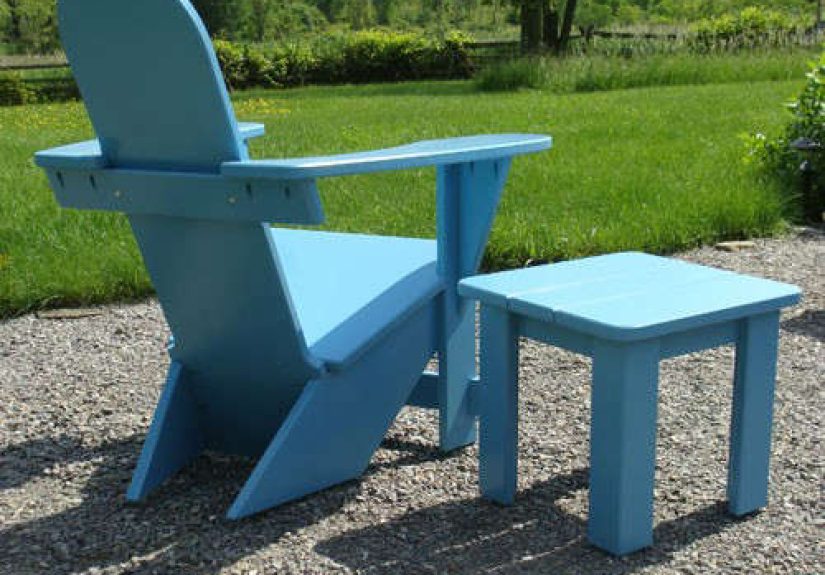
The Breadloaf Westport Chair is a variation on the classic Westport chair form. The key idea is simple: keep the same underlying structure and
lounging geometry people love, but adjust the styling so it feels a bit more streamlined. Historically, the Breadloaf variation was developed in connection
with Middlebury College’s Bread Loaf programan environment where people weren’t just relaxing; they were reading, writing, and drawing outdoors.
A quick (and useful) history of the Westport chair
The Westport chair story starts in Westport, New York, in the early 1900s. The design is associated with Thomas Lee, and it later became tied to Harry
Bunnell, who manufactured and patented a version of the chair. That early “Westport plank chair” DNAwide arms, a reclined back, a seat that invites
you to settle inbecame the blueprint for generations of Adirondack-style outdoor lounge chairs.
Why does that matter when you’re shopping for a chair today? Because the Breadloaf Westport Chair isn’t just “another Adirondack.” It’s part of the
specific Westport lineage: big-plank simplicity, a confident stance, and a posture that’s meant for lingeringnot perching.
Signature Design Details That Make It “Breadloaf”
1) A lighter visual footprint without shrinking the comfort zone
One of the most repeated descriptions of the Breadloaf variation is that it has a lighter look while keeping the same footprint
as a classic Westport chair. Translation: it won’t suddenly start taking up less space on your deck, but it can feel less bulky to the eyehandy if you
love the Westport vibe but don’t want your patio to look like it’s hosting a lumber convention.
2) Narrower arms that still behave like real arms (not decorative suggestions)
The arms on a Westport chair are famous: broad, flat, and basically begging to hold a mug, a plate, and an entire weekend newspaper.
The Breadloaf Westport Chair keeps that spirit but trims the arms downoften described as about two inches narrower than the standard
Westport armswhile still leaving plenty of room for “life’s essentials.”
3) A rounded back top for a softer silhouette
Another hallmark is the rounded top of the back, along with a slightly narrower back profile. It’s a small change, but visually it reads
as more sculpted and a little less ruggedlike the chair put on a clean shirt for company.
4) The original “writing-friendly” idea
The story goes that the earliest concept involved slanted arms to better support writing and drawing outdoors. Many versions sold for
general home use feature flattened arms today, but the “made for readers and writers” origin still explains the whole personality of the chair:
it’s built for staying put.
Comfort Breakdown: Why the “Sit” Feels Different
Comfort in this chair family isn’t accidentalit’s geometry. Compared with many boxier Adirondack-style chairs, the Westport tradition tends to place
you in a posture where your hips sit comfortably low, with a reclined back and a seat angle that encourages your legs to extend. That can feel especially
natural for long lounging sessions and, yes, the kind of deep reading where you look up and realize your coffee has gone cold… again.
The armrests are a big part of the experience. They’re not just for your elbows; they’re functional surfaces. If you like hosting, this matters: a Breadloaf
Westport Chair can be the difference between “Where do I put my drink?” and “I live here now.”
Materials and Build Quality: What to Look For
Wood choices (and why they matter)
Westport-style chairs are often associated with wide-plank wooden construction, and different makers offer different species.
In the broader Westport ecosystem you’ll see woods like cypress (naturally rot-resistant for uncovered outdoor areas) and pine
(often better for covered spaces unless you finish it carefully). You’ll also run into premium hardwood optionsgreat for durability and looks, but typically
heavier and pricier.
If your chair will live outdoors full-time, prioritize rot resistance and finishing strategy over “prettiest grain in the showroom.”
A gorgeous chair that turns fuzzy, cracks, or wobbles isn’t rustic-chicit’s regret.
Hardware and assembly
For outdoor seating, hardware is the unsung hero. Look for corrosion-resistant fasteners (stainless steel or marine-grade hardware is a strong sign) and
a build that avoids exposed screw heads on surfaces where water can sit. Even a small design choicelike driving fasteners from underneathcan help reduce
water intrusion and extend the life of a wood outdoor chair.
Finish: paint, stain, oil, or “let it go gray”
Wood outdoor furniture usually lives in one of four finish realities:
- Painted: Classic look, good weather protection when maintained, and very “New England porch.”
- Stained/sealed: Shows more wood character while adding UV and moisture protection.
- Oiled: Often a more natural look; requires reapplication but can age beautifully.
- Weathered gray: The “I meant to do maintenance” aestheticsometimes intentional, sometimes not.
The right choice depends on your climate and your patience level. If you love maintenance rituals, oil can be satisfying. If you want “hose it off and keep
moving,” you’ll want a robust sealed finishor you might decide a modern all-weather material is better for your lifestyle (more on that below).
Where the Breadloaf Westport Chair Really Shines
Porches and covered decks
This is the chair’s natural habitat. The scale feels substantial without being clunky, and the arms are genuinely usable for everything from iced tea to
a laptop (though maybe don’t tempt fate with a laptop near a sweating glass).
Firepit setups
Westport-style chairs are famously at home around a firepit: low enough to feel relaxed, stable enough to feel grounded, and comfortable enough that
“ten minutes” becomes “oh no, it’s midnight.”
By the water
Dockside lounging is practically part of the Westport chair legend. If your chair will sit near a lake or pool, pay extra attention to finish and hardware.
Water-adjacent furniture lives a tougher lifeand it’s not impressed by your excuses.
Breadloaf vs. Other Adirondack-Style Chairs
Breadloaf Westport Chair vs. Classic Westport chair
Think of the Breadloaf as the classic Westport’s slightly more tailored cousin. The platform and overall lounging feel stay familiar, while details like a
narrower arm and a rounded back top can make the chair look a bit lighter and more refined.
Breadloaf Westport Chair vs. the “fan-back” Adirondack chair
Many people picture the later fan-back, multi-slat Adirondack style when they hear “Adirondack chair.” That look became popular partly because narrow slats
were easier to source than wide, clear planks. The Breadloaf Westport Chair lives closer to the earlier plank-chair tradition, so it tends to feel more
architectural and less “beach rental.” (Not that there’s anything wrong with beach rentals. They’re just… honest about their priorities.)
Wood Breadloaf vs. modern all-weather versions
Modern Westport/Adirondack-inspired chairs made from recycled plastic or poly lumber can be extremely low maintenance: they resist rot, don’t need painting,
and clean up easily. The tradeoff is feel and character. A wood Breadloaf Westport Chair offers warmth, grain, and that unmistakable “real furniture” presence.
Your choice is less about right vs. wrong and more about whether you’d rather maintain wood occasionally or avoid maintenance almost entirely.
Shopping Checklist: How to Choose the Right One
1) Confirm the scale
Westport-style chairs tend to be generously sized. Since Breadloaf versions keep the same footprint as the Westport platform, expect a substantial chair.
If you’re furnishing a tight balcony, measure carefully before you fall in love with a chair that eats the whole balcony.
2) Match materials to placement
- Uncovered outdoor area: prioritize rot-resistant wood and corrosion-resistant hardware.
- Covered porch: you can use more wood options, but finishing still matters for humidity and sun exposure.
- High-sun climates: UV protection is keyfaded finishes can happen fast.
3) Ask about assembly and shipping
Some makers ship chairs unassembled with predrilled parts and hardware kits. If that sounds annoying, remember this: it can lower shipping costs and reduce
damage in transit. Also, you get the oddly satisfying experience of building a chair that immediately rewards you with sitting.
4) Consider accessories
A matching footstool can turn “comfortable” into “I have transcended.” Cushions are optionalmany people love the chair’s ergonomics without thembut a thin,
outdoor-rated cushion can add coziness and color.
Care and Maintenance Tips That Actually Work
- Clean gently: seasonal soap-and-water cleaning beats aggressive pressure washing that can rough up wood fibers.
- Recoat on a schedule: if you stain or oil, plan on refreshing based on sun and weather exposure.
- Mind the contact points: keep chair feet from sitting in puddles; use patio pads or set on a surface that drains.
- Off-season storage: a breathable cover or sheltered storage can meaningfully extend finish life.
FAQ
Is the Breadloaf Westport Chair the same as an Adirondack chair?
It’s part of the same extended family. Many Adirondack-style chairs trace their lineage back to the early Westport chair design. The Breadloaf version is a
specific Westport-style variation with distinctive aesthetic tweaks and an origin story tied to a reading-and-writing setting.
Is it comfortable for tall or shorter people?
Westport-style chairs are generally roomy, but comfort depends on seat height, back angle, and your leg length. If possible, try a similar Westport chair
footprint in person, or compare published dimensions to your current favorite chair.
Do I need a cushion?
Not necessarily. Many people choose these chairs because the angle and support already feel good. A cushion can add warmth in cooler evenings and protect the
finish from belt buckles, buttons, and the occasional dramatic snack spill.
Real-World Experiences: What Living With a Breadloaf Westport Chair Feels Like
The best way to understand the Breadloaf Westport Chair isn’t by staring at product photosit’s by imagining the small, ordinary moments it’s built to
improve. Owners and fans of Westport-style chairs often describe a very specific pattern: you sit down “for a second,” and then time starts behaving
differently, like it’s on vacation too.
Morning is where the chair quietly wins. The wide, usable arms are the unsung luxury: one side can hold a mug and your phone; the other can handle a book,
a notebook, or a bowl of fruit that you definitely intend to eat slowly and thoughtfully. The slightly slimmer Breadloaf styling doesn’t change the core
comfort, but it can make the chair feel a touch more “designed” when you glance back at it from the kitchen window. It’s a small psychological boost:
your porch looks intentional, even if you’re wearing socks that don’t match.
During the day, the Breadloaf origin story starts to make sense. People who like to read outside notice that the posture encourages long sessions. The seat
angle and recline can feel supportive without locking you into a single rigid position. If you write or sketch outdoors, the armrests become more than a
convenience; they’re a practical surface that reduces that constant micro-annoyance of balancing things on your lap. It’s not a desk-chair replacement,
but it’s a surprisingly capable “creative perch,” which is exactly what you’d expect from a chair designed with readers and writers in mind.
Hosting is where the chair earns its social reputation. At gatherings, people tend to migrate toward the most comfortable seat without announcing it.
The Breadloaf Westport Chair often becomes that seat. Someone claims it early, someone else casually “tries it” and suddenly doesn’t want to move, and
eventually you realize you’ve created an outdoor seating hierarchypurely by introducing one chair that feels like a destination. The arms also help with
real hosting logistics: guests can set down drinks and plates without juggling. That sounds basic until you’ve watched someone attempt the “knees-as-table”
maneuver and lose a chip to gravity.
Then there’s the long-game experience: weathering. Wood outdoor chairs develop a relationship with time. Depending on your finish strategy, a Breadloaf
Westport Chair might deepen in color, soften into a silvery patina, or hold a painted look that feels classic and crisp. Many people come to appreciate
that the chair doesn’t just “stay new”; it can age with personality. The key is choosing your preferred aging path. If you love a clean, consistent look,
you’ll likely maintain the finish more regularly. If you enjoy the relaxed, coastal-gray evolution, you’ll be comfortable letting the chair tell a little
story through its surface over the seasons.
One of the most charming experiences people mention is the chair’s ability to turn ordinary evenings into rituals. A firepit, a cool drink, and that
reclined, stable “Westport sit” creates a feeling of arrivaleven if you haven’t left home all week. It’s the kind of comfort that encourages conversation,
stargazing, and the very serious debate of “Are we going inside yet?” (Spoiler: not if the chair has anything to say about it.)
If you’re the type who collects “spots” in your housefavorite reading chair, favorite kitchen corner, favorite place to stand and pretend you’re thinking
the Breadloaf Westport Chair tends to become an outdoor spot. And once it does, it starts shaping how you use your space. You’ll step outside more often,
linger longer, and find yourself protecting that seat like it’s your job. Comfort can be contagious like that.
Conclusion
The Breadloaf Westport Chair is a smart variation on a legendary American outdoor lounge chair form: it keeps the relaxed Westport geometry
people love while refining the look with slimmer, softer detailsand a backstory tied to outdoor reading and writing. If you want a chair that feels
substantial, functional, and unapologetically lounge-first, it’s hard to beat. Just be warned: once you sit down, your porch may become your new address.






 Close
Close