
Table of Contents >> Show >> Hide
- Why I Turned the Periodic Table Into Characters (and Why It Helped)
- The Science Behind the Art: Why Pictures Stick
- What “112 Elements” Means (and Why I Stopped There at First)
- My Rulebook for Designing an Element Character
- Mini “Gallery in Words”: 12 Example Memory Hooks
- How the Periodic Table Turns Into a “Character Universe”
- How to Study With an Illustrated Periodic Table (Even If You Didn’t Draw It)
- Beyond Memorization: The Hidden Bonus of Drawing Elements
- Want to Create Your Own Illustrated Element Set? Steal This Workflow
- Conclusion: Make the Periodic Table Feel Like Something
- My Experience Illustrating 112 Elements (The Part Nobody Warns You About)
Some people collect stamps. Some people collect vinyl. I collected chemical elementsone sketch at a timebecause my high school brain refused to believe that “Na” was sodium but “S” wasn’t silicon. (Chemistry is fun like that.)
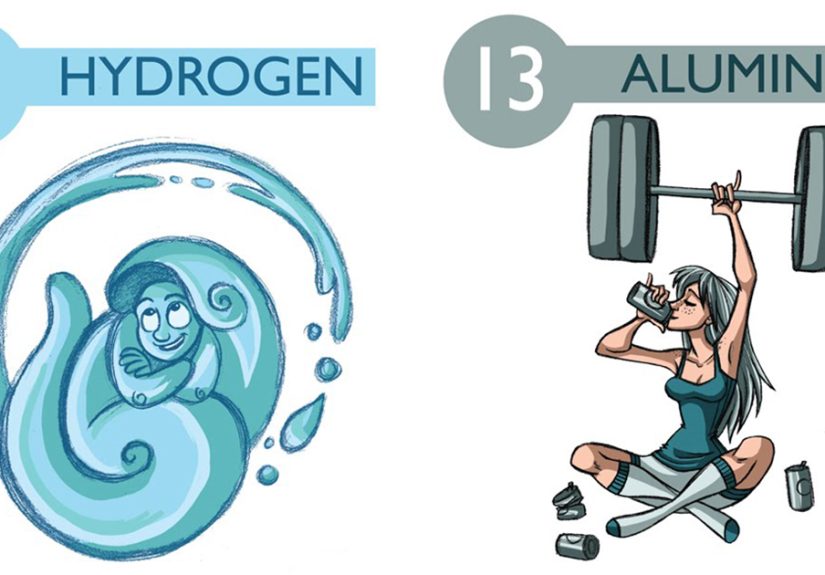
So I did what any reasonable student-artist would do: I turned the periodic table into a cast of characters. Suddenly, symbols stopped looking like random Scrabble tiles and started acting like memorable personalities. Hydrogen became the energetic main character. Noble gases became the cool kids who don’t mingle. And tungsten? Let’s just say it finally looked as tough as it behaves.
This article breaks down the idea behind illustrating 112 elements (yes, all the way to element 112), why it works so well for memory, and how you can borrow the same approachwhether you draw stick figures or your artistic talent peaks at “decent rectangle.”
Why I Turned the Periodic Table Into Characters (and Why It Helped)
Memorizing the periodic table can feel like trying to remember 118 passwords you didn’t choose. The problem isn’t that the information is impossibleit’s that the format is unfriendly. A two-letter symbol doesn’t give your brain much to grab onto.
Illustrations fix that by giving each element a “memory hook.” A character can hold clues in their outfit, posture, props, and vibe: the element’s name origin, its common uses, whether it’s reactive, where it lives on the table, and even a signature fact worth remembering for exams.
And the coolest part? Once you create a visual hook, recall becomes faster. You’re not digging for “what is Fe again?”you’re seeing a familiar character and pulling the label with it.
The Science Behind the Art: Why Pictures Stick
If you’ve ever remembered a meme longer than a math formula, your brain has already explained the concept: images are sticky.
Visual memory strategies work because they build multiple paths to the same information. Words give you one route; visuals plus words give you two. When you combine a label (“chlorine”) with a strong image (your character with pool-cleaning energy and a warning-sign aesthetic), recall gets easierespecially under pressure.
That’s why mnemonics, sketches, diagrams, and “story memory” can outperform brute-force repetition. You’re not just storing facts; you’re building cues that help you retrieve them later.
What “112 Elements” Means (and Why I Stopped There at First)
When I started building the character lineup, I focused on the elements that were commonly taught and widely referenced at the time: the table up through atomic number 112. That’s copernicium (Cn), a synthetic, lab-made element that sits way down in the heavy, blink-and-you-miss-it part of the periodic table.
Elements beyond 112 are absolutely realand the full modern table goes to 118but for a long time, the bottom row felt like a “coming soon” trailer in many classrooms. So I built a complete and cohesive set up to 112 first, then treated the newest additions like post-credits scenes.
My Rulebook for Designing an Element Character
To keep 112 designs from turning into “112 vaguely different people wearing lab coats,” I used a simple design system. Each character needed three kinds of clues:
1) A name clue
If the element is named after a place, person, myth, or concept, that history becomes a visual theme. That doesn’t mean putting a literal map on someone’s shirtit means borrowing motifs. “Einsteinium” shouldn’t whisper “random scientist.” It should scream “physics legend.”
2) A property clue
Is it reactive? Inert? A gas? A metal? Radioactive? Those properties can show up as motion, posture, expression, texture, or accessories. Highly reactive elements look restless. Noble gases look unbothered. Heavy metals carry visual weight.
3) A use-in-the-real-world clue
Your brain loves practical anchors. If an element shows up in batteries, light bulbs, coins, fertilizer, or electronics, give the character a prop or design detail that hints at that job. Even a tiny clue helps.
Mini “Gallery in Words”: 12 Example Memory Hooks
I can’t drop 112 illustrations into a single blog post (your scroll wheel would file a formal complaint), but here are examples of how character design can encode facts:
- Hydrogen (H): The hyperactive leadlight, fast, everywhere. Think balloons, rockets, and “smallest but everywhere” energy.
- Helium (He): Floating, squeaky-voiced party vibesbecause you’ll never forget the balloon association again.
- Carbon (C): A shape-shifter: pencil/graphite textures on one side, diamond sharpness on the other.
- Nitrogen (N): Calm “air element” characterreliable, present, and quietly essential.
- Oxygen (O): Bold and intensehelpful for life, but also a champion of combustion when things heat up.
- Sodium (Na): Loud, reactive, and saltyan alkali metal that behaves like it drank three energy drinks.
- Chlorine (Cl): A clean-but-danger vibe: pool chemistry, strong smell, and “handle with care” energy.
- Iron (Fe): Practical and sturdytools, bridges, skilletsan everyday workhorse.
- Copper (Cu): Warm-toned, wired, and conductivebasically the electrician of the elements.
- Silver (Ag): Reflective, sleek, and a little fancyjewelry and conductivity rolled into one.
- Gold (Au): The regal one: rare, coveted, and allergic to being ordinary.
- Uranium (U): Heavy, intense, and clearly not here for casual hangoutsradioactivity as a design mood.
Notice what’s happening: each hook is a tiny story. And stories are easier to remember than lists.
How the Periodic Table Turns Into a “Character Universe”
Once you start illustrating elements, you realize the periodic table already has built-in story structure. Families, rivalries, and cliques come preloaded:
Groups (columns) are character families
Elements in the same group behave similarly because they share valence electron patterns. In character terms, that means you can design them like relativessimilar silhouettes, repeated motifs, matching “family colors” (figuratively), or shared accessories.
For example:
- Alkali metals (Group 1): the reactive extroverts who bond with almost anyone.
- Halogens (Group 17): intense, sharp, and always looking for one more electronlike collectors completing a set.
- Noble gases (Group 18): the aloof VIP lounge crowd: stable, complete, not impressed.
Periods (rows) are “power levels”
As you move down rows, elements get bigger and heavier, and their chemistry shifts in recognizable patterns. That’s a perfect excuse to make later-period characters look more complex, layered, or armoredas if they’ve leveled up.
How to Study With an Illustrated Periodic Table (Even If You Didn’t Draw It)
You don’t need to personally illustrate 112 elements to use this method. You can study with an illustrated set, or make your own simplified version. Here’s a practical way to do it:
Step 1: Pair every symbol with an image and a one-line fact
Example: “Fe = iron = common in steel.” Keep it short. Your brain hates essays when it’s trying to remember.
Step 2: Practice retrieval, not rereading
Cover the names and test yourself from the images (or cover the images and test from symbols). The effort of recall is where learning really locks in.
Step 3: Use spaced repetition
Review a small batch today, revisit it tomorrow, then two days later, then a week later. It feels slower, but it’s wildly more effective than cramming.
Step 4: Build “micro-stories” for tricky symbols
Some symbols are historical (like Na for sodium and Fe for iron). Give them a story so they stop being random. Even a silly reason works, because silly is memorable.
Step 5: Learn in clusters, not chaos
Study by families: alkali metals, halogens, noble gases, common transition metals, and the “everyday life” elements (C, N, O, P, S). The periodic table is organized for a reasontake the hint.
Beyond Memorization: The Hidden Bonus of Drawing Elements
Illustrating elements doesn’t just help you remember names. It teaches you how to read the periodic table like a map instead of a mural.
When you consistently connect an element’s position to its behavior, patterns start to pop out:
- Why some elements react violently with water
- Why others barely react with anything
- How metals and nonmetals cluster
- Why certain elements show up in electronics, alloys, or energy tech
In other words: the drawings aren’t a shortcut around chemistrythey’re a bridge into it.
Want to Create Your Own Illustrated Element Set? Steal This Workflow
If you want to make your own “element characters” (or a simplified icon-based version), here’s a workflow that won’t melt your schedule:
Pick a consistent format
Same canvas size, same general style, same type of information per element. Consistency makes patterns easier to see and designs faster to produce.
Start with the most-used elements first
Hydrogen, carbon, oxygen, nitrogen, sodium, chlorine, iron, copperthese show up constantly. Early wins keep you motivated.
Use reliable references
Stick to trustworthy element databases for names, symbols, and core facts. You don’t want to accidentally turn an element into a character based on a myth you saw in a comment section at 2 a.m.
Don’t overstuff the design
One strong hook beats five weak ones. If every character has 12 symbols, 8 props, and 4 “fun facts,” your brain won’t know what to remember.
Conclusion: Make the Periodic Table Feel Like Something
The periodic table isn’t a random listit’s a brilliantly organized system that tells a story about matter. The problem is that the story is written in a code most brains don’t find emotionally gripping at first glance.
Illustrating 112 elements turned that code into characters I could recognize instantly. Once each element had a face (or at least a vibe), I stopped asking, “How do I memorize this?” and started asking, “What kind of character would this element be?” That single question made chemistry feel less like paperwork and more like world-building.
And if you’re staring down a chemistry unit right now: borrow the method. Draw it, doodle it, storyboard it, turn it into a cast. Because the fastest way to remember something is to make it mean somethingeven if that meaning is “chlorine is the dramatic pool manager who smells like trouble.”
My Experience Illustrating 112 Elements (The Part Nobody Warns You About)
Here’s what I wish someone had told me before I started: illustrating the periodic table is equal parts creative joy and organizational chaos. The first few elements feel easy because your brain already has built-in associations. Hydrogen? Balloons and rockets. Carbon? Diamonds and pencils. Gold? Jewelry and “expensive.” You feel unstoppablelike you could knock out the entire table before lunch.
Then you hit the stretch where the elements stop being household names and start sounding like fantasy NPCs: terbium, hafnium, seaborgium. That’s when the project changes. It’s no longer “draw what you know.” It becomes “research, translate, design, repeat.” I had to build a routine: look up the element’s basics, pick one signature hook (a use, a name origin, or a standout property), and decide what kind of personality that hook implied. It sounds simple until you realize you’re doing it more than a hundred times.
The biggest breakthrough for me was treating the table like a story world instead of 112 separate assignments. Once I grouped elements by families, the designs started helping each other. Halogens could share a sharper, more intense design language. Noble gases could feel calm and untouchable. Alkali metals could look like they were perpetually one bad decision away from causing a splashbecause, chemically, they kind of are. When I designed one member of a family, the next one got easier. The periodic table’s structure became a cheat code for my art process.
I also learned the hard way that “accurate” and “memorable” have to cooperate. If I packed every possible fact into a single character, the design got busy and the memory hook got weaker. The goal wasn’t to create a walking textbook; it was to create a strong first recall. If an illustration helped me instantly say the element’s name and one correct fact, it was doing its job. Anything beyond that was a bonus.
And honestly? The best part wasn’t finishing the setit was watching how quickly my own recall improved. Once I had a consistent visual language, I could look at a character and feel the element’s “category” before I even named it. Heavy? Reactive? Unbothered? Suddenly, the periodic table wasn’t just something I memorized; it was something I recognized. That shiftfrom memorization to recognitionmade the whole project worth it. Also, it gave me a strange new hobby: seeing random objects in everyday life and thinking, “That’s such a sodium move.”







 Close
Close