
Table of Contents >> Show >> Hide
- What Makes Plankton Glow?
- The Aesthetic of Flowing Light Art
- Real-World Inspiration: Where Science Meets Art
- Design Principles for Plankton-Inspired Light Art
- Why Plankton-Inspired Art Feels So Modern
- How Artists Can Create the Effect
- The Emotional Meaning of Flowing Light
- Experiences Related to Flowing Light Art Inspired By Plankton
- Conclusion
Some art asks you to stand still and think. Flowing light art inspired by plankton politely refuses that arrangement. It wants to ripple, shimmer, pulse, and behave like the ocean just heard a secret. This style of marine-inspired light art borrows its mood from bioluminescent plankton, especially tiny dinoflagellates that can make seawater sparkle with blue-green flashes when waves, paddles, or curious swimmers disturb them.
At first glance, plankton may not seem like an obvious muse. They are microscopic, drifting, and not exactly the type to pose dramatically under gallery lighting. Yet these tiny organisms have influenced science, photography, interactive installations, fashion experiments, sustainable lighting research, and immersive digital environments. Their glow has become a visual language for mystery, movement, ecology, and wonder. In other words, plankton may be small, but artistically speaking, they have main-character energy.
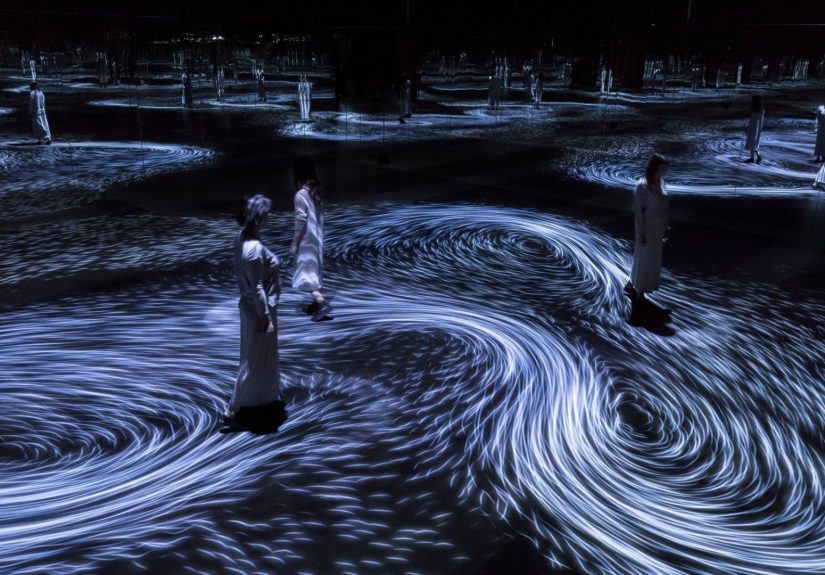
Flowing light art inspired by plankton is more than a pretty blue glow. It sits at the meeting point of biology, technology, environmental storytelling, and sensory design. It can appear as an LED sculpture that reacts to footsteps, a projection that moves like tidal water, a living-light experiment using algae, or a room-sized installation where visitors feel as if they are walking through a nocturnal sea. The best examples do not simply copy the ocean; they translate its behavior.
What Makes Plankton Glow?
Bioluminescence is the production and emission of light by a living organism. In the ocean, this phenomenon appears in many forms, from glowing jellyfish and deep-sea fish to surface-dwelling dinoflagellates. Bioluminescent plankton often produce a bluish or greenish flash because those wavelengths travel well through seawater. The effect is sometimes called “sea sparkle,” which sounds like a bottled perfume but is actually a brilliant survival strategy.
Many dinoflagellates emit light when disturbed by motion. A breaking wave, a kayak paddle, or a hand moving through dark water can trigger a brief flash. Scientists describe this glow as a chemical reaction involving light-producing molecules and enzymes, commonly discussed through the luciferin-luciferase system. For the plankton, the flash may help startle predators or attract larger predators that might eat the plankton’s attackers. For humans standing on a beach at midnight, it looks like the ocean has installed its own special effects department.
Why Artists Love the Plankton Effect
Artists and designers are drawn to bioluminescent plankton because the glow is never static. It appears through pressure, rhythm, and disturbance. That creates a perfect metaphor for responsive art: touch the work and it answers; move through a space and the space remembers you in light. Unlike a standard lamp, plankton-inspired art often suggests that illumination is alive, fragile, and temporary.
This is why flowing light art works especially well in installations, stage design, public art, wellness spaces, museums, and digital environments. The viewer is not just looking at a glowing object. The viewer becomes part of the current. Every step, gesture, or shadow can feel like a wave passing over invisible organisms.
The Aesthetic of Flowing Light Art
Flowing light art inspired by plankton usually combines three visual ideas: darkness, motion, and controlled surprise. The darkness matters because bioluminescence is a low-light phenomenon. A glowing plankton effect needs contrast. Too much brightness and the magic disappears faster than someone’s confidence after opening their electricity bill.
Motion is equally important. Plankton-inspired light should not feel like a fixed neon sign. It should drift, pulse, scatter, and fade. Designers often use programmed LEDs, projection mapping, fiber optics, translucent materials, reflective surfaces, or motion sensors to imitate the way plankton respond to waves. The result can look like liquid stars, underwater auroras, or blue fireflies that enrolled in marine biology.
Color: The Power of Blue-Green Glow
The signature palette of bioluminescent plankton art is usually cyan, turquoise, deep blue, aqua, and soft green. These colors immediately suggest water, night, and depth. However, strong plankton-inspired art does not have to be limited to blue. Some artists add violet, silver, white, or even warm gold to create emotional contrast. The key is restraint. A plankton-inspired room should not look like a discount laser tag arena. It should feel like the ocean quietly exhaling.
Texture: Dots, Trails, and Liquid Patterns
Bioluminescent plankton rarely glow as one smooth sheet. They flash in points, trails, clusters, and splashes. That texture gives artists a rich visual vocabulary. A wall projection might use drifting particles. A sculpture might suspend hundreds of glowing beads. A floor installation might create light trails around visitors’ feet. A wearable piece might use tiny light nodes that shimmer when the body moves. The best designs preserve the irregularity of nature rather than polishing it into something too perfect.
Real-World Inspiration: Where Science Meets Art
Several art and design projects have explored bioluminescence directly or indirectly. Studio Roosegaarde’s “Glowing Nature,” for example, invited visitors to interact with luminous microorganisms that glow when touched. Bio-artist Hunter Cole has created living drawings with bioluminescent bacteria, turning biological growth and decay into part of the artwork. Other artists have worked with photographs, video installations, black-light environments, and immersive classrooms to magnify invisible marine life.
At Scripps Institution of Oceanography, art-science collaborations have explored bioluminescence through photography and video, using laboratory tools to capture the beauty of living light. Educational projects have also used light painting to help people understand bioluminescence in a playful way. Meanwhile, recent research into glowing algae and living materials points toward a future where biological light may influence design, sensors, and sustainable illumination.
From Living Organisms to Digital Oceans
Not every plankton-inspired artwork needs living plankton. In fact, many should not use living organisms unless the artist has the proper scientific support, ethical framework, and environmental controls. Digital simulations, responsive LEDs, projection mapping, and phosphorescent materials can evoke the same wonder without risking harm to organisms or ecosystems.
This distinction matters. Good marine-inspired art respects the ocean instead of treating it like a prop closet. A responsible artist asks: What is the work teaching? Does it encourage care for marine life? Does it avoid waste? Does it use energy thoughtfully? Does it make people curious enough to learn more? The glow should be beautiful, yes, but it should also carry meaning.
Design Principles for Plankton-Inspired Light Art
1. Make Light Respond to Movement
The most convincing plankton-inspired installations respond to motion. Pressure sensors, cameras, motion detectors, or touch-sensitive surfaces can trigger light patterns that bloom and fade. A person walking across a floor could leave a brief trail of blue sparks. A hand moving near a wall could awaken a cluster of glowing particles. This interactivity mirrors the way dinoflagellates flash when disturbed by waves.
2. Build in Impermanence
Bioluminescent flashes are brief. They appear, vanish, and invite you to look again. Designers can recreate this by programming light to fade gradually rather than stay on continuously. A slow disappearance creates emotional tension. It reminds viewers that beauty is often temporary, and that is exactly why people take 47 photos of it.
3. Use Sound Carefully
Sound can deepen the experience, but it should not overpower the work. Soft wave recordings, low ambient tones, or subtle underwater textures can help visitors feel immersed. Loud dramatic music may turn the installation into a submarine movie trailer. The goal is not to shout “ocean.” The goal is to let people feel submerged without getting their shoes wet.
4. Choose Materials That Suggest Water
Translucent acrylic, glass, silk, resin, mesh, reflective film, and water-based projection surfaces can all suggest fluidity. Hanging strands can mimic drifting organisms. Layered transparent panels can create depth. Curved forms can echo currents. The material should help light behave as if it is floating rather than nailed to a wall and hoping for the best.
5. Connect Beauty to Ecology
Plankton are not just pretty dots in dark water. Phytoplankton form the base of marine food webs and play a major role in oxygen production and carbon cycling. A strong artwork can use this fact as part of its story. The smallest organisms can sustain enormous systems. That is an elegant message for public art, classrooms, science centers, and environmental campaigns.
Why Plankton-Inspired Art Feels So Modern
Flowing light art inspired by plankton fits perfectly into the current cultural appetite for immersive experiences. People want art they can enter, photograph, share, and feel. But unlike some spectacle-driven installations, plankton-inspired art has a built-in connection to real science. It can be beautiful without becoming empty decoration.
It also matches growing interest in biomimicry, the practice of learning from nature’s designs and systems. Bioluminescence offers a powerful example: organisms producing light without the heat and energy demands of many artificial systems. While we are not about to replace every streetlamp with a jar of algae next Tuesday, experiments in biological light are helping designers imagine new relationships between living systems and built environments.
Public Spaces and Urban Design
In public spaces, plankton-inspired lighting can turn ordinary paths, plazas, and waterfronts into memorable nighttime environments. Imagine a boardwalk where footsteps trigger soft blue ripples, or a museum entrance where lights pulse like waves under a glass floor. These designs can improve place identity and create emotional attachment. People remember spaces that respond to them.
However, outdoor installations should also consider light pollution, wildlife behavior, durability, and accessibility. A glowing path should be enchanting, not blinding. It should guide visitors safely while preserving the quiet mood that makes bioluminescence so powerful.
Interior Design and Wellness Spaces
Inside hotels, spas, meditation rooms, and residential spaces, plankton-inspired art can create calm without becoming boring. A slow-moving wall of blue particles can soften a room. A sculptural lamp can cast rippling shadows. A ceiling installation can imitate a night swim under glowing waves. The effect is especially effective when paired with natural materials such as stone, wood, linen, and glass.
The trick is moderation. A little bioluminescent magic feels luxurious. Too much can make a room look like a futuristic aquarium nightclub, which may be perfect for exactly one person, but probably not for your breakfast nook.
How Artists Can Create the Effect
Artists who want to create flowing light art inspired by plankton can begin with observation. Study videos of bioluminescent bays, glowing surf, and microscopic plankton. Notice that the glow is not uniform. It clusters around motion. It appears in pockets. It is often brightest at the edge of disturbance.
Next, translate those behaviors into design rules. For example: light appears only after touch, fades after three seconds, spreads in small particles, and never repeats the same pattern exactly. These simple rules can make digital or physical artwork feel organic.
Accessible Materials for Beginners
Beginners can experiment with glow-in-the-dark pigments, UV-reactive paint, translucent paper, LED strips, microcontrollers, projection apps, and long-exposure photography. A simple project might involve painting plankton-like shapes on transparent sheets and lighting them with black light. Another might use a motion sensor to trigger a wave of blue LEDs under a frosted acrylic panel.
Photographers can explore long exposure, reflective water, and controlled movement to create plankton-like trails. Digital artists can use particle systems to simulate glowing blooms. Sculptors can suspend small illuminated elements in layers, creating the illusion of organisms drifting through invisible currents.
Advanced Approaches
Advanced creators may use projection mapping, generative code, interactive sensors, robotic movement, hydrogel materials, or collaborations with marine scientists. Bio-art involving living organisms requires far more care, including ethical sourcing, containment, maintenance, and disposal. Living light is not just a material; it is a responsibility.
That responsibility can become part of the message. A living-light artwork asks viewers to notice dependency: the organism needs the right conditions, the light needs darkness, and the viewer needs patience. In a culture that often demands instant brightness, plankton teaches a slower lesson.
The Emotional Meaning of Flowing Light
Why does glowing plankton move people so deeply? Part of the answer is contrast. The ocean at night can feel vast and unknowable. Then suddenly, light appears from organisms too small to see. The invisible becomes visible. The ordinary movement of water turns into a cosmic event. It is science, but it feels like a spell.
Flowing light art captures that feeling. It reminds us that beauty can come from small systems, hidden processes, and delicate reactions. It also suggests that humans are not separate from nature. Our movement changes the environment, and the environment responds. That is a powerful idea, whether the artwork is in a museum, a school hallway, a waterfront park, or a dark room filled with drifting blue points of light.
Experiences Related to Flowing Light Art Inspired By Plankton
Experiencing flowing light art inspired by plankton is different from simply viewing a painting on a wall. It feels closer to entering a memory of the ocean. The room gets darker, the edges soften, and suddenly every small movement matters. You lift a hand, and a pale blue shimmer follows. You step forward, and light blooms near your feet like a tiny tide. For a moment, you are not just an observer. You are the wave.
One of the most memorable experiences this kind of art can create is a feeling of quiet participation. In many galleries, visitors worry about doing the wrong thing. Do not touch. Do not step too close. Do not breathe suspiciously near the sculpture. Plankton-inspired interactive art flips that relationship. It invites gentle movement. It rewards curiosity. Children immediately understand it, which is usually a sign that the adults should stop overthinking and enjoy themselves.
Imagine walking into an installation where the floor is dark and glossy, like still water at midnight. At first, nothing happens. Then one visitor crosses the room, and a trail of blue particles wakes behind them. Another person waves an arm, and a cluster of lights scatters across the wall. The artwork becomes social without needing a speech. Strangers begin smiling at each other because the room has turned everyone into a harmless sea creature.
The experience can also be surprisingly calming. The slow fade of light encourages slower movement. People lower their voices. They watch the glow disappear. In a wellness setting, this can create a meditative atmosphere. In a museum, it can help science feel emotional rather than abstract. In a classroom, it can make marine biology unforgettable. A student may forget a textbook paragraph, but they will remember making “plankton” glow with their footsteps.
There is also a deeper environmental experience hidden inside the beauty. When people learn that real plankton help support marine food webs and contribute to the oxygen we breathe, the glowing effect becomes more than decoration. It becomes a reminder that tiny life forms do enormous work. That message lands gently because it arrives through wonder, not guilt. The art does not wag a finger. It turns off the lights and lets the ocean make its point.
For artists, building this kind of work can be an exercise in humility. Nature already made the masterpiece. The task is not to outshine it but to translate it respectfully. That may mean choosing energy-efficient lighting, designing reusable components, avoiding harmful materials, or including educational context. The most successful plankton-inspired art feels generous: beautiful enough to attract attention, thoughtful enough to keep it, and honest enough to point back to the living world that inspired it.
In the end, flowing light art inspired by plankton gives viewers a rare gift: the sensation that darkness is not empty. It is full of hidden reactions, tiny signals, and possible light. That feeling stays with people long after they leave the room. They may walk past a river, aquarium, puddle, or dark window and think differently about what might be moving beneath the surface. That is the quiet power of this art form. It does not just glow; it changes how we look.
Conclusion
Flowing light art inspired by plankton transforms microscopic marine life into a rich artistic language of motion, mystery, and ecological awareness. By borrowing from bioluminescent plankton, artists can create immersive light installations that respond to movement, evoke ocean currents, and remind viewers that some of the planet’s smallest organisms help sustain its largest systems.
This art form succeeds because it blends beauty with intelligence. It can be playful, scientific, meditative, and environmentally meaningful all at once. Whether created with LEDs, projections, living materials, glow pigments, or interactive sensors, plankton-inspired light art invites us to see illumination as something alive and relational. Move gently, and the light appears. Pay attention, and the invisible world begins to glow.






 Close
Close