
Table of Contents >> Show >> Hide
- Why useless facts are secretly useful
- 180 Useless Facts & Pointless Trivia Worth Remembering
- Animals: nature is weird on purpose
- Space: the universe refuses to be normal
- Language: words are tiny chaos machines
- Food: dinner has more drama than you think
- History and culture: humanity has always been a little extra
- The human body: your skeleton is showing off again
- Earth, weather, and science: the planet is a show-off too
- Inventions, objects, and modern oddities
- Why our brains love pointless trivia
- A 500-word confession from someone who absolutely remembers the wrong things
- Final thought
- SEO Tags
Some articles promise life-changing wisdom. This one promises the exact opposite. These are the oddball facts, weird details, random historical nuggets, and gloriously unnecessary trivia tidbits that probably won’t help you file your taxes, fix your sink, or become a more evolved human. But they will make you more entertaining at dinner, slightly more dangerous in group chats, and strangely powerful during quiz night.
And honestly, that counts for something. Useless facts have a sneaky kind of value. They make conversations less boring. They wake up the brain. They turn dead air into “Wait, seriously?” energy. They also remind us that the world is much stranger, funnier, and more delightfully overdesigned than it has any right to be. Where else can you learn that wombats make cube-shaped poop, Venus is hotter than Mercury, and bubble wrap was once pitched as wallpaper?
Below, you’ll find 180 useless facts and pointless trivia gems grouped into easy-to-browse sections. They’re short, memorable, and based on real information, which means you can repeat them with confidence and the exact level of smugness the moment deserves.
Why useless facts are secretly useful
Let’s defend nonsense for a second. Random trivia works because the brain loves novelty. A surprising detail sticks better than a bland one. That’s why people forget where they put their keys but remember that octopuses have blue blood and three hearts. Pointless trivia is like mental confetti: not structurally important, but suddenly everything feels more alive when it’s around.
There’s also a social side to it. The best useless facts act like conversational cheat codes. They can rescue awkward silences, spark curiosity, and make ordinary topics fun again. Nobody expects a discussion about fruit to turn into a debate over whether bananas are berries. Yet here we are, thriving.
180 Useless Facts & Pointless Trivia Worth Remembering
Animals: nature is weird on purpose
- Octopuses have three hearts.
- Octopus blood is blue.
- Sea otters can hold hands while floating so they do not drift apart.
- Wombats produce cube-shaped poop.
- Butterflies taste with their feet.
- Sharks are older than trees.
- Killer whales are actually the largest members of the dolphin family.
- Blue whales are the largest animals known to have ever lived.
- Koala fingerprints can look surprisingly human.
- Flamingos get their pink color from pigments in their food.
- Giraffes have seven neck vertebrae, just like humans.
- Hummingbirds can fly backward.
- Elephants cannot jump.
- Goats have rectangular pupils.
- A shrimp’s heart is located in its head region.
- Sea stars do not have a centralized brain.
- Some snails can sleep for very long periods during dry conditions.
- Crocodiles cannot stick their tongues out.
- Domestic cats generally cannot taste sweetness.
- Male seahorses carry the babies.
- Woodpecker tongues wrap around the backs of their skulls.
- Bees can learn to recognize human faces.
- Mantis shrimp can detect polarized light.
- Axolotls can regrow limbs and parts of organs.
- Crows can remember human faces.
- Narwhal tusks are actually oversized teeth.
- Tigers have striped skin, not just striped fur.
- Cheetahs do not roar like lions do.
- Jellyfish are older than dinosaurs.
- Bats are the only mammals capable of true powered flight.
Space: the universe refuses to be normal
- Venus is hotter than Mercury even though Mercury is closer to the Sun.
- A day on Venus is longer than a year on Venus.
- Uranus rotates on its side.
- Mars has two small, potato-shaped moons.
- The Moon drifts a little farther from Earth every year.
- About 30 Earth-sized worlds could fit between Earth and the Moon.
- There is no sound in space because space is mostly a vacuum.
- Saturn’s average density is low enough that it would float in water.
- Jupiter is the largest planet in the solar system.
- The Sun holds almost all the mass in the solar system.
- Roughly one million Earths could fit inside the Sun.
- All four giant planets have rings.
- At least one asteroid also has rings.
- Mercury has water ice in permanently shadowed craters.
- Mercury has extreme temperature swings between day and night.
- Olympus Mons on Mars is the tallest volcano known in the solar system.
- Mars sunsets can appear blue.
- Footprints on the Moon can last a very long time.
- Pluto is classified as a dwarf planet.
- There are eight planets in the solar system.
- There are five officially recognized dwarf planets.
- Hundreds of moons orbit planets, dwarf planets, and even some asteroids.
- Neptune is famous for extremely powerful winds.
- The Moon experiences moonquakes.
- Earth is the only planet currently known to support life.
Language: words are tiny chaos machines
- The word “trivia” traces back to a Latin term associated with three roads.
- “Eavesdrop” originally referred to the ground where water fell from a roof.
- “Draconian” is named after Draco, a lawmaker known for harsh rules.
- “Sandwich” is named after the Earl of Sandwich.
- “Boycott” comes from the surname of Charles Boycott.
- “Nerd” first appeared in a Dr. Seuss book.
- The dot over a lowercase i or j is called a tittle.
- The symbol # is sometimes called an octothorpe.
- “Robot” comes from a Czech word tied to forced labor.
- Emoji and emoticon are not the same thing.
- A pangram is a sentence that uses every letter of the alphabet.
- “The quick brown fox jumps over the lazy dog” is a pangram.
- Some dictionary-famous long words are longer than entire text messages.
- “Muscle” comes from a Latin word meaning “little mouse.”
- “Galaxy” shares roots with the Greek word for milk.
- The spread of the telephone helped make “hello” much more common.
- Lowercase letters are called minuscule letters.
- Uppercase letters are called majuscule letters.
- English is packed with loanwords borrowed from other languages.
- The plural of “cactus” can be cactus, cactuses, or cacti.
Food: dinner has more drama than you think
- Bananas are berries.
- Strawberries are not botanically true berries.
- Peanuts are legumes, not true nuts.
- Cashews grow attached to the bottoms of cashew apples.
- Pineapples are made of many fused berries.
- Honey can last for an incredibly long time without spoiling.
- Apples float because they contain a lot of air.
- Cranberries bounce when they are ripe.
- Vanilla comes from the fruit of an orchid.
- Coffee beans are actually seeds.
- White chocolate contains cocoa butter but no cocoa solids.
- Rhubarb is a vegetable that behaves like dessert.
- Cucumbers are mostly water.
- In parts of colonial North America, lobster had a low-status reputation.
- Popsicles were invented by accident.
- Cotton candy was co-invented by a dentist.
- Ketchup was once marketed as medicine.
- Worcestershire sauce gets much of its flavor from fermented anchovies.
- Graham crackers began as part of a health-minded movement.
- German chocolate cake is named after a person, not the country.
- Fortune cookies are more American than Chinese.
- Cheese is older than many written records.
- Peppers, tomatoes, and eggplants are fruits botanically.
- Nutmeg and mace come from the same plant.
- Popcorn explodes because moisture trapped inside the kernel turns to steam.
History and culture: humanity has always been a little extra
- Oxford University is older than the Aztec Empire.
- Cleopatra lived closer to the moon landing than to the building of the Great Pyramid.
- Vikings reached North America centuries before Columbus.
- Ancient Egyptians signed one of the earliest known peace treaties.
- Ancient Egyptian workers also staged one of the earliest recorded labor strikes.
- The Library of Congress is the largest library in the world.
- The modern Olympic marathon was inspired by an ancient Greek legend.
- During World War I, anti-German sentiment in the U.S. changed some food names.
- The Guinness World Records book began after a pub argument.
- Groundhog Day is better at making headlines than predicting weather.
- The Statue of Liberty was originally copper-colored, not green.
- Napoleon was not unusually short for his era.
- Alaska is both the westernmost and easternmost U.S. state.
- George Washington never lived in the White House.
- George Washington’s dentures were not made of wood.
- Ancient Romans used graffiti in ways that feel very modern.
- The shortest recorded war lasted less than an hour.
- Board games are older than many modern countries.
- The first U.S. president born in a hospital was Jimmy Carter.
- Teddy bears are named after Theodore Roosevelt.
The human body: your skeleton is showing off again
- Human babies are born with more bones than adults.
- Most adults have 206 bones.
- The left lung is smaller than the right to make room for the heart.
- Skin is the body’s largest organ.
- The cornea has no blood vessels.
- Tooth enamel is the hardest substance in the human body.
- Fingernails usually grow faster than toenails.
- The femur is the longest bone in the body.
- The smallest bones in the body are in the ear.
- Your brain itself does not feel pain the way skin does.
- Your stomach lining renews itself frequently.
- The liver can regenerate a remarkable amount of tissue.
- Each foot contains 26 bones.
- Humans have more than 600 muscles.
- Kidneys filter large amounts of fluid every day.
- You are usually a little taller in the morning.
- Humans shed skin cells constantly.
- Saliva helps dissolve food chemicals so you can taste them.
- Taste buds are replaced over time.
- Goosebumps are a leftover reflex from hairier ancestors.
- Adults usually have fewer taste buds than children.
- Your heart beats around 100,000 times a day.
- The small intestine is much longer than its name suggests.
- Eyelashes fall out and regrow in natural cycles.
- Most people alternate which nostril does more of the breathing.
Earth, weather, and science: the planet is a show-off too
- Antarctica is the largest desert on Earth.
- Africa stretches into all four hemispheres.
- Russia spans 11 time zones.
- Dust from the Sahara can travel all the way to the Amazon.
- Continents move about as fast as fingernails grow.
- Earth is not a perfect sphere.
- The deepest parts of the ocean are under crushing pressure.
- Yellowstone has more hydrothermal features than anywhere else on Earth.
- The Olympic Mountains were formed from material that began beneath the sea.
- Lightning is hotter than the surface of the Sun.
- Rainbows are full circles, but people on the ground usually see only arcs.
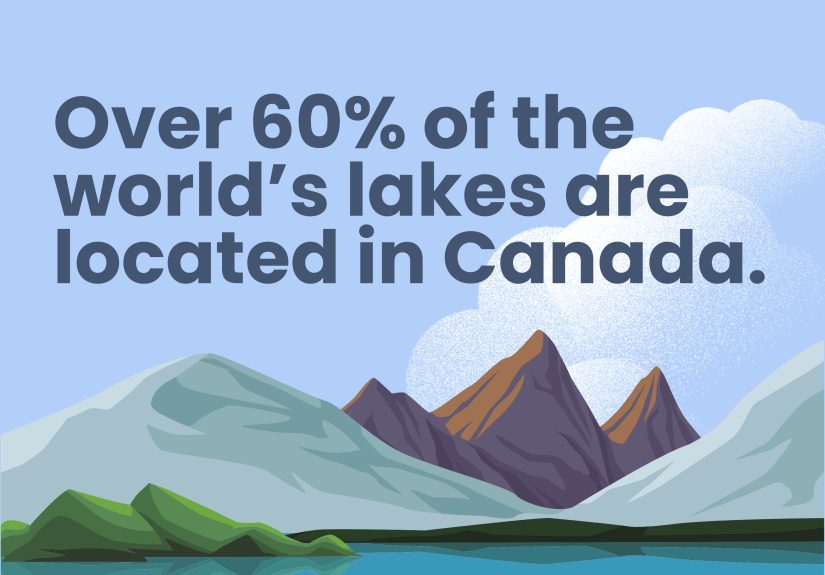
- Lake Superior contains an enormous amount of the world’s fresh surface water.
- The Dead Sea is a lake, not a sea.
- Hawaii is still moving because tectonic plates are still moving.
- Some deserts get surprisingly cold at night.
- Earth’s atmosphere is mostly nitrogen.
- Earth’s core is about as hot as the surface of the Sun.
- Pumice is a rock that can float on water.
- The smell after rain has a name: petrichor.
- Some sand dunes can boom or sing when conditions are right.
Inventions, objects, and modern oddities
- Bubble wrap was originally pitched as wallpaper.
- Play-Doh started as wallpaper cleaner.
- The first webcam was used to watch a coffee pot.
- The first barcode scan in a store was on a pack of chewing gum.
- WD-40 is named after the 40th formula attempt.
- Velcro was inspired by burrs sticking to fabric and fur.
- Frisbees were popularized by tossing pie tins.
- The Slinky was discovered by accident.
- Bluetooth is named after a Viking king.
- CAPTCHA is an acronym.
- The QWERTY keyboard layout is older than computers.
- Pencils can write underwater.
- The @ symbol is older than email.
- Email is older than the public internet.
- Some of the most memorable facts in life are about things people barely notice.
Why our brains love pointless trivia
There’s a reason this kind of list is hard to stop reading. Random facts give the brain tiny rewards. Each one is short, surprising, and complete. That makes trivia feel easy to collect. It also creates a satisfying illusion that the world can still surprise us in bite-sized pieces. In one minute, you learn something about ancient Egypt, in the next minute you discover that a narwhal tusk is really a tooth, and suddenly your brain is decorating itself like a refrigerator covered in magnets.
That’s the charm of useless facts and pointless trivia: they ask almost nothing from you and still leave you with a story, an image, or a sentence you’ll probably repeat later. They are low-stakes knowledge with high entertainment value. In a world full of urgent information, that feels oddly refreshing.
A 500-word confession from someone who absolutely remembers the wrong things
I have always thought useless facts were the mental equivalent of finding cool rocks in a parking lot. Nobody asked for them. They do not solve major problems. They are not technically necessary. And yet once you pick one up, you feel weirdly richer. That is what random trivia has always felt like to me: tiny glittering fragments of reality that make ordinary life more fun.
The funny part is that pointless facts rarely arrive at logical moments. They sneak in sideways. You start by looking up one practical thing, like how rain forms, and twenty minutes later you know that the smell after rain is called petrichor and that Antarctica is technically the largest desert on Earth. That journey is wildly inefficient and somehow deeply satisfying. It feels like your curiosity wandered off the sidewalk, found a carnival, and refused to come home.
I have also noticed that useless trivia tends to become useful the second other people are involved. A fact sitting quietly in your head may look pointless, but at the right moment it becomes social gold. Someone says bananas are fruit, and suddenly you get to announce that bananas are berries while strawberries are not true berries. A conversation about whales becomes a chance to mention that killer whales are dolphins. A dull pause in a room can be revived instantly with “Did you know wombats make cube-shaped poop?” It is difficult to overstate how much mileage a person can get out of one properly timed ridiculous fact.
There is also something comforting about trivia because it makes the world feel bottomless in a good way. Even when life feels repetitive, reality itself never seems to run out of weird details. There are always stranger words, odder animals, more unbelievable inventions, and historical footnotes that sound made up but are true. That endless supply of surprise is quietly hopeful. It suggests that boredom is not always a lack of interesting things. Sometimes it is just a lack of looking.
What I love most is that pointless knowledge does not demand prestige. Nobody needs to pretend a silly fact is profound for it to have value. It can simply be delightful. It can make you laugh, spark a question, or send you down another rabbit hole. In that way, trivia is a small rebellion against the idea that every piece of knowledge must be optimized, monetized, or turned into productivity. Sometimes learning something strange is enough.
So yes, useless facts are useless in the same way confetti is useless. They do not build the house. They do not pay the bills. But they make the party better. And if you ask me, a brain with room for both serious knowledge and wonderfully unnecessary nonsense is probably doing just fine.
Final thought
If you made it this far, congratulations: your brain is now carrying a deeply unbalanced but highly entertaining load of trivia. You may never need to know that octopuses have three hearts, that bubble wrap once wanted to be wallpaper, or that Cleopatra is closer to the moon landing than to the Great Pyramid. But those facts now belong to you, and frankly, that feels like a win.
The best useless facts and pointless trivia do not just fill space in your memory. They give texture to the world. They remind you that reality is full of absurd details, unexpected connections, and punch lines disguised as science, language, food, and history. Which is a long way of saying this: go ahead and remember the nonsense. It makes life more interesting.






 Close
Close