
Table of Contents >> Show >> Hide
- Before You Start: Make Sure the Fireplace Needs a Makeover, Not a Repair
- 1. Paint, Limewash, or Skim-Coat the Existing Surface
- 2. Reface the Surround With Tile, Thin Brick, or Stone Veneer
- 3. Replace, Wrap, or Redesign the Mantel
- 4. Refresh the Hearth and Edge Details
- 5. Update the Firebox Trim, Screen, Doors, or Insert Surround
- 6. Redesign the Wall Around the Fireplace
- How Contractors Usually Decide Which Refresh Is Best
- What Homeowners Learn After They Refresh an Old Fireplace
- Conclusion
- SEO Tags
If your fireplace looks like it time-traveled straight out of a beige 1994 sitcom, there is good news: you do not need a sledgehammer, a dumpster, or a demolition-themed personality makeover to fix it. According to contractors and home-improvement pros, many outdated fireplaces can be dramatically improved by updating what people actually see rather than tearing apart the structure itself.
That is the secret. An old fireplace usually feels dated because of its finish, its surround, its mantel, its hardware, or the wall around it, not because the basic footprint is hopeless. In other words, the fireplace may not be the problem. It may just be wearing the visual equivalent of an old bowling shirt.
A smart fireplace makeover starts with a safety check, then moves to cosmetic upgrades that add texture, contrast, and cleaner lines. Contractors often recommend keeping the core structure in place and focusing on surface-level changes that create the biggest visual payoff for the least mess. That can mean painting brick, refacing the surround, swapping out a mantel, refreshing the hearth, updating trim and doors, or redesigning the wall around the fireplace so the whole feature feels intentional again.
Below are six practical, stylish, contractor-approved ways to refresh an outdated fireplace without knocking it down, plus the design lessons homeowners tend to learn after the dust settles and the room suddenly looks like it has a point of view.
Before You Start: Make Sure the Fireplace Needs a Makeover, Not a Repair
Before you choose paint colors or start pricing tile, check the boring but important stuff first. If the firebox has visible damage, the brick is loose, the mortar is failing, smoke is backing up, or the unit has venting issues, call a pro before you do anything decorative. A cosmetic update should never cover a performance problem. Think of it this way: lipstick is lovely, but it should not be applied to structural anxiety.
Once the fireplace is sound, the fun begins.
1. Paint, Limewash, or Skim-Coat the Existing Surface
The fastest fix for an outdated brick or stone fireplace
If your fireplace is overwhelmed by orange-red brick, tired beige stone, or blotchy tile that has seen things, surface treatments are usually the quickest way to modernize it. Contractors often suggest starting with a deep cleaning and minor repairs, then deciding whether the surround should be painted, limewashed, whitewashed, or skim-coated.
Paint works best when you want a bold, clean transformation. It can tone down visually heavy brick, brighten a dark room, and make an awkward fireplace blend better with the wall color. A painted fireplace also helps emphasize shape over texture, which is useful when the original material is more “builder-basic” than “historic charm.” Soft white, warm cream, greige, charcoal, and muted black are common choices because they feel current without screaming for attention.
Limewash or whitewash is often the better option if you want to soften brick without completely erasing its character. These finishes let some variation show through, which gives the fireplace depth and keeps it from looking too flat or too perfect. That little bit of imperfection is often what makes the result feel custom rather than overly coated.
Skim-coating can also work beautifully when the goal is a smoother, more plaster-like look. This treatment is especially appealing in homes where a chunky brick fireplace feels too rustic or too visually busy. A skim-coated surround can lean modern, European, or quietly minimal depending on the room around it.
The main rule here is simple: prep matters. Dirt, soot, loose mortar, and glossy old coatings can sabotage the final finish. If the fireplace has already been painted and that finish is peeling, do not assume you can just slap new materials over it and call it a day. That is how “refreshing the fireplace” turns into “watching tile slide off in six months.”
2. Reface the Surround With Tile, Thin Brick, or Stone Veneer
When the shape is fine but the finish is unforgivable
One of the most effective ways to update a fireplace without demolition is to install a new facing material over the existing surround. Contractors often use tile, thin brick, or stone veneer to change the style dramatically while keeping the original firebox and general footprint intact.
This approach is ideal when the old material is dated beyond rescue. Maybe the fireplace has pinky-beige ceramic tile from the late 1980s. Maybe the brick is so dark and heavy that it pulls the entire room into a gloom spiral. Maybe the hearth says “Tuscan villa,” but the rest of the house says “clean-lined modern.” Refacing lets you correct that visual mismatch without a full tear-out.
Large-format tile creates a clean, contemporary look with fewer grout lines and a sleeker silhouette. Porcelain and ceramic tile are popular because they handle heat well and come in finishes that mimic marble, limestone, slate, concrete, and other high-end materials. If you want more texture, stacked stone or thin stone veneer can add depth and make the fireplace feel more architectural.
For homes that need warmth rather than polish, thin brick can be a great compromise. It keeps the familiar texture of brick while allowing you to choose a more refined color, shape, or layout than the original surround offered.
Contractors usually stress two things with refacing projects. First, the existing surface has to be stable and properly prepped. Second, materials near a fireplace must be appropriate for the application. This is not the place to get experimental with random leftovers from the garage and a heroic amount of optimism.
If you want the look of a custom fireplace but not the cost and mess of full replacement, refacing is often the sweet spot.
3. Replace, Wrap, or Redesign the Mantel
A small feature that changes the whole personality of the room
If the fireplace itself is passable but the mantel looks flimsy, fussy, too ornate, or weirdly undersized, updating that one element can change everything. Contractors say homeowners often underestimate how much a mantel controls the style of the fireplace. It is basically the eyebrows of the room. Get them wrong, and the whole face looks confused.
A thick reclaimed-wood beam can make a dated fireplace feel more grounded and relaxed. A simple painted wood mantel can clean up a clunky surround. A minimalist floating mantel can help modernize a fireplace that already has strong lines. And if the existing mantel is structurally sound but visually underwhelming, it can sometimes be wrapped or boxed out to look chunkier and more substantial.
This upgrade works because it gives the eye a stronger horizontal anchor. It also creates better scale. Many older fireplaces look awkward not because the materials are terrible, but because the proportions are off. A properly sized mantel helps the fireplace feel intentional instead of accidental.
There is a practical side, too. A new mantel gives you a natural transition point if you are also painting the surround, refacing the tile below, or adding millwork around the fireplace. It can tie all those changes together into one finished composition.
Just be careful about clearance requirements and heat exposure. A mantel is not merely decor; it sits near a working heat source. Style is fun, but not if it ends with the fire department learning your first name.
4. Refresh the Hearth and Edge Details
The lower half of the fireplace deserves better than being ignored
Many fireplace makeovers focus only on the wall above the firebox, but contractors know the hearth matters just as much. In fact, a dated hearth can make a newly painted surround still look unfinished. If the base is stained, chipped, oddly colored, or oversized in the wrong way, the fireplace will continue to look old no matter how pretty the upper half becomes.
A hearth update can be as simple as replacing old tile with something more streamlined or as detailed as wrapping the edge in a cleaner profile. Honed stone, porcelain tile, brick laid in a more intentional pattern, and slab-style surfaces all work depending on the look you want. Some homeowners prefer a flush, minimal hearth that disappears into the floor. Others want a raised hearth that feels traditional and cozy.
Edge details matter, too. A thick rounded lip, a busy trim piece, or an uneven transition can age the fireplace more than people realize. Contractors often sharpen the look by simplifying the edge, choosing thinner trim, or using a more modern profile. These changes sound small, but they are the kind of details that make the final result look professionally designed rather than “weekend project energy.”
This is also where balance comes into play. If the surround is bold, the hearth can be quieter. If the wall above is simple, the hearth can add some texture. The goal is not to make every part exciting. The goal is to make the whole fireplace look coherent, which is less flashy but much more elegant.
5. Update the Firebox Trim, Screen, Doors, or Insert Surround
The hardware makeover nobody notices until it is done
Sometimes the reason a fireplace looks outdated has less to do with brick and more to do with the black metal trim, brass doors, clunky screen, aging louvers, or dingy insert surround. These details often scream a specific decade louder than the tile ever could.
Contractors frequently recommend refreshing the mechanical-looking parts of the fireplace along with the decorative ones. A fresh coat of high-heat paint on approved metal trim can clean up a tired fireplace face. Swapping shiny brass for matte black, darker bronze, or a more restrained finish can instantly modernize the look. Replacing an old screen with a sleeker style, or adding custom doors that better fit the opening, can also make the entire feature feel more tailored.
This is especially useful for prefab or builder-grade fireplaces that have a perfectly acceptable structure but dated trim packages. You do not have to pretend the unit is hand-carved limestone from a Paris apartment. You just need it to stop looking like it came bundled with a VCR.
Another advantage is contrast. A crisp black firebox opening against light-painted brick or pale stone usually looks sharper and more intentional. It frames the firebox the way eyeliner frames an eye, only less emotionally complicated.
If your fireplace still functions well, updating the trim and hardware can deliver a major visual improvement for far less disruption than rebuilding anything.
6. Redesign the Wall Around the Fireplace
Because sometimes the fireplace is fine and the problem is everything orbiting it
Here is a contractor trick homeowners love once they see it: you do not always need to change the fireplace itself to make it look new. Sometimes the biggest transformation comes from redesigning the wall around it.
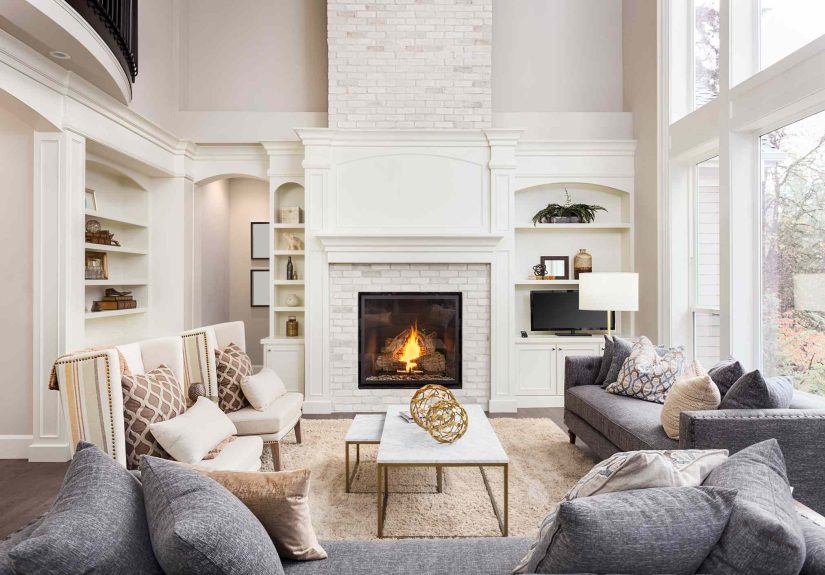
That might mean adding built-ins on one or both sides, installing shiplap or millwork above the mantel, painting the surrounding wall a contrasting color, or using wallpaper to create a more defined focal point. These upgrades help the fireplace feel integrated into the room instead of floating there awkwardly like a lonely monument to outdated taste.
Built-ins can make a plain fireplace feel custom. Vertical paneling can make a short fireplace wall look taller. A dark accent wall can make a pale surround pop. A tone-on-tone treatment can make a bulky fireplace recede so it stops dominating the room. Even something as simple as better art, a larger mirror, or layered mantel styling can change the way the fireplace reads from across the room.
This strategy works because fireplaces do not exist in isolation. They are visual anchors. If the area around them feels unfinished, cramped, or out of proportion, the fireplace itself will also feel wrong. Updating the broader composition often creates that “wow, the whole room looks expensive now” effect people chase with far messier renovations.
How Contractors Usually Decide Which Refresh Is Best
Not every outdated fireplace needs the same treatment. Contractors generally match the upgrade to the actual problem.
If the fireplace is structurally solid but just too dark, painting or limewashing usually makes sense. If the material is beyond saving aesthetically, refacing is stronger. If the proportions feel off, a new mantel or wall treatment can fix the visual balance. If the fireplace looks trapped in a previous decade because of trim or brass details, hardware updates may be all it takes.
The smartest makeovers also consider the whole room. A sleek tile surround may look incredible in a modern living room and completely out of place in a traditional den. A rustic beam mantel may feel charming in a farmhouse-style home and awkward in a formal space. The goal is not to copy a trendy fireplace from the internet. The goal is to make your fireplace feel like it belongs in your house right now.
What Homeowners Learn After They Refresh an Old Fireplace
One common experience homeowners talk about after updating an old fireplace is surprise. Not surprise that the fireplace looks better, because of course it does, but surprise at how much the rest of the room changes with it. Once the dated brick is painted, or the tile surround is replaced, or the mantel finally stops looking like an afterthought, the entire space tends to feel lighter, calmer, and more pulled together. Suddenly the sofa looks better. The rug makes more sense. Even the lamp in the corner seems like it has its life together.
Another thing people notice is that they use the room differently. Before the upgrade, the fireplace often feels like a feature everyone politely ignores. Afterward, it becomes a gathering place again. Homeowners start styling the mantel, rearranging the furniture to face the hearth, and actually enjoying the room instead of apologizing for it. A refreshed fireplace changes traffic patterns and attention patterns. It becomes the focal point it was always supposed to be.
There is also the practical satisfaction of choosing a project that feels high impact without being wildly destructive. Many homeowners go into the process assuming the only real fix is total demolition. Then they realize that thoughtful surface updates can create the look of a major renovation without the timeline, the dust cloud, and the financial drama. That is a satisfying discovery, especially for people who want change but do not want their house to feel like a construction zone for months.
Some homeowners also learn that restraint usually wins. The most successful fireplace updates are rarely the ones that throw every trend at the wall. They are the ones that simplify, sharpen, and edit. A cleaner surround. A better mantel. More balanced styling. Better contrast. Less visual clutter. In other words, the fireplace does not need to become louder. It needs to become smarter.
And then there is the emotional piece. A fireplace has a funny way of standing in for the mood of an entire home. When it looks dark, dated, and neglected, the room can feel the same way. Once it is refreshed, the space often feels more welcoming, more current, and more cared for. It is not just a design win. It is a quality-of-life win. The room becomes easier to enjoy on ordinary days, not just the days when guests come over and you suddenly see every problem at once.
That may be the biggest lesson of all. You do not always need to knock something down to make it feel new. Sometimes you just need to look at what is already there, figure out what is dragging it backward, and give it a better supporting cast. The fireplace stays. The bad styling choices leave. Everyone wins.
Conclusion
An outdated fireplace refresh is one of the smartest ways to modernize a living room without taking on a full-scale renovation. Contractors often recommend focusing on the parts that visually age the feature most: the surface finish, surround material, mantel, hearth, trim, and the wall around it. Whether you choose paint, limewash, tile refacing, a new mantel, a hardware upgrade, or built-ins that reframe the entire feature, the goal is the same: keep the structure, lose the dated look.
When done well, a fireplace makeover feels bigger than the project itself. It can redefine the room, improve flow, and make the home feel more intentional. And that is the beauty of it. No demolition crew. No dramatic wall collapse. Just a better-looking hearth that finally stops living in the past.





 Close
Close