
Table of Contents >> Show >> Hide
- 1. Get the Scale Right and Let the Room Breathe
- 2. Hang Curtains High, Wide, and With Intent
- 3. Layer the Lighting Like a Designer, Not a Gas Station
- 4. Use Paint Strategically, Especially Rich Neutrals and Color Drenching
- 5. Layer in Texture and Natural Materials
- 6. Edit Ruthlessly, Then Add One Strong Focal Point
- The Real Secret: Expensive Rooms Feel Intentional
- What These Tricks Look Like in Real Life: Experience From Everyday Rooms
- SEO Tags
Everyone wants a room that looks polished, collected, and just a little smug about how good it looks. The good news is that an expensive-looking room is not always about having a luxury budget. More often, it is about making smart design decisions that create the impression of quality, calm, and intention. In other words, the room needs to look like it has a plan instead of a panic attack.
Interior designers tend to use the same visual strategies again and again because they work. They pay attention to scale, light, texture, color, and restraint. They know when to add drama and when to stop decorating before the room starts looking like it lost a bet at a home goods store. If you want your space to feel elevated, timeless, and far more expensive than it actually was, these six tricks can do most of the heavy lifting.
This guide breaks down the specific design moves pros rely on, why they work, and how to use them in real life. Whether you are refreshing a living room, bedroom, dining room, or awkward corner that currently looks like it stores emotional baggage, these ideas will help you create a more luxurious home without turning your bank account into a cautionary tale.
1. Get the Scale Right and Let the Room Breathe
If a room looks expensive, chances are the furniture and decor feel properly sized for the space. Designers obsess over scale and proportion because nothing ruins a polished room faster than a tiny rug, undersized art, or furniture that looks like it wandered in from three different apartments and never met each other.
Why scale matters
Luxury interiors feel balanced. The pieces have enough visual weight to anchor the room, and there is enough negative space around them to keep everything from feeling cramped. Expensive-looking rooms do not try to fill every inch. They create breathing room. That sense of ease reads as confidence, and confidence is always stylish.
How to use this trick
Start with the rug. A rug that is too small makes the whole room feel cheaper, no matter how nice the sofa is. In most seating areas, at least the front legs of your main furniture should sit on the rug. If you have the room and the budget, go larger. It instantly makes the layout feel more deliberate and custom.
The same rule applies to art. One larger piece often looks more sophisticated than a scattering of tiny frames that feel nervous about commitment. If you love a gallery wall, keep it tightly edited and cohesive in spacing, frame style, or color palette. A collected look is chic. A random wall of visual shouting is less so.
Finally, resist the urge to shove every piece of furniture against the walls. Floating a sofa even a few inches forward, or creating a conversation zone with chairs and a coffee table, can make the space feel more designed and less like a waiting room with Wi-Fi problems.
2. Hang Curtains High, Wide, and With Intent
Designers know that window treatments are one of the fastest ways to make a room look finished. Bare windows can work in some modern spaces, but in most homes, curtains add softness, depth, and a sense of completion. Translation: they make the room look like someone cared.
The expensive-looking move
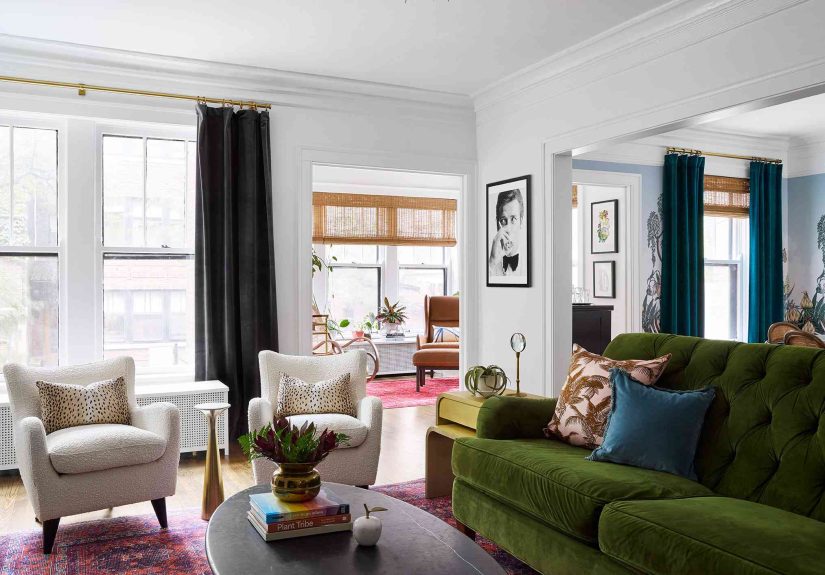
Hang curtains higher and wider than the window frame. This makes ceilings appear taller and windows look larger. It is one of the oldest designer tricks in the book because it works like visual caffeine. Suddenly the room is more awake, more elegant, and far less builder-basic.
How to do it well
Choose curtain panels that are long enough to skim the floor or kiss it lightly. Short curtains almost always look accidental unless you are working with a very specific design style. Floor-length drapery, on the other hand, reads tailored and intentional.
Fabric matters too. Linen-look panels, cotton blends, velvet, or textured weaves tend to look richer than flimsy synthetics that crinkle like a snack wrapper. You do not need custom drapes for every room, but you do want curtains that have some body. Think graceful, not ghost costume.
Neutral drapery is a safe choice when you want a luxe feel, but patterned panels can also look high-end when the rest of the palette is controlled. The goal is not to make the window scream. The goal is to make the whole room whisper, “I have excellent taste.”
3. Layer the Lighting Like a Designer, Not a Gas Station
If your entire lighting plan is one overhead fixture and hope, we need to talk. Lighting is one of the biggest differences between an average room and one that feels elevated. Designers almost never rely on a single light source. They layer light to create mood, depth, and function.
The three layers that matter
An expensive-looking room usually combines ambient lighting, task lighting, and accent lighting. Ambient lighting is the overall glow. Task lighting helps you read, work, or avoid chopping a finger off in the kitchen. Accent lighting highlights art, shelves, architecture, or decorative objects.
When these layers work together, the room feels warm and dimensional. When they do not, the space either looks flat and harsh or dim and confused. Neither one says luxury. Both say “I bought the cheapest bulb and now we live with consequences.”
How to make it look richer
Use a mix of table lamps, floor lamps, sconces, and overhead fixtures. Even one pair of matching lamps can make a room feel more symmetrical and thoughtful. Dimmers help even more. Soft lighting in the evening is one of the easiest ways to make a home feel refined.
Pay attention to the fixture itself, too. Lighting is functional, but it is also jewelry for the room. A sculptural chandelier, a vintage-inspired lamp, or a clean-lined sconce can act as decor even when the lights are off. And yes, hide the cords when possible. Visible cord chaos is not the kind of realism we are going for.
4. Use Paint Strategically, Especially Rich Neutrals and Color Drenching
Paint is one of the most budget-friendly ways to make a room look expensive. Designers use it not just to add color, but to shape the mood of a room. The right paint color can make a space feel calm, dramatic, cozy, tailored, or architectural. The wrong one can make your walls look like they are apologizing.
Why paint changes everything
Cheap-looking rooms often suffer from bland, default wall colors that do nothing for the furniture, light, or architectural features. A richer, more intentional color palette creates visual depth. Warm whites, complex taupes, soft greiges, moody greens, dusty blues, and earthy browns tend to feel more elevated than flat, generic shades.
One designer move worth stealing
Try color drenching, which means using the same color across walls, trim, and sometimes even the ceiling. This creates a cocooning, custom look and eliminates jarring visual breaks. In the right shade, it can make a room feel far more luxurious and architectural than a standard white-wall approach.
That does not mean every room needs to be dark or dramatic. A soft monochromatic scheme can feel just as expensive. The secret is choosing colors with depth and undertones that feel intentional. Test samples in natural and artificial light before committing. Paint has a funny habit of turning into a totally different personality after sunset.
Also remember that finish matters. Matte or eggshell walls often look softer and more sophisticated than a shiny finish in formal living spaces. The richer the surface looks, the more elevated the room will feel.
5. Layer in Texture and Natural Materials
Luxury is rarely about having more stuff. It is about having better visual contrast. Designers create that richness through texture. A room filled with flat, smooth, same-same materials can feel sterile even if everything in it is expensive. Texture adds warmth, dimension, and that collected quality people usually describe as “designer.”
What texture does for a room
Texture gives the eye places to land. It prevents a neutral room from looking boring and keeps a colorful room from feeling chaotic. It can come from fabrics, wood tones, stone, metal, ceramics, woven materials, greenery, and even the finish on your paint or hardware.
How designers mix materials
They combine smooth with rough, matte with polished, soft with structured. Think linen curtains with a marble table. A velvet pillow on a leather chair. A chunky wool throw on a tailored sofa. A warm wood console beneath a sleek mirror. This mix creates complexity, and complexity is what makes a room feel more expensive.
Natural materials are especially helpful because they bring warmth and authenticity. Wood, wool, linen, stone, cotton, leather, rattan, and ceramics tend to age well and feel grounded. Even one or two real materials can lift a room that otherwise feels too synthetic.
Greenery helps, too. A large branch in a vase, a potted olive tree, or a leafy plant in a textured planter adds life and softness. The room instantly feels more complete, like it has both a pulse and a point of view.
6. Edit Ruthlessly, Then Add One Strong Focal Point
Here is the least glamorous and most effective designer secret: expensive-looking rooms are edited. They are not packed with tiny decor items fighting for attention. They are composed. The eye knows where to go. The room has a focal point, and everything else supports it.
What editing actually means
Editing is not making your home empty or boring. It means removing what is unnecessary so the best pieces can shine. Too many accessories, too many colors, too many competing trends, and too many small objects can make even a nice room feel cluttered and cheap.
How to create a polished focal point
Choose one hero element for the room. It might be an oversized artwork, a dramatic light fixture, a statement mirror, a fireplace, a sculptural coffee table, or a beautifully styled sofa wall. Let that piece carry some visual authority. Then scale back the rest.
Use accessories in small, intentional groups rather than scattering them everywhere like decorative confetti. Books, trays, candles, bowls, and vases look more elegant when styled with breathing room. Matching pairs can also create instant polish, especially with lamps, chairs, or objects on a mantel or console.
And yes, conceal the practical chaos. Baskets, boxes, closed storage, and cord management are not thrilling topics, but they are the backstage crew of a beautiful room. No one applauds them, but the show collapses without them.
The Real Secret: Expensive Rooms Feel Intentional
The biggest difference between a room that looks expensive and one that looks unfinished is not the budget. It is the intention behind the choices. Expensive-looking interiors feel cohesive. The lighting is thoughtful. The rug fits. The curtains reach the floor. The palette makes sense. The materials add depth. The clutter is under control. Nothing feels accidental.
If you only take one thing from this guide, let it be this: choose fewer, better-looking moves instead of piling on more decor. One oversized rug can do more than five trendy accessories. A better lamp can outperform a dozen small trinkets. Full drapery panels can elevate the whole room faster than another throw pillow ever will. Sorry to the throw pillows, but somebody had to say it.
Designers make rooms look expensive by controlling what you notice and what you do not. They guide the eye, soften the light, and create a sense of ease. And once you understand those moves, you can absolutely steal them for your own home. Frankly, they would probably respect the hustle.
What These Tricks Look Like in Real Life: Experience From Everyday Rooms
These six tricks become even more convincing when you see how they play out in actual homes. Take a typical small apartment living room with low ceilings, a basic overhead light, and a rug that barely fits under the coffee table. On paper, nothing in that room sounds luxurious. But once the rug is replaced with a larger one, the sofa is pulled slightly away from the wall, and full-length curtains are hung closer to the ceiling, the room immediately looks calmer and more expensive. Nothing structural changed. The room simply stopped apologizing for itself.
Another common example is the family room that has plenty of good furniture but still feels oddly flat. Usually, the problem is not the sofa or the paint color. It is the lighting. One bright ceiling fixture makes everything look equally exposed, which is rarely flattering for a room or a person. Add two table lamps, a floor lamp in a dark corner, and warmer bulbs, and suddenly the space feels layered and intimate. The room begins to glow instead of glare. That shift is subtle, but it is often the moment when a home starts to feel custom rather than convenient.
Bedrooms show the same pattern. Many people assume a bedroom looks expensive if the bed is big enough or the headboard is dramatic enough. In reality, the luxurious feeling usually comes from texture and restraint. A simple bed can feel upscale when it is dressed with crisp bedding, a quilt or coverlet with visible texture, curtains that actually reach the floor, and bedside lamps that match in scale. When the palette is limited and the surfaces are clear, the room feels like a boutique hotel. When every spare pillow, random basket, and mystery chair stays in the room, the effect disappears fast.
Even dining areas benefit from these tricks. A dining room with a modest table can look far more polished when the light fixture is centered correctly, the rug is large enough for the chairs, and the centerpiece is something sculptural instead of a pile of seasonal clutter. That is the pattern across nearly every room type: expensive style is less about adding more and more about making each choice work harder.
The most useful lesson from real spaces is that luxury usually comes from correction, not excess. Rooms look better when the proportions are fixed, the finishes are more thoughtful, and the visual noise is reduced. That is encouraging, because it means the path to a more expensive-looking home is often about editing, rearranging, repainting, and upgrading one or two key elements. You do not need to renovate the entire house. You just need to stop letting the little things quietly lower the room’s standards.






 Close
Close