
Table of Contents >> Show >> Hide
- Quick Jump
- Trend 1: Traditional Style Makes a Comeback (With Transitional Still Running the Show)
- Trend 2: Bigger Kitchens, Smaller Dining Rooms
- Trend 3: Oversized Kitchen Islands Become the Command Center
- Trend 4: Backsplashes Go Full Coverage (and Then Some)
- Trend 5: Black Countertops Beat Out Gray and Beige
- Trend 6: Accent Cabinets Are the New Accent Wall (But Way More Useful)
- Bonus Trend: Vinyl/Resilient Flooring Takes the Top Spot (Yes, Really)
- Putting It All Together: The 2025 Kitchen Formula
- of Real-World Kitchen Remodel Experience (Because Data Can’t Warn You About “Sample Fatigue”)
- Editorial References (No Links)
If your kitchen has been quietly whispering, “It’s not you, it’s me,” you’re not imagining things. 2025 kitchen design is officially in its “glow-up era”less about chasing a single look and more about building a space that works hard, looks good, and doesn’t make you regret your choices every time you drop spaghetti sauce on the backsplash.
To keep this from turning into a mood board spiral that ends with you buying a $300 “artisan” spoon rest, we’re anchoring the conversation in real homeowner data from the 2025 U.S. Houzz Kitchen Trends Study (aka: what people are actually doing, not just pinning at 1 a.m.). Then we’ll add practical design guidance from other trusted U.S. home and lifestyle publications so you can steal the best ideas without inheriting the worst maintenance.
Trend 1: Traditional Style Makes a Comeback (With Transitional Still Running the Show)
Let’s start with the plot twist: traditional kitchens are trending again. According to Houzz, more homeowners are choosing traditional style in 2025 than in the prior year, while transitional style remains the overall favorite. In plain English: people want kitchens that feel classic and comfortablebut not like they’re reenacting a historical drama every time they open the fridge.
What “traditional” looks like in 2025 (hint: not your grandma’s wallpaper border)
Today’s traditional kitchen usually shows up through familiar, time-tested details: Shaker-style cabinet doors, warmer neutrals, furniture-like islands, and hardware that looks intentional (instead of “whatever was on sale in aisle 12”). The modern twist is restraintcleaner lines, fewer fussy flourishes, and better lighting.
How to use this trend without going full colonial reenactment
- Pick one “classic” anchor: Shaker cabinetry, a simple profile crown molding, or a farmhouse sinkthen keep the rest streamlined.
- Mix in quiet modern upgrades: panel-ready appliances, integrated hoods, or under-cabinet lighting that makes onions look less tragic.
- Choose a timeless palette, then personalize: warm whites, soft taupes, muted greens, or navythen add personality with a statement light or backsplash.
The big takeaway: 2025 traditional is more “tailored and warm” than “formal and fragile.” It’s a kitchen that can handle a Tuesday night taco mess and still look like you have your life together.
Trend 2: Bigger Kitchens, Smaller Dining Rooms
Houzz data shows a lot of homeowners are increasing the footprint of their kitchens in 2025and the dining room is a frequent “donor”. This tracks with how people actually live: casual meals, kids doing homework at the island, friends hovering near snacks like happy little raccoons.
Why this is happening
- Kitchen-as-hub living: cooking, working, eating, hosting, and charging 19 devices… all in one room.
- Entertaining shifts: open layouts and easy flow matter more than a “special occasion” dining room.
- Storage needs: bigger kitchens often mean bigger pantries, better cabinetry, and fewer countertop clutter avalanches.
How to expand smartly
If you’re stealing space from a dining room, the goal isn’t just “more kitchen”it’s a better layout. Consider a few strategies:
- Create zones: cooking zone (range + prep), cleanup zone (sink + dishwasher), and landing zone (island/peninsula for life to happen).
- Plan traffic like a theme park designer: keep walkways clear so guests aren’t trapped behind an open dishwasher door.
- Use lighting to define areas: pendants over the island, softer ambient lighting in adjacent dining spaces.
Bigger kitchens feel best when they’re not just larger, but calmerwhere everything has a home and the room doesn’t rely on “countertop optimism” as an organizing strategy.
Trend 3: Oversized Kitchen Islands Become the Command Center
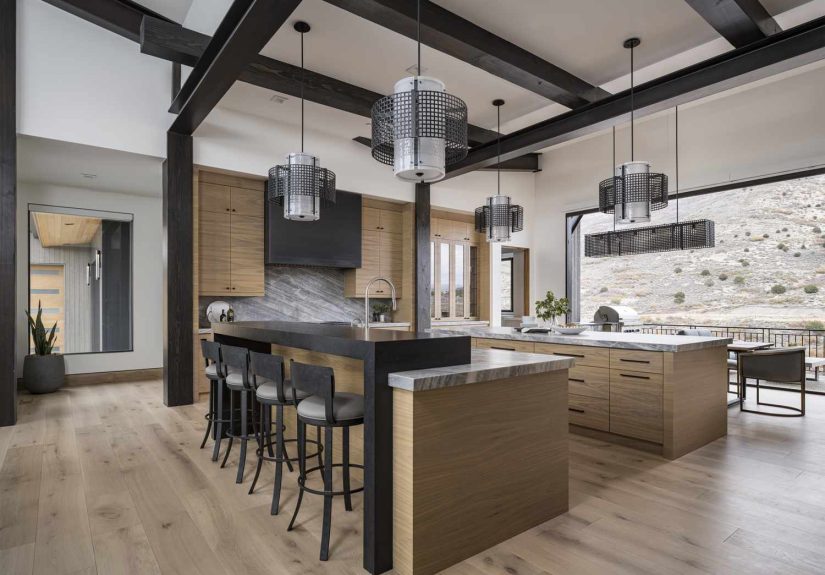
Kitchen islands aren’t just popularthey’re practically the kitchen’s main character in 2025. Houzz reports that a majority of renovating homeowners are adding or upgrading islands, and many islands are getting longer than seven feet. Translation: the island is no longer “extra counter space.” It’s the all-purpose runway where life lands.
What islands are doing now (besides collecting mail)
- Dining: casual meals and snacks happen hereoften more than the dining table.
- Work: laptops, homework, and the occasional “I’ll just sit here and scroll for a minute” moment.
- Storage: deep drawers, trash pullouts, appliance garages, you name it.
- Function: microwaves, dishwashers, and other appliances increasingly get tucked into the island.
Design tips so your island doesn’t become a kitchen iceberg
- Measure clearance first: comfort matters more than a “wow” island size. Aim for generous walkways around it.
- Choose seating thoughtfully: overhang depth, stool comfort, and knee space are the difference between “gathering spot” and “chair museum.”
- Use durable surfaces: islands see the most action, so prioritize stain resistance and easy cleanup.
- Don’t ignore lighting: pendants or a statement fixture can make the island feel intentional, not like a random countertop parked in the middle.
If the kitchen is the heart of the home, the island is the pulsewhere everyone shows up, hangs out, and asks, “Is this dishwasher clean or… vibe clean?”
Trend 4: Backsplashes Go Full Coverage (and Then Some)
The humble backsplash has officially been promoted. In 2025, Houzz reports that full coverage up to the cabinets or range hood is the most popular choice, and extending backsplash material higher (even to the ceiling) is becoming more common. This is the design equivalent of saying, “If we’re doing this, we’re doing it for real.”
What’s driving the “bigger backsplash” look
- Visual impact: larger coverage creates a more finished, custom look.
- Less fuss, more function: more protected wall area where real cooking happens.
- A chance for personality: color, pattern, texturebacksplashes are now a key design moment.
Patterns and materials that feel “2025,” not “builder basic”
Houzz data shows tile is still dominant, but slab backsplashes are also in the mix. Practical moves you’ll see a lot in 2025:
- Classic rectangular tile, updated: choose unexpected colors, handmade textures, or vertical stacking for a fresh feel.
- Slab drama: a quartz or quartzite slab backsplash can look seamless and upscale (and it cuts grout maintenance).
- Statement moments: bring pattern behind the range, then keep surrounding areas calmer for balance.
Pro tip: “Bold” works best when the rest is calm
If your backsplash is the star, let other elements support it. Think quieter counters, simpler cabinet fronts, and hardware that complements rather than competes. That way, your kitchen reads “designer” instead of “I lost a bet at the tile store.”
Trend 5: Black Countertops Beat Out Gray and Beige
If you’ve been waiting for “millennial gray” to loosen its grip on the kitchen world, 2025 is your moment. Houzz reports that while white and off-white countertops remain the top picks, black countertops have risen in popularity, outpacing gray and beige. The vibe shift: kitchens are leaning warmer and richer, and black surfaces help ground that look.
Why black countertops are suddenly everywhere
- Contrast without chaos: black anchors light cabinetry and makes wood tones look more intentional.
- Modern-but-timeless energy: it reads sophisticated without relying on trendy patterns.
- Plays well with metals: brass, brushed nickel, black hardwareblack counters can handle it all.
Make black countertops feel livable (not like a fingerprint exhibit)
- Consider the finish: honed or leathered finishes can hide smudges better than high-gloss.
- Balance with warmth: pair with warm woods, creamy whites, or earthy paint colors.
- Use good lighting: dark surfaces look best with layered lightingambient + task + accent.
Black countertops can be dramatic, but the best 2025 versions feel grounded and practicallike the kitchen is dressed well, not dressed up.
Trend 6: Accent Cabinets Are the New Accent Wall (But Way More Useful)
Accent walls had a moment. Then they got tired. Now, Houzz data suggests the spotlight has moved to accent cabinets and shelvesa design move that adds personality and function. In 2025, more than half of homeowners renovating their kitchens are adding or upgrading an accent cabinet or shelf.
What counts as an accent cabinet?
Think of it as a “special” storage zone: a glass-front cabinet for display, a contrasting pantry cabinet, a built-in hutch moment, or open shelving that breaks up a wall of uppers. Houzz indicates that glass-front styles are especially popular for these accent pieces.
How to do it without creating a clutter shrine
- Choose a purpose: everyday glassware, cookbooks, serving pieces, or a coffee setup.
- Add lighting: a subtle LED strip inside a glass cabinet makes it feel intentional and elevated.
- Edit ruthlessly: display fewer, nicer things. Your accent cabinet is not a storage unit with a window.
- Use contrast: try a different cabinet color, a wood tone, or a distinct door style for that “collected” look.
The appeal is simple: you get the personality people love about open shelving, with fewer dusting responsibilities. 2025 is all about design that looks good and behaves.
Bonus Trend: Vinyl/Resilient Flooring Takes the Top Spot (Yes, Really)
Kitchen flooring is where style meets real lifewater splashes, dropped pans, dog zoomies, and the occasional “how did this get sticky?” mystery. Houzz reports that vinyl/resilient flooring is the top choice among renovated kitchens in 2025, narrowly edging out hardwood and tile.
Why homeowners are choosing vinyl/resilient floors
- Water resistance: many modern options are built for spills and wet mopping.
- Durability: good vinyl can take a beating without looking like it’s been through a cooking show finale.
- Comfort underfoot: it tends to feel softer (and less back-breaking) than tile.
- Better visuals than the old days: wood looks, stone looks, matte finishesvinyl has evolved.
The reality check: wellness and quality matter
Not all vinyl products are created equal. Some design experts and wellness-focused voices caution about synthetic materials and off-gassing. The smart approach in 2025 is to shop carefully: look for reputable brands, ask about emissions standards, and prioritize products designed for kitchens (especially rigid-core options if moisture is a concern).
How to make this trend look elevated
- Go wider plank (if it fits your style): wide planks can feel more modern and less “patchwork.”
- Choose a realistic texture: subtle grain and a low-sheen finish read more authentic.
- Mind the transition lines: clean, thoughtful transitions to adjacent rooms make vinyl look intentional.
Vinyl isn’t “cheap-looking by default” anymore. In 2025, the best vinyl flooring is chosen deliberatelyas a performance-driven finish that still looks good in photos.
of Real-World Kitchen Remodel Experience (Because Data Can’t Warn You About “Sample Fatigue”)
Here’s what the Houzz trends won’t tell you directly, but every remodel veteran learns the hard way: the kitchen you design on paper and the kitchen you live in are related… like cousins. Close cousins, but still cousins.
First, traditional and transitional sound like style labels until you’re standing in your kitchen holding three “warm white” cabinet samples that all look identicaluntil the sun moves two inches and suddenly one turns buttery and another turns slightly “dentist office.” The best move I’ve seen (over and over) is to pick one clear anchor: Shaker doors or a classic cabinet color, then let modern touches do the heavy liftinggood lighting, a practical island layout, and hardware that feels intentional. You get the comfort of traditional design without the stress of constant upkeep.
Second, the kitchen expansion trend is real, but it’s not automatically magical. People assume: “More square footage = better kitchen.” Not always. The kitchens that feel best are the ones where the work zones make sense. If your sink, trash, and dishwasher are far apart, you’ll feel it every single day. If your fridge door blocks a walkway, you’ll remember it every single holiday. Expansion is most successful when it improves flow not just when it increases the number of steps you can take while carrying a boiling pot of pasta water.
Third, let’s talk about the oversized island. A huge island is fantasticuntil it becomes a clutter magnet. In real kitchens, islands collect everything: backpacks, chargers, mail, that one random screw you swear is important. The best “big island” experience I’ve seen comes down to two things: (1) planned storage (deep drawers are a life upgrade), and (2) boundarieslike a designated drop zone tray or a built-in charging drawer. Otherwise, your stunning 7-foot island becomes a 7-foot to-do list.
Fourth, backsplashes are the easiest place to get braveand the easiest place to overdo it. People fall in love with a bold tile, then install it everywhere, and suddenly the kitchen looks like it’s wearing a patterned suit to a casual brunch. The best “statement backsplash” experiences are controlled: big impact in one key wall (often behind the range), with calmer finishes elsewhere.
Fifth, black countertops are gorgeous… and yes, you’ll notice smudges if you choose a glossy finish. In real life, the happiest homeowners choose a softer sheen (honed/leathered) and pair it with warm elements so the kitchen feels inviting instead of severe.
Finally, the vinyl/resilient flooring trend makes total sense when you have kids, pets, or simply a deep love of not panicking over spilled juice. The best experiences come from buying quality and planning the install properlyflat subfloors, clean transitions, and a finish that looks believable. The worst experiences come from rushing the choice because “it’s just the floor.” It’s not “just the floor.” It’s the surface you’ll stare at while searching for the dropped garlic clove you definitely heard bounce into another dimension.
Bottom line: Houzz trends point you toward what’s popular. Your success comes from translating those trends into choices that fit your habits, your household, and your tolerance for maintenance. Design the kitchen you’ll actually live inthen make it pretty.
Editorial References (No Links)
- Houzz Research: 2025 U.S. Houzz Kitchen Trends Study (survey of U.S. homeowners)
- Houzz editorial coverage: kitchen remodeling trends summary based on the study
- Real Simple: summary of key 2025 Houzz kitchen findings
- Forbes: coverage of the 2025 Houzz kitchen trends report
- Architectural Digest: 2025 kitchen trend context (personalization, concealed appliances, entertaining)
- Better Homes & Gardens: 2025 kitchen trend forecasts (storage, warmth, sustainability)
- The Spruce: 2025 trend commentary on statement backsplashes
- HGTV: traditional kitchen characteristics and examples
- Consumer Reports: flooring durability and vinyl performance considerations
- Good Housekeeping: vinyl plank flooring performance for kitchens
- Martha Stewart: design/wellness concerns regarding synthetic flooring materials






 Close
Close