
Table of Contents >> Show >> Hide
- What “6-Inch Fitter” Actually Means (and Why It’s Not the Shade’s “Width”)
- Why White? The Real Reason It Looks Better (and Feels Better)
- How to Measure for a 6-Inch White Fitter Lampshade (Without Guessing)
- Choosing the Right Style: What a 6-Inch White Fitter Shade Looks Like in the Wild
- Material Matters: Glass, Fabric, and the Great Fitter Confusion
- Installation Tips: How to Mount It Without Cracking the Shade (or Your Spirit)
- Cleaning and Care: Keeping White Shades White
- Common Mistakes (So You Don’t Join the “Returns Department Hall of Fame”)
- FAQ: 6-Inch White Fitter Lampshade
- Conclusion: The Right Shade Is the One That Fits (and Makes Your Light Look Expensive)
- Real-World Experiences: What People Learn About 6-Inch Fitters (Usually After One Mistake)
A “6-inch white fitter lampshade” sounds like something a lighting nerd would say at a party and immediately lose the aux cord. But it’s actually a super practical, very specific thing: a shade designed to fit a 6-inch shade holder (the “fitter”), usually on pendants, pan lights, and vintage-style fixturesoften in that clean, light-softening white you want in kitchens, entryways, and anywhere you’re trying to look like you have your life together.
This guide breaks down what “6-inch fitter” really means, how to measure so you don’t buy the lighting equivalent of the wrong shoe size, what styles and materials work best (hello, opal/milk glass), and how to install and care for your shade without cracking it or your patience.
What “6-Inch Fitter” Actually Means (and Why It’s Not the Shade’s “Width”)
In lighting, the fitter is the part of the shade that interfaces with the fixture’s shade holder. On many glass shades, that means the lipthe flared rim that slides into a circular holder and is typically secured with set screws. A “6-inch fitter” refers to the nominal diameter of that interface point (the holder opening and the shade’s corresponding lip area).
Here’s the key detail that saves returns: fitter sizes are usually nominal. The actual glass lip often measures a touch under the stated size so it can slide into a same-sized holder without needing brute strength or a pep talk.
Lip fitter vs. straight fitter: the quick personality test
- Lip fitter: The shade has a flared lip designed to be secured by set screws. Common for pendants and fixture shades.
- Straight fitter: The shade sits in the holder opening without the same flared lip profile; often used where gravity does the heavy lifting.
Why White? The Real Reason It Looks Better (and Feels Better)
White shadesespecially opal or milk glassare popular because they soften and diffuse light. Instead of a harsh spotlight effect (aka “interrogation chic”), you get a more even glow that’s friendly to faces, countertops, and your phone camera.
Where white opal/milk glass shines the most
- Kitchens: Bright enough to work, soft enough to not feel like a stadium.
- Entryways: Welcoming glow that flatters everyone coming in (even the delivery guy).
- Hallways & stairwells: Gentle, consistent illumination without glare.
- Bathrooms (with the right fixture rating): Diffused light is kinder to morning faces.
How to Measure for a 6-Inch White Fitter Lampshade (Without Guessing)
Measuring is the difference between “installed in 10 minutes” and “why is my ceiling light mocking me.” Start with the fixture, not the shade you wish you had.
Step 1: Identify the fitter type and holder style
Many 6-inch fitter shades pair with a circular holder that uses set screws. If you see three little screws around the ring, you’re likely in lip-fitter territory.
Step 2: Measure the shade holder opening (the real MVP measurement)
- Turn power off and let the bulb cool (no one wants “branding” as a hobby).
- If there are set screws, back them out slightly before measuring.
- Measure the inside diameter of the holder opening where the shade sits.
- If it’s about 6 inches, you’re shopping in the right aisle.
Step 3: Understand “nominal” sizing so you don’t panic
A “6-inch fitter” shade’s lip may measure slightly under 6 inches by design. That’s normal. What you don’t want is a lip that’s bigger than the holder openingglass doesn’t negotiate.
Choosing the Right Style: What a 6-Inch White Fitter Shade Looks Like in the Wild
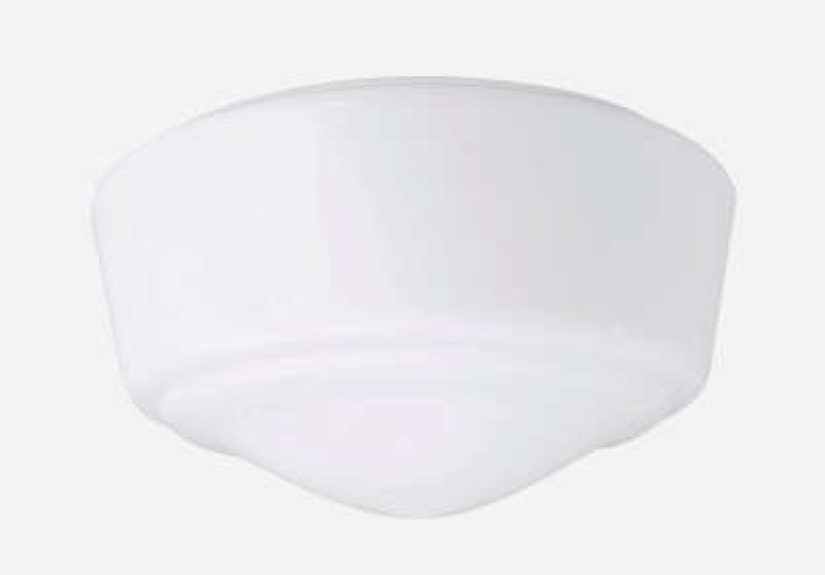
A 6-inch fitter often shows up in classic and vintage-inspired lighting: schoolhouse pendants, large fixture shades, and certain hanging lamp configurations. White glass versions typically come in profiles that feel both timeless and practical.
Popular silhouettes (and the vibe they give)
- Schoolhouse / globe: Vintage, friendly, and great for general ambient light.
- Bell / dome: More directed light, still soft around the edges.
- Ribbed student-style: Texture adds depth; diffuses light and hides fingerprints a bit better.
- Wide bowl: Big, bold presenceideal when the fixture needs visual weight.
Specific examples of “6-inch fitter + white” combinations
- Kitchen island pendant: A schoolhouse-style opal shade with a 6-inch lip fitter creates a bright but mellow pool of light across the island.
- Vintage hallway fixture: A small ribbed white glass shade with a 6-inch fitter can upgrade an older pan light without changing the whole fixture.
- Breakfast nook statement: A larger opal globe with a 6-inch fitter adds “intentional design” energy without screaming for attention.
Material Matters: Glass, Fabric, and the Great Fitter Confusion
When people say “fitter,” they might mean different attachment systems depending on whether the shade is glass or fabric. A 6-inch fitter is most commonly associated with glass shades and shade holders, but it’s worth knowing the landscape.
Common fitter/attachment types you’ll see in lighting
- Set-screw fitter holders (common for glass): Shade lip slides into ring; screws tighten to hold it.
- Spider fitter (fabric shades): Sits on a harp and is secured by a finial.
- Uno fitter (fabric or some glass systems): Shade attaches directly to the socket with a threaded ring.
- Clip-on (small shades): Clips onto the bulb. Quick, but usually not a 6-inch fitter situation.
Translation: if you’re buying a 6-inch white fitter lampshade, you’re almost always dealing with a glass shade meant for a holder ring with that matching nominal diameter. If your fixture uses a harp and finial, you’re in spider territory, not “6-inch fitter” land.
Installation Tips: How to Mount It Without Cracking the Shade (or Your Spirit)
Before you start
- Turn off power at the switch (and ideally the breaker if you’re removing a ceiling shade).
- Let the bulb cool completely.
- Lay down a towel on the counter or floor. Glass shades love to explore gravity.
Installing a lip-fitter glass shade with set screws
- Loosen the set screws so the shade lip can slide in easily.
- Center the shade so the gap looks even all the way around.
- Tighten screws gradually in rotation (like tightening lug nuts on a wheel).
- Stop when snugover-tightening is how glass learns to “spiderweb.”
Bulb choice: keep it bright, keep it cool
White glass diffuses light beautifully, but heat is the enemy of enclosed fixtures and vintage-style shade holders. LEDs are usually the smartest move: plenty of lumens with far less heat than old-school incandescent bulbs. If you want cozy, aim warm; if you want crisp task lighting, go a bit coolerjust don’t turn your kitchen into an operating room.
Cleaning and Care: Keeping White Shades White
White glass shades are forgiving, but not invincible. The good news: you don’t need special potionsjust gentle habits.
Routine cleaning (the “I have guests tonight” method)
- Turn off power and let the shade cool.
- Dust with a dry microfiber cloth to remove loose grime.
- For fingerprints, wipe gentlyno aggressive scrubbing.
Deeper cleaning (the “why is it sticky?” method)
- Remove the shade carefully and place it in a sink or basin with lukewarm water.
- Add a small amount of mild dish soap.
- Use a soft sponge or cloth; rinse thoroughly.
- Dry completely before reinstalling to avoid water spots and slippery handling.
Avoid abrasive pads and harsh cleanersespecially on textured or ribbed glass. White stays classy when you treat it like glass, not a frying pan.
Common Mistakes (So You Don’t Join the “Returns Department Hall of Fame”)
- Mistake: Measuring the widest part of the shade instead of the fitter lip.
Fix: Measure the holder opening or the shade’s lip diameterthe interface point. - Mistake: Assuming “6-inch” means exact-to-the-millimeter precision.
Fix: Remember nominal sizing; the shade lip may be slightly under for fit. - Mistake: Over-tightening set screws.
Fix: Tighten evenly and gentlysnug is the goal, not “bench press.” - Mistake: Using a high-heat bulb in a tight glass enclosure.
Fix: Use LED equivalents and follow fixture recommendations.
FAQ: 6-Inch White Fitter Lampshade
Is a 6-inch fitter the same as a 6-inch shade diameter?
Not necessarily. The fitter refers to the attachment diameter (often the lip area), not the widest part of the shade. A shade can be 12–18 inches wide and still have a 6-inch fitter, depending on the design.
Will a 6-inch fitter shade fit any 6-inch holder?
Often yes, but confirm the holder style (lip-fitter with set screws vs. other systems) and measure carefully. Vintage fixtures can have quirks, and “close enough” is not a reliable strategy with glass.
What’s the best room for a white opal/milk glass shade?
Kitchens, entryways, halls, and anywhere you want soft, even light. White glass is a diffusion champion.
Conclusion: The Right Shade Is the One That Fits (and Makes Your Light Look Expensive)
A 6-inch white fitter lampshade is the perfect example of lighting being both art and geometry. When you match the fitter size, choose a white glass that suits your style, and install it with a little patience, you get the best kind of upgrade: the one that looks intentional, feels better to live with, and doesn’t require rewiring your entire house.
Measure the holder opening, confirm the fitter type, expect nominal sizing, and treat set screws like you’re handling glassbecause you are. Do that, and your “new” shade won’t just fit. It’ll glow.
Real-World Experiences: What People Learn About 6-Inch Fitters (Usually After One Mistake)
If you hang around homeowners, antique collectors, or anyone who has ever typed “replacement shade” into a search bar at 11:47 p.m., you start hearing the same storiesdifferent kitchens, same emotional arc. The first experience is almost always optimism: “It’s just a lampshade.” Then comes the plot twist: “Why are there six different ‘6-inch’ measurements and none of them are the same?”
One of the most common “aha” moments happens when someone realizes the shade they fell in love with has a giant, beautiful bowl… and a fitter that’s totally unrelated to that bowl’s width. A 6-inch fitter shade can look large and dramatic (think classic schoolhouse silhouettes), because the business endthe lip that actually mountscan be smaller than the shade’s widest point. People often learn this after measuring the shade across its belly, buying based on that, and then discovering their fixture’s holder ring has absolutely no interest in participating.
Another repeat experience: set screws. In theory, they’re simpletighten three screws, shade stays up, everyone wins. In real life, folks either barely tighten them (and spend a week wondering why the shade looks crooked), or they tighten like they’re securing a roller coaster harness. Glass, being glass, responds to overconfidence with a delicate little crack that sounds like a villain quietly laughing. The “real-world trick” people share is tightening gradually in rotation: a little on screw A, then B, then C, then back aroundkeeping the shade centered and the pressure even.
Kitchens add their own special chapter. White glass looks dreamyuntil cooking grease enters the chat. People who install white opal shades over islands and in breakfast nooks often say the first few weeks are pure joy: bright, flattering light that makes countertops look like magazine photos. Then one day, they notice a faint haze. It’s usually not permanent damage; it’s just life floating through the air. The experienced move is light maintenance: occasional microfiber wipe-downs, and a gentle soapy wash when needed. The biggest lesson is to avoid abrasive scrubbers, especially on ribbed glass, because texture loves to hold onto scratches like souvenirs.
There’s also the “bulb epiphany.” Many people start with whatever bulb they have in a drawersome daylight-bright supernova and then wonder why their cozy kitchen suddenly feels like a dentist’s office. Because white glass diffuses light, it can make brightness feel more uniform, which is great… but it also means the bulb’s color temperature matters more than you think. Real-world feedback tends to land in the same place: warm-to-neutral LEDs feel inviting and still bright enough, and they run cooler than old incandescent bulbs (which matters a lot when you’re pairing glass with an enclosed or semi-enclosed fixture).
Finally, there’s the experience that’s oddly satisfying: the moment everything clicks. The 6-inch fitter matches perfectly, the shade sits level, the screws are snugnot aggressiveand the light turns on with that soft, even glow. People describe it as the easiest “big impact” upgrade: suddenly the room looks more finished, more intentional, and somehow a little calmer. It’s not magic. It’s just the right fitter size doing what it was born to dofit.







 Close
Close