
Table of Contents >> Show >> Hide
- 1. Buffy the Vampire Slayer “Beer Bad”
- 2. The X-Files “First Person Shooter”
- 3. Star Trek: The Next Generation “Sub Rosa”
- 4. Ghostwriter “Attack of the Slime Monster”
- 5. M*A*S*H “Dreams”
- 6. Beverly Hills, 90210 “The Time Has Come Today”
- Why Do Great Shows Make Such Weird One-Off Episodes?
- Viewer Experience: Why These Episodes Stay in Our Brains
- Conclusion
- SEO Tags
Every classic TV show has a comfort zone. Friends had the couch. Star Trek had the bridge. Buffy the Vampire Slayer had witty monsters, emotional trauma, and vampires who looked like they owned leather pants in multiple shades of pain. But every now and then, even a beloved series looks at its own formula and says, “What if we throw the steering wheel out the window and let a raccoon drive?”
That is where the magic happens. Or the chaos. Or, in some cases, the episode where a serious science-fiction show becomes a haunted romance novel with fog machines. These are the strange one-off TV episodes that fans remember not because they were polished, logical, or even good, but because they were unforgettable. They broke tone, bent genre, ignored common sense, and left viewers wondering whether the writers’ room had been locked overnight with too much coffee and no adult supervision.
This list looks at six classic shows that went insane for one episode. Some were trying to be experimental. Some were chasing a trend. Some were probably just exhausted. All of them created bizarre, oddly fascinating television history.
1. Buffy the Vampire Slayer “Beer Bad”
When the moral lesson arrives wearing caveman makeup
Buffy the Vampire Slayer was famous for turning teenage problems into literal monsters. High school is hell? In Sunnydale, yes, legally and architecturally. A boyfriend turns cold after intimacy? He might become a soulless vampire. College insecurity? Maybe the beer is cursed and turns people into prehistoric grunters.
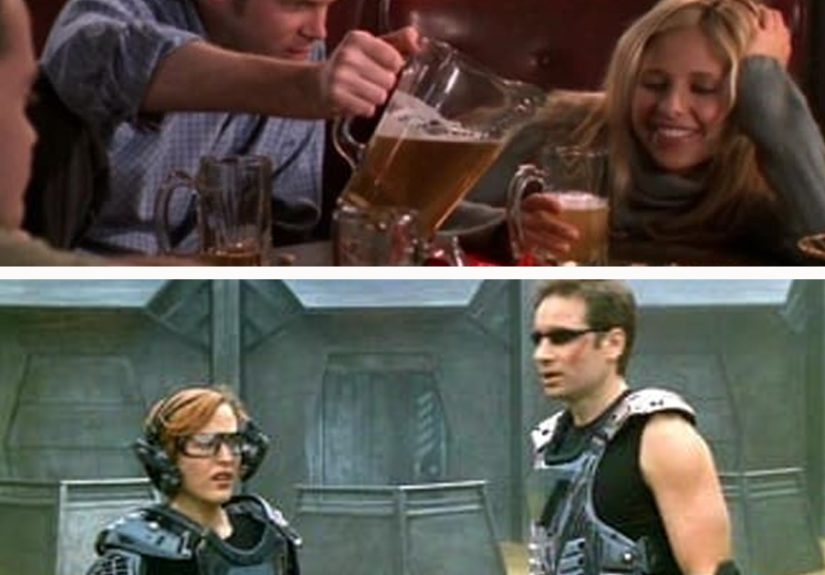
That last one is the basic premise of “Beer Bad,” the fifth episode of Season 4. Buffy is bruised after being treated badly by Parker, a college guy with the emotional depth of a wet napkin. She ends up drinking with a group of smug students at a campus pub, where Xander has somehow landed a bartending job using a fake ID. The beer, called Black Frost, is not merely cheap college poison. It has been mystically altered by a resentful bartender, and the drinkers begin reverting into caveman behavior.
On paper, this fits the Buffy metaphor machine: alcohol can lower inhibitions and make smart people act primitive. On screen, however, the episode becomes a parade of grunting, wall-painting, and Buffy saying things with the vocabulary of a very irritated toddler. The show that gave us “Hush,” “The Body,” and “Once More, with Feeling” also gave us Cave Buffy. Television contains multitudes.
The reason this episode feels so wild is that Buffy usually trusted its audience to understand complicated emotional symbolism. “Beer Bad” is not subtle. It walks into the room with a club, points at the keg, and yells, “Moral!” Yet the episode has a weird charm because it is so committed to its bad idea. It is not half-insane. It is fully wearing the animal skin and asking for another round.
2. The X-Files “First Person Shooter”
Mulder and Scully enter a deadly video game, because the year 2000 had feelings
The X-Files could be terrifying, elegant, paranoid, funny, and occasionally all of those within the same episode. Its best monster-of-the-week stories made the impossible feel disturbingly close to the real world. Then came “First Person Shooter,” a Season 7 episode that takes Mulder and Scully into a virtual reality video game where a deadly digital woman is killing players for real.
The episode was written by cyberpunk novelist William Gibson and Tom Maddox, which makes the result even more fascinating. Instead of a sleek meditation on technology, identity, and digital violence, viewers got leather outfits, oversized weapons, early-2000s gaming panic, and a villain who feels like she escaped from a computer-generated perfume commercial. The Lone Gunmen are involved. A VR company is involved. Mulder, naturally, ends up inside the game because Mulder has never seen a haunted toaster, alien fungus, or cursed software and thought, “Maybe I should stay outside this one.”
“First Person Shooter” is not boring, and that may be its greatest defense. It is a chaotic time capsule from an era when mainstream media was still trying to understand video games, the internet, and cyberculture. The episode treats gaming like a smoky underground battlefield full of testosterone, murder, and suspiciously dramatic lighting. It is less “technology will reshape reality” and more “what if a screensaver could kill you while wearing combat lingerie?”
Still, the episode earns its place in classic TV weirdness because it shows a serious franchise trying to wrestle with a new cultural anxiety and accidentally body-slamming itself through a glass coffee table. It is clumsy, glossy, confused, and absolutely memorable.
3. Star Trek: The Next Generation “Sub Rosa”
The one where Dr. Crusher inherits a haunted candle situation
Star Trek: The Next Generation was the refined, thoughtful, diplomatic branch of the franchise. It gave viewers moral dilemmas, philosophical debates, and Patrick Stewart making sitting in a chair look Shakespearean. Then “Sub Rosa” arrived in Season 7 and asked: what if the Enterprise visited a Scottish-themed colony and Dr. Beverly Crusher fell under the spell of an erotic ghost linked to her grandmother’s candle?
Yes, that is the plot. Dr. Crusher attends her grandmother’s funeral on Caldos IV, a planet designed to resemble the Scottish Highlands. She discovers that her grandmother had a mysterious lover named Ronin, who is less a normal gentleman caller and more a supernatural energy being with alarming family-bound romantic habits. Ronin begins focusing on Beverly, appearing as a ghostly presence and exerting influence over her through a candle that acts as his energy source.
The episode is infamous because it feels like it wandered in from a gothic paperback rack at an airport bookstore. The fog. The candle. The ancestral romance. The graveyard energy. The fact that the Enterprise crew responds to a centuries-long ghost seduction problem with the same procedural calm they would bring to a malfunctioning replicator.
Yet “Sub Rosa” is also bizarrely watchable. It is not generic. It is not safe. It gives Dr. Crusher a spotlight, lets the show drift into horror-romance territory, and then tries to rescue the premise with technobabble by revealing that Ronin is an anaphasic alien. Classic Star Trek move: if the ghost is embarrassing, call it plasma-based and keep walking.
“Sub Rosa” may not be great Star Trek, but it is unforgettable television. It proves that even the most dignified sci-fi series can accidentally turn into Wuthering Heights in Space.
4. Ghostwriter “Attack of the Slime Monster”
Educational television meets nightmare fuel in a purple puddle
Ghostwriter was a clever PBS children’s series built around reading, writing, clues, and a group of kids solving mysteries with help from a ghost who communicated through text. It was wholesome without being dull, educational without feeling like homework, and very much the kind of show parents could approve of while making dinner.
Then came “Attack of the Slime Monster,” a story arc centered on Gooey Gus, a grotesque slime-covered doll from a scary story written by Casey. The plot begins as a creative writing exercise, which sounds innocent enough. A kid writing a spooky story? Great. Literacy in action. Then Gooey Gus becomes the kind of image that lodges itself in a child’s brain and refuses to pay rent for the next thirty years.
The brilliance, or madness, of this arc is that it turns the act of storytelling into something physically threatening. The kids are not simply learning how fiction works; they are being chased by the consequences of imagination. Gooey Gus is sticky, strange, and deeply unsettling in that special 1990s children’s television way, when practical effects could make even a toy look like it had crawled out of a drain behind a haunted arcade.
For a show designed to promote literacy, this is a bold message: writing is powerful, but sometimes what you write may appear at a barbecue and traumatize everyone. Still, that is part of why the arc is remembered. It taught young viewers that stories are not just assignments. They can surprise you, scare you, and become more vivid than expected.
Was Gooey Gus too weird for an educational mystery show? Absolutely. Did that make kids remember it? Also absolutely. Mission accomplished, PBS. Terrifyingly accomplished.
5. M*A*S*H “Dreams”
When a beloved war comedy becomes a surreal trauma chamber
M*A*S*H was always more complicated than a simple sitcom. It used comedy to survive horror, setting jokes and friendship against the relentless machinery of war. Even so, “Dreams,” from Season 8, feels like the show stepping through a mirror and refusing to come back until everyone has had a nightmare.
The episode follows the exhausted staff of the 4077th after a marathon stretch of surgery. As casualties keep arriving, the characters steal brief moments of sleep, and the audience sees their dreams. These dreams are not cute sitcom fantasies. They are surreal, symbolic, and often disturbing. Margaret imagines a wedding that turns into operating-room imagery. Father Mulcahy’s religious dream twists into battlefield suffering. Hawkeye, the fast-talking surgeon whose hands are central to his identity, dreams of being unable to operate when he is needed most.
What makes “Dreams” so powerful is that its insanity is not random. It is psychological. The episode externalizes the trauma the characters usually bury under jokes, professionalism, and routine. The tonal shift is jarring because it is supposed to be. The viewer is denied the usual comic safety net and forced to sit inside the emotional cost of survival.
Unlike some of the other entries on this list, “Dreams” is not insane because it is misguided. It is insane because it is brave. It uses surrealism to tell the truth about people who have seen too much. In another show, that might feel pretentious. In M*A*S*H, it feels earned. The series spent years making viewers love these characters; “Dreams” reminds us what loving them actually means.
6. Beverly Hills, 90210 “The Time Has Come Today”
Brenda finds a diary and everyone gets drafted into the 1960s
Beverly Hills, 90210 was built on teen drama, romance, heartbreak, social issues, and attractive people looking devastated near lockers, pools, and convertibles. In “The Time Has Come Today,” the show decides that what its fourth season really needs is a full detour into the late 1960s.
The episode begins with Brenda staying home while the rest of the gang goes on a ski trip. She discovers an old diary written by a young woman who once lived in the Walsh house during the Vietnam era. As Brenda reads, she imagines herself and her friends as people from that turbulent time. Suddenly, the familiar 90210 cast is filtered through antiwar protests, military anxiety, counterculture fashion, and period-drama melodrama.
The idea is not automatically bad. A diary can be a strong storytelling device, and connecting teenage uncertainty across generations is a legitimate theme. The problem is that the execution feels like the show raided a costume warehouse, put everyone in 1960s drag, and sprinted through a history lesson before the audience could ask too many questions.
Still, the episode has a strange sincerity. It wants to say that young people have always struggled with love, identity, politics, family expectations, and fear about the future. That is a thoughtful idea wrapped in a very odd package. The result is an hour that feels less like standard 90210 and more like an educational dream Brenda had after falling asleep near a stack of vintage Life magazines.
“The Time Has Come Today” is not the most famous episode of the series, but it is one of the clearest examples of a teen soap suddenly deciding to become a time capsule. The gang did not simply go skiing. They went historically sideways.
Why Do Great Shows Make Such Weird One-Off Episodes?
There are several reasons classic shows go off the rails for one episode. Long-running television burns through story ideas fast. Writers need fresh angles. Actors need new challenges. Networks want topical episodes. Producers want awards. Sometimes a show has been doing the same thing for so long that even a haunted candle starts to look like creative oxygen.
Experimental episodes are risky because they temporarily break the contract between show and viewer. Audiences tune in expecting a familiar rhythm. When that rhythm changes, the response can be delight, confusion, or “Did my remote accidentally switch channels?” But risk is also why television evolves. Without strange one-offs, we would not get bottle episodes, musical episodes, mockumentary episodes, real-time episodes, or genre-bending classics that later become fan favorites.
The difference between a brilliant experiment and a bizarre misfire often comes down to emotional truth. “Dreams” works because the surrealism reveals something deep about the characters. “Beer Bad” struggles because its metaphor stomps around like a caveman holding a public-service announcement. “Sub Rosa” is questionable as science fiction but unforgettable as pure tonal whiplash. “First Person Shooter” may not understand gaming culture, but it perfectly captures the panic of a moment when digital life felt new, dangerous, and deeply misunderstood.
Viewer Experience: Why These Episodes Stay in Our Brains
One of the funniest things about classic TV is that the “bad weird” episodes often become more memorable than the technically better ones. A perfectly competent episode can fade into the background, but a wild one-off episode becomes a shared password among fans. Mention “the caveman beer episode” to a Buffy viewer, and you will probably get a groan, a laugh, or both. Say “the ghost candle episode” to a Star Trek fan, and they may stare into the distance like they have just remembered a battle they barely survived.
That is part of the viewing experience. Strange episodes create community because they demand discussion. You do not simply watch “Sub Rosa” and move on with your evening like a normal citizen. You text someone. You search for explanations. You ask whether the writers meant to do that. You wonder how many executives approved the candle. You may even rewatch it years later just to confirm that your memory did not exaggerate the weirdness. Usually, it did not. Sometimes the episode is even stranger than you remembered.
These episodes also remind viewers that television is made by people working under pressure. A season of network TV could run more than twenty episodes, which is a marathon compared with many modern streaming seasons. Under those conditions, writers’ rooms had to stretch. Not every swing could be elegant. Some swings hit the ball. Some swings hit the mascot. But even the misses can reveal the personality of a show.
For many fans, weird one-off episodes become comfort food precisely because they are imperfect. They show the seams. They expose the ambition, panic, humor, and occasional desperation behind the polished brand of a classic series. A bizarre episode says, “We tried something.” That counts for a lot. Even when the result is a slime monster, a virtual assassin, or Dr. Crusher making life decisions around a suspicious family heirloom, the attempt has energy.
There is also nostalgia involved. Watching these episodes today means revisiting old television habits: weekly schedules, cliffhangers, commercial breaks, network standards, dated technology, and the charming belief that every social issue could be handled in forty-four minutes. The weirdness becomes a time machine. “First Person Shooter” is not just an odd X-Files episode; it is a snapshot of how the year 2000 imagined video games. “Attack of the Slime Monster” is not just gooey nightmare fuel; it is a reminder of practical effects, after-school TV, and the era when children’s shows were allowed to be genuinely unsettling.
That is why these episodes endure. They are not always the best, but they are alive. They provoke reactions. They break the pattern. They make viewers ask questions, laugh at the wrong moments, defend the indefensible, and remember exactly where a beloved show briefly lost its mind.
Conclusion
Classic TV shows become classics because they know who they are. But sometimes, the most interesting episode is the one where a show forgets who it is for forty minutes and comes back wearing a fake mustache. These six episodes prove that television history is not built only from masterpieces. It is also built from cursed beer, digital assassins, haunted candles, slime monsters, surgical nightmares, and teen soap stars cosplaying the 1960s.
Some of these episodes are failures. Some are secret successes. Some are both at the same time, which is the most television thing imaginable. What they all share is nerve. They took familiar shows and shoved them into unfamiliar territory. The results were messy, funny, strange, occasionally profound, and impossible to forget.
So here is to the insane one-off episode: the black sheep of the season, the fan-forum argument starter, the late-night rewatch dare. Great television gives us excellence. Weird television gives us stories we keep telling.






 Close
Close