
Table of Contents >> Show >> Hide
- First: Is it really a hairball… or an actual cough?
- Way #1: Brush like you mean it (and do it strategically)
- Way #2: Add moisture to meals (hydration helps hair move through)
- Way #3: Use fiber wisely (hairball diets, treats, or a little pumpkin)
- Way #4: Consider a vet-approved hairball gel or lubricant (the “grease the slide” approach)
- Way #5: Reduce overgrooming triggers (because the “hairball problem” may start in the skinor the brain)
- What NOT to do (even if the internet says it’s “a hack”)
- When to call the vet (the “this is bigger than a fur tube” checklist)
- A simple weekly hairball-prevention routine
- Conclusion
- Extra: of Real-World Hairball Experiences (and what they teach)
Few household sounds are as uniquely unsettling as a cat making that
cough-gag-retch noise at 2:17 a.m.the one that convinces you a tiny lion is
either summoning a demon or auditioning for a heavy metal band.
Most of the time, it’s “just” a hairball. But here’s the twist: cats don’t actually
cough up hairballs. They vomit them (hairballs come from the stomach, not the lungs),
and the dramatic soundtrack is your cat’s digestive system doing interpretive dance.
This guide focuses on safe, vet-aligned ways to help your cat move a hairball along
without turning your living room into a DIY medical drama. We’ll also cover when that
“hairball” might be something elseand when it’s time to call the vet instead of
lighting a candle and hoping for the best.
First: Is it really a hairball… or an actual cough?
Because hairballs can sound like coughing, it’s easy to assume every hacking noise equals
“incoming fur log.” But a true cough is a respiratory event (airways/lungs), while a hairball
episode is typically retching and vomiting behavior (GI tract).
Quick, practical clues
-
Hairball retching: Your cat often crouches low, neck extended, with repeated heaves.
You may eventually see a wet, tubular wad of hair (usually more “cigar” than “ball”). -
Coughing: The cat may stand more normally, cough in bursts, and swallow afterward.
There may be no vomit, no bile, and no hairball prize at the end. -
Red flag: Repeated unproductive retching (trying to vomit but nothing comes up),
lethargy, appetite loss, constipation, or abdominal discomfort can signal a blockage or another issue.
Bottom line: if your cat is “trying to hack something up” but nothing happensespecially if it goes on
for hours or comes with other symptomsdon’t force home remedies. That’s your cue to call your veterinarian.
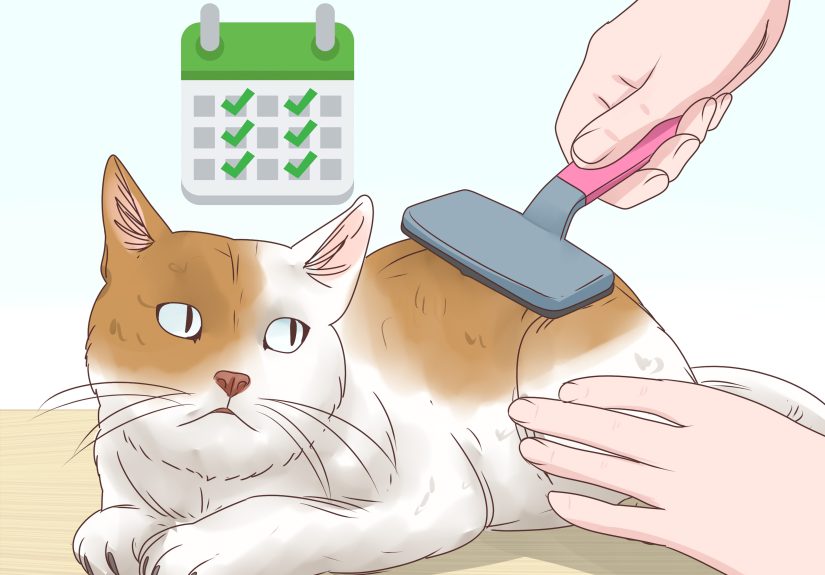
Way #1: Brush like you mean it (and do it strategically)
The simplest hairball solution is wonderfully unglamorous:
remove loose hair before your cat swallows it. Cats groom themselves constantly, and
the more loose fur they have on-board, the more they ingest. Regular brushing reduces shedding,
reduces swallowed hair, and reduces hairball frequency. It’s the least dramatic fixand the most effective.
How to make brushing actually work
-
Pick the right tool: Slicker brush for long-haired cats, rubber curry/glove for short-haired cats,
wide-tooth comb for tangles, and a gentle de-shedding tool if your cat tolerates it. - Time it right: Aim for daily brushing during heavy shedding seasons, and several times a week otherwise.
- Finish with a wipe: A quick wipe-down with a slightly damp cloth after brushing can pick up leftover loose hairs.
-
Make it bribable: Pair brushing with a high-value treat or lickable reward so your cat learns:
“When the brush comes out, snacks appear. This is acceptable.”
If your cat treats brushes like personal insults, try a grooming glove first (it feels more like petting),
or schedule occasional professional grooming for long-haired cats. You’re not failing; you’re outsourcing.
Way #2: Add moisture to meals (hydration helps hair move through)
Hairballs form when swallowed hair clumps together instead of moving smoothly through the digestive tract.
One underrated helper: hydration. Moisture supports normal digestion and can help hair pass
through the GI tract more easily, reducing the need for your cat to vomit it back up.
Easy hydration upgrades (no negotiation required)
- Feed more wet food: Even adding one wet meal a day can boost water intake.
-
Add water to food: A tablespoon or two mixed into wet food (or even some dry, if your cat tolerates it)
can increase fluid intake. - Try a fountain: Many cats drink more when water is moving (cats are weirdly pro-aquarium).
-
Multiple water stations: Put bowls where your cat already hangs outnear favorite windows,
not just next to the litter box like a punishment.
Hydration won’t “pop out” a hairball instantly, but it can make the whole system run smoother.
Think of it as improving traffic flow so fur doesn’t form a pileup.
Way #3: Use fiber wisely (hairball diets, treats, or a little pumpkin)
Fiber can help move swallowed hair through the intestines rather than letting it linger and clump.
That’s why many “hairball control” cat foods and treats include added fiber.
The goal isn’t to turn your cat into a tiny oatmeal influencerit’s to support consistent gut motility.
Options that are usually cat-friendly
-
Hairball-control food: These formulas commonly use fiber blends designed to help hair pass through
the digestive tract. If your cat gets frequent hairballs, this can be a low-effort baseline solution. - Hairball-control treats: Helpful if you don’t want to switch the full diet or you have a picky eater.
-
Plain canned pumpkin (small amounts): Some vets recommend a little pumpkin for extra fiber.
It must be plain pumpkinnot pumpkin pie filling with sugar/spices.
How to do pumpkin without overdoing it
For many cats, a small spoonful mixed into food can be enough. Start tiny (think: teaspoon-ish),
watch stool changes, and stop if your cat gets diarrhea or refuses to eat. Fiber is helpful… until it’s not.
If your cat has other medical issues (especially GI disease), talk to your vet before adding fiber supplements.
“Natural” doesn’t automatically mean “right for your cat’s intestines.”
Way #4: Consider a vet-approved hairball gel or lubricant (the “grease the slide” approach)
Over-the-counter hairball gels/pastes are designed to lubricate the swallowed hair so it passes
more easily through the digestive tract. Many are flavored (fish! chicken!) to make cats less suspicious,
which is thoughtful because cats are basically furry conspiracy theorists.
How to use hairball gels safely
- Follow the label: Dosing varies by product and cat size. More is not better.
- Use intermittently: Many cats do well with occasional use (for example, a few times a week during shedding seasons).
- Don’t use human laxatives: Avoid giving anything meant for people unless your veterinarian specifically instructs you.
- Watch for side effects: If stools become very soft, appetite drops, or vomiting increases, stop and call your vet.
Important: if you suspect a blockage (repeated unproductive retching, lethargy, pain, no stool, not eating),
lubricants are not the move. That’s a “professional help now” situation.
Way #5: Reduce overgrooming triggers (because the “hairball problem” may start in the skinor the brain)
Frequent hairballs can be a symptom, not just a nuisance. If your cat is grooming excessively, they swallow more hair.
Causes can include fleas, allergies, skin irritation, stress, or boredombasically, the feline version of
“I’m fine” while obviously not fine.
Practical fixes that often help
- Check parasite prevention: Even indoor cats can get fleas (they hitchhike in like tiny criminals).
-
Enrichment: Add interactive play, food puzzles, window perches, and short daily “hunt” sessions.
A busy cat grooms less out of boredom. -
Stress reduction: Maintain predictable routines, provide safe hiding spots, and use slow introductions
for new pets or changes. -
Talk to your vet about patterns: If hairballs are frequent, ask whether allergies, thyroid disease,
or GI motility issues could be involvedespecially in short-haired cats with frequent episodes.
This is the “root cause” approach: fewer triggers → less overgrooming → less swallowed hair → fewer hairballs.
It’s not flashy, but it’s how you win long-term.
What NOT to do (even if the internet says it’s “a hack”)
-
Don’t pull anything from your cat’s mouth: If you see string, hair, or “something,” pulling can cause serious injury.
If it’s stuck, call a vet. - Don’t force oils or random home concoctions: Some fats/oils can cause GI upset or interfere with nutrition.
-
Don’t wait out red flags: A blockage can become dangerous quickly. If your cat is miserable, hiding, not eating,
or repeatedly retching with no result, it’s time for veterinary care. - Don’t assume it’s always a hairball: Asthma, infections, heart issues, and other problems can mimic hairball sounds.
When to call the vet (the “this is bigger than a fur tube” checklist)
Occasional hairballs can be normal. But contact your veterinarian promptly if you notice any of the following:
- Repeated unproductive retching or vomiting (trying, but nothing comes up)
- Refusing food or water, or appetite changes lasting more than a day
- Lethargy, hiding, weakness, or signs of pain
- Constipation, straining, or no bowel movement
- Bloated or tender abdomen
- Coughing that sounds “chesty,” wheezy, or happens in repeated bursts without vomiting
Hairballs can occasionally contribute to intestinal obstruction, which can be serious.
When in doubt, treat persistent symptoms as medicalnot “carpet maintenance.”
A simple weekly hairball-prevention routine
For short-haired cats
- Brush 2–4 times per week (daily during heavy shedding)
- Consider wet food once daily or add water to meals
- Use a hairball-control treat during shedding seasons if needed
For long-haired cats
- Brush daily (yes, dailywelcome to the fluff management club)
- Wet food and/or water fountain
- Consider a hairball-control diet if episodes are frequent
- Discuss occasional hairball gel use with your vet
Conclusion
Helping a cat “cough up” a hairball is mostly about supporting the body’s two best options:
vomiting it safely or passing it through the intestines.
Your top tools are simple and effective: remove loose fur with brushing, support digestion with moisture and fiber,
use vet-approved hairball gels when appropriate, and reduce overgrooming triggers so the problem doesn’t keep restarting.
And if your cat’s “hairball routine” turns into repeated unproductive retching, appetite loss, lethargy,
constipation, or true coughing fitsskip the home experiments and call your vet. Your cat doesn’t need
a heroic fix. They need the right fix.
Extra: of Real-World Hairball Experiences (and what they teach)
Hairballs are one of those cat-parent rites of passagelike learning that your cat can hear a treat bag open from
three rooms away, but cannot “see” a toy that’s directly in front of their face. Over time, patterns show up in
real households, and those patterns can make hairball problems feel a lot more solvable.
One common scenario: the seasonal shed surge. Cat parents describe a totally normal winter routine,
and thenboomspring hits and the cat starts hacking twice a week. Nothing else changes except the tumbleweeds of fur
forming under the couch. In these cases, “helping the cat cough up a hairball” works best when you prevent the hairball
from forming in the first place: daily brushing for two to three weeks during peak shedding, a quick post-brush wipe-down,
and a short-term hairball-control treat or diet tweak. The lesson: sometimes the best “treatment” is simply treating
shedding season like it’s a known annual event… because it is.
Another frequent story involves the hydration upgrade. Some cats live their whole lives sipping water
like they’re sampling an expensive espressoone tiny lick, then staring at the bowl as if it betrayed them.
Owners who switch one meal a day to wet food (or add a little water to meals) often report fewer hairball episodes
over time. Not overnight magic, but noticeably less drama. The lesson: smoother digestion can mean less fur clumping,
which means fewer midnight concerts on your hallway runner.
Then there’s the sneaky one: the “hairball” that isn’t. Cat parents sometimes describe repeated hacking with
no hairball payoff. The cat seems fine otherwise, but the sound happens in burstsespecially after running,
excitement, or dust exposure. In these cases, vets may explore respiratory causes like asthma or airway irritation.
The lesson: if it looks like a hairball but behaves like a coughrepeating without vomittreat it as a health question,
not a housekeeping problem.
Finally, a very real pattern is stress grooming. A move, a new baby, a new pet, construction noise,
or even a schedule change can lead to overgrooming. More grooming means more swallowed hair, which can spike hairballs.
Cat parents who add predictable playtime, cozy hiding spots, and calmer routines often see improvementnot just in hairballs,
but in overall behavior. The lesson: hairballs can be a “symptom on the floor” of something happening emotionally or medically.
Put all those experiences together and you get a reassuring takeaway: hairballs are common, but they’re rarely random.
When you watch patterns (shedding, hydration, stress, frequency), you can usually reduce themand know sooner when you need help.







 Close
Close