
Table of Contents >> Show >> Hide
- Why Calf Strength Matters
- Ground Rules Before You Start
- 1. Standing Calf Raises
- 2. Bent-Knee Calf Raises
- 3. Eccentric Heel Drops
- 4. Functional Loaded Calf Work
- A Simple Weekly Plan
- Stretching, Recovery, and Smart Progression
- When to Back Off
- Real-World Experiences With Calf Training
- Conclusion
- SEO Tags
Note: This article is for general education only and is not a substitute for advice from a doctor or physical therapist. Stop exercising and get medical help if you have sudden swelling, warmth, discoloration, numbness, severe weakness, or sharp pain that makes it hard to walk or push off.
Your calves do an absurd amount of unpaid labor. They help you walk, run, climb stairs, jump, balance, and push off the ground every time life demands movement. Yet calf training often gets treated like the side dish nobody ordered. That is a mistake.
If your calves are weak, everyday movement can feel less stable, harder efforts can feel less powerful, and your lower legs may be more likely to complain when you suddenly decide that this is the week you become a hiking machine, a pickleball legend, or a person who enjoys sprints. Strong calf muscles support the ankle, help your Achilles tendon tolerate stress, and make lower-body movement more efficient.
The good news is that you do not need a room full of fancy gym equipment or a motivational speech from a retired action hero. You need a simple plan, good form, and enough patience to let your muscles adapt. Below are four smart ways to strengthen calf muscles, plus a practical roadmap for sets, reps, recovery, and real-life progress.
Why Calf Strength Matters
Your calf is not just one muscle. It is a team. The two big stars are the gastrocnemius, which is the more visible muscle on the back of the lower leg, and the soleus, which sits deeper underneath. Together, they help point your foot downward, stabilize your ankle, and generate force when you walk, jog, jump, or rise onto your toes.
That means calf strength is not only for runners or athletes. It matters for parents carrying toddlers, servers walking long shifts, travelers dragging luggage, older adults trying to stay steady on stairs, and anyone who has ever made a dramatic run across a parking lot because they forgot where they parked. In other words: basically everybody.
When your calves are strong and flexible, lower-leg movement tends to feel smoother. When they are weak, stiff, or overloaded, your body often starts making trade-offs. Ankles move less well. Feet work harder. The Achilles tendon may take more stress than it wants. Your body will still get the job done, but it may do it with the grace of a folding chair in a windstorm.
Ground Rules Before You Start
1. Warm up before strength work
Do five to ten minutes of easy movement first. A brisk walk, light cycling, marching in place, or a few minutes on stairs is enough to get blood moving and make calf exercises feel less like a rude surprise.
2. Progress gradually
Do not jump from zero to hero in one session. Your calves are used all day, but that does not mean they enjoy being overloaded out of nowhere. Start with body weight, master the movement, and add load or difficulty later.
3. Use control, not momentum
Bouncing through reps turns calf training into interpretive dance. You want a smooth rise, a short pause at the top, and a controlled lowering phase.
4. Learn the difference between soreness and warning pain
Mild soreness one to three days after a new or harder workout can be normal. Sharp pain, a popping sensation, major swelling, severe bruising, or trouble pushing off the floor is not the kind of “good burn” fitness people brag about. That calls for caution and, sometimes, medical care.
1. Standing Calf Raises
If calf training had a greatest-hits album, the standing calf raise would be track one. It is simple, effective, scalable, and teaches the exact motion your calves perform in real life: pushing your body upward through the ball of the foot.
How to do it
Stand tall with your feet about hip-width apart. Hold a wall, countertop, or sturdy chair for balance if needed. Keep your weight spread evenly across the ball of each foot. Rise onto your toes as high as you comfortably can. Pause for one second at the top, then slowly lower your heels back to the floor.
Why it works
This move strengthens the calf through a basic and functional pattern. It is especially useful for building a foundation because it teaches body control, ankle stability, and full-range movement without too much complexity.
Best starting dose
Try 2 to 3 sets of 8 to 12 reps. When that feels easy and your form stays clean, move to 12 to 15 reps or hold a dumbbell, kettlebell, backpack, or even a suspiciously heavy tote bag.
Make it harder
Once two-leg calf raises feel easy, progress to single-leg calf raises. That instantly increases the challenge and exposes left-right differences you may not have noticed. Many people discover one calf is doing the work of a loyal employee while the other is more of a “let’s circle back next week” type.
Common mistakes
Do not roll your ankles outward. Do not rush the lowering phase. Do not lean your whole body forward like you are trying to inspect a tiny stain on the wall. Stay tall, stay controlled, and let the calves do the job.
2. Bent-Knee Calf Raises
Standing calf raises are great, but they are not the whole story. A bent-knee variation shifts the challenge and helps train the deeper calf in a slightly different way. That matters because real life rarely happens with your knees locked perfectly straight.
How to do it
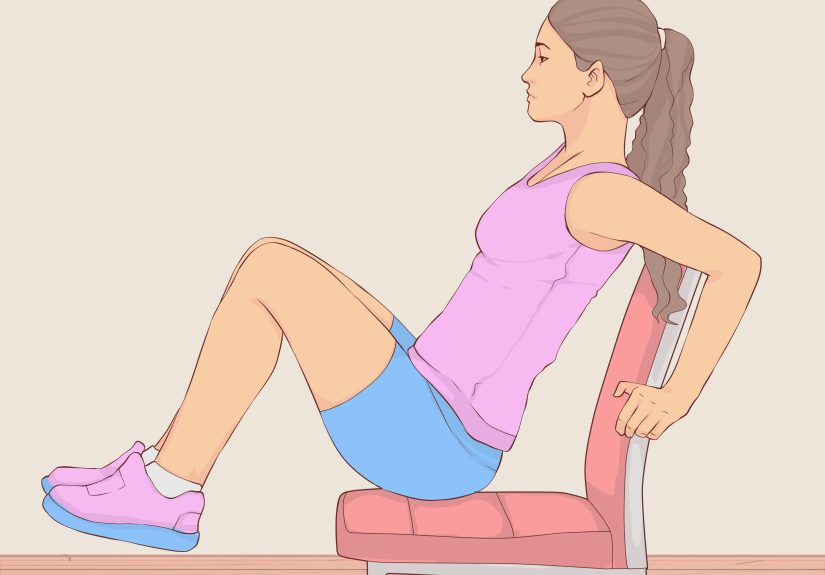
You can do this seated or standing. For a simple home version, sit on a chair with your knees bent about 90 degrees and your feet flat on the floor. Raise your heels off the floor while keeping the balls of your feet down. Pause at the top, then lower slowly. To add resistance, place a dumbbell, backpack, or a stack of books on your thighs.
For a standing version, hold onto support, bend your knees slightly, and perform a calf raise from that position without turning it into a mini squat.
Why it works
Training your calves from both straight-knee and bent-knee positions gives you more complete lower-leg strength. This can be especially useful for people who run, hike, play court sports, or spend long periods on their feet.
Best starting dose
Do 2 to 3 sets of 10 to 15 reps. Since this variation often feels smaller and less dramatic than a standing calf raise, people sometimes race through it. Resist that temptation. The slow squeeze at the top is the money part.
Who benefits most
This is a smart choice for runners, walkers, and anyone whose calves fatigue quickly during long activity. It is also friendly for people who need a lower-balance-demand option before moving to harder standing drills.
3. Eccentric Heel Drops
Now we get to the exercise with the fancy-sounding name and the very practical purpose. Eccentric training means the muscle is working while it lengthens. For calf training, that usually means the lowering phase is the star of the show.
How to do it
Stand on a stair or stable raised step with the front half of your foot on the edge and your heel hanging off. Hold onto a railing or wall. Rise up onto both toes. Then shift your weight to one foot and slowly lower that heel below the step over two to four seconds. Return to the top with both feet and repeat.
Why it works
The lowering phase creates a strong training stimulus and can help build strength, control, and resilience in the calf-Achilles system. It is especially popular in rehab and return-to-running programs, though it should be introduced gradually.
Best starting dose
Start with 1 to 2 sets of 6 to 8 reps per side. This does not sound like much until you do it correctly and realize your calves are suddenly negotiating terms. Over time, build toward 2 to 3 sets of 10.
Important caution
This exercise can be excellent, but it is not the right move to force through severe pain. If you have ongoing Achilles pain, recent injury, or major stiffness first thing in the morning, it is smart to check with a clinician or physical therapist before loading aggressively.
4. Functional Loaded Calf Work
Once you have the basics, your calves need to do more than just move up and down in one neat little lane. Real life asks them to stabilize, absorb force, and keep working when the rest of your body is busy. That is where functional loaded work earns its paycheck.
Great options
Single-leg calf raises: These build strength, balance, and side-to-side symmetry.
Farmer carries on toes: Hold weights, rise slightly onto the balls of your feet, and walk carefully for short distances. This challenges endurance and control.
Step-ups and stair climbing: These reinforce push-off strength in a pattern that transfers nicely to daily movement.
Hill walking: This can be a practical way to challenge the calves without turning every workout into gym theater.
How to use this category
Pick one functional option and place it near the end of your workout. Keep the volume modest at first. For example, do 2 sets of 8 single-leg calf raises per side, or 2 short carries of 20 to 30 seconds. The goal is not to destroy your calves. The goal is to make them more capable.
Why it works
This kind of training bridges the gap between isolated strength and actual movement. It helps your calves contribute during walking, sport, climbing, and long days on your feet without acting shocked every time the terrain changes.
A Simple Weekly Plan
If you like structure, here is an easy starting template:
Day 1
Standing calf raises: 3 sets of 10
Bent-knee calf raises: 3 sets of 12
Easy calf stretch: 2 rounds of 30 seconds
Day 2
Walk, cycle, or do another low-impact activity. Keep it easy. Your calves are invited to work, not file a complaint.
Day 3
Eccentric heel drops: 2 sets of 8 per side
Single-leg calf raises: 2 sets of 6 to 8 per side
Easy stretch or ankle mobility work
Day 4
Rest or cross-train.
That is enough for most beginners. More is not automatically better. Consistency wins.
Stretching, Recovery, and Smart Progression
Strong calves usually do better when they are also reasonably mobile. Gentle calf stretching before and after activity, especially wall calf stretches and bent-knee heel cord stretches, can help keep the lower leg feeling less stiff. You do not need circus-level flexibility. You need enough range to move well without forcing it.
For recovery, walking and light daily movement are often better than total shutdown after a hard calf workout. Sleep matters. Hydration matters. Gradual progression matters most of all. If you go from casual neighborhood walks to an hour of hill sprints and fifty eccentric heel drops, your calves may decide to send you a strongly worded message.
A practical progression rule is simple: change only one variable at a time. Add reps, or add load, or add a harder variation. Do not add all three in the same week unless you enjoy surprise soreness and difficult stairs.
When to Back Off
Muscle fatigue is normal. Mild soreness can be normal. Pain that changes how you walk is your cue to stop pretending you are “just being tough.” Back off and reassess if you notice:
Sharp or stabbing pain during a rep
A pop or sudden tearing feeling
Marked swelling or bruising
Trouble standing on your toes
Pain that keeps worsening instead of settling down
Warmth, discoloration, numbness, or calf tenderness that seems unusual
Those signs can point to more than ordinary post-workout soreness.
Real-World Experiences With Calf Training
The following are composite examples based on common training patterns, not personal testimonials. They are useful because calf strengthening often looks better on paper than it feels in real life.
Experience one: the weekend runner. A person who jogs only on Saturdays often notices calf tightness halfway through the route and soreness for two days after. After adding standing calf raises twice a week and doing a short warm-up walk before running, the legs usually feel less shocked by the effort. The big change is not magic. It is exposure. The calves stop treating each run like a surprise attack.
Experience two: the all-day-on-my-feet worker. Someone in retail, healthcare, teaching, or food service may not think of their job as athletic, but their calves absolutely do. These people often describe a heavy, tired feeling by late afternoon rather than dramatic pain. Bent-knee calf raises and slow single-leg raises can help because they build endurance and control, not just brute force. Many people in this situation say the biggest improvement is not in workouts. It is in how stairs feel at the end of a shift.
Experience three: the gym beginner who goes too hard. This person discovers calf raises, gets excited, loads the machine like they are preparing for a livestock competition, and then waddles for three days. That is a classic lesson in dosage. Calves respond well to training, but they also complain loudly when volume jumps too fast. A smarter approach is starting with body weight, slow tempo, and modest sets. The result is better form, less soreness, and actual progress instead of a temporary feud with every staircase in the building.
Experience four: the older adult working on balance. For many adults, stronger calves are less about sport and more about confidence. Rising onto the toes while holding a kitchen counter may seem basic, but it can improve lower-leg strength, ankle awareness, and control. Over time, the person often reports that curbs, stairs, and quick direction changes feel less uncertain. That matters. Strength is not only about performance. It is also about staying capable in daily life.
Another common experience is discovering a left-right difference. One side often feels smoother, stronger, or more stable. That is normal. It does not mean something is terribly wrong. It simply means your program should include single-leg work so the weaker side gets a fair chance to catch up.
People also underestimate how much tempo changes the exercise. Ten fast, bouncy calf raises can feel easy. Ten slow reps with a pause at the top and a controlled lowering phase can feel like your calves just opened a complaint hotline. That is useful feedback. Time under tension matters, and cleaner reps usually beat sloppy extra volume.
The final experience almost everybody shares is this: calf training rewards consistency more than drama. You do not need a complicated routine. You need a few good exercises, done regularly, with enough patience to let strength build. Over several weeks, the change is often subtle at first. Walking feels springier. Hiking feels steadier. Runs feel smoother. Stairs become less annoying. Then one day you realize your calves have quietly become much more reliable, which is exactly what you wanted all along.
Conclusion
If you want stronger calves, keep it simple. Use standing calf raises to build the base, bent-knee raises to round things out, eccentric heel drops for controlled strength, and functional loaded work to make the gains useful in real life. Warm up, progress gradually, and do not confuse recklessness with commitment.
Calves may be small compared with the glutes or quads, but they punch far above their weight in daily movement. Train them with a little respect and they will pay you back every time you walk, climb, sprint, jump, or just try to live your life without making dramatic noises near a staircase.







 Close
Close