
Table of Contents >> Show >> Hide
- Why Dogs Bark at Strangers in the First Place
- 1. Manage the Situation So Your Dog Stops Rehearsing the Barking
- 2. Teach a Replacement Behavior That Pays Better Than Barking
- 3. Change Your Dog’s Feelings About Strangers
- 4. Practice Calm, Structured Greetings and Meet Your Dog’s Daily Needs
- Common Mistakes That Make Barking Worse
- When to Call Your Veterinarian or a Professional Trainer
- Real-Life Experiences: What This Looks Like for Actual Dog Owners
- Final Thoughts
If your dog treats every passing human like a suspicious character in a low-budget crime drama, you are not alone. Barking at strangers is one of the most common complaints dog owners have, and it can make normal life feel weirdly complicated. Walks get tense. Guests become an event. The mail carrier starts looking like the final boss.
The good news is that this problem is usually workable. The even better news is that you do not need to become a dog whisperer, a full-time referee, or a person who apologizes to every neighbor within a two-block radius. In most cases, you can reduce barking at strangers by understanding why it happens, preventing your dog from practicing it over and over, and teaching a calmer response that pays better than sounding the alarm.
This article breaks the process into four practical strategies you can actually use: manage the environment, teach replacement behaviors, change your dog’s emotional response to strangers, and practice calm greetings while meeting your dog’s daily needs. None of these are magic tricks. They are better: boring, reliable habits that work.
Why Dogs Bark at Strangers in the First Place
Before you can stop the barking, you have to figure out what your dog thinks is happening. Dogs do not all bark at strangers for the same reason. One dog is saying, “Danger! Suspicious hoodie at three o’clock!” Another is saying, “I am overwhelmed.” Another is yelling, “LET ME SAY HI RIGHT NOW.” And one more has simply learned that barking makes things happen.
Common reasons include fear, territorial behavior, excitement, leash frustration, and habit. A dog barking from the front window may believe they are chasing intruders away. A dog barking on leash may feel trapped and overreactive because they cannot increase distance or greet normally. A shy dog may bark because strangers feel unpredictable. A busy, under-stimulated dog may bark because, frankly, barking is the most exciting thing on the schedule.
This matters because the fix must match the cause. If your dog is frightened, punishment will not create confidence. If your dog is overstimulated, yelling will not create calm. If your dog is practicing the behavior ten times a day at the window, one training session in the evening will be fighting an uphill battle in flip-flops.
1. Manage the Situation So Your Dog Stops Rehearsing the Barking
The first step is not glamorous, but it is powerful: stop giving your dog so many chances to rehearse the behavior. Barking is self-rewarding for many dogs. They bark, the stranger keeps moving, and your dog thinks, “Excellent. My security services remain unmatched.”
At home, reduce visual triggers
If your dog barks at every person, dog, bike, stroller, squirrel, leaf, and vaguely leaf-shaped shadow outside the window, do not start with a speech about manners. Start with management. Close the curtains. Use frosted film on low windows. Move furniture away from the glass. Give your dog access to rooms where they are less likely to patrol like a tiny unpaid detective.
This is not “giving in.” It is removing a trigger that keeps the habit strong. If your dog gets to practice explosive window barking all afternoon, you are basically hosting a daily masterclass in overreaction.
At the door, create distance before guests enter
If visitors set your dog off, do not let the front entry become a wrestling match. Use a baby gate, leash, crate, exercise pen, or separate room before the guest comes in. Better yet, have your dog start away from the door completely. The goal is to prevent the full-speed rush, not admire it in real time and hope for personal growth.
Many dogs are far more successful greeting people after the “door drama” is over. Once the guest is inside, seated, and boring, your dog has a much better chance of thinking, “Oh. That’s it?” instead of “We are under attack.”
On walks, work at a distance
If your dog barks at strangers outdoors, distance is your best friend. Cross the street. Step into a driveway. Turn and walk the other way. Arc away instead of marching straight toward the trigger like you are proving a point. The right distance is the one where your dog notices the person but can still respond to you, take food, and keep their brain online.
That distance may be ten feet for one dog and fifty feet for another. There is no trophy for getting closer too fast.
2. Teach a Replacement Behavior That Pays Better Than Barking
Once you have reduced the chaos, give your dog something useful to do instead. “Stop barking” is not a full lesson. Dogs do better when they learn a clear replacement behavior. Think of it as swapping “sound the alarm” for “check in, settle down, and collect payment.”
Teach “quiet” the smart way
The best version of “quiet” is not you shouting it like a disappointed game show host. It is a calm cue your dog understands because silence has been rewarded many times. Start in an easier setting. Wait for a brief pause in barking, say “quiet,” and reward immediately. Over time, stretch the quiet period before rewarding.
What you are reinforcing is not mystical silence. It is the tiny moment your dog chooses not to bark. That moment is gold. Catch it.
Teach “place” or “go to bed”
This is one of the best tools for dogs who bark at guests. Teach your dog to go to a mat, bed, or crate and stay there for rewards. First teach it when nothing exciting is happening. Then practice with small distractions. Eventually, the doorbell and guest arrival become the cue to run to the mat instead of running commentary at full volume.
A dog on a mat cannot also be hurling their opinion at the front door with the same intensity. That is what trainers call an incompatible behavior. I call it a sanity-saving upgrade.
Build a check-in habit
Simple behaviors like eye contact, hand target, “watch me,” or responding to their name are incredibly useful. When your dog spots a stranger, you want them to think, “Where’s my person?” not “I must announce this.” Reward your dog for turning toward you before the bark starts. Over time, this check-in becomes automatic.
The earlier you interrupt the cycle, the easier it is. A dog who glances at a stranger and then back at you is trainable in that moment. A dog who is already barking, lunging, and producing enough emotional steam to power a small village is not really learning.
3. Change Your Dog’s Feelings About Strangers
This is the heart of the issue for many dogs. If strangers make your dog uneasy, the goal is not just silence. The goal is a different emotional response. You want your dog to notice a stranger and think, “Ah yes, the treat fairy has arrived,” rather than “This is how it ends.”
Use desensitization and counterconditioning
That phrase sounds fancy, but the idea is simple. Desensitization means exposing your dog to the trigger at a low enough level that they can stay calm. Counterconditioning means pairing that trigger with something wonderful, usually high-value treats.
So when a stranger appears at a safe distance, treats appear. Stranger disappears, treats stop. Stranger appears, chicken rains from heaven. Stranger disappears, the buffet closes. After enough repetitions, the presence of a stranger starts predicting good things instead of stress.
The key is staying below your dog’s threshold. If your dog is already barking, frozen, growling, lunging, or refusing food, the setup is too hard. Increase distance and make the exercise easier. Progress should feel almost boring. That is usually a sign you are doing it correctly.
Let the dog choose the pace
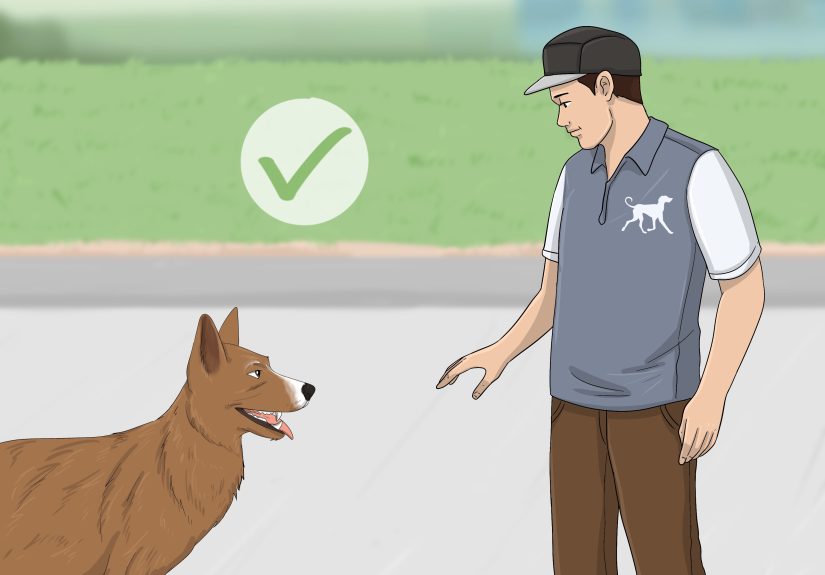
One common mistake is forcing greetings. A stranger leans in, reaches over the head, stares at the dog, and everyone acts shocked when the dog says, “Absolutely not.” For many dogs, especially shy or cautious ones, that kind of social pressure is too much.
Instead, let strangers ignore the dog at first. No looming, no grabbing, no “dogs love me” speeches. If needed, have the person toss treats gently away from or to the side of the dog so your dog can move freely and choose whether to get closer. Choice builds confidence. Pressure builds opinions, and not the fun kind.
Keep sessions short
Do not try to cram all of canine emotional growth into one heroic Saturday. A few short, successful sessions beat one long, messy one. End before your dog is exhausted or over threshold. You are building trust, not filming a transformation montage.
4. Practice Calm, Structured Greetings and Meet Your Dog’s Daily Needs
Training works better when your dog’s general stress level is lower. A bored, under-exercised, over-aroused dog is much more likely to bark at strangers. So the fourth strategy is really a two-part deal: practice better greeting routines and make sure your dog’s daily life supports calm behavior.
Use a greeting plan for guests
When someone visits, do not wing it. Put your dog on leash if needed. Start behind a barrier or on their mat. Reward calm behavior. Ask guests to enter quietly and avoid direct interaction at first. Once your dog is settled, allow a controlled greeting only if your dog is showing soft, relaxed body language. If not, that is okay. Not every dog needs to become the mayor of the neighborhood.
For walk-by strangers, the same principle applies. Reward calm observation. Ask for a check-in. Move away before your dog tips into barking. Think of yourself as a coach, not a referee arriving late to the fight.
Meet the physical and mental needs behind the behavior
Many barking problems improve when dogs get enough exercise, enrichment, rest, and predictability. That does not mean every barky dog just needs a longer walk. But it does mean a dog with no outlets is more likely to overreact to normal life.
Use food puzzles, sniff walks, training games, chew time, scatter feeding, and short practice sessions throughout the week. Give your dog a routine. Teach them how to settle. Reduce the amount of time they spend scanning the world for drama.
Also, do not leave your dog alone in the yard for long periods if they bark at passersby. That setup often turns a mild habit into a full hobby.
Common Mistakes That Make Barking Worse
- Yelling at your dog: To your dog, it can sound like you joined the barking. Teamwork, but not the good kind.
- Moving too close too fast: Flooding a nervous dog with strangers can backfire.
- Forcing greetings: Not every dog wants to meet every person, and that is perfectly fine.
- Being inconsistent: If barking sometimes gets attention, access, or interaction, it may stick around.
- Waiting until the dog is fully worked up: Early intervention is easier than post-explosion cleanup.
When to Call Your Veterinarian or a Professional Trainer
Some barking at strangers is a training problem. Some is a fear or behavior case that needs professional support. And sometimes a medical issue is part of the picture. If your dog’s barking is sudden, worsening, paired with lunging or snapping, or happening in an older dog whose behavior has changed, talk with your veterinarian. Pain, sensory changes, cognitive changes, and other health issues can influence behavior.
You should also get professional help if your dog has a bite history, seems too aroused to eat or respond during training, or if you are starting to organize your life around avoiding the entire outside world. A qualified reward-based trainer or veterinary behavior professional can help you create a plan that is safer and more precise.
Real-Life Experiences: What This Looks Like for Actual Dog Owners
In real life, improvement usually does not arrive with a cinematic soundtrack and one perfectly timed treat. It tends to show up in smaller, less glamorous moments. A dog who used to bark at every delivery driver now only barks once and runs to their mat. A dog who used to lose their mind at every person on a walk can now watch someone pass from across the street and eat chicken without filing a formal complaint.
One common experience owners describe is the “window watchdog phase.” At first, they assume the barking is random. Then they notice a pattern: their dog is parked on the couch all afternoon, monitoring the neighborhood like unpaid security. Once the owners block the window view, add puzzle toys, and interrupt the patrol habit, the house gets dramatically quieter. Nothing mystical happened. The dog just stopped rehearsing the same reaction fifty times a day.
Another frequent experience happens on walks. Owners often say, “My dog is fine until a stranger gets too close.” That detail matters. It usually means the dog can cope at a certain distance but goes over threshold when the space shrinks too fast. Once the owner starts crossing the street earlier, feeding treats sooner, and rewarding check-ins, the walk changes. Not instantly, but noticeably. The dog begins expecting guidance instead of improvising a full public meltdown.
Guest visits are another big one. Many owners spend months trying to make their dog “be social,” when the smarter goal is simply calm coexistence. A dog does not need to adore every visitor. They just need to stay under control and feel safe. Owners often see the best results when they stop forcing greetings, put the dog behind a gate or on a mat at first, and let the dog observe before interacting. Ironically, once the pressure disappears, some dogs become much more comfortable.
There is also the emotional side for humans. Barking at strangers can be embarrassing. People worry they look irresponsible, or they start dreading walks and visitors. That stress can make them rush training, tense the leash, or unknowingly add pressure to the situation. One of the most helpful mindset shifts is realizing that barking is information, not a personal insult. Your dog is not trying to ruin brunch. Your dog is having a hard time or making a habit out of a behavior that has worked before.
The owners who make the most progress usually do the same few things consistently. They lower exposure to triggers. They stop expecting instant friendliness. They reward calm behavior like it matters, because it does. And they celebrate smaller wins than they used to. Maybe today the dog saw a stranger and stayed quiet for three seconds. That counts. Maybe the dog barked once instead of ten times. That counts too.
Over time, those small wins stack up. The dog learns that strangers are not always a problem, that calm behavior is rewarding, and that their person will handle the situation. And the owner learns something just as important: progress with barking is often less about “stopping the noise” and more about building trust, predictability, and better habits on both ends of the leash.
Final Thoughts
If you want your dog to stop barking at strangers, think less like a silencer and more like a teacher. First, manage the setup so your dog stops practicing the behavior. Next, teach clear replacement skills like quiet, check-in, and place. Then work on changing your dog’s emotional response to strangers through distance, treats, and controlled practice. Finally, support the whole process with structured greetings, exercise, enrichment, and consistency.
Your dog may never become a social butterfly who greets every stranger like a long-lost roommate. That is fine. The real goal is a dog who can stay calmer, recover faster, and move through the world without turning every unfamiliar person into breaking news.







 Close
Close