
Table of Contents >> Show >> Hide
- First, identify what kind of leak you have (so you don’t fix the wrong thing)
- Before you start: a tiny prep step that prevents a huge mess
- 1) Replace the shower valve cartridge (the #1 fix for a dripping shower)
- 2) Reseal the showerhead or shower arm threads (stop leaks at the wall connection)
- 3) Remove and replace failing shower caulk (especially at corners and “change of plane” joints)
- 4) Fix a leaking shower drain (tighten it, reseal it, or replace it from the top)
- Quick bonus checks (because leaks love plot twists)
- Conclusion: fix the leak fast, save your bathroom (and your sanity)
- Real-life DIY experiences and lessons learned (the extra stuff nobody tells you)
A leaking shower is basically your house whispering, “Hey… I’m slowly turning your bathroom into a science experiment.”
The good news: most shower leaks come from a handful of repeat offendersworn valve parts, crusty threads, failed caulk,
or a drain that’s no longer living its best sealed life. The trick is to match the symptom to the fix
before you start tearing things apart like you’re auditioning for a home renovation show.
First, identify what kind of leak you have (so you don’t fix the wrong thing)
Use this quick “leak detective” checklist to pinpoint the source:
-
Drips from the showerhead when the handle is OFF: often a worn valve cartridge/washer (Fix #1).
Note: a few drips right after a shower can be normal as water drains from the pipecontinuous dripping is not. - Water leaking where the showerhead meets the pipe or at the arm coming out of the wall: thread seal problem (Fix #2).
- Water escaping at corners, along tile edges, or where walls meet the shower pan: failing caulk/grout transitions (Fix #3).
- Water showing up on the ceiling below, at the subfloor, or around the drain: drain seal or drain body issue (Fix #4).
Before you start: a tiny prep step that prevents a huge mess
- Turn off the water (shutoffs if you have them; otherwise the main).
- Plug the drain with a rag or stopper so tiny screws don’t go on a forever vacation.
- Cover the tub/shower floor with a towel to prevent scratches and to catch parts.
- Take a photo of the handle/trim as you disassemble. Future-you will send present-you a thank-you card.
1) Replace the shower valve cartridge (the #1 fix for a dripping shower)
If your showerhead drips long after you’ve turned the handle off, the most common cause is a worn
cartridge, washer, or O-rings inside the shower valve. These parts are designed to be replaceable,
which is a polite way of saying, “Yes, they will wear outplease don’t take it personally.”
What you’ll need
- Screwdriver (Phillips/flat) and/or Allen key (many handles use a set screw)
- Adjustable wrench or pliers
- Replacement cartridge (match brand/modelbringing the old one to the store helps)
- Silicone plumber’s grease (optional, but helpful for O-rings)
- Cartridge puller (only if the cartridge is stubborn)
Steps (typical single-handle shower)
- Remove the handle. Pop off the decorative cap, then remove the screw or loosen the set screw.
- Remove the trim/escutcheon plate. This exposes the valve body.
- Pull the retaining clip or loosen the bonnet nut. Many valves use a U-shaped clip; others use a threaded retaining ring.
- Extract the cartridge. Pull straight out. If it’s stuck, use a cartridge puller rather than yanking sideways (sideways force can damage the valve body).
- Install the new cartridge. Align the tabs/notches exactly as the old one sat. This matters for proper hot/cold orientation and sealing.
- Reassemble and test. Turn water back on, operate the handle, and confirm the drip is gone.
Real-world tip
If the cartridge won’t budge, don’t “persuade” it with chaotic force. Use the correct puller or a method designed for your valve type.
A cracked valve body can turn a $25 repair into a “remove tile and cry quietly” situation.
When to call a plumber for this one
- You can’t shut off the water reliably, or the shutoff valves are seized.
- The valve body is corroded, cracked, or visibly damaged.
- You replaced the cartridge and the shower still dripscould be a deeper valve-seat or pressure-balancing issue.
2) Reseal the showerhead or shower arm threads (stop leaks at the wall connection)
If water is leaking where the showerhead connects to the armor where the arm meets the wall
you’re usually dealing with a thread seal failure. Think of it like a jar lid: it works great until it doesn’t.
Mineral buildup and old tape can prevent a tight seal.
What you’ll need
- Adjustable wrench or pliers
- Soft cloth or painter’s tape (to protect the finish)
- PTFE thread tape (“Teflon tape”)
- Old toothbrush or small brush for cleaning threads
- Optional: pipe joint compound (use only if appropriate for your connection)
Steps
- Remove the showerhead. Turn counterclockwise. If you use pliers, wrap the jaws or the fitting to avoid scratches.
- Clean the threads. Remove old thread tape and mineral deposits from the shower arm threads.
- Wrap new PTFE tape. Wrap clockwise (the same direction you’ll tighten the showerhead), usually 3–5 wraps, keeping tape snug and flat.
- Reinstall the showerhead. Hand-tighten, then snug with a wrench. Don’t over-tighten.
-
Check the arm-at-wall connection if needed. If the leak is at the wall, you may need to remove and reseal the shower arm threads too.
Use care: twisting the arm aggressively can stress the plumbing inside the wall.
Specific example: the “leaks only when running” clue
If you see water only while the shower is onand it beads at the wall platethis fix is often the winner.
If it drips from the head after shutdown for hours, go back to Fix #1.
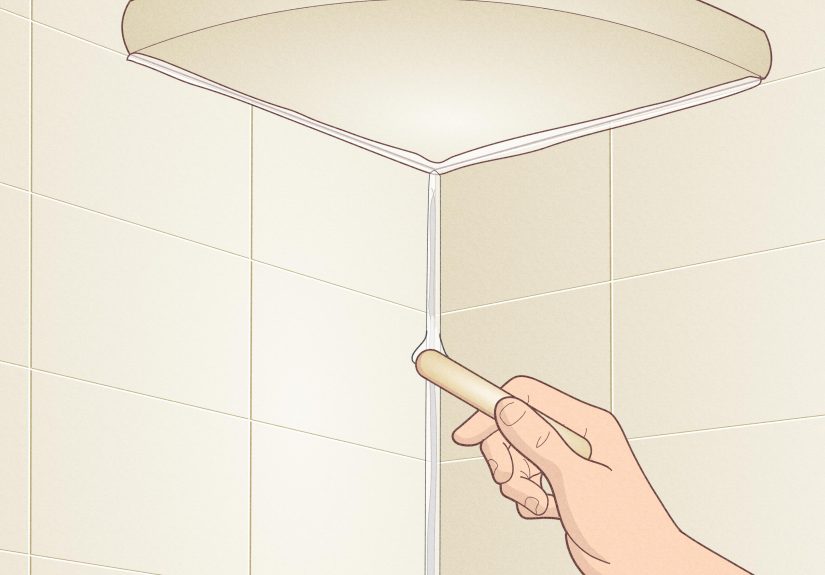
3) Remove and replace failing shower caulk (especially at corners and “change of plane” joints)
Caulk is the unsung hero of keeping water where it belongs. In showers, the most failure-prone areas are
inside corners and transitions (wall-to-wall and wall-to-pan). These spots move slightly over time due to
building movement and temperature changes. Rigid grout can crack there; flexible sealant is designed to handle it.
What you’ll need
- Utility knife or caulk removal tool
- Plastic scraper/putty knife
- Rubbing alcohol (or a manufacturer-recommended cleaner) for final wipe-down
- Painter’s tape (for clean lines)
- 100% silicone bathroom caulk (mildew-resistant)
- Caulk gun and a smoothing tool (or a damp fingerclassic, but effective)
Steps (the “do it once, do it right” method)
- Remove old caulk completely. Don’t apply new caulk over old caulk. It won’t bond well and you’ll be redoing this sooner than you’d like.
- Clean and dry the area. Caulk won’t adhere to damp surfaces. Let it dry thoroughly (fans help).
- Prep for a clean bead. Mask both sides of the joint with painter’s tape to create a crisp line.
- Apply silicone caulk. Cut the nozzle at a small angle and run a steady bead. Consistency beats speed here.
- Tool the bead quickly. Smooth within the working time so it seals the joint fully without gaps.
- Let it cure. Many silicones need around 24 hours before getting wet (check your product label).
Safety note (because chemistry is dramatic)
If you’re cleaning mold or mildew, avoid mixing cleaners (for example, bleach and vinegar) because dangerous fumes can form.
Use good ventilation, gloves, and follow product directions.
How to tell if this fixed your leak
After curing, run the shower and watch the corners and pan edge. No water should slip behind the bead.
If water still escapes behind tile or the wall feels soft, the issue may be deeper than surface caulk.
4) Fix a leaking shower drain (tighten it, reseal it, or replace it from the top)
Drain leaks are sneaky because the shower still “looks fine” while water quietly damages what’s underneath.
If you notice staining on the ceiling below, damp flooring near the shower, or a musty smell that won’t quit,
the drain assembly is a prime suspect.
What you’ll need
- Screwdriver (for the strainer)
- Drain wrench/removal tool (helps remove the drain flange)
- Adjustable pliers/wrench
- Replacement drain kit (matched to your shower base and pipe type)
- Sealant as required by your drain instructions (often 100% silicone; sometimes plumber’s putty is specified)
- Rags and a plastic scraper
Step 1: Try the simple fixtighten the drain connection
Some shower drains use a compression-style assembly with a locking ring and gaskets. If the drain is slightly loose,
tightening the locking ring/nut can restore compression on the gasket and stop the leak.
Step 2: Reseal or replace the drain from above (common DIY repair)
- Remove the strainer. Take out the screws and lift the cover.
- Remove the drain flange. Use the correct drain wrench/tool and turn counterclockwise.
- Clean the opening. Scrape away old sealant/putty and wipe the surfaces clean.
- Install the new drain and gaskets. Follow your drain kit’s order of washers and gaskets carefullythis is where the seal actually happens.
-
Use the correct sealing material. Many modern shower drains call for 100% silicone,
and some materials (like certain plastics/acrylic/ABS components) may be incompatible with plumber’s putty.
Always follow the drain manufacturer’s instructions for your specific drain and shower base. - Test before celebrating. Run water and check below (or monitor for any new dampness). If you have access underneath, inspect while the water is running.
If you suspect the shower pan is the problem
If the drain is solid but water still appears below, the leak could involve the shower pan, liner, or waterproofing system.
Those repairs can range from targeted fixes to partial rebuilds, especially when water has compromised framing or subfloor.
Quick bonus checks (because leaks love plot twists)
Water escaping the enclosure
- Shower door seals/sweeps: If water runs out the bottom or side, inspect for brittle, missing, or misaligned seals and replace as needed.
- Door alignment: A door that’s slightly out of square can funnel water where you don’t want it. Adjusting hinges or guides can help.
- Threshold/track: Clean debris so water drains inward, not outward.
“It’s not a leak, it’s condensation” (sometimes true!)
If surfaces are wet after showers but there’s no clear leak point, improve ventilation: run the fan longer, crack a window,
and keep humidity down. Water damage from chronic humidity is the slow cousin of a plumbing leakstill annoying, still expensive.
Conclusion: fix the leak fast, save your bathroom (and your sanity)
Most leaking shower repairs come down to four practical moves:
replace the valve cartridge, reseal threaded connections, recaulk transitions,
and tighten/reseal/replace the drain. If you diagnose the leak correctly, you’ll usually fix it in an afternoon.
If you ignore it, your shower will eventually start charging rent to mold.
Real-life DIY experiences and lessons learned (the extra stuff nobody tells you)
Here’s the funny-not-funny part about shower leaks: the leak is rarely the hardest part. The hard part is
figuring out what you’re actually looking at and resisting the urge to “just caulk everything” like silicone is a magic spell.
Plenty of DIYers learn this the same wayby confidently sealing the wrong seam and then watching water
reappear somewhere new, like it teleported out of spite.
One common scenario goes like this: the showerhead drips, so you replace the showerhead. It still drips. You add more tape.
It still drips. You start bargaining with the universe. But the real culprit is the valve cartridge.
A helpful rule: if the drip continues long after the water is off, the leak is usually happening upstream in the valve,
not at the showerhead itself. The showerhead just becomes the messengerwet, innocent, and unfairly blamed.
Another classic DIY lesson: surface prep is the difference between “professional” and “peeling by Thursday.”
When people recaulk, the temptation is to remove the visibly bad section and patch it. The problem is that silicone doesn’t
bond reliably to old silicone, and water will find the weak seam. The result is a bead that looks decent from six feet away
but fails where it mattersbehind the joint, where you can’t see it until something smells weird. Taking the time to remove
all the old caulk, wipe down the joint, and let it dry completely feels slow… until you compare it to doing the job twice.
Drain repairs come with their own “wish I knew that” moments. A drain assembly is basically a sandwich:
flange on top, gasket(s) below, compression holding everything tight. DIYers sometimes assume the seal is
mostly putty or silicone. In many designs, the gasket is the real hero and sealant is just the supporting actor.
So if the gasket is crooked, missing, or installed in the wrong order, you can apply sealant with the enthusiasm of a pastry chef
and still get a leak. Following the drain kit’s washer order isn’t glamorous, but it’s effectiveand that’s the point.
And then there’s the “I tightened it a little more” trap. Over-tightening can crack plastic parts, distort gaskets, or strip threads.
Under-tightening leaks. The sweet spot is snug, even compressionfirm but not brutal. If you’re not sure, tighten gradually,
test, and tighten again if needed. It’s slower, but it’s cheaper than replacing a broken fitting you didn’t intend to break.
Finally, the underrated experience: testing methodically saves you hours. After a repair, run water in a controlled way.
Start with a short run and watch the exact area you worked on. For drain-related concerns, fill the base slightly and let it stand,
then drain and observe. If you have access below, inspect while the water is running. This step feels boringuntil it prevents
you from discovering a “surprise” leak after you’ve already cleaned up and put everything back.
Bottom line: a leaking shower is annoying, but it’s also one of the most solvable household problems if you stay calm,
match the symptom to the fix, and do the unsexy prep work. Your future self will appreciate the quiet.
Your ceiling below the shower will appreciate it even more.







 Close
Close