
Table of Contents >> Show >> Hide
- Before You Choose: What Do You Need From a Window Covering?
- 1) Shades and Blinds (The Clean, Classic Curtain Alternatives)
- 2) Interior Shutters (A Built-In Look With Serious Style)
- 3) Window Film (Privacy, UV Blocking, and StyleNo Rod Required)
- 4) Creative Curtain-Free Covers (Screens, Awnings, and “Not Actually a Curtain” Tricks)
- Real-World Experiences: What People Notice After Going Curtain-Free (About )
- Conclusion: The Best Curtain-Free Window Covering Is the One That Fits Your Life
Curtains are greatuntil they’re not. Maybe they collect dust like it’s their full-time job. Maybe your cat thinks they’re an Olympic climbing wall. Or maybe you’re just craving a cleaner, more modern look (that doesn’t involve yardage and a degree in Rod Placement). Whatever your reason, you can absolutely cover windows without curtains and still get privacy, light control, and style.
Below are four curtain-free solutions that work in real homesrenters includedplus practical tips on choosing the right option for each room. You’ll also find a longer “real-world experiences” section near the end (the kind of stuff people only learn after living with a window treatment for a while).
Before You Choose: What Do You Need From a Window Covering?
The best window coverings without curtains depend on what you’re trying to fix. Use this quick checklist:
- Privacy: Do you need daytime privacy, nighttime privacy, or both?
- Light control: Filter glare? Darken a bedroom? Keep plants happy but neighbors clueless?
- Heat control: Are you battling a room that turns into a toaster every afternoon?
- Ease: Do you want “set it and forget it,” or are you fine adjusting slats daily?
- Rental-friendly: Do you need no-drill or damage-free options?
Keep those answers in mind as you read, because the “best” choice is the one that fits your window, your routine, and your tolerance for maintenance. (Some of us love a crisp Roman shade. Others love anything that doesn’t require ironing. No judgment.)
1) Shades and Blinds (The Clean, Classic Curtain Alternatives)
If you want a straightforward way to cover windows without curtains, start here. Shades and blinds are widely available, come in tons of styles, and can be customized for privacy, light control, and even energy efficiency.
Blinds vs. shades: what’s the difference?
Blinds have slats (think faux wood, wood, aluminum, vinyl). You tilt them to aim light up or down. Shades are a continuous piece of material (fabric, woven wood, solar screen) that raises and lowers. Both can look sleek and modernjust with different “control vibes.”
Best shade types when you don’t want curtains
- Roller shades: Minimal and tidy. Great for modern spaces, offices, and kitchens. Choose light-filtering for bright rooms or blackout for bedrooms.
- Cellular (honeycomb) shades: A top pick for comfort. The honeycomb structure traps air, which can help reduce heat loss in winter and cut unwanted heat gain in summer. If you want practical + polished, this is a strong contender.
- Roman shades: Soft, tailored folds with a “designed on purpose” look. Great for living rooms and dining rooms when you want warmth without actual curtains.
- Solar shades: Fantastic for rooms with glare (hello, WFH setup). They reduce brightness while preserving some viewlike sunglasses for your windows.
- Top-down/bottom-up shades: One of the best “privacy without a cave” solutions. You can lower from the top to let in light while keeping the lower portion private.
Best blind types for privacy and easy control
- Faux wood blinds: Durable, moisture-resistant options work well in kitchens and bathrooms.
- Vertical blinds (modern versions): Useful for sliding doors or big windows where you want flexible coverage.
- Mini blinds (aluminum): Budget-friendly and functional, though they can read “office break room” if the rest of the room is cozy.
Practical tips: measuring and mounting
For a cleaner built-in look, many people prefer inside-mount (installed within the window frame). For better light blocking and privacy coverage, outside-mount (installed above/around the trim) can help reduce side gaps. A common rule of thumb: extend coverage beyond the window opening for improved privacy and light controlespecially if you’re going curtain-free.
Safety note if kids or pets are around
If you have young children in the home (or frequent little visitors), consider cordless options. They’re widely available now and reduce risks associated with dangling cords. Many brands offer cordless or wand options that still look stylish.
Where shades/blinds shine
- Bedrooms: Blackout roller, blackout cellular, or lined Roman shades.
- Bathrooms: Faux wood blinds, moisture-resistant roller shades, or top-down/bottom-up cellular shades.
- Kitchens: Easy-clean roller shades or faux wood blinds (especially near sinks and stoves).
- Living rooms: Light-filtering cellular, Roman shades, or woven wood shades for texture.
2) Interior Shutters (A Built-In Look With Serious Style)
Want your window to look “architectural” instead of “I ran out of curtain budget”? Interior shutters are the move. They’re one of the most timeless no-curtain window treatmentsand they can look custom even in a basic room.
Popular shutter styles
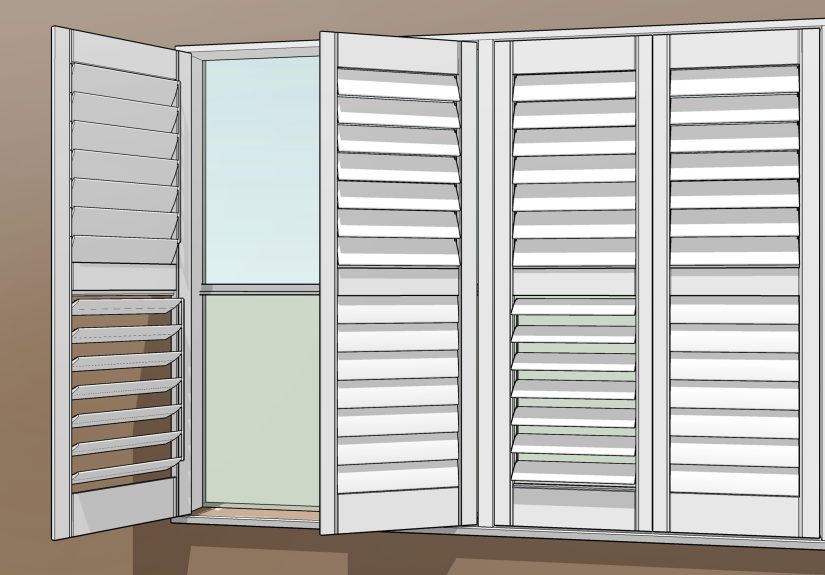
- Plantation shutters: Wide louvers, classic look, and excellent light control. They’re especially popular in living rooms, bedrooms, and front-facing windows.
- Café shutters: Cover only the lower half of the window. Great for privacy while keeping the top open for light. Ideal for street-facing kitchens, breakfast nooks, and bathrooms.
- Tier-on-tier shutters: Separate top and bottom panels so you can open/close each section independently. The “I want light but not an audience” option.
Why people love shutters
- Light control: Tilt louvers to bounce light up toward the ceiling or down toward the floor.
- Privacy: Excellent for front windows and bedrooms, especially at night.
- Durability: They hold up well over time compared to many fabric options.
- Design payoff: They can make a room look more finishedeven without other window dressing.
When shutters might not be your best fit
Shutters often cost more upfront than basic blinds or roller shades, and they’re usually a more permanent install. If you’re renting, you’ll want landlord approval. If you’re a homeowner, they can be a long-term style investment.
Best rooms for shutters
- Street-facing windows: Great for privacy without looking closed-off.
- Bathrooms: Café shutters are a favorite when you want privacy plus natural light.
- Living rooms: Plantation shutters can anchor the room and look polished year-round.
3) Window Film (Privacy, UV Blocking, and StyleNo Rod Required)
Window film is one of the most underrated ways to cover windows without curtains, especially if you want privacy without sacrificing daylight. It’s also renter-friendly in many cases, because several film types are removable.
Types of window film (and what they’re good for)
- Frosted/etched-look film: A go-to for bathrooms, sidelights, and street-facing windows. It blurs visibility while still letting in plenty of light.
- Decorative film: Patterns, reeded-glass looks, stained-glass stylesgreat if you want privacy plus personality.
- Solar control film: Helps reduce glare and can cut solar heat gain. Useful for sunny rooms that overheat.
- One-way (reflective) privacy film: Offers daytime privacy in bright conditions, but can lose privacy at night when interior lights are on. (Translation: it’s not magicjust physics.)
- Security film (thicker): Designed to help hold shattered glass together. Often used for added safety and storm concerns.
Why window film works so well without curtains
Film sits directly on the glass, so it doesn’t take up visual space or create fabric bulk. You get a clean, modern lookgreat for minimalist homes, small rooms, and windows with awkward trim where curtain rods feel like overkill.
Installation tips that save your sanity
- Clean the glass thoroughly: Tiny specks become permanent “art” under film if you skip this.
- Measure and cut with a little margin: You can trim down for a precise fit after it’s applied.
- Use the right application method: Some films are static-cling; others use adhesive. Follow the product instructions closely.
- Use a squeegee tool: It helps push out bubbles and water for a smoother finish.
Best places to use window film
- Bathrooms: Frosted film is an easy privacy win.
- Front doors with glass panels: Keeps daylight, blocks the “porch peek.”
- Home offices: Solar film can reduce glare without turning the room dark.
- Rentals: Removable film is a popular no-drill solution.
Pro tip: If nighttime privacy is essential, choose a frosted/opaque film or pair reflective film with another solution (like a shade). One-way film is famous for surprising people at nightusually right when they’ve just walked past the window holding a snack like a goblin.
4) Creative Curtain-Free Covers (Screens, Awnings, and “Not Actually a Curtain” Tricks)
If your goal is “I don’t want curtains, and I also don’t want my windows to look like every other window,” this section is for you. These options range from practical to decorative, and many can be mixed with shades or film for a layered, custom solution.
Option A: Privacy screens and room dividers
A folding screen or decorative panel placed in front of a window can give instant privacyespecially for large panes or odd-shaped windows. This works best where you don’t need to access the window constantly (like a side window in a living room).
- Best for: Big windows, rental spaces, “I need privacy today” situations
- Watch out for: Blocking airflow if the window is used for ventilation
Option B: Exterior solar screens or shades
Exterior solar screens reduce sun before it hits the glass, which can help with heat and glare. They’re popular in very sunny climates or for west-facing windows that roast a room in late afternoon. Some are retractable and can feel like a “patio upgrade” even when used on regular windows.
Option C: Awnings and exterior shutters
If your main problem is heat (and your window gets blasted by sun), exterior solutions can be powerful. An awning shades the window and can reduce glare and solar heat gain. Exterior shutters add charm and can offer storm protection in some regions.
Option D: Faux glass looks (reeding, stained glass, and frosted effects)
Want privacy without losing light, but also want your space to look like you hired someone with an “aesthetic mood board”? Decorative films that mimic reeded glass, textured glass, or stained-glass patterns can deliver that effect quickly and affordably.
Option E: The “layered but not curtains” approach
Many designers layer treatments for flexibility. You can do a curtain-free version of that idea by pairing:
- Frosted film + a simple roller shade (privacy all day, light control when needed)
- Solar shade + blackout liner (glare control by day, darkness by night)
- Café shutters + top light-filtering shade (privacy below, softness above)
Layering is also your best friend if your window faces a busy street and gets strong sun. You can solve privacy, glare, and heat without hanging a single curtain panel.
Real-World Experiences: What People Notice After Going Curtain-Free (About )
The internet makes window treatments look simple: pick a thing, install the thing, enjoy your life. In real homes, people tend to discover a few extra truths after living with window coverings without curtains for a while. Here are some common, experience-based observations (the kind you hear from homeowners, renters, and anyone who’s ever said, “Why does this look amazing on a blog but weird in my living room?”).
1) Nighttime privacy is the surprise plot twist. During the day, many solutions feel perfectespecially solar shades and reflective “one-way” films. Then nighttime arrives, you turn on the lights, and suddenly your window becomes a high-definition display. The fix is usually simple: choose frosted/opaque film instead, add a shade you can lower at night, or use top-down/bottom-up styles so you can keep light coming in while protecting privacy.
2) The “gap problem” is real (and solvable). Blinds and shades can leave light gaps at the sides, especially on inside-mount installations. People notice it most in bedrooms or street-facing rooms where privacy matters. Outside-mount shades often improve coverage because they overlap the window frame. Another common move: pick a style designed to fit tighter (some cellular shades do this well) or choose layered solutions (film + shade) for full coverage without curtains.
3) Heat and glare control feels like a lifestyle upgrade. In rooms that get hammered by sunwest-facing offices, living rooms with big glass, or any space where the couch mysteriously becomes “too hot to sit on”solar shades and solar-control films can feel like an instant quality-of-life improvement. People often report the room becoming more comfortable, screens easier to see, and furniture less likely to fade. The key is picking the right level of openness in solar shades or the right performance ratings for film, so you’re not accidentally making the room dimmer than you wanted.
4) Cleaning changes, but it doesn’t disappear. Curtains trap dust. Shades and blinds collect it in different ways. Faux wood blinds can be easy to wipe, but they have lots of slats. Roller shades look minimal, but fingerprints show up faster than you’d think (especially near cords, chains, or bottom rails). Window film is low-maintenance once installed, but the glass still needs cleaningjust with non-scratch methods so the surface stays nice. Many people end up loving the “less fabric lint” aspect, even if they still have to dust something.
5) Style looks more “finished” when hardware is intentional. A shade that’s slightly too narrow, mounted a little crooked, or installed at the wrong height can make a room feel off. People who are happiest with curtain-free windows tend to treat installation like a mini design project: measure carefully, mount level, and choose finishes (white, black, wood tones) that match the room. Even budget options look more expensive when the fit is clean.
6) The best solution is often a combo. The biggest “aha” moment is that you don’t have to choose one hero product. A frosted film for daytime privacy plus a simple shade for nighttime and light control can be the sweet spot. Likewise, shutters provide structure, and a light-filtering shade can soften harsh sun. Curtain-free doesn’t mean function-freeit just means your toolbox is different.
Conclusion: The Best Curtain-Free Window Covering Is the One That Fits Your Life
If you want a clean, easy upgrade, shades and blinds are the most flexible all-around choice. If you’re aiming for a built-in, timeless look, interior shutters can elevate a room fast. If your goal is bright daylight with privacy, window film is a surprisingly powerful solution. And if you want something uniqueor you’re working around tricky windowscreative curtain-free covers (screens, exterior shading, layered “not-curtains”) can give you both function and personality.
The win isn’t just skipping curtainsit’s getting windows that work better for your space, your privacy needs, and your daily routines. And yes, your cat may still try to climb something. But at least it won’t be your drapes.







 Close
Close