
Table of Contents >> Show >> Hide
- Before You Pick a Seat: What a Great Shower Bench Actually Does
- Smart Sizing, Placement, and Safety Basics
- Materials That Look Good and Behave in a Wet Zone
- The 34 Ideas
- Built-In Benches That Look Like They Belong There
- Full-width “spa deck” bench
- Corner triangle bench
- Floating slab bench (cantilever style)
- Built-in bench in matching wall tile
- Bench with contrasting accent tile
- Stone top + tiled base combo
- Bench that lines up with a long niche
- Bench tucked under a window (with the right waterproofing)
- Compact shaving ledge (not a full seat)
- “L” shaped bench for shared showers
- Curved bench for softer lines
- Bench with an open toe-kick shadow line
- Bench that continues the bathroom’s main material
- Bench with a built-in storage cubby (carefully detailed)
- Modern Minimal Seats and “Invisible” Details
- Thin-profile bench in large-format tile
- Monochrome bench for a seamless look
- Waterfall-edge slab seat
- Bench aligned with a linear drain aesthetic
- Bench in the same finish as the shower curb/threshold
- Fold-Down and Space-Saving Seats
- Wall-mounted fold-down teak slat seat
- Minimal white fold-down seat for bright bathrooms
- Fold-down seat with support legs
- Fold-down seat placed near the entry
- Fold-down seat paired with a handheld sprayer dock
- Compact fold-down perch for ultra-small showers
- Freestanding Options That Feel Intentional (Not Temporary)
- Teak shower bench (classic spa look)
- Teak corner stool
- Ceramic garden stool as a shower seat
- Stone-look composite stool
- Small outdoor bench rated for wet conditions
- Adjustable shower chair for temporary needs
- Details That Make Any Seat More Functional
- Add a “seat-side” niche for the essentials
- Use a slightly darker grout on the bench top
- Integrate a discreet footrest edge
- Installation Notes (Because Leaks Are Not a Design Feature)
- Care and Maintenance Tips (So Your Seat Stays Cute)
- Quick FAQ
- Real-World Experiences: What People Learn After Living With a Walk-In Shower Seat (Extra Notes)
- Conclusion
A walk-in shower seat is one of those “small” bathroom upgrades that somehow changes everything. One day it’s a place to sit
while you shave your legs or let conditioner do its thing. The next day it’s a safety feature for a sprained ankle, a perch for
tired feet, and the most convenient shelf you’ve ever owned. It’s basically the bathroom version of a reliable friend: always there,
never judging, and occasionally holding your stuff.
The trick is choosing a shower seat that looks intentional (not like you panic-bought a plastic chair on moving day) and functions
well in a wet environment (because water is undefeated). Below, you’ll find planning guidance, material tips, and 34 seat ideas that
range from sleek built-ins to space-saving fold-down optionsplus a longer “what people actually learn after living with one” section
at the end.
Before You Pick a Seat: What a Great Shower Bench Actually Does
It supports how you really shower
Some people sit to relax. Some sit to shave. Some sit to wash kids. Some sit because knees are complicated. Your “why” influences
the seat’s size, location, and whether it should be permanent, folding, or movable.
It doesn’t create a water problem
Shower seats add corners, seams, and horizontal surfacesexactly where water likes to linger. The best designs keep waterproofing
continuous, encourage drainage, and avoid fussy nooks that become soap-scum condos.
It plays nice with the layout
If your shower is compact, a bulky bench can make it feel like you’re bathing inside a phone booth. If your shower is spacious, a
tiny corner perch can look like an afterthought. The seat should feel proportionate and leave comfortable standing room.
Smart Sizing, Placement, and Safety Basics
Dimensions that work for most people
Many designers follow commonly referenced accessibility and planning guidelines that land in a similar range: seat height around chair
height, and enough depth to sit comfortably without turning into a gymnast. If you’re remodeling for aging-in-place or accessibility,
talk with a pro who understands local code and user needs.
Put it where the water makes sense
If the seat is meant for relaxing, place it where it can catch the sprayoften near a wall-mounted or handheld showerhead. If it’s
mainly for shaving or storage, it can sit slightly out of the main spray zone so shampoos aren’t constantly rinsing themselves.
Prioritize traction and edges
A shower seat should be stable, easy to grip, and comfortable to slide onto. Rounded edges, a slightly textured surface, and a nearby
grab bar (if needed) can make a seat feel secure rather than slippery.
Drainage is non-negotiable
Any horizontal surface in a shower should be pitched so water doesn’t pool. Even a beautiful stone slab can become a puddle-party if
it’s dead flat.
Materials That Look Good and Behave in a Wet Zone
Tiled benches
Tiled benches can blend seamlessly with the walls or become a standout feature with contrasting tile. Use bullnose edges or metal trim
to protect corners and keep lines crisp.
Stone or slab tops
Solid stone or large-format porcelain slabs can feel luxurious and reduce grout lines. Just remember: smooth stone can be slick, and
some natural stones need sealing and careful cleaning.
Wood (yeswhen it’s the right wood)
Teak is popular because it handles moisture well and warms up the look of tile-heavy showers. It can weather to a silvery tone unless
you maintain the finishboth looks can be great, depending on your vibe.
Fold-down seats (metal + slats, phenolic, or teak)
Fold-down seats are fantastic in smaller walk-in showers because they disappear when not in use. The key is proper blocking behind the
wall so the seat is anchored securely.
The 34 Ideas
Built-In Benches That Look Like They Belong There
-
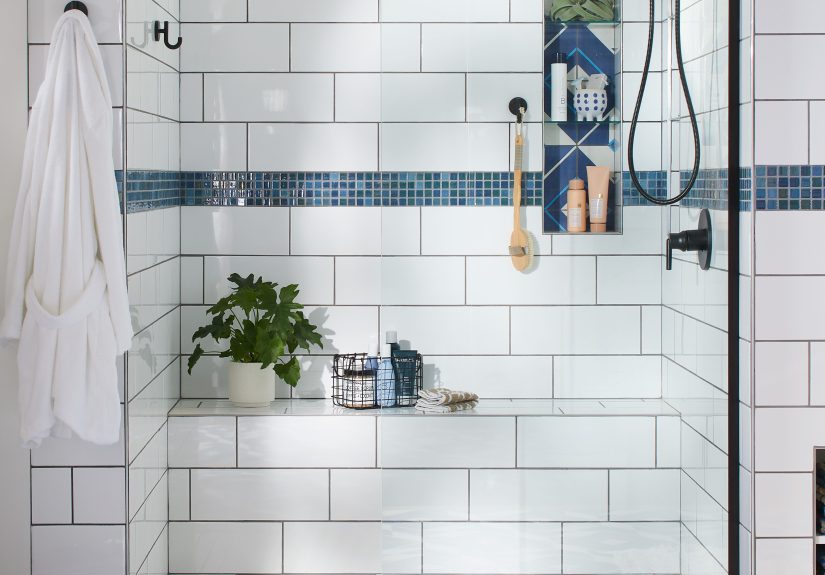
Full-width “spa deck” bench
Run a bench along the entire back wall to create a lounge-like feel. Pair it with a handheld sprayer and a niche above for a true
“hotel shower” moment. -
Corner triangle bench
A classic for a reason: it saves space while offering a comfortable perch. It’s also great for shavingyour foot gets a throne.
-
Floating slab bench (cantilever style)
A thicker slab that appears to “hover” can look modern and high-end. Keep edges softly rounded so it looks sleek, not sharp.
-
Built-in bench in matching wall tile
Want the seat to blend in? Use the same tile on the bench face and top so it reads as part of the architecture, not an add-on.
-
Bench with contrasting accent tile
Make the seat a focal point with mosaic tile or a bold pattern. This is a clever way to use “splurge” tile in a smaller area.
-
Stone top + tiled base combo
Use tile for the vertical surfaces and a stone or slab top for a cleaner look with fewer grout lines on the sitting surface.
-
Bench that lines up with a long niche
When the niche and bench share similar proportions, the shower looks intentional and calmlike it had a designer, not a committee.
-
Bench tucked under a window (with the right waterproofing)
If your shower has a window wall, a bench below can feel airy and luxurious. Make sure window details are designed for wet use and
pitched to drain. -
Compact shaving ledge (not a full seat)
If you rarely sit but love shaving comfort, a narrow ledge is a space-saver. Bonus: it doubles as a product shelf.
-
“L” shaped bench for shared showers
An L-shape creates more seating without making the bench feel too deep. It’s great when two people need space at the same time.
-
Curved bench for softer lines
A gentle curve can elevate a modern shower and reduce sharp corners. It’s also surprisingly comfortable to sit on.
-
Bench with an open toe-kick shadow line
Recess the bottom slightly so the bench “floats” visually. It’s a subtle trick that makes a small shower feel lighter.
-
Bench that continues the bathroom’s main material
If your vanity top is quartz or your bathroom has a signature stone, repeating it on the shower seat ties the whole room together.
-
Bench with a built-in storage cubby (carefully detailed)
A recessed cubby on the bench face can hold extra bottles. Keep the opening simple, easy to clean, and well waterproofed.
Modern Minimal Seats and “Invisible” Details
-
Thin-profile bench in large-format tile
Large tile (or slab) reduces visual noise. A thinner bench can still be strong if properly built and anchored.
-
Monochrome bench for a seamless look
Same tile, same grout color, same finishthis is how you make a seat disappear in a modern shower.
-
Waterfall-edge slab seat
Wrap the slab over the front edge for a “waterfall” effect. It reads custom and polished, like it belongs in a design magazine.
-
Bench aligned with a linear drain aesthetic
If you’re using modern features like a linear drain, echo that clean geometry with a straight, minimal bench and crisp trim lines.
-
Bench in the same finish as the shower curb/threshold
Repeating the curb material on the seat is an easy designer move. The bathroom feels coordinated without extra effort.
Fold-Down and Space-Saving Seats
-
Wall-mounted fold-down teak slat seat
Warm, spa-like, and practicalespecially in smaller showers. It folds up neatly so the shower stays open when you’re standing.
-
Minimal white fold-down seat for bright bathrooms
If your shower is all white tile and glass, a crisp white seat blends in while still delivering function.
-
Fold-down seat with support legs
Some fold-down models include swing-down legs for extra support. These can feel especially solid for daily use.
-
Fold-down seat placed near the entry
For accessibility and ease, placing the seat near the opening can make transfers and entry/exit more comfortable.
-
Fold-down seat paired with a handheld sprayer dock
Mount the handheld sprayer where it’s reachable from the seat. This combo is practical for rinsing, washing, and cleaning the
shower itself. -
Compact fold-down perch for ultra-small showers
If you only need occasional seating, a smaller fold-down perch gives you a “just in case” solution without crowding the space.
Freestanding Options That Feel Intentional (Not Temporary)
-
Teak shower bench (classic spa look)
A teak bench brings warmth and a resort vibe. Choose one with slatted construction so water drains through and it dries faster.
-
Teak corner stool
A smaller teak stool is ideal when you want flexibility. It can tuck into a corner or move outside the spray zone when not needed.
-
Ceramic garden stool as a shower seat
Durable, water-friendly, and surprisingly stylish. Pick a color that ties into your tile or accessories so it looks curated.
-
Stone-look composite stool
If you love the look of stone but want less maintenance, composite materials can deliver the aesthetic without the same sealing
requirements. -
Small outdoor bench rated for wet conditions
Some outdoor benches are built to handle moisture better than indoor furniture. Make sure it’s truly water-resistant and stable.
-
Adjustable shower chair for temporary needs
If you’re recovering from surgery or managing a short-term mobility issue, an adjustable chair can be a practical, removable
solution.
Details That Make Any Seat More Functional
-
Add a “seat-side” niche for the essentials
A niche near seated height means you’re not twisting like a pretzel to grab shampoo. Convenience is underrated until you have it.
-
Use a slightly darker grout on the bench top
Benches get more direct contact with water, soap, and body products. A slightly darker grout can help hide everyday staining while
still looking intentional. -
Integrate a discreet footrest edge
If you don’t want a full bench, a small integrated footrest or ledge can still make shaving and washing easierwithout eating up
floor space.
Installation Notes (Because Leaks Are Not a Design Feature)
Built-in seats need structure and waterproofing continuity
A built-in bench should be constructed with materials and methods designed for wet areas and integrated with the shower’s waterproofing
system. The goal is simple: water hits the wall, hits the bench, and is guided back to the drainwithout finding a shortcut into your
framing.
Slope the sitting surface so water runs off
The top of a bench should be pitched toward the drain or shower floor so water doesn’t pool. This small detail helps reduce staining,
keeps the seat drier between uses, and protects the long-term integrity of the installation.
Don’t “retrofit” a built-in bench without a plan
Adding a built-in bench to an existing shower often means disrupting waterproofing. If you want a seat without opening the walls, a
freestanding bench or fold-down seat is usually the safer, simpler choice.
Care and Maintenance Tips (So Your Seat Stays Cute)
- Daily: Quick rinse to wash away soap residue; a short squeegee session helps even more.
- Weekly: Mild cleaner on tile/stone; avoid harsh abrasives that scratch finishes and dull grout.
- For teak: Wipe down occasionally and decide whether you want it to weather naturally or maintain a richer tone with appropriate teak oil.
- For fold-down seats: Clean hinges and brackets so they fold smoothly; check fasteners periodically.
Quick FAQ
Is a shower seat only for accessibility?
Not at all. Plenty of people add a seat purely for comfort, shaving, storage, or that spa-day feeling. Accessibility is a big benefit,
but it’s not the only reason.
Should I choose built-in or freestanding?
Built-in benches look custom and can be very sturdy when properly built. Freestanding seats are flexible, easier to swap out, and
avoid disturbing waterproofinggreat for renters or anyone who wants low commitment.
What’s the biggest mistake people make?
Choosing style without thinking about drainage and cleaning. A gorgeous bench that holds puddles or collects grime will age poorlyand
you’ll resent it every time you scrub it.
Real-World Experiences: What People Learn After Living With a Walk-In Shower Seat (Extra Notes)
Here’s what tends to happen once a shower seat becomes part of daily life: it stops being “the bench” and starts being “the command
center.” People who originally installed one for shaving discover it’s also the perfect place to park a loofah, prop up a foot to
rinse, or keep a bottle upright that refuses to stand on the shower floor. And if your shower is shared, the bench becomes the
unofficial truce zoneone person’s products go on the left, the other’s on the right, and no one has to pretend they didn’t notice.
The most common “I’m glad we did this” moment is when life throws a curveball: a sore back, a twisted knee, a long day, or a kid who
suddenly decides bathing is a full-contact sport. Having a seat turns the shower into a more forgiving space. People also underestimate
how much a seat improves the usability of a handheld showerhead. Once you can sit and rinse comfortably, the whole routine feels more
controlled and less like an Olympic event.
The most common “I wish we’d thought of this” moment? Placement. A bench that looks perfect in photos can feel awkward if it’s too far
from the controls, too close to the main spray, or right where the door swing wants to be. In real bathrooms, water has opinions. If
the bench sits directly under the showerhead, it stays wetter longer and can show mineral spots faster (especially with hard water).
But if it’s too far out of the spray, people don’t actually sit therethey just use it as a shelf. The sweet spot is aligning the seat
with how you’ll actually use the water: a relaxing perch near the spray, or a grooming/storage ledge slightly off to the side.
Another real-life lesson: cleaning matters more than anyone wants to admit. Benches with lots of grout lines can be beautiful, but they
demand more upkeep. Homeowners who prefer low-maintenance often end up loving slab tops, large-format tile, or well-designed freestanding
pieces that can be lifted out for a quick scrub underneath. On the flip side, people who adore intricate mosaic tile are usually happy
to do the extra cleaning because the bench becomes a focal pointlike functional jewelry for the shower.
Finally, there’s the “seat as design anchor” effect. Once a bench exists, the rest of the shower tends to organize around it: niches
align, tile layouts become more intentional, and the whole space feels calmer. Even in small bathrooms, a thoughtfully chosen seat can
make the shower look more finishedless like a utility box, more like a room you meant to create. The best compliment you’ll hear is
when someone assumes it came that way. The second-best compliment is when they sit down and say, “Oh. Okay. Now I get it.”
Conclusion
A walk-in shower seat can be as subtle as a slim ledge or as luxurious as a full-width spa bench. The best choice matches your space,
your habits, and your tolerance for maintenancewhile respecting the realities of waterproofing and drainage. If you want the most
flexible route, go freestanding or fold-down. If you want the most custom look, build it in the right way with the right materials.
Either way, you’re upgrading comfort, function, and the overall “this bathroom gets me” feeling.







 Close
Close
So good: A walk-in shower seat can be as subtle as a slim ledge or as luxurious as a full-width spa bench. The best choice matches your space