
Table of Contents >> Show >> Hide
- How to Choose the Right Bathroom Cabinet Color
- 32 Bathroom Cabinet Color Ideas
- 1. Bright White
- 2. Soft Cream
- 3. Warm Beige
- 4. Greige
- 5. Mushroom Taupe
- 6. Dove Gray
- 7. Charcoal Gray
- 8. Matte Black
- 9. Black and White Two-Tone
- 10. White Oak
- 11. Walnut Brown
- 12. Navy Blue
- 13. Slate Blue
- 14. Powder Blue
- 15. Cobalt Blue
- 16. Smoky Teal
- 17. Seafoam Green
- 18. Sage Green
- 19. Olive Green
- 20. Forest Green
- 21. Emerald or Jade
- 22. Blush Pink
- 23. Dusty Rose
- 24. Mauve
- 25. Terracotta
- 26. Clay Brown
- 27. Coral
- 28. Peach
- 29. Butter Yellow
- 30. Soft Lilac
- 31. Plum
- 32. Burgundy
- Tips for Making Any Cabinet Color Look Better
- Real-Life Experience: What These Bathroom Cabinet Colors Actually Feel Like
- Final Thoughts
- SEO Tags
Bathroom cabinets do more than hide cotton swabs, half-used lotion bottles, and that one hair tool nobody admits buying. They also help set the mood for the whole room. A white vanity can make the space feel crisp and clean. A navy cabinet adds polish. A mossy green one says, “Yes, I do have excellent taste, thank you for noticing.”
If you are planning a refresh, choosing the right bathroom cabinet color can completely change how the room feels without requiring a full gut renovation. That is why so many homeowners start with the vanity. It is practical, visible, and much easier to update than tile, plumbing, or layout. Whether your style leans classic, modern, farmhouse, coastal, vintage, or somewhere in the neighborhood of “I saw it online and now I need it,” there is a cabinet color that can make your bathroom look more finished and more intentional.
Below, you will find 32 bathroom cabinet color ideas ranging from reliable neutrals to bold, slightly unexpected shades. Some are timeless. Some are playful. A few are dramatic enough to deserve their own soundtrack. All of them can work beautifully when paired with the right countertop, hardware, lighting, and wall color.
How to Choose the Right Bathroom Cabinet Color
Before you fall in love with a paint swatch based on vibes alone, think about the room itself. Small bathrooms often benefit from lighter or softer cabinet colors that keep things airy, while larger bathrooms can handle deeper, moodier shades. Natural light matters too. A north-facing bathroom can make cool colors look colder, while a warm bathroom may make beige, cream, and blush tones glow in a flattering way.
It also helps to consider the fixed finishes you are not changing. White quartz, marble-look counters, chrome faucets, brass pulls, black fixtures, patterned tile, and wood flooring all interact with cabinet color differently. The smartest bathroom cabinet ideas do not treat color like a solo act. They treat it like part of an ensemble cast where nobody should be wildly overdressed.
32 Bathroom Cabinet Color Ideas
1. Bright White
Bright white bathroom cabinets are the little black dress of bathroom design, except less dramatic and much better at hiding design indecision. They look clean, classic, and easy to pair with almost anything, from marble counters to matte black hardware.
2. Soft Cream
If stark white feels too clinical, soft cream is your friend. It has the same light-reflecting quality but adds warmth, making the bathroom feel more welcoming and less like it is preparing you for a dental procedure.
3. Warm Beige
Beige has officially shaken off its boring reputation. On bathroom cabinets, a warm beige reads calm, grounded, and quietly elegant. It works especially well with natural stone, unlacquered brass, and warm wood accents.
4. Greige
Greige is what happens when gray and beige agree to stop arguing and make something useful together. This balanced neutral works in traditional and modern bathrooms alike and plays nicely with both cool and warm finishes.
5. Mushroom Taupe
Mushroom taupe has more personality than basic beige but stays subtle enough to feel timeless. It is perfect if you want a neutral vanity color with a little depth, especially in bathrooms layered with creamy walls and textured tile.
6. Dove Gray
Dove gray cabinets bring a soft, tailored look to a bathroom. They feel crisp without being harsh and are especially effective in spaces where you want a light palette that still has some visual definition.
7. Charcoal Gray
Charcoal is a moody neutral that gives bathroom cabinets a stronger architectural feel. It looks particularly sharp with white counters, brass hardware, and a little contrast from pale walls or bright mirrors.
8. Matte Black
Black bathroom cabinets are bold, sophisticated, and a tiny bit bossy in the best way. Matte black feels modern and grounded, especially in bathrooms with clean lines, strong lighting, and hardware that deserves to be seen.
9. Black and White Two-Tone
Cannot decide between light and dark? Use both. A two-tone vanity with black lower cabinets and white upper elements or surrounding trim gives you contrast without overwhelming the room. It is graphic, stylish, and very hard to ignore.
10. White Oak
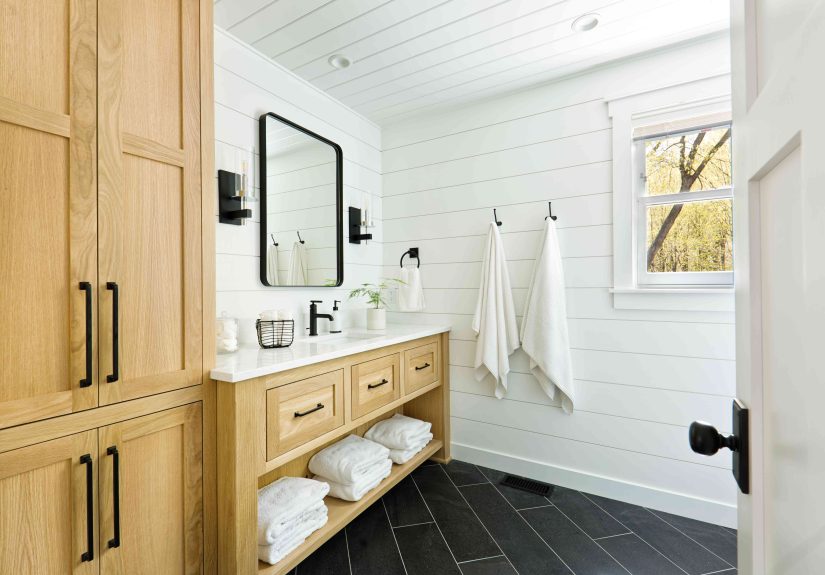
White oak is technically a wood tone, but it belongs in this conversation because it has become a go-to vanity finish for spa-inspired bathrooms. The pale, natural look brings softness and texture without relying on paint at all.
11. Walnut Brown
Walnut adds richness and warmth to a bathroom cabinet design. It feels classic but not stuffy, and it looks beautiful with cream walls, stone countertops, and vintage-inspired fixtures. Think polished, not precious.
12. Navy Blue
Navy bathroom cabinets are one of the easiest ways to bring color into the room without it feeling trendy for trend’s sake. Navy pairs beautifully with brass, chrome, marble, and white tile, which is why it keeps earning repeat invitations.
13. Slate Blue
Slate blue offers a softer alternative to navy. It still has depth, but with a quieter mood. This shade works well in coastal, transitional, and cottage-style bathrooms that need color but not a full fireworks display.
14. Powder Blue
Powder blue cabinets can make a bathroom feel airy, light, and a little nostalgic. They are especially charming in smaller bathrooms, guest baths, or homes where you want the vanity to feel cheerful rather than serious.
15. Cobalt Blue
Cobalt is the extrovert of the blue family. It adds energy, confidence, and a designer feel to the vanity. If your bathroom is otherwise simple, a cobalt cabinet can be the statement piece that wakes everything up.
16. Smoky Teal
Smoky teal sits between blue and green, which makes it wonderfully flexible. It can read serene or dramatic depending on the light and the surrounding finishes. Pair it with white counters and warm metallic hardware for balance.
17. Seafoam Green
Seafoam green cabinets have a breezy, refreshing quality that suits beachy, cottage, or retro-inspired bathrooms. This shade feels playful without being loud, especially when paired with white walls and light tile.
18. Sage Green
Sage green has become a modern classic because it feels calm, organic, and easy on the eyes. On bathroom cabinets, sage creates a relaxing, collected look that works with brass, black, and even polished nickel fixtures.
19. Olive Green
Olive takes green in a richer, earthier direction. It feels sophisticated and slightly unexpected, especially when used on cabinetry. Olive is a smart choice if you like color but want something more grounded than mint or emerald.
20. Forest Green
Forest green bathroom cabinets bring drama and depth without drifting into gloom. This color looks fantastic in powder rooms, where you can lean into the mood and make the vanity feel like a jewel-box centerpiece.
21. Emerald or Jade
Emerald and jade tones are vibrant, glossy-looking, and undeniably luxe. If you want your bathroom vanity to feel custom, these green jewel tones can deliver a high-impact result, especially with gold hardware and crisp white stone.
22. Blush Pink
Blush cabinets are soft, flattering, and far more versatile than skeptics expect. The right blush reads warm and refined rather than sugary, especially when balanced with marble, brass, or natural wood textures.
23. Dusty Rose
Dusty rose is a grown-up pink that gives bathroom cabinets a romantic edge without tipping into precious territory. It works beautifully in vintage-inspired bathrooms and in spaces with warm metal accents and creamy walls.
24. Mauve
Mauve lands between pink, taupe, and purple, which makes it surprisingly usable. It feels soft and artistic, and it can lend a bathroom a custom, collected look that does not scream for attention but absolutely knows it looks good.
25. Terracotta
Terracotta cabinet color brings warmth and an earthy character to the bathroom. It pairs well with plaster-style walls, natural fiber accents, and off-white tile. This is the shade for people who want their bathroom to feel sun-baked and stylish.
26. Clay Brown
Clay brown is deeper and moodier than terracotta, with a cozy, grounded feel. It can make a bathroom look more layered and intentional, especially when used with textured tile, warm stone, and softly lit mirrors.
27. Coral
Coral bathroom cabinets are bright, spirited, and impossible to accuse of being dull. In the right bathroom, coral adds just enough punch to feel fun while still staying polished. Keep the rest of the room simple so the vanity can enjoy its moment.
28. Peach
Peach is softer than coral and warmer than blush, which gives it a lovely middle ground. It brings a gentle glow to bathroom cabinetry and can make the whole room feel more inviting, especially when paired with creamy whites.
29. Butter Yellow
Yellow may not be the first cabinet color people think of, which is exactly why it can work so well. A muted butter yellow feels optimistic and charming rather than loud, especially in vintage or cottage-style bathrooms.
30. Soft Lilac
For something unexpected but still delicate, try soft lilac. This shade can make a vanity feel airy, whimsical, and a little editorial. It works best when the rest of the palette stays restrained and lets the cabinet do the talking.
31. Plum
Plum cabinets add richness and a slightly dramatic edge to the bathroom. They feel more refined than bright purple and can look surprisingly elegant with warm brass, creamy walls, and a simple countertop that keeps the color in focus.
32. Burgundy
Burgundy is bold, moody, and beautifully unexpected on a bathroom vanity. It has enough depth to feel luxurious and enough warmth to feel inviting. If you want a bathroom that looks memorable instead of merely nice, burgundy is a strong closer.
Tips for Making Any Cabinet Color Look Better
Even the best bathroom cabinet color can flop if the supporting cast is off. First, test your color at different times of day. That dreamy sage can turn muddy, and that perfect gray can suddenly look purple like it is trying out for theater camp. Paint samples on poster board or directly on a door panel if you can.
Second, pay attention to sheen. Satin and semi-gloss finishes are often practical for bathroom cabinets because they are easier to clean and hold up better to moisture. Third, think about hardware as jewelry. A simple cabinet color can look far more expensive with the right knobs or pulls. Brass warms things up, black adds contrast, and chrome keeps the look crisp.
Finally, do not forget the whole-room palette. The vanity does not need to match the walls, floor, or tile exactly, but it should make sense with them. Contrast can be beautiful. Chaos usually just looks expensive.
Real-Life Experience: What These Bathroom Cabinet Colors Actually Feel Like
One of the most interesting things about bathroom cabinet colors is that they rarely look the same in real life as they do on a tiny paint chip or a glowing phone screen at midnight. White seemed like the safest choice in one bathroom refresh, but once it was on the vanity, it felt colder than expected because the room had almost no natural light. Swapping to a softer cream instantly made the space feel more relaxed and much less sterile. Same layout, same mirror, same countertop, completely different mood.
Blue shades tend to be crowd-pleasers for a reason. Navy usually feels polished and expensive, even when the budget is very much not acting expensive. A softer blue, like slate or powder blue, can make a guest bathroom feel calmer and friendlier. The trick is making sure the undertones work with the rest of the room. A cool blue next to a warm beige floor can look slightly confused, like two nice people seated at the wrong wedding table.
Green cabinets are often the surprise favorite once they are installed. Sage is the easiest to live with because it feels peaceful and works with many styles. Olive and forest green make more of a statement, but in a good way. They seem especially effective in powder rooms, where you can take bigger design risks without committing an entire primary bath to the drama. A darker green vanity with brass hardware and warm lighting can make a tiny bathroom feel deliberate, not cramped.
Darker cabinet colors also tend to teach the same lesson: contrast matters. Matte black, charcoal, plum, and burgundy can look stunning, but they need breathing room. Light countertops, mirrors, tile, or wall color help them shine. Without contrast, a dark vanity can make the room feel heavier than intended. With contrast, it feels tailored and sophisticated.
Then there are the unexpected shades, the ones people hesitate over until they see them styled well. Blush, peach, butter yellow, and lilac can all work beautifully, but they usually need restraint elsewhere. The vanity becomes the personality piece, so the surrounding finishes should support it rather than compete for attention. That is often the difference between “charming and custom” and “what exactly happened in here?”
The biggest takeaway from real bathrooms is simple: cabinet color changes the emotional temperature of the room. Warm neutrals feel cozy. Blues feel fresh. Greens feel grounded. Dark shades feel dramatic. Soft pinks and peaches feel playful. There is no single best bathroom cabinet color, only the one that makes your specific room feel more like the version of home you actually want to live in.
Final Thoughts
The best bathroom cabinet color ideas do not just follow trends. They solve a design problem, set a mood, and help the room feel finished. If you love a safe neutral, there is no shame in white, cream, beige, or gray. If you want more personality, blues and greens are reliable next steps. And if you are feeling brave, blush, terracotta, plum, or burgundy can turn an ordinary vanity into the most memorable thing in the room.
So yes, the bathroom may be one of the smallest rooms in the house. But with the right cabinet color, it can still make a very large impression.






 Close
Close