
Table of Contents >> Show >> Hide
- 1. Match the lumber to your climate, not just your budget
- 2. Know the main deck lumber options before you shop
- 3. Read the end tag like it owes you money
- 4. Pay attention to lumber grade, because defects are not “character” on a deck
- 5. Sight every board for bow, twist, cup, and loose knots
- 6. Moisture content matters more than most first-time buyers realize
- 7. Buy deck board sizes that actually match your framing plan
- 8. Do not separate lumber from fasteners and hardware
- 9. Plan lengths carefully and buy a little extra
- 10. Buy for the full life of the deck, not just for install day
- Final Thoughts
- Real-World Buying Experience: What Deck Lumber Teaches You After the Receipt Is Gone
- SEO Tags
Buying deck lumber sounds simple until you’re standing in the lumber aisle, squinting at two boards that both say “decking” while one looks ready for a backyard oasis and the other looks like it already lost a fight with humidity. The truth is, a beautiful deck starts long before the first screw goes in. It starts with choosing the right wood, the right grade, the right treatment, and the right expectations.
If you buy strictly on price, you may save money on Saturday and regret everything by August. If you buy only for looks, you may end up with a deck that photographs beautifully and ages like unrefrigerated potato salad. The smart move is to balance budget, climate, maintenance, appearance, and structure. That’s how you choose deck lumber that works now and still behaves itself later.
Here are 10 practical tips to help you choose and buy deck lumber like someone who has learned a few things the expensive way.
1. Match the lumber to your climate, not just your budget
The best deck lumber for a dry climate is not always the best deck lumber for a humid one. Before you fall in love with a wood species, think about what your deck will deal with: heavy rain, blazing sun, freeze-thaw cycles, salty air, leaf buildup, or poor airflow underneath the structure. Moisture is one of wood’s biggest drama generators. It can lead to shrinking, swelling, twisting, checking, and decay over time.
If you live in a wet or humid region, pressure-treated lumber is often the practical starting point for framing because it is designed for outdoor exposure and rot resistance. If appearance matters more and you are willing to maintain it, cedar or redwood can be strong contenders. In harsher environments, buying the cheapest boards on the rack usually means buying tomorrow’s headaches today.
2. Know the main deck lumber options before you shop
Not all deck lumber is trying to do the same job. Pressure-treated lumber is the most common and usually the most affordable wood option. It is widely used for deck framing and often for deck boards too. Cedar and redwood cost more, but many homeowners love them for their natural beauty and natural resistance to moisture, rot, and insects. Douglas fir can also be a strong option in some markets, especially when properly treated and maintained.
The trick is to decide where you want to spend. Many smart builds use pressure-treated framing under the deck and then upgrade the visible surface boards if the budget allows. That way, you are not paying premium prices where no one will ever see the wood except squirrels and the occasional dropped hot dog.
3. Read the end tag like it owes you money
If you are buying pressure-treated lumber, the little end tag matters more than the sales sign. That tag tells you the treatment standard, the use category, and whether the board is intended for above-ground or ground-contact use. In other words, it tells you whether the board is actually right for the job or just nearby and convenient.
For example, above-ground exposed lumber is commonly used for decking, railings, joists, and beams in typical deck applications, while lumber used in contact with soil or in tougher decay conditions may need ground-contact treatment. If parts of your deck will sit close to the ground, stay damp, trap debris, or get poor ventilation, you should not guess. You should verify. Buying the wrong treatment level is like wearing flip-flops to a roofing job: technically a choice, but not a great one.
4. Pay attention to lumber grade, because defects are not “character” on a deck
Wood grades affect both appearance and performance. Higher-grade boards generally have fewer knots, fewer splits, straighter grain, and a more consistent look. Lower grades may be cheaper, but they are also more likely to contain defects that lead to warping, checking, and weak points. On a bookshelf, that might be rustic charm. On a deck surface, it can become a tripping hazard or an annual repair project.
If the board will be highly visible and underfoot every day, spend more for a better grade. Select or No. 1 material is often a smarter buy for deck boards, fascia, and other finish areas. Save lower-grade boards for less visible work only when they still meet structural requirements. And if a board is clearly terrible, do not let the phrase “I can make it work” ruin your weekend.
5. Sight every board for bow, twist, cup, and loose knots
Never buy deck boards by label alone. Pick them up. Sight down the length. Look for bowing, twisting, cupping, and ugly oversized knots that seem one bad season away from popping out and taking your dignity with them. Even good species and decent grades can include problem boards, especially in big-box stacks that have been handled by half the zip code.
A board with minor character might still work in a short cut or hidden area. A badly twisted board is just a future argument with clamps, screws, and your lower back. Also check the board ends. Severe checking, crush damage, and ragged fibers are clues that a board has already lived a hard life before ever meeting your deck.
6. Moisture content matters more than most first-time buyers realize
Fresh pressure-treated lumber is often wet when you buy it. That means it may shrink as it dries, and that shrinkage can affect width, thickness, spacing, and straightness. A board that looks acceptable at the store can become a banana, a propeller, or a science fair experiment after a few hot weeks in the yard. That is why deck builders talk so much about wood movement. Wood never fully stops being wood.
If you want a more stable product and your budget allows it, consider KDAT lumber, which stands for kiln-dried after treatment. It usually costs more, but it tends to be more dimensionally stable and easier to finish. Even if you buy standard pressure-treated boards, store them flat, keep them supported, and do not let them sit carelessly in the yard while you “get to it next weekend.” Wood hears that and misbehaves on purpose.
7. Buy deck board sizes that actually match your framing plan
Deck lumber is not one-size-fits-all. Common deck board profiles such as 5/4 x 6 and 2x decking do not perform the same way, and your joist spacing matters. Board thickness, board material, and layout pattern all influence how the deck will feel and last. A diagonal layout often requires tighter framing than a simple straight layout. Decorative designs may look great, but they can increase waste, cost, and structural demands.
In other words, do not wander into the store and buy whatever looks nicest before your framing plan is settled. Buy the lumber that fits the deck design, not the fantasy version of the deck in your head. If you are mixing materials, check span recommendations and installation instructions before you buy a truckload of confidence and regret.
8. Do not separate lumber from fasteners and hardware
Deck lumber and deck fasteners are a package deal. If you are using pressure-treated wood, you need corrosion-resistant screws, connectors, and hardware that are compatible with treated lumber. Hot-dipped galvanized hardware is a common minimum standard, while stainless steel is often the better choice in coastal, very wet, or high-corrosion environments. Electroplated bargain fasteners are not a clever savings strategy. They are a slow-motion repair bill.
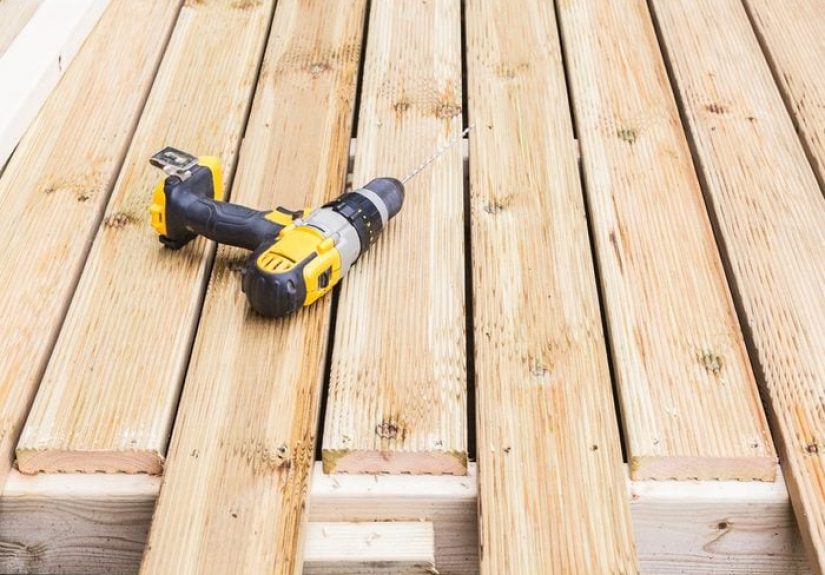
Screws are also generally a better choice than nails for decking because they hold more securely and are less likely to back out over time. Pre-drilling near board ends is smart too, especially with dense or brittle boards, because split ends are not a charming design detail. Buy the hardware at the same time as the lumber so you do not end up with premium boards and completely wrong screws.
9. Plan lengths carefully and buy a little extra
One of the easiest ways to waste money on deck lumber is to ignore board length strategy. Standard lengths can reduce waste and simplify layout, while awkward lengths can leave you with a pile of expensive offcuts and a new appreciation for basic math. If your design can be adjusted slightly to work with standard lengths, do it. Your budget will send a thank-you card.
It is also wise to buy a little extra. For a straightforward deck, a modest overage can cover cuts, mistakes, and one or two boards that turn out to be less charming at home than they looked at the store. If your design includes diagonal boards, picture framing, stairs, or lots of angles, bump that extra amount higher. And if you find especially clean boards from the same batch, grabbing a couple of spares now can save you color and grain-matching headaches later.
10. Buy for the full life of the deck, not just for install day
The cheapest deck lumber is not always the least expensive deck in the long run. Think about maintenance, repairs, refinishing, and replacement before you buy. Pressure-treated lumber often wins on upfront cost, but it usually needs routine sealing, inspection, and occasional board replacement over the years. Cedar and redwood can age beautifully, but they are not “install and forget” woods either. Real wood asks for some care if you want it to keep looking sharp.
That does not mean wood is a bad choice. It means you should buy with open eyes. If you love a natural wood look, enjoy seasonal upkeep, and want lower initial cost, wood can be a great fit. If you want maximum convenience and minimal maintenance, you may want to compare wood against alternative decking products before committing. The smartest deck lumber purchase is the one that still makes sense three summers from now.
Final Thoughts
Choosing and buying deck lumber is really about making good trade-offs. You are balancing looks, durability, treatment level, grade, moisture, framing, hardware, and long-term maintenance. The right choice is rarely the cheapest board in the stack, and it is not always the fanciest one either. It is the board that fits your deck design, your climate, your budget, and your willingness to maintain it.
If you remember only one thing, remember this: buy deck lumber like future-you will have to live with it. Because future-you absolutely will. And future-you deserves fewer warped boards, fewer popped screws, and fewer muttered insults in the backyard.
Real-World Buying Experience: What Deck Lumber Teaches You After the Receipt Is Gone
The first time I helped shop for deck lumber, the plan was painfully simple: buy pressure-treated boards, save money, and build fast. On paper, it looked brilliant. In the parking lot, it still looked brilliant. Two weeks later, after some of those boards dried and started twisting like they had signed a private contract with chaos, the brilliance faded a bit. That project taught the biggest lesson in deck buying: the label gets you in the right neighborhood, but the actual board decides whether you sleep well.
On that job, the cheapest boards were the most expensive in spirit. Some had big knots right where screws needed to go. A few had so much bow that laying them flat felt like negotiating with a stubborn mule. We spent extra time sorting, trimming, and forcing boards into place. By the end, any money saved on the front end had been partly repaid in labor, frustration, and colorful language not suitable for a family barbecue.
A later project went differently because the buying process changed. Instead of grabbing whatever was on top, we sorted for straighter boards, cleaner grain, and better-looking faces. We also paid more attention to moisture. A few KDAT boards cost more upfront, but they behaved better during install and looked more consistent after a season outdoors. That experience made one thing clear: deck lumber is not just a material purchase. It is a time purchase. Better boards often buy back your Saturday.
Cedar taught a different lesson. It was beautiful, lighter to handle, and easier on the eyes than standard treated pine. But it also made it obvious that pretty wood still needs a plan. If you buy cedar for its warm color and then never clean or protect it, it will age to gray whether you meant for that to happen or not. Some homeowners love that silvery weathered look. Others look at it six months later like they have been personally betrayed. The point is not that cedar is difficult. The point is that expectations should be bought along with the boards.
Another common mistake is forgetting that deck lumber does not work alone. People obsess over boards, then toss random screws and hardware into the cart like an afterthought. That is how nice lumber ends up paired with the wrong fasteners. A deck is a system. The boards, framing, connectors, treatment level, spacing, and finish all matter together. Buying lumber without buying the right supporting pieces is like buying expensive running shoes and then tying them with cooked spaghetti.
The best deck lumber purchases usually share a pattern. The buyer has measured carefully, knows the joist layout, understands the treatment tag, checks board quality in person, buys a little extra, and thinks about maintenance before checkout. That buyer is not necessarily spending the most money. They are just spending it with fewer illusions. And honestly, that may be the most valuable building skill of all.







 Close
Close