
Table of Contents >> Show >> Hide
- Quick Jump
- 1) Pollinators quietly built your grocery store
- 2) Mosquitoes forced modern public health (and mega-projects)
- 3) Silkworms helped globalize fashionand industry
- 4) A tiny “red bug” colored empires and modern products
- 5) Lac bugs gave us a secret super-coating (shellac)
- 6) Fruit flies unlocked big chunks of modern biology
- 7) Ladybugs saved citrus and invented practical biocontrol
- 8) Termites taught us to build cooler buildings (and better tech)
- 9) The war on bugs sparked environmental laws and smarter farming
- 10) Insects became courtroom witnesses
- Wrap-Up: The world is more “bug-built” than we admit
- Real-Life Bug Moments: of “Oh… That’s Actually a Big Deal”
Bugs have a branding problem. “Tiny genius that quietly runs Earth’s life-support systems” doesn’t fit on a T-shirt as easily as “Ew, get it out!” But whether you love them, fear them, or politely escort them outside with a cup and a prayer, insects have been steering human history for a long timesometimes by helping us, sometimes by ruining our picnic, and often by doing both at once.
Below are ten genuinely surprising ways bugs nudged civilization into its modern shapefrom what’s on your plate, to what’s in your medicine cabinet, to why entire industries and laws exist. Consider it a guided tour of the modern world… hosted by the very creatures we keep trying to swat.
1) Pollinators quietly built your grocery store
Picture the produce aisle without animal pollinators. It gets bleak fast. A huge share of flowering plants and many food crops depend on pollinatorsbees, butterflies, moths, beetles, and moreto move pollen where it needs to go. That’s not “nature trivia.” That’s breakfasts, lunches, and snacks.
Why it shaped the modern world
Once agriculture scaled up, pollination became a form of invisible infrastructure. The modern food system leans on both managed honey bees and thousands of native bee species. In the U.S., honey bees alone are associated with billions of dollars in crop pollination value each year, supporting fruits, nuts, vegetables, and seed crops that keep farms profitable and diets less depressing.
The surprising part isn’t just that bugs “help plants.” It’s that they make certain crops economically viable at modern scalemeaning they influence land use, farm jobs, food prices, and what even counts as “normal” food.
2) Mosquitoes forced modern public health (and mega-projects)
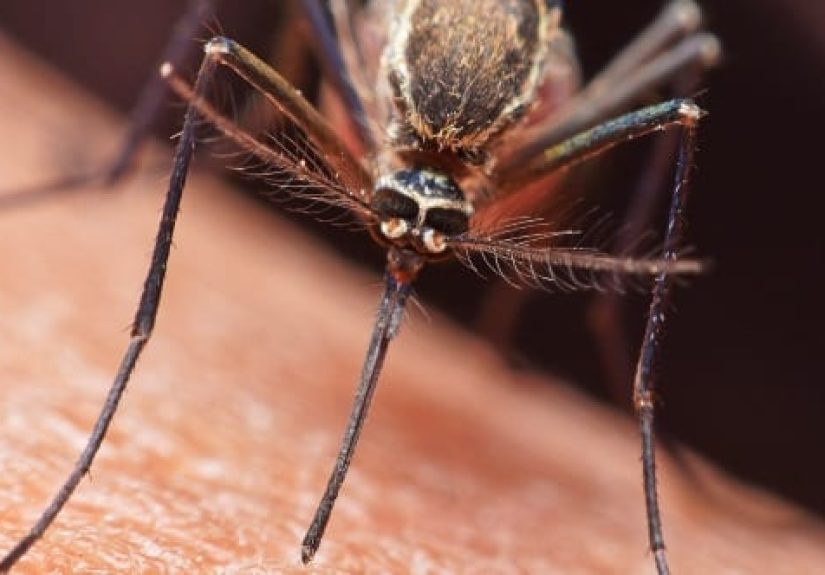
Mosquitoes are the rare creature that can both (1) ruin your evening and (2) rewrite geopolitics. Because they transmit diseases like malaria and yellow fever, mosquitoes have shaped settlement patterns, military campaigns, and the success or failure of major engineering projects.
Exhibit A: Building the Panama Canal
The Panama Canal didn’t become possible just because humans got better at digging. It became possible because humans got better at mosquito controldrainage, sanitation, targeted interventions, and organizing public health at a scale that matched the problem. Reducing yellow fever and malaria wasn’t a side quest; it was the main mission that made construction feasible.
This is one reason modern public health looks the way it does: coordinated surveillance, vector control, and infrastructure decisions (like water management) that sound boring until you realize they’re basically anti-mosquito architecture.
3) Silkworms helped globalize fashionand industry
Silkworms don’t look like economic disruptors. They look like someone’s craft project that wandered off. Yet silk helped power global trade networks for centuries and shaped ideas of luxury, labor, and technology.
More than fancy fabric
Silk production demanded specialized knowledgecultivating host plants (like mulberry), managing delicate life cycles, and developing methods to reel and spin fibers consistently. Those skills pushed early innovations in manufacturing discipline: standardized processes, quality control, and specialized labor.
Even in the United States, historical efforts to develop silk culture show how valuable the material was perceived to beenough to inspire manuals, experiments, and local industries. Today, silk’s influence echoes in textiles, medical sutures, and the broader story of how biological materials inspired industrial thinking.
4) A tiny “red bug” colored empires and modern products
If you’ve ever admired a deep, vivid crimsonon a historic uniform, a luxury textile, or even certain modern foods and cosmeticsthere’s a decent chance you’re looking at the legacy of an insect dye.
Cochineal: the original “wow, that’s red”
Cochineal comes from scale insects that live on cacti. When processed, they yield carminic acid, a pigment that can produce striking reds. Historically, this dye became enormously valuable because it created a color that was difficult to achieve with other natural sources.
The ripple effects were very modern: trade routes, colonial economics, fashion signaling, and an early version of global supply chains all tied to a bug that spends its life clinging to a plant. If “influencer marketing” existed back then, cochineal would have worn a tiny crown and demanded a brand deal.
5) Lac bugs gave us a secret super-coating (shellac)
Shellac is one of those materials that shows up everywhere while staying out of the spotlightlike the drummer in a band who also does your taxes. It’s a natural resin made from the secretions of lac insects, processed into flakes and used as a finish or protective coating.
Why shellac mattered
Before “plastic everything” became our personality, shellac helped solve practical problems: sealing wood, protecting surfaces, insulating, and creating glossy finishes. It also had an iconic moment in media historyshellac-based records (think early 78 rpm discs) helped spread music at scale before vinyl took over.
The bigger story: insect-derived materials weren’t just folk solutions. They were industrial inputs that shaped manufacturing choices, consumer goods, and the look-and-feel of everyday life.
6) Fruit flies unlocked big chunks of modern biology
Fruit flies are annoying in kitchens and legendary in laboratories. Drosophila became a superstar “model organism” because it’s easy to breed, fast to study across generations, and surprisingly informative about how genes work in animalsincluding humans.
From tiny fly to big medical insights
Research using fruit flies helped scientists map genes to traits, understand development, and connect gene function to disease pathways. Their contributions are so foundational that multiple Nobel Prizes have been associated with discoveries made using Drosophila.
In plain English: a bug you’ve tried to shoo away from bananas helped build the modern understanding of genetics, biological clocks, and how complex bodies assemble themselves. That’s an impressive resume for something smaller than a sprinkle.
7) Ladybugs saved citrus and invented practical biocontrol
When people hear “ladybug,” they think “cute.” Farmers in 1880s California were thinking “please, save my orchard.” Citrus was being hammered by cottony cushion scale, and conventional control methods weren’t cutting it.
The vedalia beetle: tiny hero, huge consequences
Entomologists identified natural enemies of the pest in its native range and introduced the vedalia beetle (Rodolia cardinalis) as a predator. The results became one of the classic success stories of biological control, demonstrating that you can manage pests by working with ecosystems rather than carpet-bombing fields with chemicals.
That conceptuse targeted natural enemies, monitor pests, minimize collateral damagehelped shape what later became integrated pest management (IPM). In other words, one small beetle helped nudge agriculture toward a more systems-based, modern approach.
8) Termites taught us to build cooler buildings (and better tech)
Termites are famous for eating houses. Ironically, they also taught humans how to design better ones.
Termite mounds: climate control without the energy bill
Some termite mounds maintain stable internal conditions through clever ventilation and heat exchangebasically passive HVAC. Architects and engineers have used these principles to inspire buildings that stay comfortable with dramatically less air-conditioning.
Bonus: insects as blueprints for machines
The same “copy the bug” thinking fuels insect-inspired roboticstiny flying microrobots modeled after insect flight, and research into agile, resilient movement inspired by cockroaches and other all-terrain champions. Bugs are proof that you can solve hard engineering problems with lightweight materials, efficient motion, and brutally effective design.
If nature had a patent office, insects would be filing nonstop.
9) The war on bugs sparked environmental laws and smarter farming
Modern pesticides exist largely because insects are extremely good at what they doeating crops, spreading disease, and evolving quickly. The 20th century turned pest control into an arms race, with chemicals that were powerful, scalable, and sometimes disastrously broad.
DDT and the rise of modern environmental policy
DDT became famous for its effectiveness and infamous for its environmental consequences. Public concern, scientific research, and political pressure helped reshape how the U.S. regulates chemicals, balancing benefits against ecological and health risks. The ripple effects include tougher review processes, expanded monitoring, and a cultural shift: “Does it work?” stopped being the only question.
Why this changed farming
As pests developed resistance and collateral damage became obvious, the logic of “spray more” started losing. IPM approachesmonitoring, targeted treatments, biological control, and habitat managementgained momentum. Bugs didn’t just force new chemicals; they forced better strategy.
10) Insects became courtroom witnesses
This is the part where the bugs get a job in the justice systemwithout filling out any paperwork. Forensic entomology uses insect activity (often blowflies and beetles) to help estimate the post-mortem interval, especially when other biological clues are limited.
How it works (without the horror-movie soundtrack)
Many insects arrive in predictable sequences after death, and their development is temperature-dependent. By identifying species and life stagessometimes with modern molecular methodsinvestigators can estimate when colonization likely began, adding a time window that can support or challenge timelines in an investigation.
It’s a striking example of the modern world’s relationship with bugs: we’ve learned not just to fight them, but to read themlike living (and occasionally buzzing) data.
Wrap-Up: The world is more “bug-built” than we admit
Bugs didn’t merely “influence” the modern world. They helped design it. They shaped what we grow, where we build, how we control disease, what we wear, how we make materials, how we run farms, how we do science, and even how we solve crimes.
The next time you see an insect and your first instinct is to panic, consider a calmer second thought: without their weird little lives, a lot of modern life wouldn’t existor would be wildly more expensive, less colorful, and way less understood.
Real-Life Bug Moments: of “Oh… That’s Actually a Big Deal”
Most of us experience the insect-shaped modern world without noticing ituntil a bug forces us to pay attention. The most relatable example is the classic late-night mosquito duel: you’re half asleep, you hear the whine, and suddenly you’re doing tactical blanket maneuvers like a low-budget action hero. Annoying? Yes. Also a tiny reminder that public health and engineering (window screens, repellents, drainage, city mosquito programs) exist because one insect can change the odds for millions of people.
Or take the fruit fly invasion. One forgotten piece of produce, and your kitchen becomes a tiny airport with nonstop arrivals. You can improvise a trap with vinegar, soap, and a jar, and it feels like a humble domestic victoryuntil you remember that the same species (or its close lab cousins) helped scientists decode how genes drive development. Your countertop nuisance and modern genetics are weirdly adjacent.
Then there’s the “pollinator realization” moment. Maybe you plant herbs on a balcony, and one day you notice a bee working the flowers with a focus you wish you had at your job. A few weeks later, that plant is thriving, and you suddenly understand why farms rent hives and why native pollinator habitats matter. It’s not sentimental; it’s supply chain. That bee is doing logistics.
Sometimes bugs show up through products, not sightings. You might brush on a glossy wood finish, pop a pill with a shiny coating, or admire a rich red tint in a product and never think “insect.” Yet insect-derived materials and dyes have been part of manufacturing and commerce for a long time. The surprise isn’t that it existsit’s how quietly it blends into everyday life.
And if you’ve ever heard the words “termite inspection” spoken with the seriousness usually reserved for medical tests, you already know how bugs influence human behavior. Entire industries exist because termites and other pests won’t respect property lines. At the same time, the funniest twist is that termite mounds can inspire energy-saving building designs. The same creature that can wreck a beam can inspire a better blueprint.
Finally, there’s the moment you watch a documentary or read a news story about insects helping solve a caseusing development stages and timing to estimate what happened. It’s unsettling, sure, but also oddly comforting: even in messy situations, nature leaves patterns. Bugs don’t just live around us. They leave clues, build systems, and keep influencing the modern worldwhether we’re ready to notice or not.






 Close
Close