
Table of Contents >> Show >> Hide
- Why Coke “Works” (and Why It Sometimes Doesn’t)
- Safety & “Please Don’t Do This” Rules
- Hack #1: A “Rust Bath” for Small Tools and Hardware
- Hack #2: Chrome & Rust SpotsThe “Diet Coke + Foil” Buff
- Hack #3: Loosen a Stubborn, Rusty Bolt Without Power Tools (Sometimes)
- Hack #4: Toilet Bowl Stains in a Pinch (But Don’t Make It Your Lifestyle)
- Hack #5: Burnt Pots, Baking Sheets, and Oven GratesSoak to Unstick the Apocalypse
- Hack #6: Copper-Bottom Pots and BrassBring Back the Shine
- Hack #7: Battery Terminal CorrosionA Quick Rinse (Use Caution)
- Hack #8: Fresh Grease Spots in LaundryA Pre-Soak Assist
- Hack #9: Driveway or Garage Oil SpotsA “Fresh Stain” Trick
- Hack #10: Garden OddballSlug & Snail Trap (Use Responsibly)
- Quick “Coke Cleaning” Checklist (So You Don’t Regret Everything)
- Real-World Results: What It’s Like to Actually Try These Hacks (Experience Notes)
- Conclusion
Somewhere out there, a lemon is rolling its eyes because it’s not the only acidic overachiever in your kitchen.
Yes, Coca-Cola can do more than fuel road trips and make movie theater popcorn taste like happiness.
In the right (very specific) situations, it can help loosen rust, lift grime, and tackle some stubborn household messes.
But before we turn your pantry into a soda-powered cleaning lab, let’s be honest:
Coke is not a miracle cleaner. It’s more like a weird little helpergreat for a few niche jobs, messy if you’re careless,
and definitely not your new everyday disinfectant.
Why Coke “Works” (and Why It Sometimes Doesn’t)
Coke’s cleaning party trick comes from mild acids (like phosphoric and citric acids), carbonation, and a bit of
“sticky syrup energy.” The acids can help break down mineral buildup and oxidation (rust/tarnish), while the
liquid helps soften grime so you can scrub it off.
The catch? It’s mild compared to purpose-built products. That means it often needs time (soaking)
and effort (scrubbing). And because regular Coke contains sugar and coloring, it can leave residue if
you don’t rinse wellwhich is the opposite of “clean,” unless you’re trying to attract ants for a science fair project.
Safety & “Please Don’t Do This” Rules
- Never mix Coke with bleach or ammonia-based cleaners. Acids + certain cleaners can create dangerous fumes. When in doubt: rinse, ventilate, and use one product at a time.
- Avoid natural stone (marble, limestone, travertine). Acids can etch and dull the surface.
- Spot test first on painted, lacquered, or plated finishes. Coke can discolor or soften some coatings.
- Rinse like you mean it. If you leave soda behind, you may end up with sticky buildup that grabs dirt.
- Keep it away from kids and pets during useespecially if you’re using it outdoors as a “trap.”
Pro tip: If you’re using Coke for cleaning, Diet Coke can be less sticky because there’s no sugar
though you still need to rinse thoroughly.
Hack #1: A “Rust Bath” for Small Tools and Hardware
If you’ve got light surface rust on screws, bolts, or hand tools, a Coke soak can help loosen oxidation enough
to scrub it away.
Best for
Small items with light rust: pliers, screwdrivers, rusty screws, old hinges, lightly rusted garden trowels.
How to do it
- Drop the item into a container and fully submerge it in Coke.
- Let it soak 8–24 hours (yes, it’s a slow burn).
- Scrub with a stiff brush or fine steel wool, then rinse and dry thoroughly.
- Finish with a thin coat of oil (especially for tools) to slow future rust.
Reality check
This works best on surface rust, not deeply pitted metal. If the item is badly corroded, a dedicated rust remover
or vinegar/citric acid soak may be more effective.
Hack #2: Chrome & Rust SpotsThe “Diet Coke + Foil” Buff
This one is oddly satisfying: crumpled aluminum foil acts as a gentle scrubber, while Coke helps loosen rust.
People love it on chrome fixtures and some automotive chrome pieces.
How to do it
- Dip crumpled foil in Diet Coke (or pour a little Coke onto the rusty spot).
- Rub gently in small circles until rust loosens.
- Wipe clean, rinse with water, and dry.
Don’t get brave
Avoid using foil on delicate finishes or anything you’d cry about scratching. Go gently, spot test, and stop if
you feel resistance (that’s your cue, not a personal challenge).
Hack #3: Loosen a Stubborn, Rusty Bolt Without Power Tools (Sometimes)
If a bolt is rusted in place, Coke can work like a mild penetrantnot as strong as a real penetrating oil,
but occasionally helpful if you’re stuck and it’s Sunday night.
How to do it
- Soak a rag or paper towel in Coke.
- Wrap it around the rusted bolt or hinge area.
- Let it sit 30–60 minutes, re-wetting as needed.
- Try turning the bolt; if it budges, keep working slowly.
Reality check
If it doesn’t move, don’t force it until you strip the head. Penetrating oil exists for a reason.
Coke is more “supporting actor” than “action hero” here.
Hack #4: Toilet Bowl Stains in a Pinch (But Don’t Make It Your Lifestyle)
The classic internet move: pour Coke into the toilet and let it sit. It can loosen some mineral stains and rust rings,
but it’s not a disinfectant and can leave residue if used regularly.
How to do it (the least chaotic version)
- Pour one can around the bowl so it coats stained areas.
- Let it sit for at least 1 hour (overnight for stubborn stains).
- Scrub with a toilet brush and flush.
- Follow up with a proper toilet cleaner/disinfectant if you’re cleaning for hygiene, not just looks.
Important note
If you do this often, sugar residue can attract more grime and bacteria over timeso think of this as an emergency hack,
not your weekly routine.
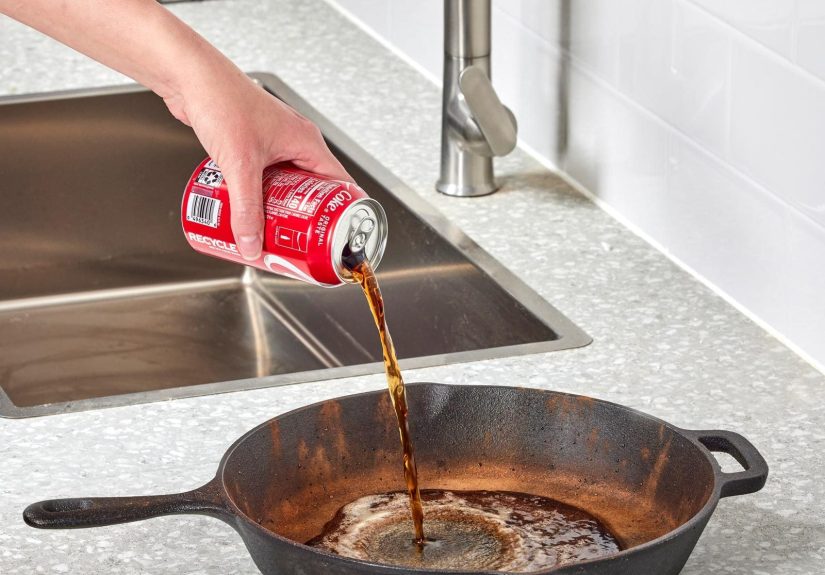
Hack #5: Burnt Pots, Baking Sheets, and Oven GratesSoak to Unstick the Apocalypse
Burnt-on gunk is basically glue made from food. Coke won’t erase your sins, but it can soften the crust so you can scrub less
(and complain less loudly).
Option A: Soak
- Place the item in a sink or tub and cover the burnt area with Coke.
- Let it sit several hours or overnight.
- Scrub with a non-scratch pad, then wash with dish soap and hot water.
Option B: Simmer (pots only)
- Pour enough Coke into the pot to cover the burnt layer.
- Simmer gently for 10–15 minutes.
- Let it cool, then scrape and wash normally.
Always rinse thoroughlyCoke can leave sticky residue that makes the pan feel “clean” in the same way a lollipop feels “clean.”
Hack #6: Copper-Bottom Pots and BrassBring Back the Shine
Mild acids can help remove oxidation on copper and brass. Coke can brighten dull areas, especially if you’re dealing with a copper-bottom pan
that’s gone from “chef chic” to “sad penny.”
How to do it
- For copper-bottom pans: pour Coke into a shallow pan and soak the copper area for about an hour.
- For brass hardware: apply a small amount of Coke to a microfiber cloth and rub gently.
- Rinse well and dry completely to prevent water spots and new tarnish.
Spot test warning
If the metal is lacquered or coated, acids can cloud the finish. Test a hidden area first.
Hack #7: Battery Terminal CorrosionA Quick Rinse (Use Caution)
Corrosion on battery terminals is messy and can interfere with connection. Coke’s mild acidity can help wash away some corrosion
on the outside of terminals. This is most relevant for car/garage situations.
How to do it safely
- Wear gloves and eye protection.
- Make sure the car is off. If you’re unsure, use a standard battery-cleaning method instead of experimenting.
- Pour a small amount of Coke over the corroded terminal area.
- Gently scrub with an old toothbrush.
- Rinse with a little water and dry thoroughly.
Reality check
This is a “get you through today” trick. Proper battery cleaning products (or a baking soda solution) are usually better.
If corrosion keeps coming back, address the underlying issue.
Hack #8: Fresh Grease Spots in LaundryA Pre-Soak Assist
Some people use cola as a pre-soak for fresh grease stains. The idea is that it helps loosen oily residue before washing.
This isn’t guaranteed (and dark soda can be risky on light fabrics), but it can help on durable, color-safe items.
How to do it (carefully)
- Blot excess greasedon’t rub it deeper.
- Test on an inside seam first (especially for whites).
- Apply a small amount of Coke to the stain and let it sit a few minutes.
- Wash immediately with a good detergent in the warmest water safe for the fabric.
Better alternative
Dish soap is designed to fight grease. If you want reliable results, dish soap + detergent usually wins.
Coke is more “backup dancer” than “lead singer.”
Hack #9: Driveway or Garage Oil SpotsA “Fresh Stain” Trick
Cola can help soften and lift some oil residue from hard surfaces, especially if the stain is fresh.
The key is follow-through: scrub, rinse, and don’t let sugary runoff head straight into a storm drain.
How to do it
- Cover the stain with Coke and let it sit about an hour.
- Scrub hard with a stiff brush.
- Rinse thoroughly with plenty of water.
Reality check
For old, set-in stains, you’ll likely need an absorbent (cat litter/degreaer) or a dedicated concrete cleaner.
Coke isn’t a time machine.
Hack #10: Garden OddballSlug & Snail Trap (Use Responsibly)
A shallow bowl of Coke can attract slugs and snails, and the acidity can kill them. It’s a low-tech trap
that some gardeners use when pests are feasting on tender plants.
How to do it
- Set a shallow container near affected plants at dusk.
- Add a small amount of Coke (just enough to cover the bottom).
- Check in the morning, then dispose of contents safely.
Important cautions
- Keep traps away from pets and wildlife.
- Don’t pour large amounts into soilsugar can attract ants and cause a sticky mess.
- Consider safer, targeted pest controls if you have frequent infestations.
Quick “Coke Cleaning” Checklist (So You Don’t Regret Everything)
- Use it for: light rust, tarnish on some metals, softening burnt-on grime, occasional mineral stains.
- Skip it for: disinfecting, stone surfaces, delicate finishes, anything porous you can stain.
- Always: spot test, give it time, scrub, rinse thoroughly, and dry.
Real-World Results: What It’s Like to Actually Try These Hacks (Experience Notes)
Here’s the part most “viral hacks” conveniently forget: the difference between a satisfying video and real life is usually
a sticky countertop and someone in your household asking, “Why does the bathroom smell like a movie theater?”
If you try the rust soak, you’ll notice the biggest improvement happens when you combine time with friction.
The soak softens rust; the scrub removes it. Expect to pull the item out and think, “Nothing happened,” then scrub and suddenly
see orange-brown residue sliding off like it’s giving up on adulthood. The real win is on small parts you can fully submergescrews,
washers, little hingesbecause the liquid can actually reach everything. Tools with deep pitting are less satisfying; Coke can’t rebuild metal.
The pro move is drying thoroughly and applying oil afterward. Otherwise, the newly “clean” surface can flash-rust again faster than you can say,
“I should’ve just bought a rust remover.”
The Diet Coke + foil method is the most “weirdly fun,” because you get that instant feedback loop:
rub, wipe, gasp, repeat. But it’s also where people get overconfident. Light pressure works best. If you grind away like you’re polishing a trophy,
you risk dulling a finish, especially on cheaper chrome plating. When it works, it’s great on small rust specks and cloudy spots; when it doesn’t,
it mostly creates gray smudges that require regular soap-and-water cleanup. Consider it the household equivalent of a gentle exfoliation, not sandpaper.
For the toilet hack, the experience is usually “surprisingly okay” followed by “why is the brush sticky?”
Coke can loosen certain stains, but it doesn’t sanitize. So if your goal is clean and not just less embarrassing,
you’ll still want a disinfecting cleaner afterward. Also: if you have a lighter-colored toilet bowl, test cautiously.
Dark soda plus porous mineral buildup can occasionally create faint discoloration. The bigger issue is residueif you don’t scrub and flush well,
you’re leaving a sugary film behind. That film can grab grime later, which is the opposite of the long-term relationship you want with your toilet.
The burnt pan soak is the most practical day-to-day trick. The best outcome is when you soak overnight and then scrub with hot water
and dish soap. The worst outcome is when you forget the rinse step and your pan has that “tacky candy glaze” feel the next day.
Simmering works, but it smells like you’re making dessert in a garage. If your pan is nonstick, be gentleuse a non-scratch tool and keep heat low.
The goal is softening the burnt layer, not creating a new layer of caramelized cola.
For copper and brass, the “experience” is mostly about expectations. Coke can brighten dull oxidation, but it’s not a museum-grade polish.
You’ll get a noticeable lift in shine, especially on cookware bottoms, but you may still see uneven patches if the tarnish is heavy.
The key is rinsing and drying: metal looks amazing when freshly cleaned and then immediately starts oxidizing again the moment you ignore it.
If you want that bright look to last, finish with a gentle polish (appropriate for the metal) or a protective step recommended for the item.
The battery terminal trick feels dramatic because you’re working around something that looks like science class.
In reality, the “wow” comes from the rinse action and the brushing. It can help remove crusty corrosion,
but most people find that standard battery cleaning methods are cleaner, safer, and more repeatable.
If you try Coke here, keep it small, controlled, and rinse thoroughlyleaving sugar residue around a terminal is not a vibe.
Finally, the driveway oil and slug trap hacks are where practicality meets consequences.
Coke on a driveway can help with fresh spots, but it’s messy and can attract insects if you don’t rinse thoroughly.
Slug traps can work, but they’re not selective and can be gross to clean upso place them carefully and use minimal soda.
In both cases, “a little” is smarter than “a whole two-liter bottle because I was feeling confident.”
Bottom line: Coke hacks are best when you treat them like a quirky tool in the toolboxnot a replacement for proper cleaning products.
Use them sparingly, rinse thoroughly, and keep your expectations realistic. The goal is a cleaner home, not a sticky sequel.







 Close
Close