
Table of Contents >> Show >> Hide
- Before You Visit Any “Gate to Hell” (A Quick Reality Check)
- Quick Table of Contents
- 1) Darvaza Gas Crater (Turkmenistan)
- 2) Actun Tunichil Muknal Cave (Belize)
- 3) Chinoike Jigoku “Blood Pond Hell” (Japan)
- 4) Cape Matapan (Taenarum) Caves (Greece)
- 5) Acheron River (Greece)
- 6) Fengdu Ghost City (China)
- 7) Masaya Volcano (Nicaragua)
- 8) The Ploutonion / Pluto’s Gate (Turkey)
- 9) Houska Castle (Czech Republic)
- 10) Mount Osore (Osorezan) (Japan)
- How to Choose the Right “Hell Gate” for Your Travel Style
- Experiences: What It’s Like to Visit an “Entrance to Hell” (Expectations vs. Reality)
- Conclusion
“Go to hell” is a popular phraseusually said in traffic, in comment sections, or when someone steals the last slice of pizza.
But what if you took it as travel advice?
Across the world, there are places so fiery, sulfur-scented, bone-chilling, or myth-soaked that people have branded them as
entrances to hell. Sometimes that label comes from ancient religion and folklore. Sometimes it’s pure geology doing what geology does best:
hissing, bubbling, steaming, and casually reminding us who’s in charge down there.
This list is for the devilishly curiousnot because these sites are “actually” portals to the underworld, but because they’re real,
visitable locations with legends (and/or landscapes) that earn the nickname. Expect volcano rims, sacred caves, hot springs that look like tomato soup,
and temples where the air itself can be dangerous if you ignore the rules.
Before You Visit Any “Gate to Hell” (A Quick Reality Check)
Hell tourism is best enjoyed with a little common sense and a lot of respect. Most of these places are protected cultural sites, active natural hazards,
or bothmeaning the goal is to leave with photos, not with a rescue helicopter cameo.
- Follow local rules (especially in caves, temples, and volcanic parks).
- Use licensed guides when requiredmany of these sites are fragile or genuinely risky.
- Expect closures due to weather, volcanic gas, conservation rules, or seasonal access.
- Be respectful: several locations are active pilgrimage sites and memorial spaces.
Quick Table of Contents
- Darvaza Gas Crater (Turkmenistan)
- Actun Tunichil Muknal Cave (Belize)
- Chinoike Jigoku “Blood Pond Hell” (Japan)
- Cape Matapan (Taenarum) Caves (Greece)
- Acheron River (Greece)
- Fengdu Ghost City (China)
- Masaya Volcano (Nicaragua)
- The Ploutonion / Pluto’s Gate (Turkey)
- Houska Castle (Czech Republic)
- Mount Osore (Osorezan) (Japan)
1) Darvaza Gas Crater (Turkmenistan)
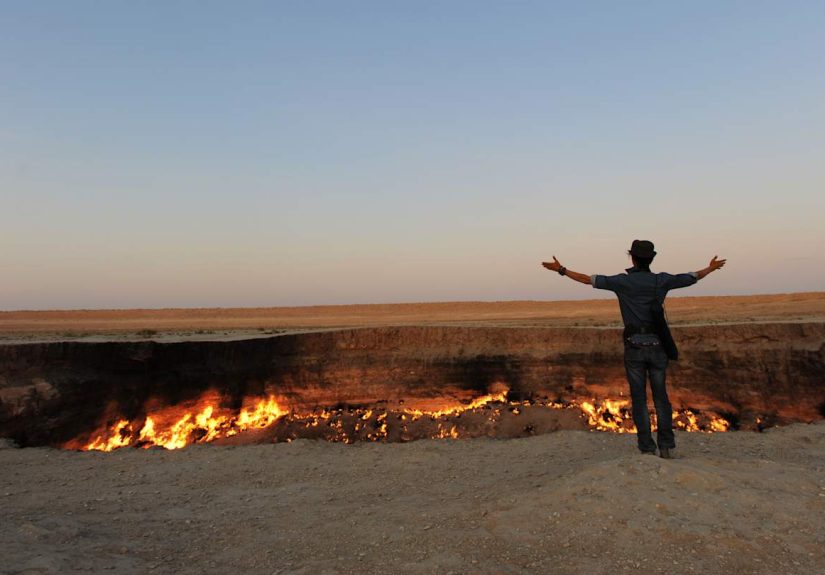
If you imagine hell as “a giant fire pit in the middle of nowhere,” congratulations: your brain just invented the Darvaza Gas Crater,
often nicknamed the Door or Gates of Hell. It’s a burning natural-gas crater in the Karakum Desertan eerie glow that’s been
mesmerizing travelers for decades.
- Why it’s “hellish”: Flames, heat shimmer, and a nighttime skyline that looks like a fantasy movie set.
- How to visit: It’s remote; trips typically require planning, local logistics, and a safety-first approach near the rim.
2) Actun Tunichil Muknal Cave (Belize)
Known as “ATM,” this cave is less “fire-and-brimstone” and more “sacred underworld.” For the ancient Maya, caves could be spiritual passagewaysand ATM
contains powerful archaeological remains, including the famous “Crystal Maiden,” whose bones calcified over time into a sparkling, ghostly display.
- Why it’s “hellish”: A dark, wet descent into a place tied to sacrifice and the Maya underworld story world.
- How to visit: Guided tours only; expect hiking, swimming, scrambling, and strict conservation rules (often including no cameras).
3) Chinoike Jigoku “Blood Pond Hell” (Japan)
Beppu is famous for hot springsand some are meant for soaking. Chinoike Jigoku is not one of those. Its name translates to “Blood Pond Hell,” and the
water looks like a red cauldron. The color comes from mineral-rich mud; the vibe comes from the fact that it’s basically a simmering science experiment.
- Why it’s “hellish”: A vivid red pool that steams like it’s auditioning for the role of “portal.”
- How to visit: It’s a viewing site on the Beppu “Hells” circuitgreat for photos, terrible for toe-dipping.
4) Cape Matapan (Taenarum) Caves (Greece)
Ancient Greeks didn’t always treat the underworld as a purely abstract concept. Cape Matapanalso associated with the old name Taenarumhas caves that
appear in myth as an entry point to Hades. Above the sea-level openings, ruins mark the headland like a historical “you sure about this?” sign.
- Why it’s “hellish”: Mythic pedigree: heroes and poets placed underworld journeys in this neighborhood.
- How to visit: This is rugged coastline territorygo prepared, watch conditions, and prioritize safe access over dramatic selfies.
5) Acheron River (Greece)
The Acheron is one of the most famous “underworld rivers” in Greek mythologyoften framed as a boundary between the living and the dead.
Today, the real river runs through gorgeous landscapes that attract hikers, rafters, and travelers who like their scenery with a side of legend.
- Why it’s “hellish”: A name and story that practically comes with its own soundtrack.
- How to visit: Treat it like an adventure destinationgood footwear, respect for currents, and a willingness to get your ankles wet.
6) Fengdu Ghost City (China)
Fengdu Ghost City is a complex of shrines and statues dedicated to the afterlifeoften described as a “model” of hell in Chinese folk and religious
imagination. Visitors pass moral tests, encounter dramatic imagery, and walk through a cultural landscape built to make you reflect on how you’ve been
behaving lately. (Suddenly, you remember every time you didn’t return a shopping cart.)
- Why it’s “hellish”: Designed as a journey through afterlife trials, complete with gate imagery and lessons.
- How to visit: Commonly visited from the Yangtze River region; go in a mindset of cultural respect, not theme-park mockery.
7) Masaya Volcano (Nicaragua)
Masaya has been called the “Mouth of Hell” since the Spanish colonial erabecause staring into an active crater with glowing lava and volcanic gases can
inspire big feelings. The volcano’s persistent activity and dramatic crater views helped earn it a reputation as one of the most intense “look, don’t
touch” attractions on Earth.
- Why it’s “hellish”: A living volcano that can look like a furnace when conditions are right.
- How to visit: It’s within a national park system; check current access rules because volcanic gas and activity can change quickly.
8) The Ploutonion / Pluto’s Gate (Turkey)
In the ancient city of Hierapolis (near modern Pamukkale), there’s a site historically associated with Plutothe god tied to the underworld. Ancient
accounts described lethal vapors, and modern science has shown that carbon dioxide can pool near the ground, creating real danger in certain conditions.
In other words: this “gate to hell” has receipts.
- Why it’s “hellish”: Myth meets measurable riskdeadly gas behavior helped fuel the underworld reputation.
- How to visit: You can visit the archaeological area, but follow barriers and warnings; the hazard is the point, not a challenge.
9) Houska Castle (Czech Republic)
Houska Castle has one of Europe’s most famous “portal” legends: a supposed pit to hell sealed beneath a chapel. Whether you believe the folklore or not,
the place has a spooky, isolated reputation, plus the architectural vibe of a medieval building that didn’t get the memo about “cheerful.”
- Why it’s “hellish”: A long-running local legend centered on a sealed chasm and protective construction.
- How to visit: Typically a day-trip style destination; bring curiosity, not expectations of cinematic jump scares.
10) Mount Osore (Osorezan) (Japan)
Mount Osore is often described as a threshold between worlds in Japanese folk beliefa landscape of sulfur, steam, and stark volcanic terrain surrounding
a temple complex. It’s not “scary” in a cheap way; it’s heavy in a human way. People come to mourn, to remember, and to feel close to what they’ve lost.
- Why it’s “hellish”: Geothermal fumes and barren ground match classic Buddhist imagery of harsh afterlife landscapes.
- How to visit: It can be remote and seasonalplan carefully, and treat it as a sacred space first, attraction second.
How to Choose the Right “Hell Gate” for Your Travel Style
Not all entrances to hell are created equal. Some are pure geology (volcanoes, hot springs). Others are cultural landscapes designed to teach and provoke.
A few combine bothwhere a real hazard (like gas) helped build a legend.
- If you love nature: prioritize volcanic parks and geothermal sites.
- If you love history: go for ancient underworld traditions and archaeological sites.
- If you love eerie folklore: castles and “afterlife cities” deliver the vibeswithout the lava.
Experiences: What It’s Like to Visit an “Entrance to Hell” (Expectations vs. Reality)
Visiting one of these so-called “entrances to hell” is less about proving anything supernatural and more about experiencing how humans react to extremes.
Travelers often describe the same emotional arc: laughter at the name, a little swagger at the entrance, and thensomewhere between the sulfur smell and
the echo of your own footstepsa quiet moment where your brain goes, “Oh. This is serious.”
At fiery sites like the Darvaza Gas Crater, the experience tends to hit hardest after dark. The daylight version can look like a rugged hole in the
desertimpressive, but abstract. Night turns it into a glowing wound in the Earth. People commonly talk about feeling the heat on their face even from a
cautious distance, watching the flames ripple like a living thing, and realizing how quickly “cool travel story” can become “bad idea” if you ignore the rim.
The most memorable part is often the contrast: a silent desert sky above you, and a roaring, relentless burn below.
In caves like Actun Tunichil Muknal, the sensation is the opposite: not heat, but humidity, darkness, and reverence. Your world shrinks to whatever your
headlamp revealswater lines on stone, narrow passages, and chambers that feel like they’ve been holding their breath for centuries. Many visitors say the
most intense moment isn’t fear; it’s realizing you’re looking at irreplaceable traces of beliefceramics, bones, and spaces that were never meant to be
casual entertainment. The strict rules (like no photography) can actually heighten the experience, because you’re forced to be present instead of performing
your trip for a camera roll.
Geothermal “hells” like Chinoike Jigoku deliver a different kind of thrill: the brainy delight of nature being weird in public. The colors look unreal,
the steam makes everything cinematic, and the fact that it’s too hot to enter turns the site into a safe, contained spectacle. People usually leave these
places feeling amused, slightly awed, and oddly hungrybecause something about bubbling earth energy makes your stomach think you’ve earned a snack.
Then there are the cultural “hellscapes,” like Fengdu Ghost City or the myth-saturated landscapes of Greece. Here, the experience is shaped by story:
gates, moral tests, underworld rivers, and rituals. Travelers often notice that the “fear” isn’t really fearit’s reflection. You walk through art and
symbolism meant to make you consider consequences, kindness, and what a community values. Even skeptics tend to admit that a well-designed afterlife lesson
can be surprisingly effective, especially if you’ve been a little too comfortable cutting corners lately.
The biggest reality check? These places don’t feel like a theme park. The best ones feel like a mirror: geology showing power, history showing continuity,
and myth showing how people try to name the unnameable. You don’t have to believe in hell to understand why humans keep pointing at fire, caves, and
poisonous air and saying, “Yeah… that’s probably the doorway.”
Conclusion
The world is full of places that earned frightening nicknames because they’re extreme, mysterious, or sacredor all three at once. If you visit any of
these “entrances to hell,” go with humility and curiosity. Respect the landscape, respect the culture, and remember: the best souvenir is the story you
tell afterward, not the rule you broke to get it.







 Close
Close